
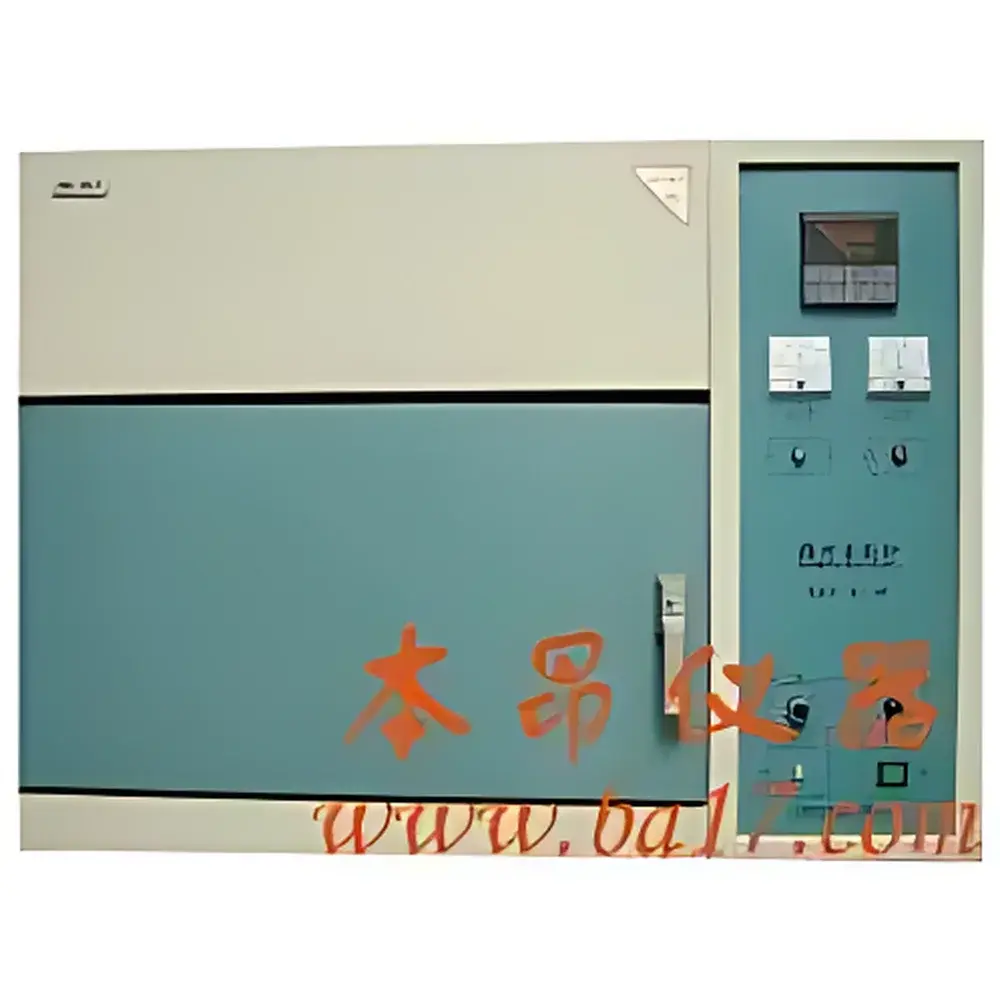
BenAng BA-4-17B Ceramic Fiber Muffle Furnace
| Brand | BenAng |
|---|---|
| Origin | Shanghai, China |
| Model | BA-4-17B |
| Maximum Temperature | 1700 °C |
| Chamber Dimensions | 160 × 150 × 150 mm |
| Heating Rate to 1000 °C | ≤12 min |
| Temperature Uniformity | ±1 °C |
| Control System | 30-Stage PID Programmable Controller |
| Thermocouple Type | Platinum-Rhodium 30 (Type B) |
| Power Supply | AC 380 V, 3-phase |
| Rated Power | 4 kW |
| Heating Element | MoSi₂ U-Shaped Rods (1700 °C Grade) |
| Insulation | 50 mm High-Purity Alumina-Silica Ceramic Fiber |
Overview
The BenAng BA-4-17B Ceramic Fiber Muffle Furnace is a high-performance laboratory box furnace engineered for rapid thermal processing up to 1700 °C. Designed around advanced refractory architecture, it employs ultra-pure alumina-silica ceramic fiber insulation (50 mm thick) sourced from the United States—offering exceptional thermal retention, minimal thermal mass, and negligible particulate shedding during operation. Unlike traditional brick-lined muffle furnaces, this model utilizes high-stability MoSi₂ (molybdenum disilicide) U-shaped heating elements rated for continuous service at 1700 °C, ensuring uniform radiant heat distribution across the entire chamber volume. Its ability to reach 1000 °C in under 12 minutes—approximately five times faster than conventional refractory furnaces—makes it particularly suitable for time-sensitive protocols in materials synthesis, ashing, calcination, and thermal gravimetric pre-treatment workflows. The furnace operates without combustion byproducts or volatile emissions, supporting inert-atmosphere compatibility when coupled with optional gas purge systems.
Key Features
- High-purity ceramic fiber chamber insulation (50 mm), certified for low thermal conductivity (<0.09 W/m·K at 1000 °C) and zero dust generation—critical for contamination-sensitive applications such as pharmaceutical residue analysis and semiconductor precursor annealing.
- MoSi₂ U-shaped heating elements (1700 °C grade), imported from the U.S., featuring superior resistance stability, extended service life, and minimized hot-spot formation due to optimized geometric uniformity.
- Precision temperature control via a 30-segment programmable PID controller with Type B (PtRh30/PtRh6) thermocouple feedback—delivering ±1 °C accuracy across the full operating range (room temperature to 1700 °C).
- Integrated safety architecture including door-activated power cutoff, surface overtemperature cutout, automatic restart inhibition after power interruption, and low-noise laminated silicon steel transformer core for stable voltage regulation.
- Compact chamber dimensions (160 × 150 × 150 mm) optimized for sample batches up to 150 g while maintaining ISO/IEC 17025-compliant thermal homogeneity (±3 °C within working zone at 1200 °C).
Sample Compatibility & Compliance
The BA-4-17B accommodates crucibles made of alumina, quartz, silicon carbide, and platinum-group alloys—enabling routine use in ASTM E171 (standard practice for conditioning and testing nonmetallic materials), ASTM D3174 (ash content determination in coal and coke), and USP <281> (residue on ignition). Its non-reactive ceramic fiber lining eliminates cross-contamination risks associated with refractory brick erosion, fulfilling GLP requirements for trace elemental analysis (e.g., ICP-MS sample preparation). The furnace meets CE electromagnetic compatibility directives (2014/30/EU) and conforms to IEC 61000-6-3 for industrial radiated emissions. No internal lubricants, binders, or organic additives are used in insulation fabrication—ensuring compliance with EPA Method 3050B (acid digestion of sediments and soils) and ISO 11885 (determination of selected metals by ICP-AES).
Software & Data Management
While the BA-4-17B operates via standalone hardware-based PID control, its analog output (4–20 mA) and RS485 Modbus RTU interface enable seamless integration into centralized laboratory data acquisition networks. When connected to validated SCADA or LIMS platforms, temperature profiles, ramp/soak segments, and fault logs are timestamped and archived with audit-trail capability compliant with FDA 21 CFR Part 11 (electronic records and signatures). Optional USB data logger modules support CSV export of real-time temperature history for post-run validation against SOP-defined thermal cycles—essential for QA/QC documentation in GMP-regulated environments such as medical device sterilization validation or catalyst activation reporting.
Applications
- Materials science: Sintering of advanced ceramics (e.g., ZrO₂, Si₃N₄), heat treatment of thin-film substrates, and controlled oxidation of nanomaterials.
- Environmental testing: Gravimetric determination of total suspended solids (TSS), volatile solids (VS), and fixed residue in wastewater sludge per APHA Standard Methods 2540E.
- Pharmaceutical development: Residue-on-ignition testing of excipients, thermal degradation studies of APIs, and moisture content verification per USP <731>.
- Geochemical and fuel analysis: Ash fusion temperature measurement (ASTM D1857), proximate analysis of coal (ASTM D3172–D3176), and sulfur content quantification via sulfate ash conversion.
- Academic research: Kinetic studies of solid-state reactions, phase transformation mapping, and calibration of thermogravimetric analyzers (TGA) using NIST-traceable reference materials.
FAQ
What atmosphere options are supported inside the chamber?
The BA-4-17B is designed for ambient air operation but can accommodate inert gas purging (N₂, Ar) via standard 6-mm inlet/outlet ports. Optional quartz tube inserts or sealed alumina crucible lids further limit oxygen exposure for reducing or carburizing treatments.
Is the furnace compatible with automated sample loading systems?
Yes—the unit features standardized mounting flanges and mechanical interlocks that interface with third-party robotic arms and conveyor-based batch loaders meeting SEMI E10 specifications.
How often does the MoSi₂ heating element require replacement?
Under typical intermittent use (≤4 h/day at ≤1500 °C), service life exceeds 2,000 operational hours. Visual inspection every 500 h is recommended to detect surface crystallization or localized embrittlement.
Can temperature uniformity be verified independently?
Yes—three-point probe calibration (center + two corners) using NIST-traceable thermocouples is supported per ISO/IEC 17025 Clause 6.4.2, with uniformity reports admissible for accreditation audits.
Does the controller support remote monitoring via Ethernet or Wi-Fi?
Not natively—but the RS485 port allows connection to industrial gateways (e.g., Moxa EDS-G205A) enabling secure TLS-encrypted web access through existing campus or cloud-based infrastructure.



