
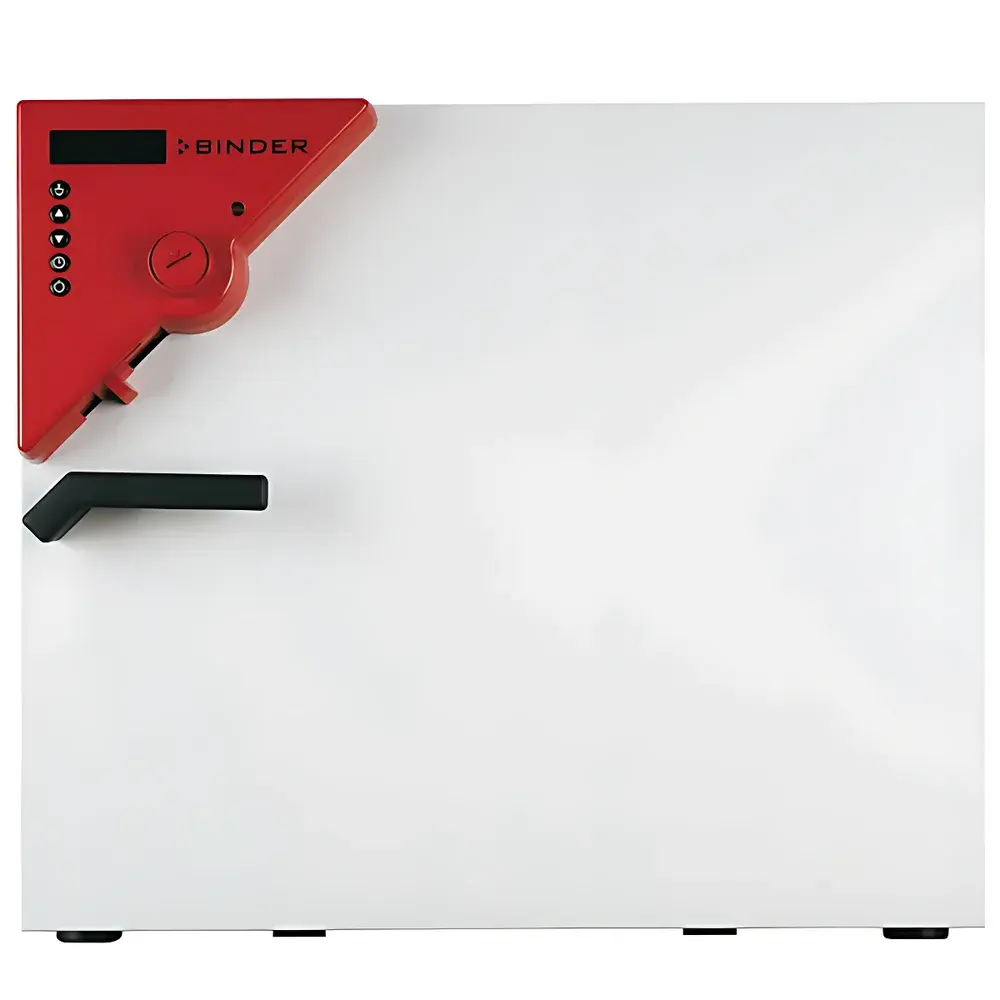
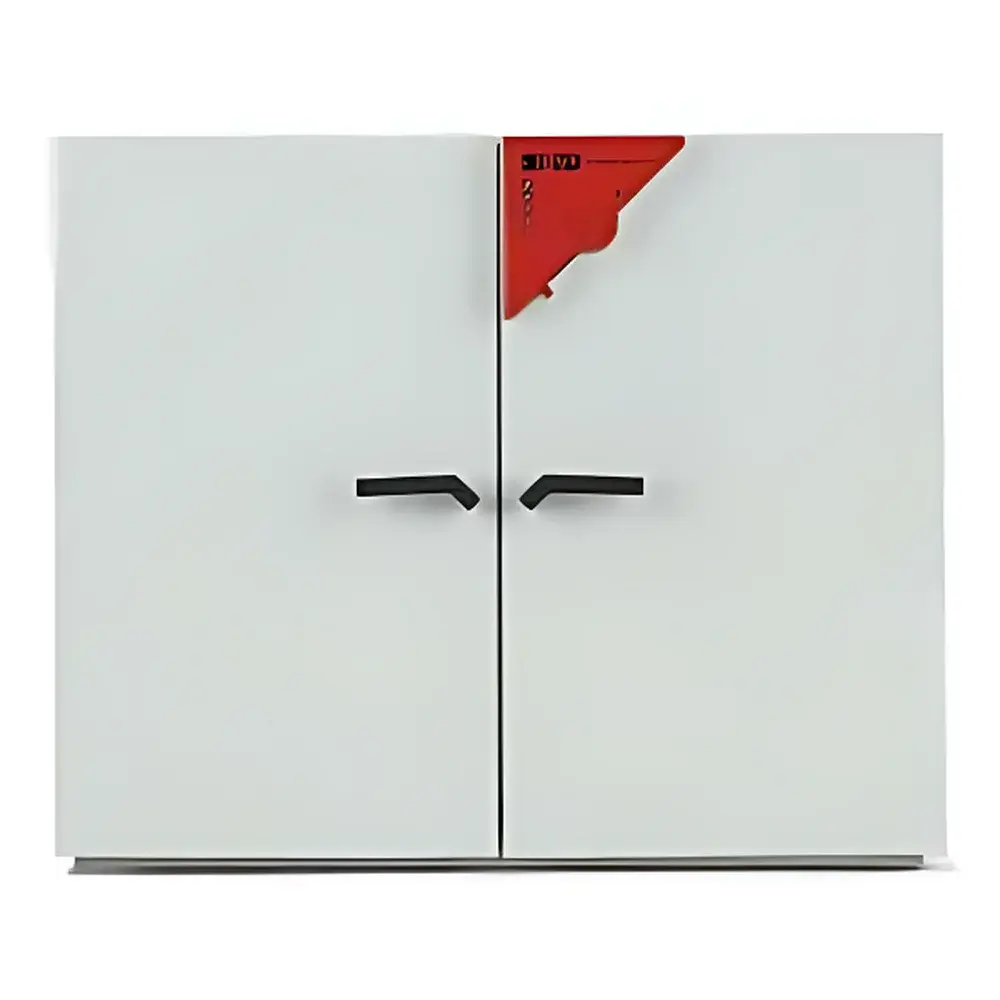
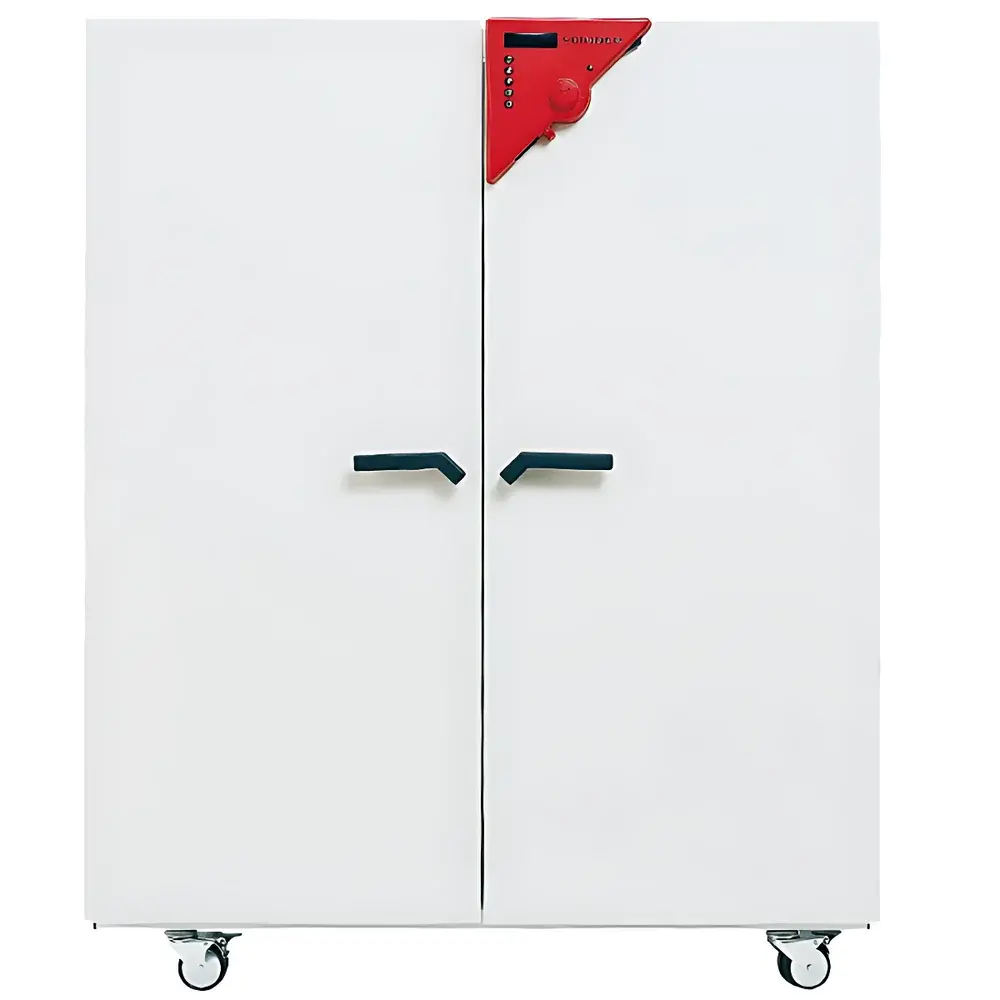
BINDER ED115 Natural Convection Drying Oven
| Brand | BINDER |
|---|---|
| Origin | Germany |
| Model | ED115 |
| Temperature Range | Ambient + 5 °C to 300 °C |
| Temperature Uniformity (at 150 °C) | ±0.4 K |
| External Dimensions | 710 × 735 × 605 mm |
| Internal Dimensions | 510 × 530 × 425 mm |
| Chamber Material | Stainless Steel (AISI 304) |
| Heating Method | Natural Convection |
| Chamber Volume | 115 L |
| Safety Class | Independent Temperature Safety Device, Class 2 (DIN 12880) |
| Control System | LCD Controller with APT.line™ Preheating Technology |
| Energy Efficiency | Up to 30% lower power consumption vs. conventional natural convection ovens |
Overview
The BINDER ED115 Natural Convection Drying Oven is a precision-engineered laboratory drying system designed for routine thermal processing tasks including moisture removal, pre- and post-weighing drying, polymer curing, sterilization validation support, and stability testing under non-forced airflow conditions. Operating on the principle of natural convection—where heat transfer occurs solely via buoyancy-driven air movement without mechanical fans—the ED115 ensures minimal sample disturbance, eliminating particle resuspension, oxidation risk, or mechanical stress on delicate specimens such as filter papers, biological matrices, pharmaceutical powders, or calibration standards. Its temperature range extends from ambient +5 °C up to 300 °C, enabling high-temperature applications such as glassware depyrogenation and dry-heat sterilization protocols compliant with ISO 17665-1 and EN 285 Annex C. The oven’s robust stainless-steel chamber (AISI 304), combined with BINDER’s proprietary APT.line™ preheating jacket technology, delivers exceptional thermal stability and reproducibility—critical for GLP- and GMP-aligned laboratories requiring traceable, auditable thermal processes.
Key Features
- APT.line™ preheating jacket architecture ensures uniform heat distribution and minimizes temperature gradients across the chamber, achieving ±0.4 K fluctuation at 150 °C
- Class 2 independent temperature safety device (DIN 12880) with optical alarm provides redundant thermal protection, essential for unattended operation and regulatory compliance
- Energy-optimized design reduces power consumption by up to 30% compared to legacy natural convection ovens, verified per IEC 62301 standby and operational load testing
- LCD controller with intuitive menu navigation supports precise setpoint programming, ramp/soak profiles, and real-time monitoring of chamber temperature and elapsed time
- Electromechanical exhaust valve enables controlled venting for volatile residue management during solvent-based drying procedures
- Ergonomically contoured door handle and reinforced double-wall insulation enhance operator safety and thermal efficiency
- Two chrome-plated wire shelves included; maximum shelf load capacity: 30 kg per shelf; total chamber load capacity: 150 kg
Sample Compatibility & Compliance
The ED115 accommodates a broad spectrum of sample formats—including Petri dishes, weighing boats, crucibles, glass vials, aluminum pans, and standard ISO 9001-certified test trays—without airflow-induced displacement. Its natural convection design meets ASTM E145–22 requirements for gravity convection ovens used in moisture content determination (e.g., AOAC 950.46, USP <731>). Chamber construction complies with DIN EN 61000-6-3 (EMC) and DIN EN 61000-6-2 (immunity), while electrical safety conforms to IEC 61010-1:2010. For regulated environments, the controller supports optional data logging interfaces compatible with FDA 21 CFR Part 11-compliant software platforms when integrated into validated systems.
Software & Data Management
While the ED115 operates via standalone LCD control, its analog output (0–10 V) and digital RS485 interface enable seamless integration with centralized lab information management systems (LIMS) or SCADA architectures. Optional BINDER CTV software (sold separately) permits remote parameter configuration, event logging, and export of timestamped temperature records in CSV or PDF format—supporting audit trails required under ISO/IEC 17025 and EU GMP Annex 15. All temperature safety events—including overtemperature alarms and safety circuit triggers—are automatically recorded with date/time stamps and retained in non-volatile memory.
Applications
- Moisture content analysis per ISO 5517 and AOAC Official Methods of Analysis
- Drying of soil, feed, and agricultural samples prior to elemental analysis (ICP-OES, XRF)
- Thermal conditioning of reference materials and certified standards (CRM)
- Pre-sterilization drying of stainless-steel components in cleanroom assembly workflows
- Residual solvent evaporation in API synthesis intermediates (ICH Q5C)
- Accelerated aging studies for packaging materials per ASTM F1980
- Calibration of hygrometers and humidity sensors using saturated salt solutions
FAQ
Does the ED115 support programmable ramp-and-soak cycles?
Yes—the LCD controller allows up to 10 user-defined segments with adjustable ramp rates and dwell times.
Is the chamber volume validated per ISO 17025 requirements?
Chamber volume is factory-measured and documented in the Certificate of Conformance; IQ/OQ protocols are available upon request for method-specific validation.
Can the ED115 be used for depyrogenation?
It meets minimum thermal parameters for dry-heat depyrogenation (≥250 °C for ≥45 min), though process qualification must be performed per individual load configuration and thermocouple mapping.
What maintenance intervals are recommended?
Annual verification of temperature uniformity and safety device functionality is advised; door gasket integrity should be inspected quarterly.
Is external ventilation ducting required?
Not mandatory—but recommended when processing solvents or volatile organics; the electromechanical exhaust valve facilitates connection to building exhaust systems.



