
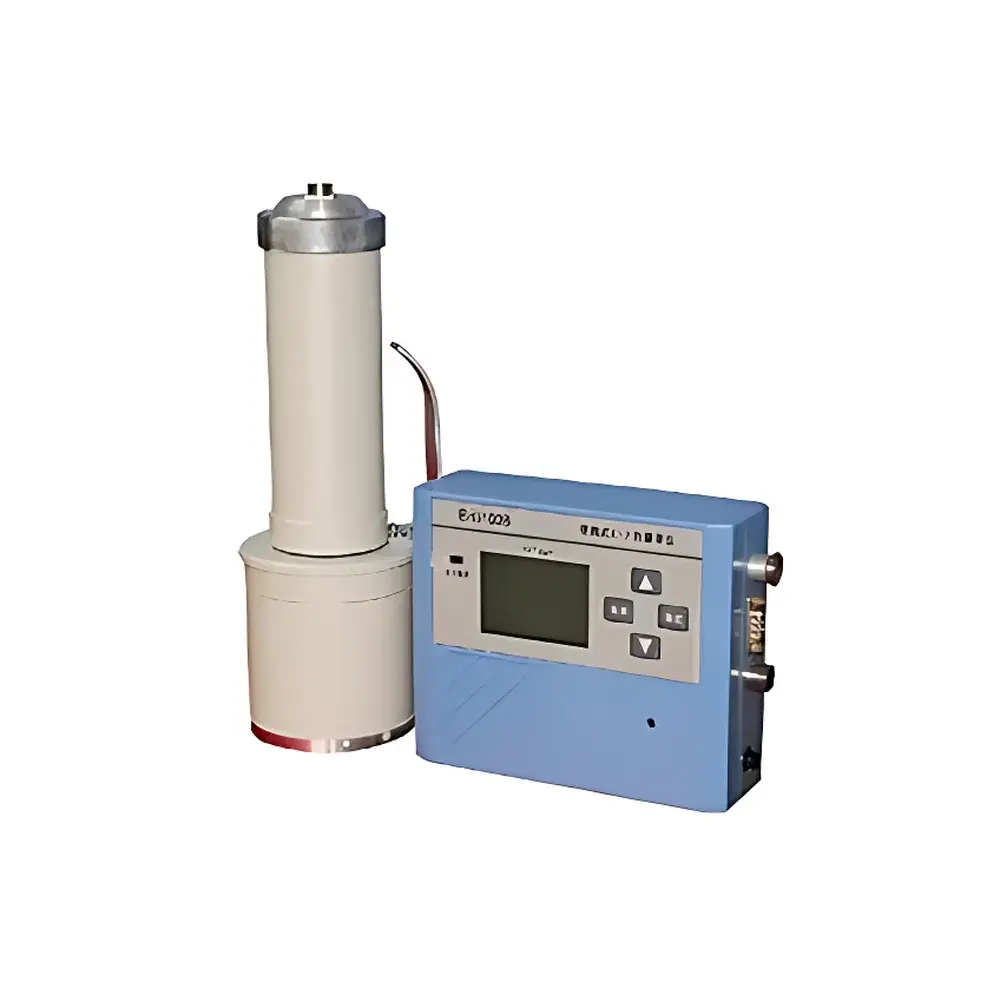
BH3103B Portable X-γ Environmental Dose Rate Meter
| Origin | Beijing |
|---|---|
| Manufacturer Type | Distributor |
| Origin Category | Domestic |
| Model | FJ428G |
| Instrument Category | Dosimeter / Dose Rate Meter |
| Instrument Type | Portable |
| Measured Medium | Air |
| Detector Type | Environmental Radiation Detector |
| Radiation Type | X and γ |
| Measurement Range | (1–10,000) × 10⁻⁸ Gy/h |
| Accuracy | ±10% reading error |
Overview
The BH3103B Portable X-γ Environmental Dose Rate Meter is a field-deployable radiation monitoring instrument engineered for precise measurement of ambient air kerma rate (expressed as absorbed dose rate in air) from X-ray and gamma-ray sources. Based on energy-compensated GM tube detection technology, it operates under the principle of ionization event counting in a gas-filled detector—where incident photons interact with the fill gas (typically halogen-quenched argon or neon mixture), generating charge pulses proportional to radiation intensity. The instrument is calibrated to report dose rate in SI units (Gy/h), traceable to national primary standards, and conforms to fundamental dosimetric definitions per ICRU Report 51 and IEC 60846-1:2014 for portable radiation protection instruments. Designed for routine environmental surveillance, it supports regulatory compliance in radiological protection programs across nuclear facilities, geological survey teams, medical imaging departments, industrial NDT sites, and public health agencies.
Key Features
- Wide dynamic measurement range: (1–10,000) × 10⁻⁸ Gy/h (0.01–100 µGy/h), enabling detection from natural background levels to elevated occupational exposure scenarios.
- Energy response optimized from 25 keV to 3 MeV, with deviation ≤ ±15% relative to reference ¹³⁷Cs (662 keV), meeting IEC 60846 Class II performance criteria for environmental dosimeters.
- Angular response validated at 0°–150° using ¹³⁷Cs, ensuring ≤ ±15% variation from maximum sensitivity—critical for isotropic field measurements in uncontrolled environments.
- Integrated Ni-MH rechargeable battery system delivering ≥24 hours continuous operation or >50 hours intermittent use; low-battery warning and auto-sleep mode extend service life.
- Backlit LCD display with Chinese-language menu interface, real-time clock, threshold-based audible/visual alarm for dose rate exceedance, and non-volatile memory for up to 1,000 data points with timestamping.
- Rugged mechanical design: probe (Ø90 mm × 300 mm) and control unit (200 × 155 × 60 mm) weigh 2.2 kg total; operational temperature range −10 °C to +40 °C; humidity tolerance ≤90% RH at 40 °C.
Sample Compatibility & Compliance
The BH3103B is specifically configured for gaseous media—primarily ambient air—and does not require sample preparation or active aspiration. Its detector geometry and wall composition are optimized for air kerma measurement per ISO 4037-3:2019 (X/γ reference radiation fields). It satisfies key requirements for environmental radiation monitoring under China’s HJ/T 61-2001 standard and aligns with international guidance in IAEA Safety Standards Series No. RS-G-1.7. While not certified for personal dosimetry (e.g., TLD or OSL badge equivalence), it fulfills screening-level verification needs compatible with ALARA implementation and initial site characterization per IAEA GSG-7. Calibration certificates include traceability to CNIM (China National Institute of Metrology) and uncertainty budgets compliant with ISO/IEC 17025.
Software & Data Management
Data export is supported via optional USB-to-RS232 adapter (not included), enabling transfer of stored dose rate logs—including timestamps, alarm flags, and battery status—to Windows-based analysis software. The internal firmware implements audit-trail-capable logging: each record contains acquisition time, measured value, instrument ID, and operator-defined location tag (via keypad entry). While not FDA 21 CFR Part 11 compliant out-of-the-box, the device supports GLP-aligned documentation practices when paired with validated lab information management systems (LIMS). Firmware updates are performed offline via PC utility; no cloud connectivity or remote telemetry is embedded.
Applications
- Environmental baseline surveys near nuclear power plants, uranium mining sites, or radioactive waste disposal facilities.
- In situ screening of building materials (e.g., granite, fly ash concrete) for ²²⁶Ra, ²³²Th, and ⁴⁰K activity concentrations using dose rate-to-activity conversion models.
- Workplace monitoring around diagnostic X-ray rooms, radiotherapy bunkers, and industrial radiography enclosures.
- Emergency response deployment during radiological incidents—rapid assessment of ambient dose rates for evacuation zone delineation.
- Geological prospecting support: correlation of terrestrial gamma dose rates with local lithology and radionuclide distribution patterns.
- Regulatory compliance verification for hospitals, research reactors, and industrial irradiators under national radiation safety licensing frameworks.
FAQ
What radiation types does the BH3103B detect?
It measures X-ray and gamma-ray photon fields only; it is not sensitive to alpha, beta, or neutron radiation.
Is calibration required before first use?
Yes—factory calibration is provided with certificate; users must perform periodic recalibration every 12 months or after physical shock, per ISO/IEC 17025 recommendations.
Can the instrument be used underwater or in high-dust environments?
No—it is rated IP54 (dust-protected, splash-resistant) and intended for terrestrial atmospheric use only.
Does it meet international standards for environmental monitoring?
Its performance parameters conform to IEC 60846-1:2014 Class II specifications and support alignment with IAEA RS-G-1.7 and EU Council Directive 2013/59/Euratom Annex VIII requirements.
How is energy compensation achieved in the detector?
Through graded-Z shielding layers surrounding the GM tube, which flatten the intrinsic energy dependence across the 25 keV–3 MeV range without requiring electronic correction algorithms.
Related Products







