
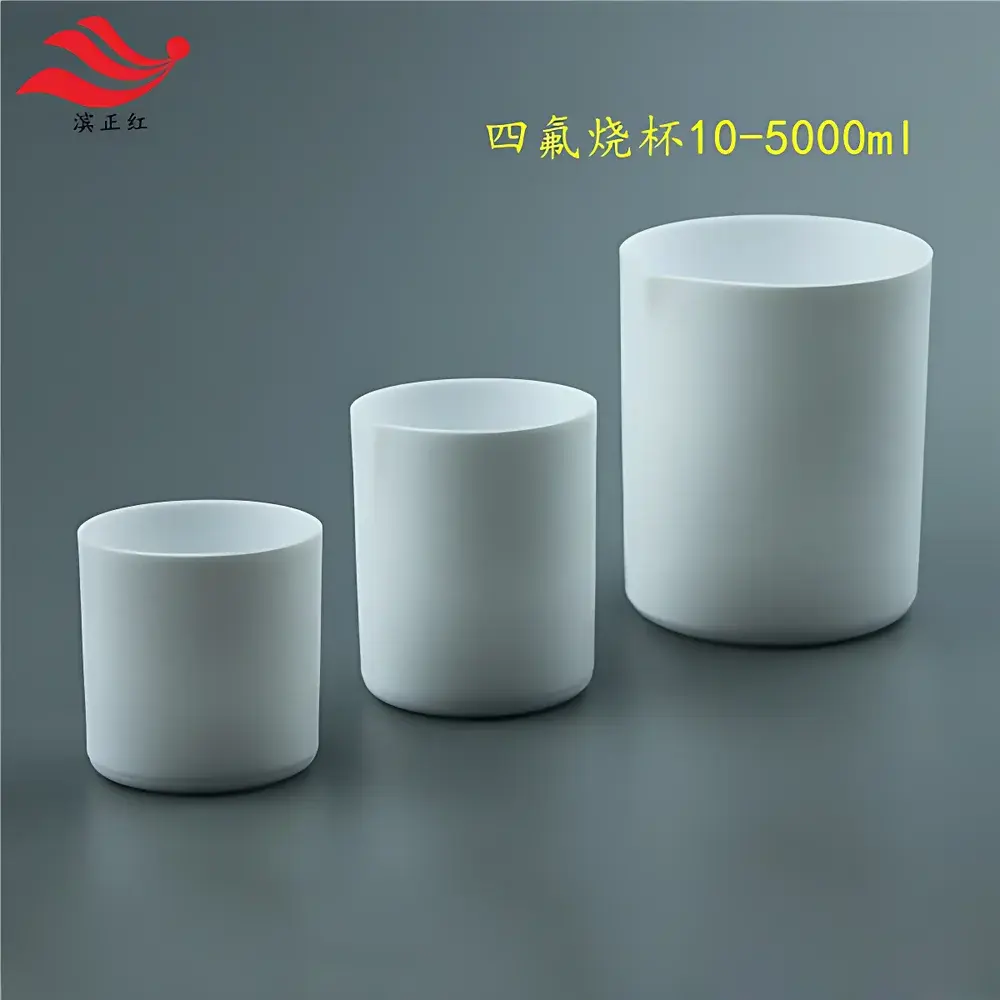
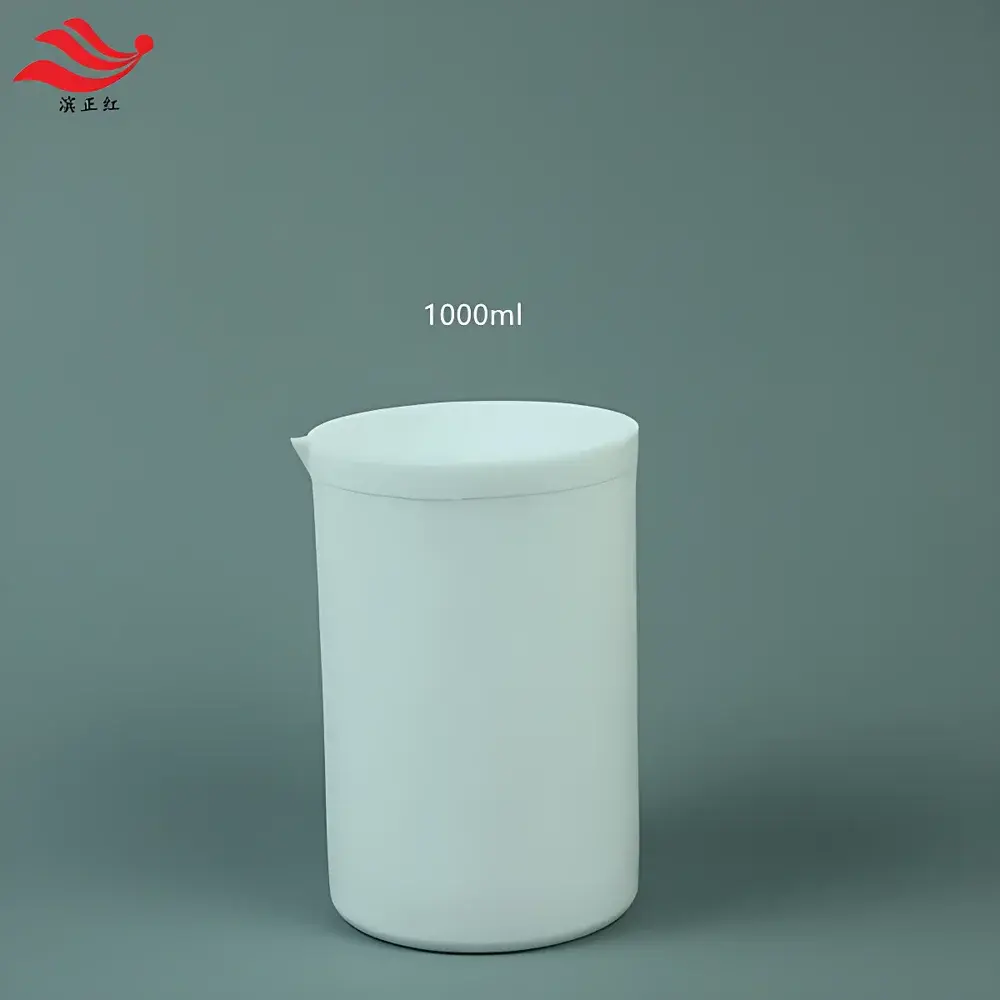
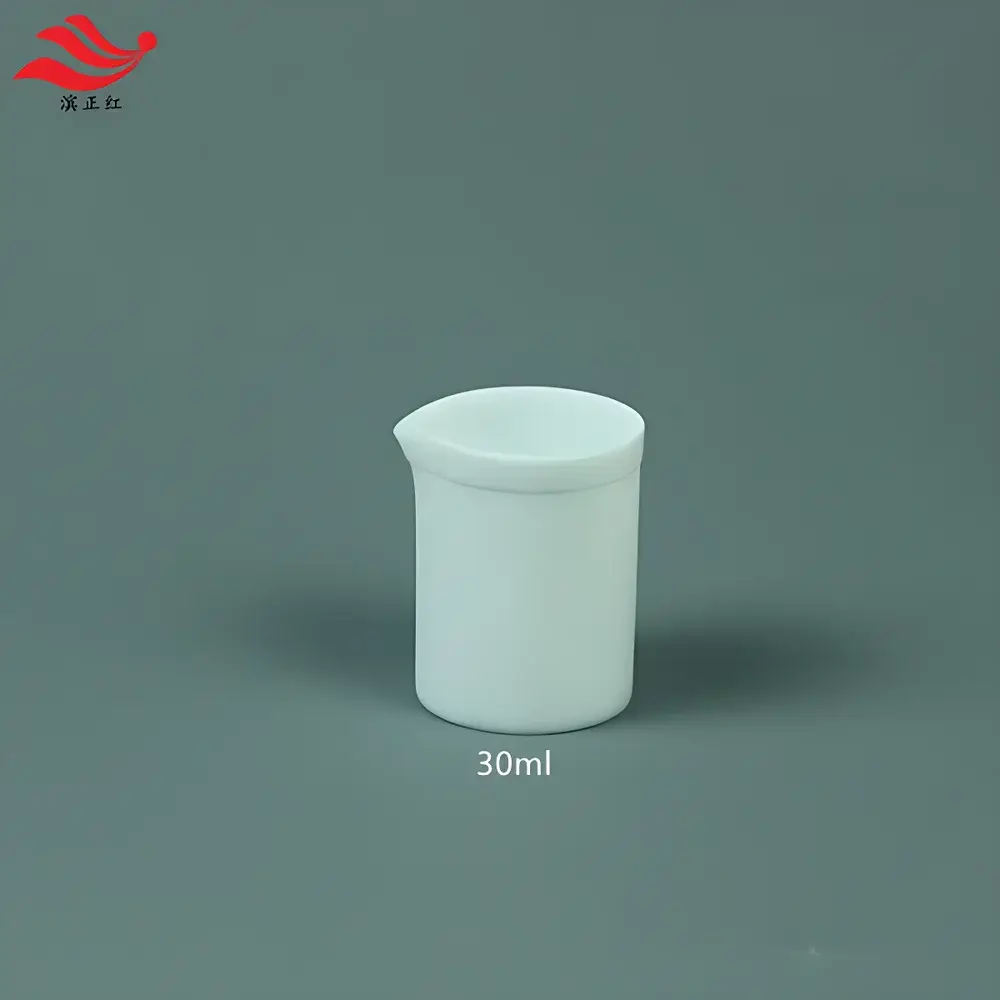
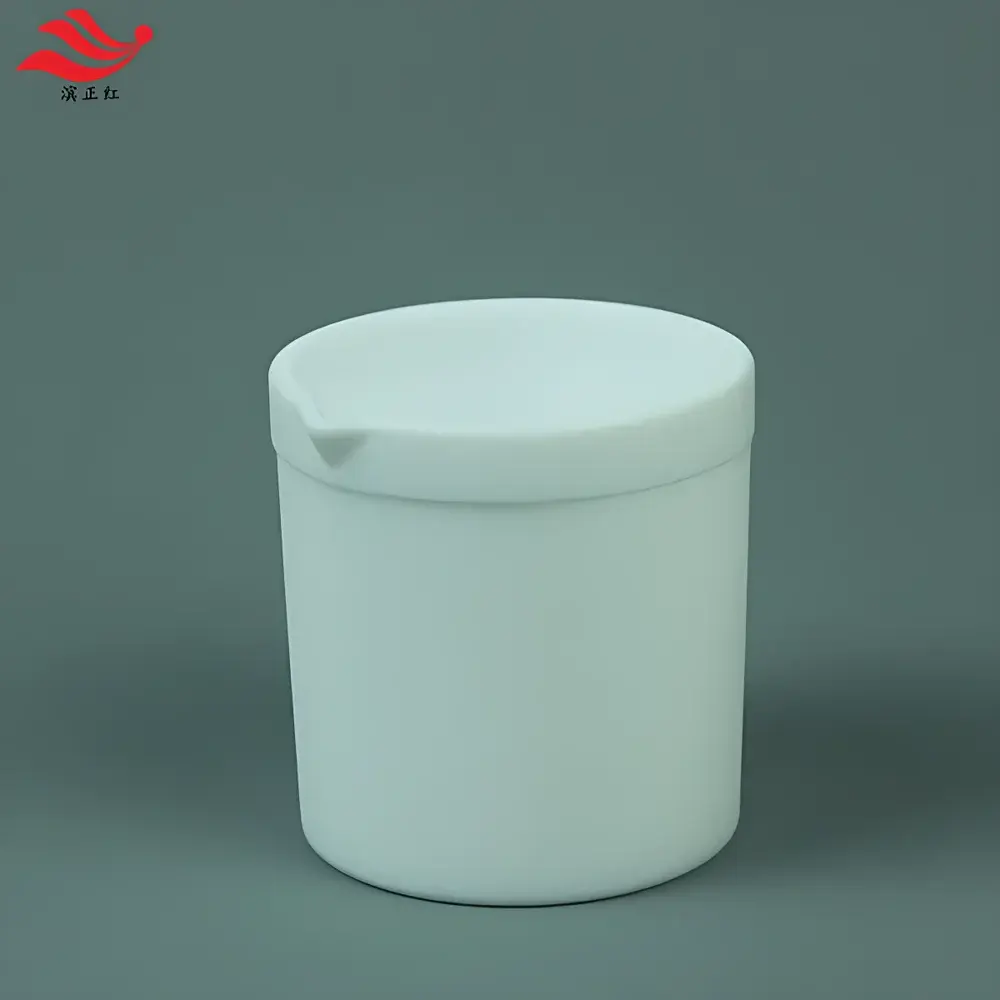
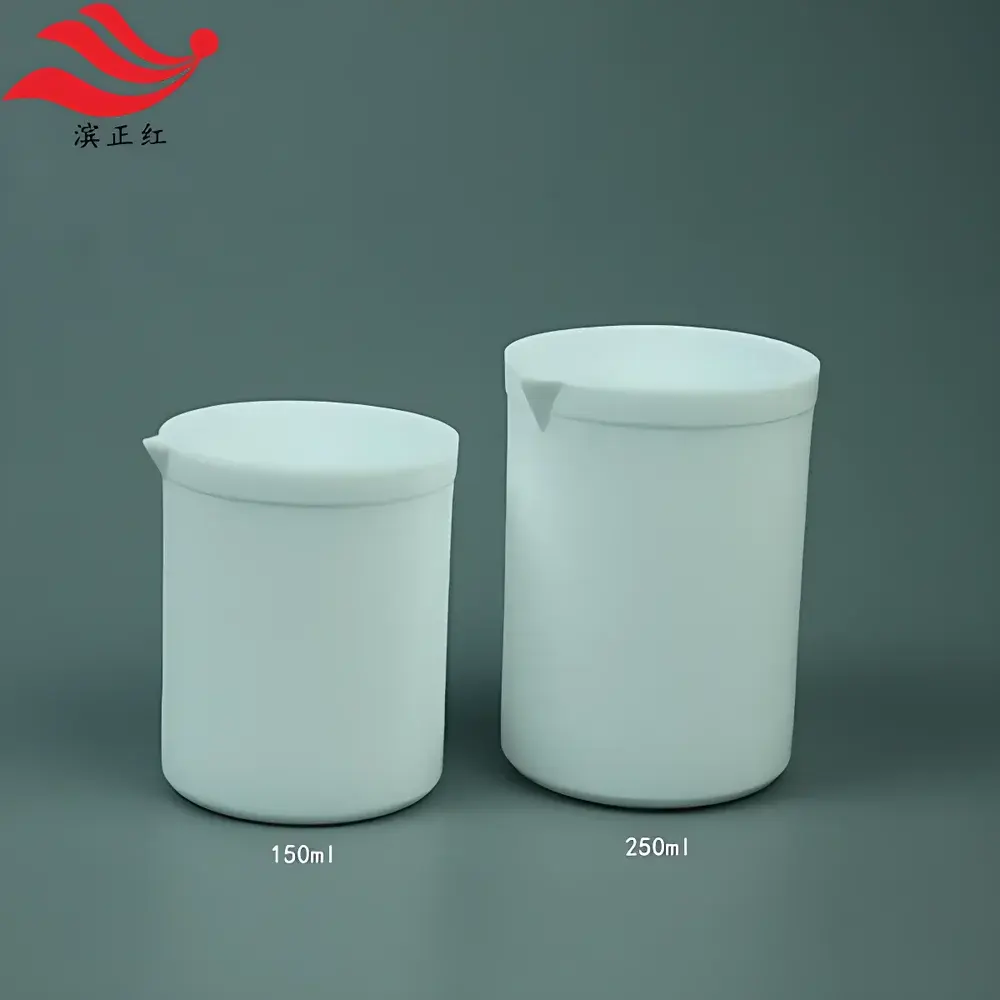
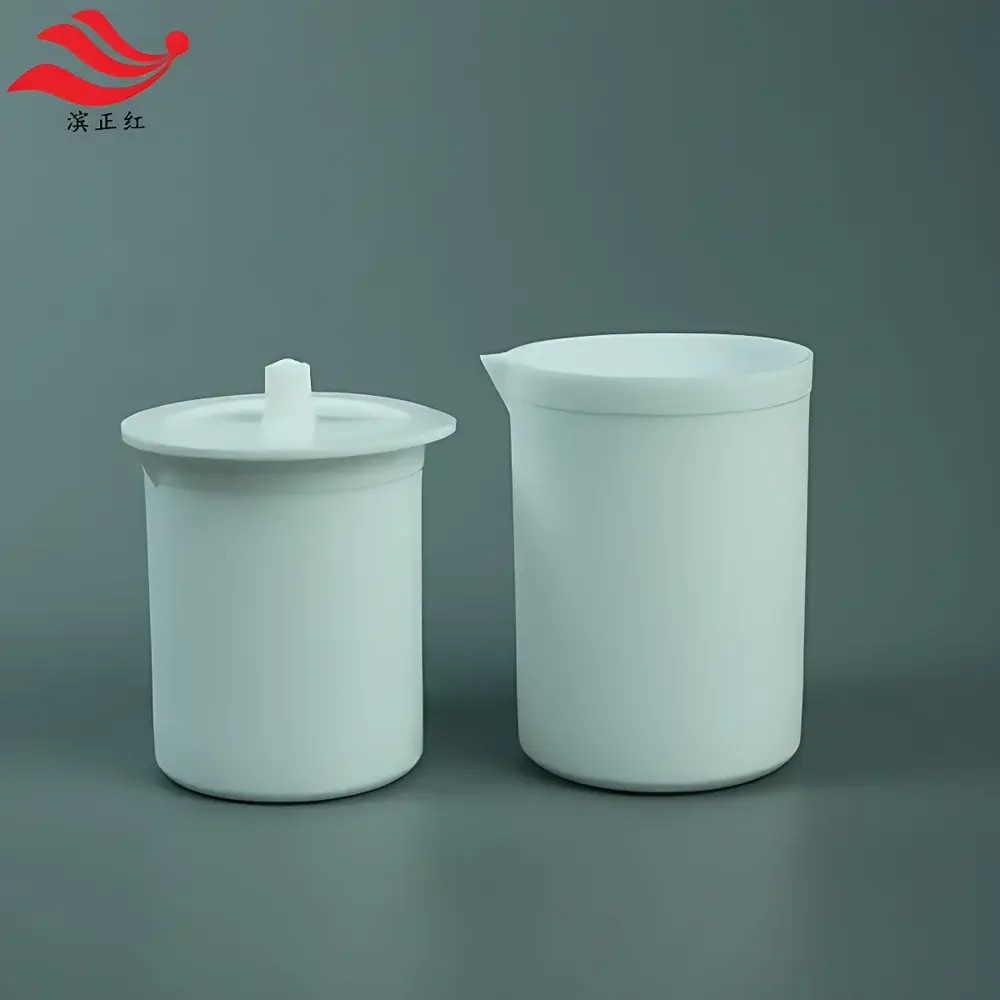
Binzhenghong PTFE Beakers (Teflon®-Equivalent), 10–5000 mL
| Brand | Binzhenghong |
|---|---|
| Origin | Jiangsu, China |
| Manufacturer Type | Direct Producer |
| Country of Origin | China |
| Volume Range | 10–5000 mL |
| Material | Polytetrafluoroethylene (PTFE) |
| Max Continuous Use Temperature | 250 °C |
| Short-Term Thermal Resistance | 300 °C (on hot plates only) |
| Chemical Resistance | Resistant to concentrated acids, alkalis, aqua regia, and organic solvents |
| Color | Opaque white |
| Compliance | ASTM D4894, ISO 1043-1, USP Class VI (biocompatibility reference) |
Overview
Binzhenghong PTFE Beakers are precision-molded laboratory vessels fabricated from high-purity, virgin polytetrafluoroethylene (PTFE), conforming to international material specifications for inertness and thermal stability. Designed for applications demanding extreme chemical resistance and minimal leachables, these beakers operate reliably across a broad temperature spectrum—from cryogenic conditions at −196 °C (liquid nitrogen immersion) to continuous service at +250 °C, with short-term exposure tolerance up to 300 °C when placed on calibrated laboratory hot plates. Unlike glass or quartz alternatives, PTFE exhibits near-zero reactivity with aggressive reagents including hydrofluoric acid, fuming nitric acid, molten alkali metals, and halogenated solvents—making them indispensable in trace-metal analysis, semiconductor wafer cleaning, nuclear fuel processing, and high-purity synthesis workflows. The beakers are manufactured via isostatic compression and sintering under controlled atmospheric conditions to ensure dimensional stability, low porosity (<0.001%), and consistent wall thickness—critical for reproducible evaporation kinetics and gravimetric accuracy.
Key Features
- Opaque white, non-porous PTFE homopolymer with ≥99.9% purity (per ASTM D4894 elemental impurity screening)
- Thermal resilience: stable from −200 °C to +250 °C; certified for intermittent 300 °C exposure on flat-surface heating devices (e.g., ceramic hot plates)
- Zero extractables: no detectable leaching of fluorinated compounds or metal ions under EPA Method 6020B ICP-MS validation protocols
- Non-stick surface enables quantitative recovery of viscous, adhesive, or crystallizing samples without solvent rinsing
- Optimized geometry: tapered walls and reinforced rims minimize mechanical deformation during handling and thermal cycling
- Customization capability: available in standard volumetric calibrations (±1% tolerance per ISO 6772) or bespoke geometries—including graduated markings, threaded necks, spout variants, and integrated lids (sold separately)
Sample Compatibility & Compliance
These beakers are validated for direct contact with Class I–IV hazardous chemicals per GHS classification, including but not limited to: HF/HNO₃ mixtures, piranha solution (H₂SO₄:H₂O₂), bromine trifluoride, and anhydrous aluminum chloride. They meet the dimensional and material requirements of ISO 1043-1 (plastics nomenclature), ASTM D4894 (PTFE specification), and serve as USP Class VI-compliant components in pharmaceutical process equipment where extractables profiling is mandated. For GLP/GMP environments, batch-specific CoA documentation—including FTIR spectral verification, ash content (<50 ppm), and heavy metal screening (Pb, Cd, Cr, Hg <1 ppm)—is provided upon request. Note: PTFE beakers must never be used over open flames or induction heaters; placement on asbestos-free ceramic fiber mats or borosilicate glass hot plates is required.
Software & Data Management
While inherently passive (non-electronic), Binzhenghong PTFE beakers integrate seamlessly into digitally governed lab workflows. Each lot is assigned a unique traceability code linked to manufacturing logs (date, sintering cycle parameters, raw material lot ID). This supports audit-ready documentation for FDA 21 CFR Part 11–compliant electronic records systems when paired with digital balance interfaces, LIMS barcode scanning, or automated sample tracking platforms. Optional laser-etched serial numbering enables full chain-of-custody mapping for regulated environmental testing (e.g., EPA SW-846 Method 3050B digestions).
Applications
- Acid digestion of geological, biological, and polymer matrices prior to ICP-OES/ICP-MS analysis
- Preparation and storage of calibration standards for ultra-trace elemental quantification
- Inert reaction vessels for Grignard, organolithium, and hydride chemistry under anhydrous atmospheres
- Evaporation concentrators in cleanroom-based semiconductor metrology labs
- Long-term storage of fluoride-containing electrolytes for battery R&D
- Containment of radioactive isotopes (e.g., ³H, ¹⁴C) due to low gamma attenuation and no neutron activation risk
FAQ
Can these PTFE beakers be sterilized in an autoclave?
No. Autoclaving (121 °C, 15 psi, saturated steam) induces irreversible creep deformation and surface microcracking in PTFE. Dry-heat sterilization at ≤200 °C for ≤2 hours is permissible.
Is PTFE compatible with microwave-assisted digestion?
Not recommended. PTFE lacks microwave absorption properties and may experience localized arcing or thermal runaway when in contact with metallic residues or carbonized deposits.
Do you provide volume calibration certificates traceable to NIST?
Yes. Optional ISO/IEC 17025-accredited volumetric certification is available for batches ≥50 units, with uncertainty budgets reported per EURACHEM/CITAC Guide CG4.
What is the maximum safe heating rate to avoid thermal shock?
Ramp no faster than 5 °C/min from ambient to 250 °C; rapid quenching must be avoided—allow natural cooling to <100 °C before mechanical handling.
Are threaded lids available for solvent reflux applications?
Yes. Custom-machined PTFE lids with O-ring grooves (Viton® or Kalrez® compatible) and pressure-relief vents can be supplied; contact engineering support for ASME B16.5 flange interface specifications.



