
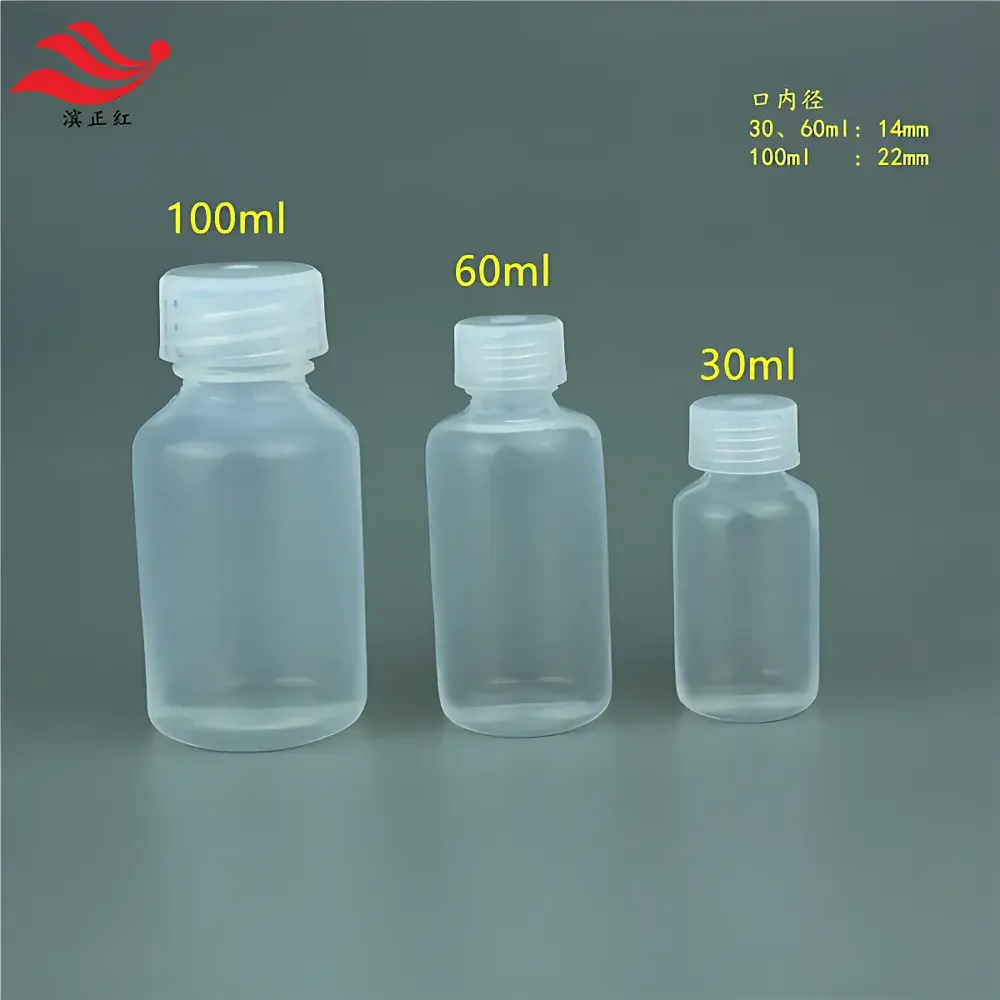
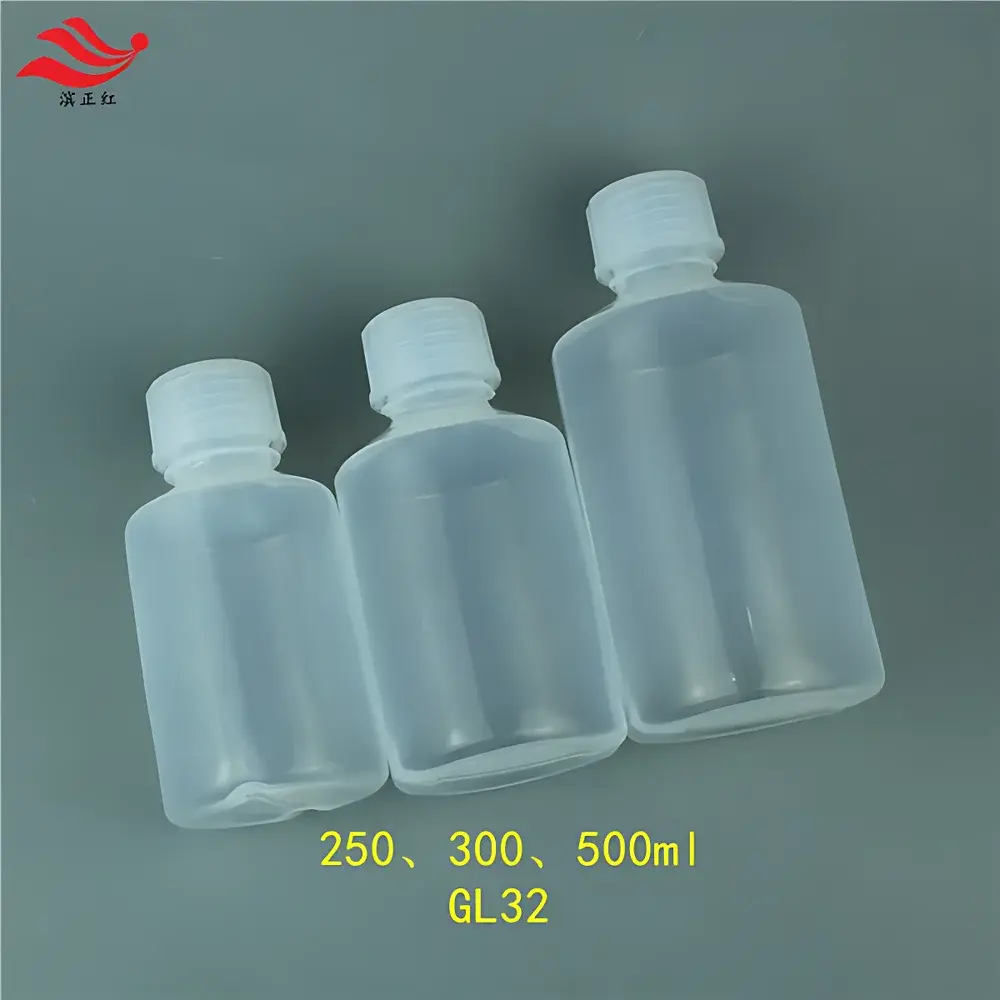
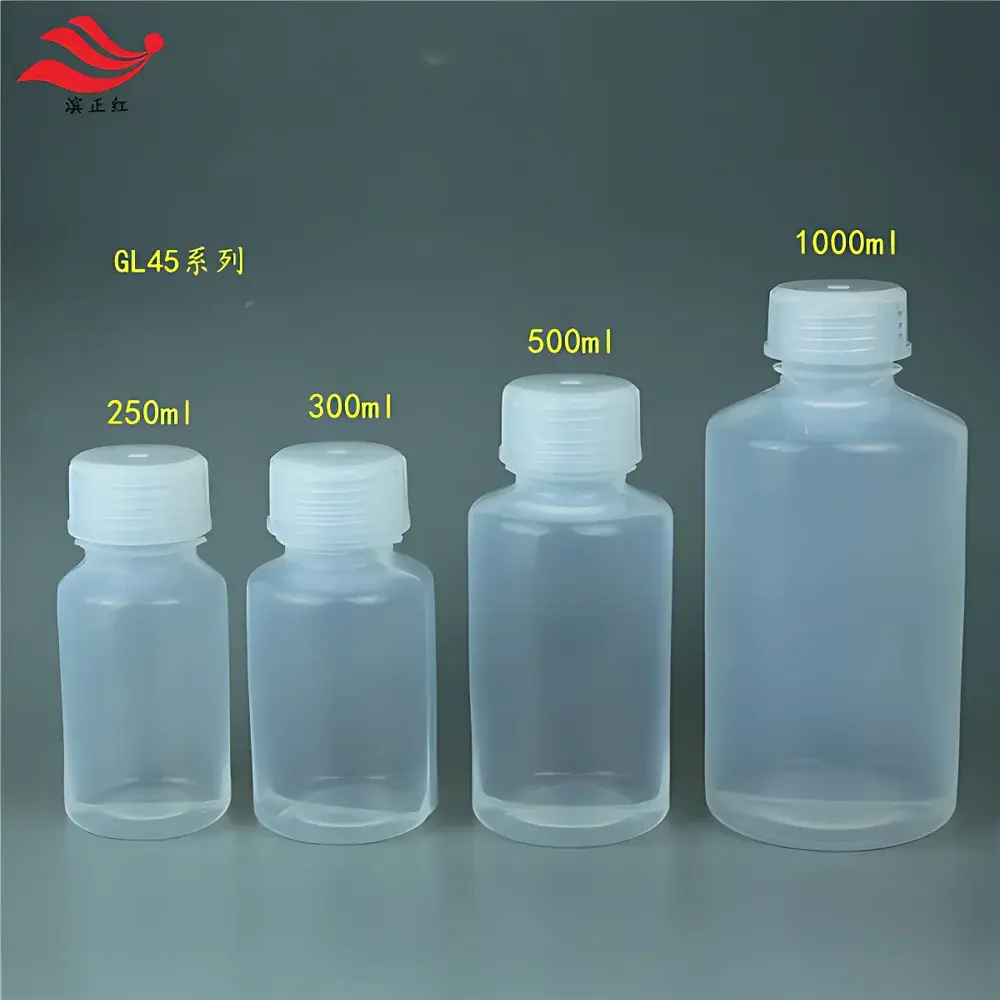
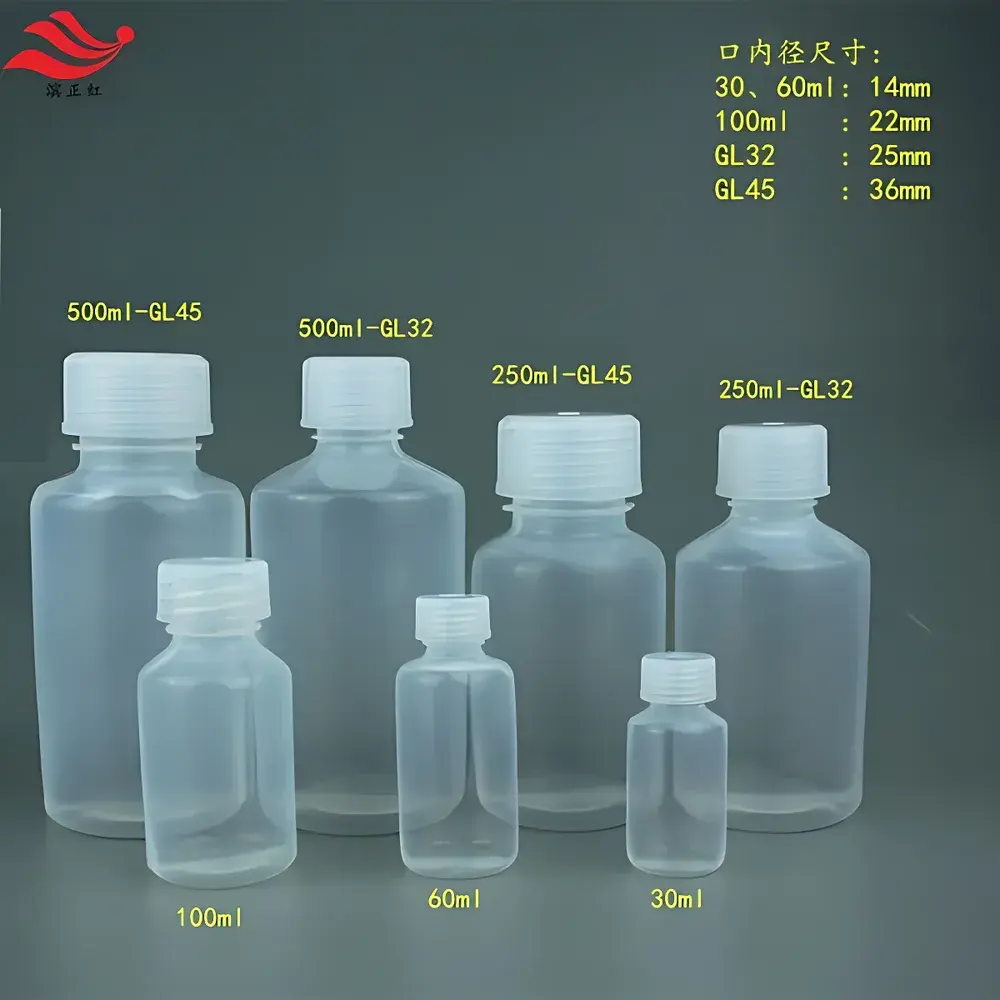
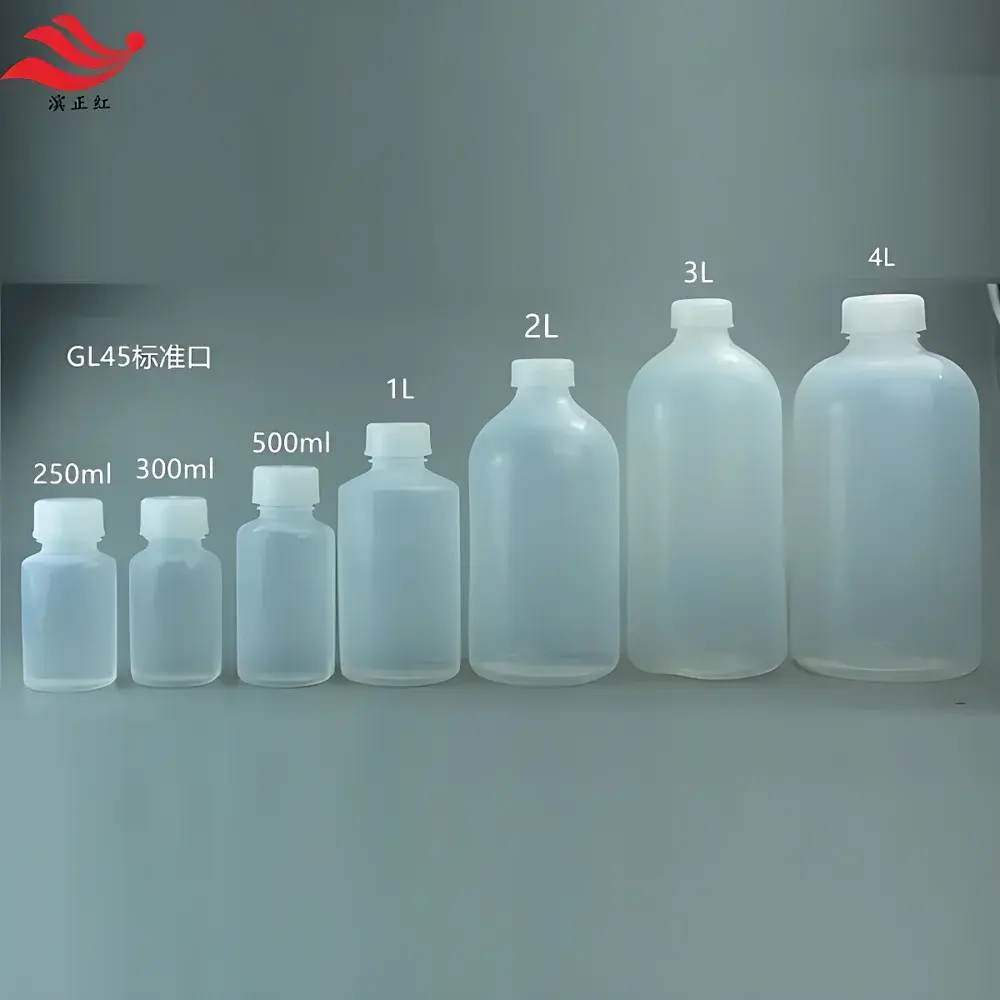
Binzhenghong ZH-25–4000mL PFA Reagent Vials for Semiconductor & New Energy R&D
| Brand | Binzhenghong |
|---|---|
| Origin | Jiangsu, China |
| Manufacturer Type | OEM/ODM Producer |
| Product Category | Domestic Labware |
| Model | ZH-25–4000mL |
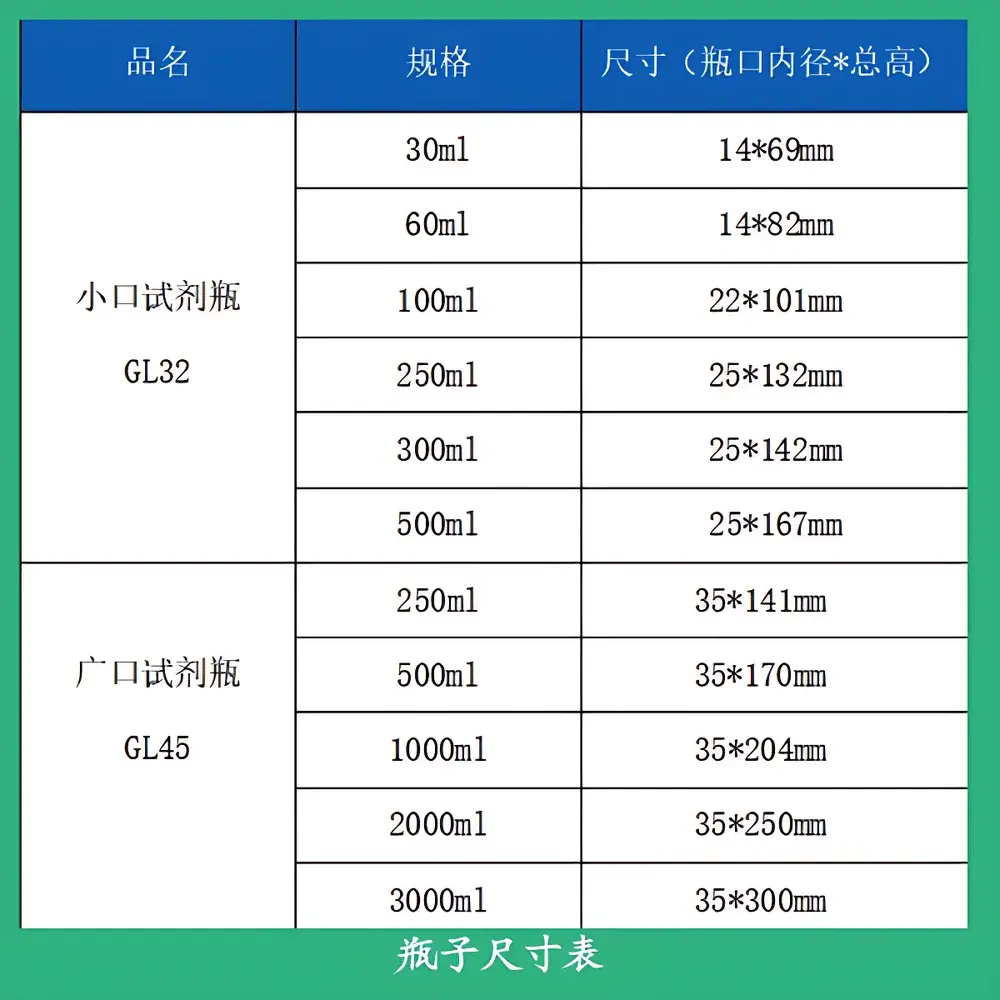
| Volume Range | 25 mL to 4000 mL |
| Neck Finish | GL32 & GL45 |
| Material | High-Purity PFA (Perfluoroalkoxy alkane) |
| Transparency | Optically Clear |
| Extractables/Leachables | Ultra-Low Background |
| Chemical Resistance | Excellent against strong acids, bases, oxidizers, and solvents |
| Thermal Stability | –200 °C to +260 °C |
| Compliance | Meets ASTM D4897–22 (Fluoropolymer Labware), ISO 15223-1:2021 (Labeling), USP <661.2> Class VI Requirements |
Overview
Binzhenghong ZH-series PFA reagent vials are engineered for high-integrity sample containment in mission-critical applications across semiconductor process development, battery electrolyte formulation, photovoltaic material synthesis, and trace-metal analysis. Constructed from virgin, non-regrind perfluoroalkoxy alkane (PFA), these vials deliver exceptional chemical inertness, ultra-low extractables, and near-zero background interference—essential for ICP-MS, IC, HPLC, and electrochemical testing where nanogram-level contamination compromises data validity. Unlike standard HDPE or borosilicate glass containers, PFA exhibits no metal ion leaching, negligible organic outgassing, and full compatibility with aggressive reagents including hydrofluoric acid (HF), piranha solution, concentrated nitric acid, and lithium-ion battery electrolytes (e.g., LiPF6 in EC/DMC). The seamless, molded monolithic construction eliminates weld lines or adhesive interfaces that could harbor residues or initiate degradation under thermal cycling.
Key Features
- Material Purity: Manufactured from ASTM D4897–22 certified PFA resin with ≤0.1 ng/cm² total metallic extractables (measured by ICP-MS after 72-hr extraction in 1% HNO3 at 60 °C).
- Optical Clarity: Fully transparent, non-yellowing structure enables real-time visual inspection of sample homogeneity, phase separation, or precipitate formation without opening the vial.
- Thermal & Mechanical Robustness: Withstands autoclaving (121 °C, 20 psi, 30 min), freeze-thaw cycles (–80 °C to +25 °C), and vacuum desiccation without crazing or dimensional drift.
- Sealing Integrity: Compatible with PTFE-lined screw caps (GL32/GL45 thread standards) providing hermetic closure and vapor-phase retention for volatile solvents (e.g., acetone, THF, NMP).
- Dimensional Consistency: Tight tolerance control (±0.15 mm on neck diameter, ±0.3 mm on height) ensures reliable fitment with automated liquid handlers, autosampler carousels, and robotic grippers.
- Traceability & Documentation: Batch-specific CoA provided, including FTIR spectral verification, residual catalyst screening (via XRF), and particulate count (per ISO 14644-1 Class 5 cleanroom assembly).
Sample Compatibility & Compliance
These vials are validated for storage and handling of high-purity solvents (e.g., anhydrous acetonitrile, ultrapure water), electrode slurries (NMP-based cathode dispersions), etchant solutions (BOE, HF:HNO3:CH3COOH), and reference standards for elemental calibration. They comply with key regulatory frameworks governing analytical integrity: USP for plastic packaging components used in pharmaceutical and biotech QC labs; ISO 15223-1:2021 for labeling of in vitro diagnostic devices; and ASTM E2934–21 (Standard Guide for Establishing Traceability in Analytical Chemistry). While not classified as medical devices, their low-background performance supports GLP-compliant method validation per OECD 172 and FDA 21 CFR Part 58 requirements.
Software & Data Management
As passive labware, the ZH-series vials require no embedded electronics or firmware. However, they integrate seamlessly into digital lab infrastructure: barcoded variants (optional) support LIMS integration (e.g., Thermo Fisher SampleManager, LabVantage) via GS1-128 labels; vial dimensions and material codes conform to ISA-88/ISA-95 object models for MES synchronization in pilot-scale battery cell manufacturing lines. All batch documentation—including CoA, FTIR reports, and particulate logs—is delivered in PDF/A-1b format compliant with ISO 19005-1 for long-term archival.
Applications
- Semiconductor fab: Storage of photoresist developers, CMP slurries, and cleaning agents where Na⁺, K⁺, Fe, or Ni contamination must remain <1 ppt.
- Lithium-ion R&D: Long-term stability testing of electrolyte formulations under elevated temperature (45–60 °C) and controlled humidity (<5% RH).
- New energy analytics: Calibration standard containment for ICP-OES quantification of transition metals (Co, Ni, Mn) in cathode recycling streams.
- Photovoltaics: Solvent-based perovskite precursor solution storage with minimized PbI2 decomposition kinetics.
- Environmental testing: Preservation of aqueous heavy-metal samples prior to EPA Method 200.8 analysis.
FAQ
Are these vials suitable for use with hydrofluoric acid (HF)?
Yes. PFA is one of only two fluoropolymers (alongside FEP) rated for continuous contact with >49% HF at ambient temperature per ASTM D1499–22. Short-term exposure up to 120 °C is also validated.
Do you provide certificates of analysis (CoA) for each production lot?
Yes. Each shipment includes a signed CoA listing FTIR peak assignments (C–F stretch at 1140–1240 cm⁻¹), residual metal content (by ICP-MS), and visual inspection results per ISO 10523.
Can these vials be sterilized using gamma irradiation?
No. Gamma exposure degrades PFA’s molecular weight and induces chain scission. Autoclaving or dry-heat (150 °C, 2 hr) is recommended for sterility assurance.
What cap options are available for GL45-threaded vials?
Standard PTFE-faced polypropylene caps (with induction-sealed foil liners) and reusable PFA-coated aluminum caps with Viton O-rings for ultra-high-vacuum applications.
Is custom labeling or laser etching supported?
Yes. Permanent CO₂-laser marking (20–30 µm depth) is available for alphanumeric batch IDs, QR codes, or GHS hazard pictograms—without compromising wall integrity or extractables profile.



