
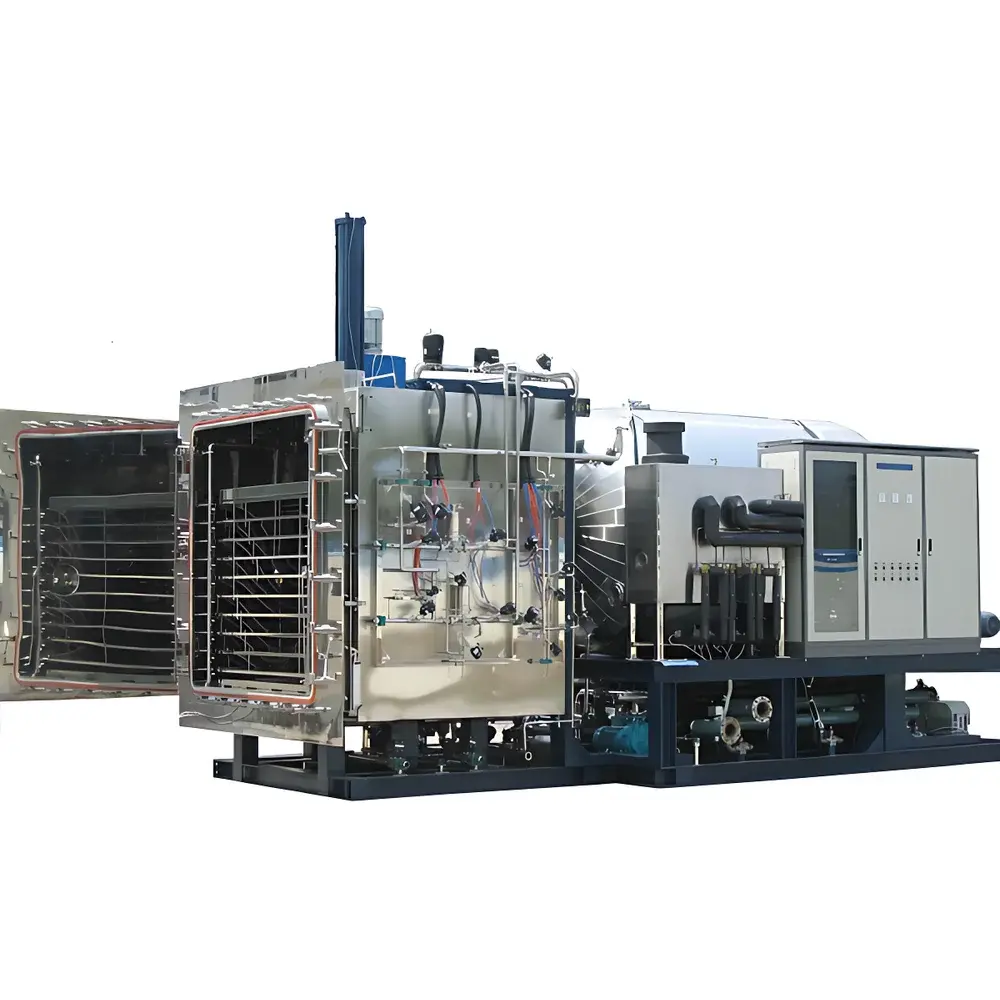
BIOCOOL LYO-5 Production-Scale Freeze Dryer
| Brand | BIOCOOL |
|---|---|
| Origin | Beijing, China |
| Model | LYO-5 |
| Instrument Type | Standard Shelf-Type Freeze Dryer |
| Application | Production-Scale Lyophilization |
| Freeze-Drying Area | 5 m² |
| Ultimate Vacuum | <3 Pa |
| Condensation Capacity (24 h) | 100 L/24 h |
| Cold Trap Temperature | <−70 °C |
| Shelf Temperature Range | −55 °C to +80 °C |
| Shelf Uniformity | ±1.0 °C |
| Power Consumption | 24 kW |
| Compliance | Meets GB150-2011, PED, ASME, FDA 21 CFR Part 11, GMP, and CIP/SIP requirements |
Overview
The BIOCOOL LYO-5 is a production-scale shelf-type freeze dryer engineered for robust, repeatable, and regulatory-compliant lyophilization in pharmaceutical, biotechnology, and high-value industrial applications. It operates on the fundamental principles of sublimation under controlled low-pressure and low-temperature conditions: frozen product is subjected to deep vacuum while heat is precisely supplied to the shelf system, enabling ice to transition directly from solid to vapor without passing through the liquid phase. This process preserves thermolabile compounds—including monoclonal antibodies, vaccines, enzymes, and probiotics—by minimizing structural degradation, oxidation, and denaturation. Designed for batch processing of up to 9,450 vials (Ø22 mm), the LYO-5 integrates a 5 m² stainless steel shelf area with independent temperature control, full-range pressure regulation (0.5 Pa to 0.15 MPa), and real-time monitoring at 50 ms sampling intervals—ensuring process transparency and deterministic control across all three lyophilization phases: freezing, primary drying (sublimation), and secondary drying (desorption).
Key Features
- Shelf-based pre-freezing capability with programmable ramp-hold profiles, eliminating reliance on external ultra-low temperature freezers.
- Integrated vacuum regulation system enabling dynamic pressure control during both primary and secondary drying—critical for preventing melt-back, cake collapse, or vial breakage in sensitive formulations.
- Automated endpoint detection via in-situ capacitance or pressure-rise testing (PAT-ready), confirming residual moisture content meets target specifications before desiccation concludes.
- Pulse backfill system with selectable slow/medium/fast modes to prevent particle dispersion or powder loss during inert gas (N₂ or Ar) reintroduction post-drying.
- Industrial-grade 15.6″ capacitive touchscreen HMI with intuitive navigation, requiring no manual reference for routine operation; supports multilingual UI and role-based access control.
- Full-process data acquisition with timestamped logging of shelf temperature, condenser temperature, chamber pressure, and vacuum pump status—compliant with ALCOA+ data integrity principles.
- 2000-user-programmable lyo cycle recipes, including parameter limits, alarm thresholds, and stage-specific logic—enabling rapid requalification and tech transfer.
- Modular CIP (Clean-in-Place) and SIP (Steam-in-Place) systems validated per ISO 13408-1 and EU Annex 1; includes Fo-value recording, triple overpressure protection, and automatic post-SIP water removal using a German-sourced liquid ring pump.
Sample Compatibility & Compliance
The LYO-5 accommodates diverse sample formats including glass vials (Ø13–Ø32 mm), trays, and stoppered bottles, supporting both aqueous and low-conductivity formulations. Its chamber and shelf surfaces meet mirror-finish Ra ≤ 0.4 µm specifications (per ASTM B487), facilitating effective cleaning and reducing bioburden retention. Structural design adheres to ASME BPVC Section VIII Div. 1 and PED 2014/68/EU for pressure equipment, with full X-ray inspection of all welds and helium mass spectrometry leak testing (<1×10⁻⁹ mbar·L/s). The system satisfies FDA 21 CFR Part 11 requirements for electronic records and signatures—including audit trail generation, user authentication, and immutable data archiving. It further aligns with ICH Q5C (stability), Q5D (analytical validation), and WHO TRS 986 Annex 2 for sterile manufacturing environments.
Software & Data Management
The embedded control software provides closed-loop PID regulation of shelf temperature and chamber pressure, with configurable alarms, interlocks, and safety shutdown sequences. All process data—including temperature curves, vacuum trends, and event logs—are stored locally on redundant SSDs and exportable in CSV/PDF format. Optional PC-based remote monitoring extends supervision up to 1.5 km via Ethernet or 4G LTE, enabling off-site oversight without compromising network security. Calibration modules support NIST-traceable verification of PT100 shelf sensors and capacitance manometers, with documented calibration certificates generated per ISO/IEC 17025. Process analytical technology (PAT) integration is supported via Modbus TCP and OPC UA protocols for connection to MES or SCADA platforms.
Applications
The LYO-5 serves as a bridge between pilot-scale development and commercial manufacturing, routinely deployed in: terminal sterilization-avoidant biologics processing; clinical trial material production (Phases I–III); aseptic formulation of diagnostics reagents and molecular standards; stabilization of microbial cultures and cell therapies; and high-purity food-grade ingredient preservation (e.g., probiotics, enzymes, botanical extracts). Its SIP/CIP configuration supports multi-product facilities operating under shared equipment validation protocols, while its scalable architecture allows seamless transition from LYO-5 to LYO-10 or LYO-20 platforms using identical control logic and SOP templates.
FAQ
Does the LYO-5 support automated cycle development?
Yes—it includes built-in tools for freeze point determination (via optional eutectic point analyzer) and empirical drying rate modeling, enabling first-principles-based cycle design.
Can the system be integrated into a factory automation network?
Yes—standard Modbus TCP and optional OPC UA connectivity enable bidirectional communication with DCS, MES, and LIMS systems.
What validation documentation is provided?
IQ/OQ protocols, FAT/SAT reports, calibration records, and 21 CFR Part 11 compliance statements are included; PQ support is available upon request.
Is organic solvent compatibility available?
Yes—optional cold trap modifications and solvent-resistant gasket materials allow safe handling of acetone, ethanol, and tert-butanol-based formulations.
How is long-term measurement stability ensured?
Through periodic auto-calibration routines, drift-compensated sensor algorithms, and scheduled recalibration alerts tied to operational hours and environmental exposure history.



