
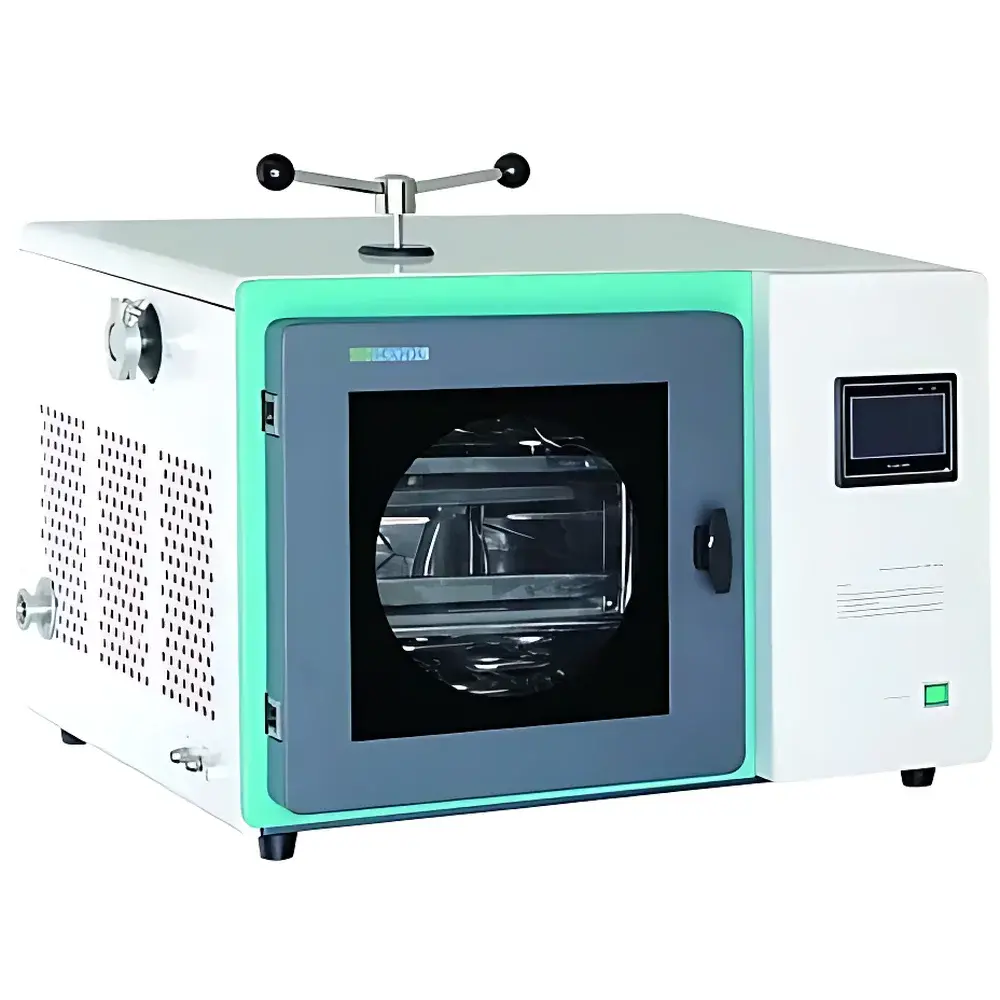
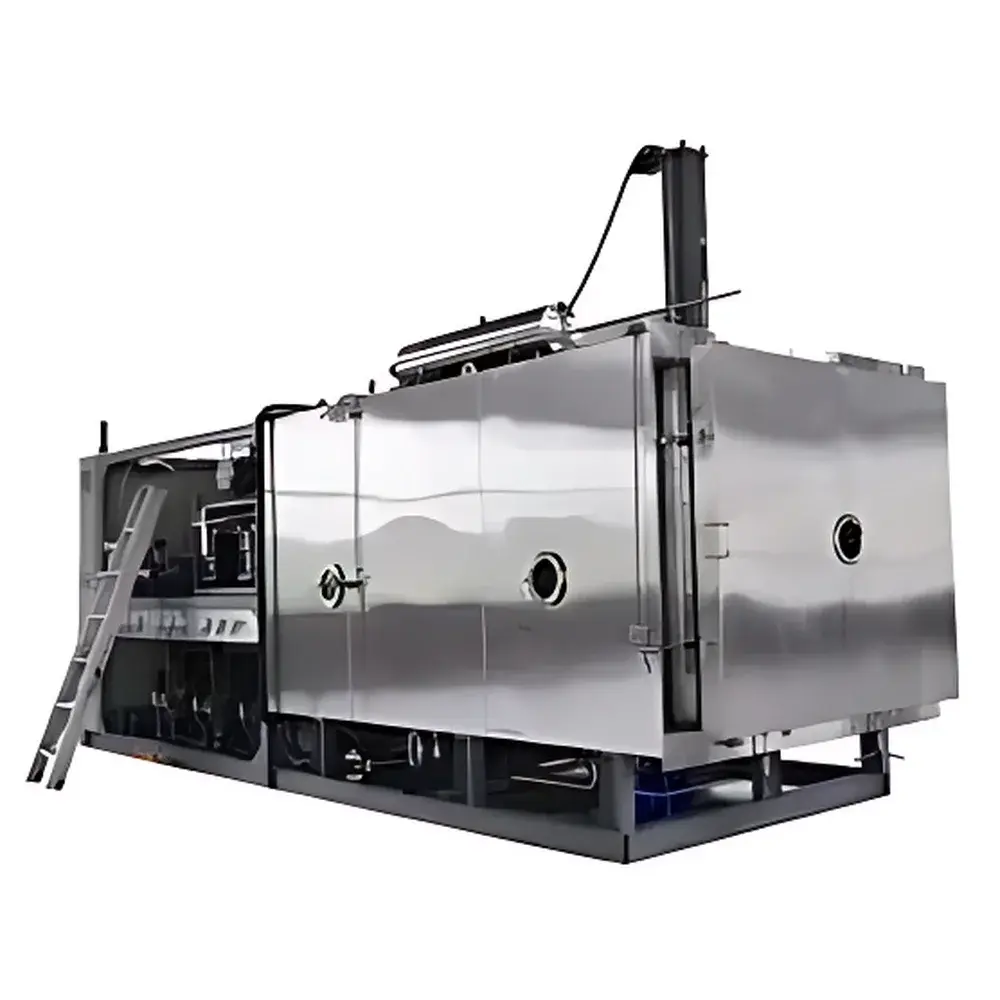
BIOCOOL Pilot1-2LD Pilot-Scale Freeze Dryer
| Brand | BIOCOOL |
|---|---|
| Origin | Beijing, China |
| Model | Pilot1-2LD |
| Type | Shelf-Type Freeze Dryer |
| Application | Pilot-Scale Processing |
| Lyophilization Area | 0.1 m² |
| Ultimate Vacuum | <9 Pa |
| Condensate Capacity (24 h) | 2 L/24 h |
| Cold Trap Temperature | −55 °C |
| Compressor | International Brand |
| Vacuum Pump | Korean Brand |
| Control Interface | Industrial Touchscreen |
| Programmable Logic Control | Yes |
| Optional Features | Nitrogen Backfilling, Vacuum Regulation, Endpoint Detection, Non-Electric Defrost, Pulse Backfill, Auto Drain Interlock, Multi-Mode Data Logging |
Overview
The BIOCOOL Pilot1-2LD is a pilot-scale shelf-type freeze dryer engineered for reproducible, scalable lyophilization under controlled low-temperature and high-vacuum conditions. It operates on the fundamental principles of sublimation—removing water from frozen samples via direct phase transition from ice to vapor under vacuum—while maintaining structural integrity and biological activity of thermolabile compounds. Designed for process development and small-batch manufacturing in pharmaceutical, biotechnology, and academic research settings, the system bridges laboratory feasibility studies and commercial GMP production. Its 0.1 m² shelf area supports batch sizes typical of Phase I–II clinical trial material preparation or formulation optimization, with thermal and vacuum stability validated across extended drying cycles. The unit integrates a −55 °C cold trap capable of condensing up to 2 L of water vapor per 24 hours—sufficient for multi-vial or small tray-based processing—and maintains ultimate vacuum below 9 Pa to ensure efficient primary drying kinetics.
Key Features
- Reinforced aerospace-grade acrylic drying chamber door: provides full visual access without compromising vacuum integrity or mechanical strength.
- Shelf pre-freezing capability: enables in-situ freezing of loaded samples prior to primary drying, eliminating transfer-related thermal shock or contamination risk.
- Dual independent temperature control: each shelf features dedicated heating/cooling circuits with fuzzy PID algorithms and real-time thermal loop monitoring for precise, uniform heat transfer during annealing and secondary drying.
- Non-electric cold trap defrost system (optional): uses ambient heat exchange rather than resistive heating—reducing fire hazard, minimizing thermal stress on condenser coils, and shortening downtime between cycles.
- Programmable vacuum regulation (optional): dynamically adjusts chamber pressure during sublimation and desorption phases to suppress melt-back, vial foaming, or powder dispersion—critical for protein formulations and amorphous small molecules.
- Three-stage pulse backfill system (optional): offers slow, medium, and rapid nitrogen or inert gas reintroduction to prevent particle displacement, especially for fragile lyophiles such as monoclonal antibody powders or enzyme complexes.
- Auto-drain interlock logic: mechanically and electronically synchronizes drain valve closure with vacuum pump restart, preventing accidental air ingress and compressor oil contamination.
Sample Compatibility & Compliance
The Pilot1-2LD accommodates standard 22 mm and 32 mm serum vials, stainless steel trays (up to 100 mm depth), and custom silicone molds. Its shelf geometry supports both stoppered vial drying and bulk tray processing. All wetted surfaces are electropolished 316L stainless steel compliant with ASTM A270 and ASME BPE standards. The system meets essential requirements for GLP-compliant documentation: audit-trail-enabled data logging (with time-stamped event markers), user-access-level management (operator, engineer, administrator), and configurable alarm thresholds for shelf temperature deviation (>±1.5 °C), vacuum excursion (>15 Pa), or condenser overload (>90% capacity). While not certified to FDA 21 CFR Part 11 out-of-the-box, its PC database export mode supports integration into validated electronic lab notebook (ELN) or LIMS platforms meeting 21 CFR Part 11 Annex 11 requirements.
Software & Data Management
An industrial-grade 7-inch capacitive touchscreen serves as the primary HMI, supporting intuitive drag-and-drop protocol editing and real-time parameter overlay (shelf temp, chamber pressure, condenser temp, elapsed time). Up to 99 customizable freeze-drying programs can be stored locally; each includes ramp/soak segments, vacuum setpoints, and endpoint logic triggers. Data logging options include internal flash memory (retains ≥90 days of 1-second-interval records), USB mass storage export (CSV format compatible with Excel and MATLAB), and TCP/IP-enabled remote database upload to Windows-based servers. All logged parameters are timestamped and tagged with operator ID, program name, and batch ID—facilitating traceability per ISO 9001:2015 and ICH Q5C guidelines.
Applications
This system is routinely deployed in: formulation development of parenteral biologics (e.g., lyophilized mAbs, vaccines, and oligonucleotide conjugates); stability testing under ICH Q1A–Q5E conditions; excipient screening for collapse temperature (Tc) and glass transition (Tg’); production of reference standards for QC labs; and preservation of microbial cultures, stem cells, and diagnostic reagents. Its thermal uniformity (<±1.2 °C across shelf surface) and vacuum repeatability (<±0.3 Pa over 8-hour hold) support DOE-based process characterization per ICH Q8(R2).
FAQ
What is the maximum allowable sample volume per cycle?
The system supports up to 2 L of total aqueous load per 24-hour cycle, assuming optimal freezing and vacuum conditions. Actual throughput depends on product-specific eutectic temperature, vial geometry, and formulation solids content.
Does the unit comply with GMP documentation requirements?
It provides foundational GMP-enabling features—including electronic signatures, audit trails, and alarm history—but requires site-specific validation (IQ/OQ/PQ) and procedural SOPs to meet regulatory submission standards.
Can the freeze-drying protocols be exported for regulatory filing?
Yes—protocols and raw time-series data export in CSV format, fully annotated with metadata (user, timestamp, version number), suitable for inclusion in IND/MAA dossiers.
Is remote monitoring supported?
Via optional Ethernet module: real-time parameter streaming and alarm notification through Modbus TCP or OPC UA to SCADA or MES systems.
What maintenance intervals are recommended for the vacuum pump?
Per manufacturer specifications: oil change every 500 operating hours; inlet filter replacement every 200 hours; annual calibration of vacuum transducer against NIST-traceable reference.



