
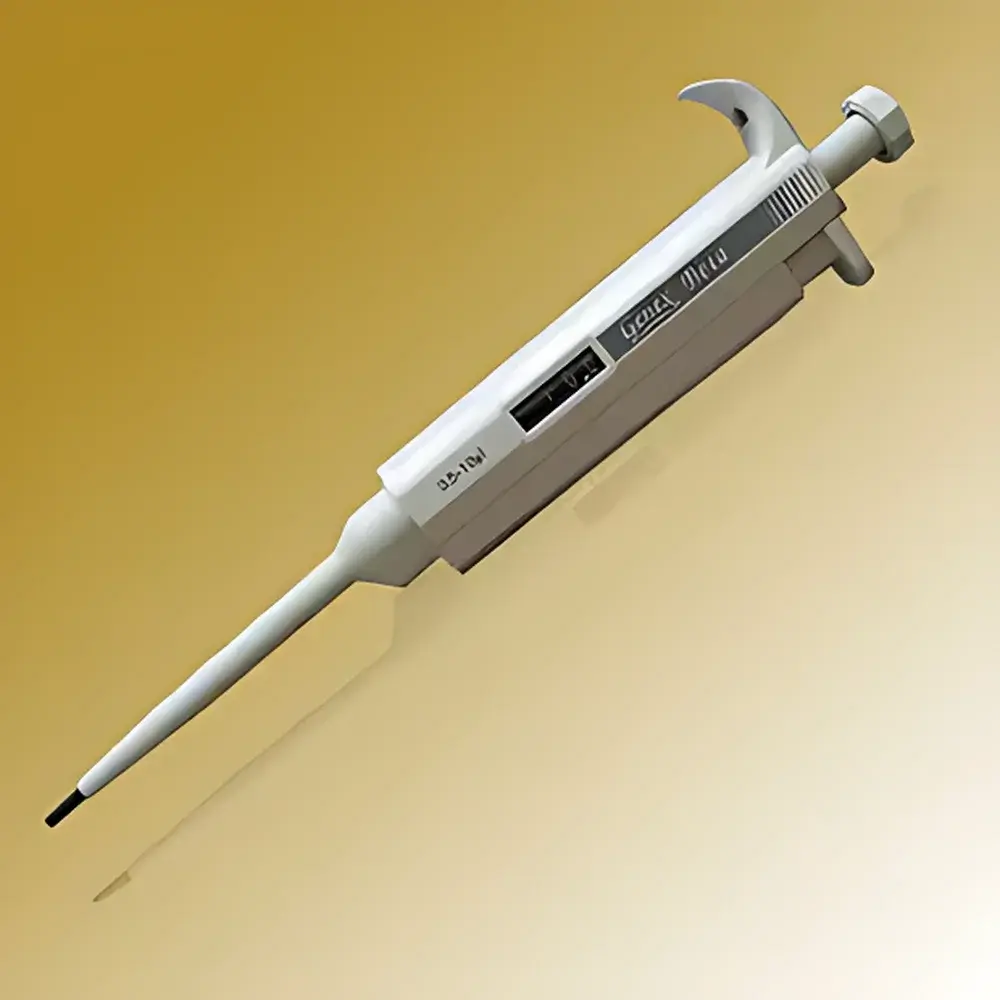
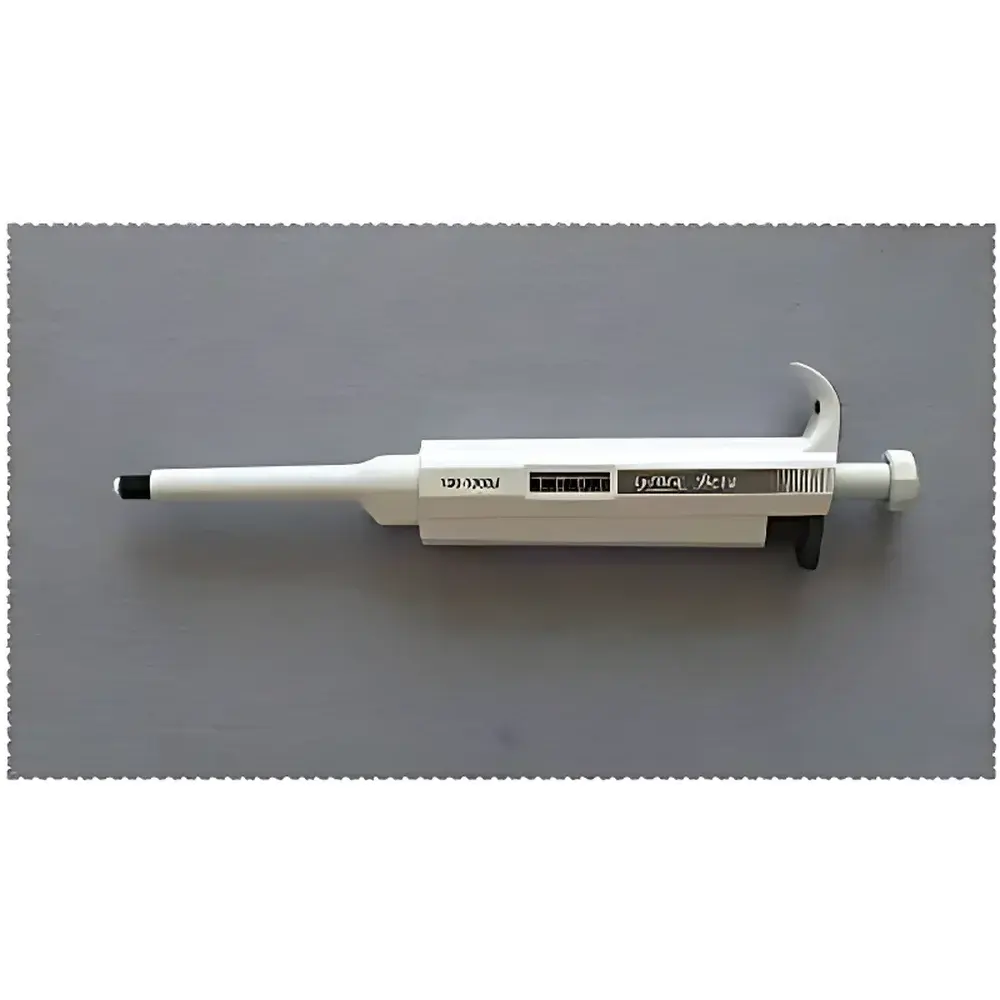
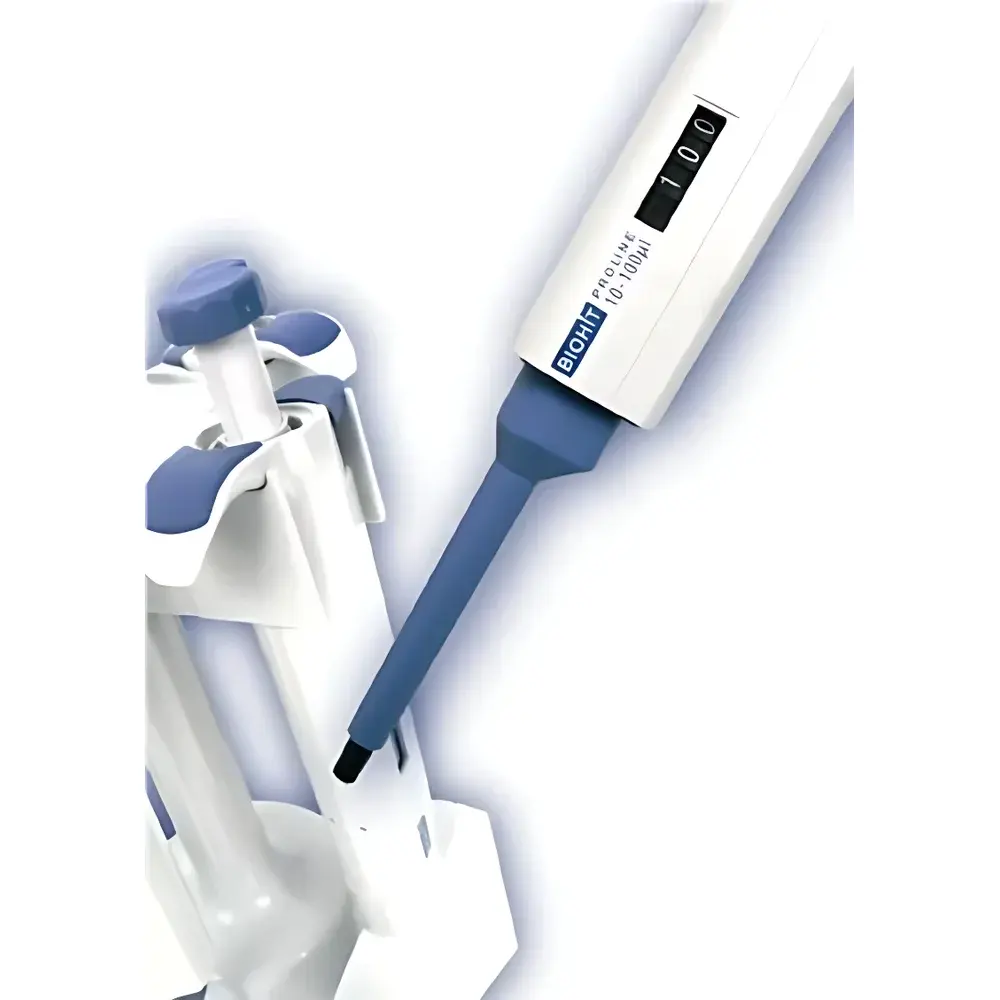
BIOHIT Genex 0.1–2.5 µL Manual Single-Channel Pipette
| Brand | SARTORIUS |
|---|---|
| Origin | Finland |
| Model | Genex 0.1–2.5 µL |
| Pipette Type | Manual Single-Channel |
| Volume Range | 0.1–2.5 µL |
| Increment | 0.05 µL |
| Accuracy (at 2.5 µL) | ±2.5% |
| Precision (CV at 2.5 µL) | ≤2.0% |
| Accuracy (at 0.25 µL) | ±12.0% |
| Precision (CV at 0.25 µL) | ≤6.0% |
| Compatible Tips | 10 µL low-retention filtered tips |
| Sterilization | Half-unit autoclavable (5–121 °C, 20 min) |
| Tip Ejector | Detachable, chemically resistant tip cone |
| Ergonomics | Weight ≤85 g, optimized grip geometry for reduced RSI risk |
Overview
The BIOHIT Genex 0.1–2.5 µL manual single-channel pipette is a precision liquid handling instrument engineered for ultra-low-volume applications in molecular biology, genomics, and diagnostic assay development. Designed and manufactured in Finland under strict ISO 9001 and ISO 13485 quality management systems, this pipette employs a spring-loaded air displacement mechanism with a calibrated piston seal system to ensure consistent volumetric delivery across its full range. Its operational principle relies on controlled aspiration and dispensing of air volumes corresponding to liquid displacement—optimized for viscosities up to 3 mPa·s and vapor pressures typical of aqueous buffers, ethanol solutions, and diluted DNA/RNA samples. The Genex series adheres to ISO 8655-2 (volumetric performance) and ISO 8655-5 (testing methods), with factory calibration traceable to national metrology institutes (e.g., MIKES, Finland). It is intended for use in GLP-compliant laboratories and supports audit-ready documentation when paired with certified calibration services.
Key Features
- Ultra-low volume capability: Accurate and reproducible handling from 0.1 µL to 2.5 µL—critical for qPCR master mixes, CRISPR reagent dispensing, and single-cell lysate transfer.
- Half-unit autoclavability: The lower assembly—including tip cone, ejector, and O-rings—can be sterilized at 121 °C for 20 minutes without disassembly or performance degradation.
- Detachable chemically resistant tip cone: Constructed from PTFE-coated polyetherimide (PEI), offering compatibility with DMSO, 70% ethanol, chloroform, and 1 M NaOH.
- Ergonomic design: Total mass <85 g; contoured finger grips and optimized center-of-gravity reduce muscular load during repetitive operation—validated per ISO 10075-3 for RSI risk mitigation.
- Digital volume display: High-contrast, parallax-free window with 0.05 µL resolution; volume setting remains stable under mechanical shock (tested per IEC 60068-2-27).
- Filter tip compatibility: Accepts standard 10 µL low-retention filtered tips with hydrophobic barrier membranes to prevent aerosol contamination and cross-sample carryover.
Sample Compatibility & Compliance
The Genex 0.1–2.5 µL pipette is validated for use with aqueous solutions, glycerol-containing buffers (≤15% v/v), and common organic-aqueous mixtures encountered in NGS library prep and ELISA workflows. It complies with ISO 8655-2:2022 for accuracy and precision requirements at defined test volumes (0.25 µL, 1.25 µL, and 2.5 µL). All units undergo 100% post-assembly volumetric verification using gravimetric methods per ISO 8655-6. For regulated environments, the device supports integration into FDA 21 CFR Part 11–compliant workflows when used with Sartorius CertiCheck software and documented calibration records (certificates include uncertainty budgets per GUM guidelines).
Software & Data Management
While the Genex 0.1–2.5 µL is a manually operated instrument, it is fully supported by Sartorius’ CertiCheck Calibration Management Suite (v4.2+). This desktop application enables lab managers to schedule, document, and archive calibration events—including user-defined tolerance limits, environmental condition logging (temperature/humidity), and electronic signature capture. Calibration certificates are generated in PDF/A-1b format for long-term archival and include measurement uncertainty estimates derived from combined standard uncertainties (repeatability, temperature drift, balance resolution, and density correction). Traceability to PTB (Germany) or NIST (USA) is maintained through Sartorius’ accredited calibration laboratory (DIN EN ISO/IEC 17025:2017).
Applications
- Quantitative PCR (qPCR) and digital PCR (dPCR) reaction setup requiring sub-microliter precision in template, enzyme, and probe dispensing.
- Next-generation sequencing (NGS) library normalization and pooling steps where volume errors directly impact sequencing depth uniformity.
- High-throughput screening (HTS) assays involving nanoliter-range compound dilution series in 384- and 1536-well microplates.
- Diagnostic kit manufacturing under ISO 13485, where process validation mandates documented pipette performance across the entire operating range.
- Reference material preparation in metrology labs performing BIPM key comparisons for volume transfer standards.
FAQ
Is the Genex 0.1–2.5 µL pipette compatible with third-party filtered tips?
Yes—it accepts all industry-standard 10 µL low-retention filtered tips meeting ISO 8655-3 dimensional specifications.
Can this pipette be calibrated in-house using standard gravimetric procedures?
Yes; detailed SOPs and uncertainty calculation templates are provided in the Sartorius Technical Documentation Package (Order No. DOC-GENEX-CAL-SOP-EN).
What is the recommended recalibration interval under routine laboratory use?
Sartorius recommends quarterly calibration for daily use in regulated environments; biannual verification is acceptable for research-only applications per ISO/IEC 17025 Clause 6.6.
Does the pipette meet requirements for ISO/IEC 17025-accredited testing laboratories?
Yes—when used with certified reference materials, accredited calibration services, and documented environmental controls, it satisfies Clause 6.4.10 on equipment suitability.
How is thermal drift compensated during low-volume operation?
The piston shaft is manufactured from low-expansion Invar alloy (α ≈ 1.2 × 10⁻⁶ K⁻¹), minimizing volume error due to ambient temperature fluctuations between 15–30 °C.
Related Products



