Bioseb BIO-FSTR/M Automated Forced Swim Test System
| Brand | Harvard Apparatus |
|---|---|
| Origin | USA |
| Manufacturer Type | Authorized Distributor |
| Origin Category | Imported |
| Model | BIO-FSTR/M |
| Price Range | USD 1,400 – 7,000 |
| Capacity | 4 simultaneous mice |
| Cylinder Dimensions | 11.7 cm (diameter) × 15.9 cm (height) |
| Detection Method | Dual-modal (video + piezoelectric vibration sensing) |
| Behavioral Classification Accuracy | ≥96% |
| Output Data Format | Timestamped behavioral state sequence (Immobility/Swimming/Climbing), raw video + vibration waveform export |
| Software Features | Playback, re-analysis, GLP-compliant audit trail, CSV/Excel export |
Overview
The Bioseb BIO-FSTR/M Automated Forced Swim Test System is an integrated behavioral phenotyping platform engineered for objective, high-throughput assessment of depressive-like behavior in murine models. It implements the validated forced swim test (FST) paradigm—first established by Porsolt et al. (1977) and refined through decades of neuropharmacological research—using a dual-sensor architecture grounded in ethologically informed behavioral taxonomy. Unlike legacy manual scoring or single-modality video-only systems, the BIO-FSTR/M synchronizes high-resolution video capture with real-time piezoelectric vibration transduction mounted directly on the inner wall of each polycarbonate swim cylinder. This hybrid detection strategy resolves ambiguities inherent in visual-only interpretation—particularly distinguishing active climbing (vertical forepaw contact with cylinder wall) from vigorous swimming (horizontal propulsion without wall contact)—by correlating optical motion vectors with mechanical energy transfer signatures. The system operates under standardized FST protocols compliant with NIH guidelines and widely cited literature (Cryan et al., *Neuropharmacology*, 2002; Lucki et al., *Psychopharmacology*, 1995), enabling quantification of three mutually exclusive behavioral states: Immobility (passive floating with minimal movement), Swimming (horizontal, directional locomotion), and Climbing (upward-directed limb motion against the cylinder wall).
Key Features
- Dual-modal behavioral detection: Synchronized HD video (30 fps, 1280×720 resolution) and wall-mounted piezoelectric sensors provide orthogonal data streams for cross-validated state classification.
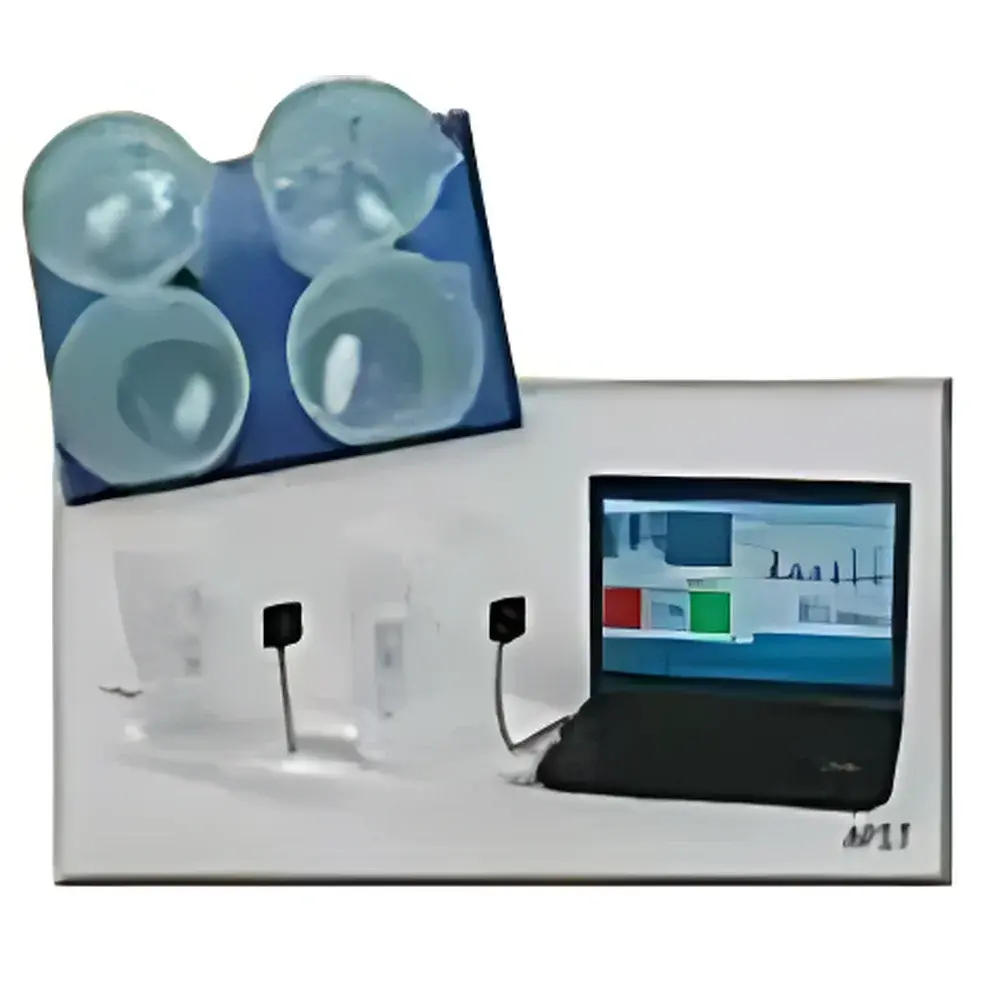
- Four-channel parallel testing: Simultaneous acquisition from four independent swim cylinders (11.7 cm diameter × 15.9 cm height), each equipped with calibrated vibration transducers and uniform LED backlighting to minimize shadow artifacts.
- Algorithmic behavioral segmentation: Proprietary machine vision pipeline trained on >10,000 manually annotated frames achieves ≥96% concordance with expert human scorers (kappa = 0.91) for Immobility, Swimming, and Climbing states.
- GLP-ready software architecture: Built-in audit trail, user access control, electronic signature support, and full metadata logging (timestamp, operator ID, session parameters) meet FDA 21 CFR Part 11 and OECD GLP requirements.
- Re-analysis capability: Raw video and synchronized vibration waveforms are stored losslessly; users may reprocess sessions with updated algorithms or modified thresholds without re-running experiments.
Sample Compatibility & Compliance
The BIO-FSTR/M is validated for use with adult C57BL/6, BALB/c, and CD-1 male and female mice (18–30 g). Swim cylinders are constructed from optically transparent, autoclavable polycarbonate rated for repeated exposure to 70% ethanol and mild alkaline detergents. All electrical components comply with UL 61010-1 and IEC 61000-6-3 EMC standards. The system supports integration into institutional animal care and use committee (IACUC)-approved protocols aligned with the ARRIVE 2.0 guidelines and the European Directive 2010/63/EU on protection of animals used for scientific purposes.
Software & Data Management
Bioseb’s FSTR Analysis Suite v4.2 runs on Windows 10/11 (64-bit) and provides native support for batch processing, group-wise statistical comparison (ANOVA, Kruskal-Wallis), and export to common formats including CSV, Excel (.xlsx), and MATLAB (.mat). Each session generates a structured dataset containing per-second behavioral state assignments, cumulative duration metrics, latency-to-first-climb, and spectral analysis of vibration amplitude distribution. Audit logs record all user actions—including parameter changes, re-analyses, and report generation—with immutable timestamps and operator identifiers. Data encryption at rest (AES-256) and role-based permission tiers ensure compliance with institutional data governance policies.
Applications
- Preclinical antidepressant screening: Quantitative evaluation of compound efficacy across behavioral subdomains (e.g., selective reduction in immobility vs. enhanced climbing).
- Genetic model characterization: Phenotypic profiling of transgenic, knockout, or CRISPR-edited mouse lines exhibiting altered stress-coping strategies.
- Neurocircuitry validation: Correlation of FST behavioral outputs with ex vivo electrophysiology, c-Fos immunohistochemistry, or fiber photometry recordings.
- Chronic stress paradigm integration: Longitudinal tracking of behavioral adaptation following repeated social defeat or chronic mild stress exposure.
- Methodological standardization: Replacement of subjective manual scoring in multi-site collaborative studies requiring inter-laboratory reproducibility.
FAQ
What behavioral states does the BIO-FSTR/M classify?
It classifies three ethologically defined states: Immobility (minimal limb movement, passive floating), Swimming (horizontal, coordinated limb strokes without wall contact), and Climbing (vertical forepaw movements against the cylinder wall).
Can the system be used with rats?
The BIO-FSTR/M is optimized for mice; Bioseb offers a separate rat-configured system (BIO-FSTR/R) with larger cylinders and recalibrated sensor thresholds.
Is vibration sensing mandatory for accurate classification?
Yes—vibration data is essential for differentiating Climbing from vigorous Swimming, as both generate similar optical motion patterns but produce distinct mechanical signatures on the cylinder wall.
Does the software support third-party statistical packages?
Yes—CSV and Excel exports include timestamped state transitions and raw sensor waveforms, enabling direct import into R, Python (pandas), GraphPad Prism, or SPSS.
How is system calibration performed?
Each unit ships with NIST-traceable calibration certificates for vibration sensors; video calibration is performed via on-screen grid alignment during initial setup and verified quarterly using standardized motion phantoms.