
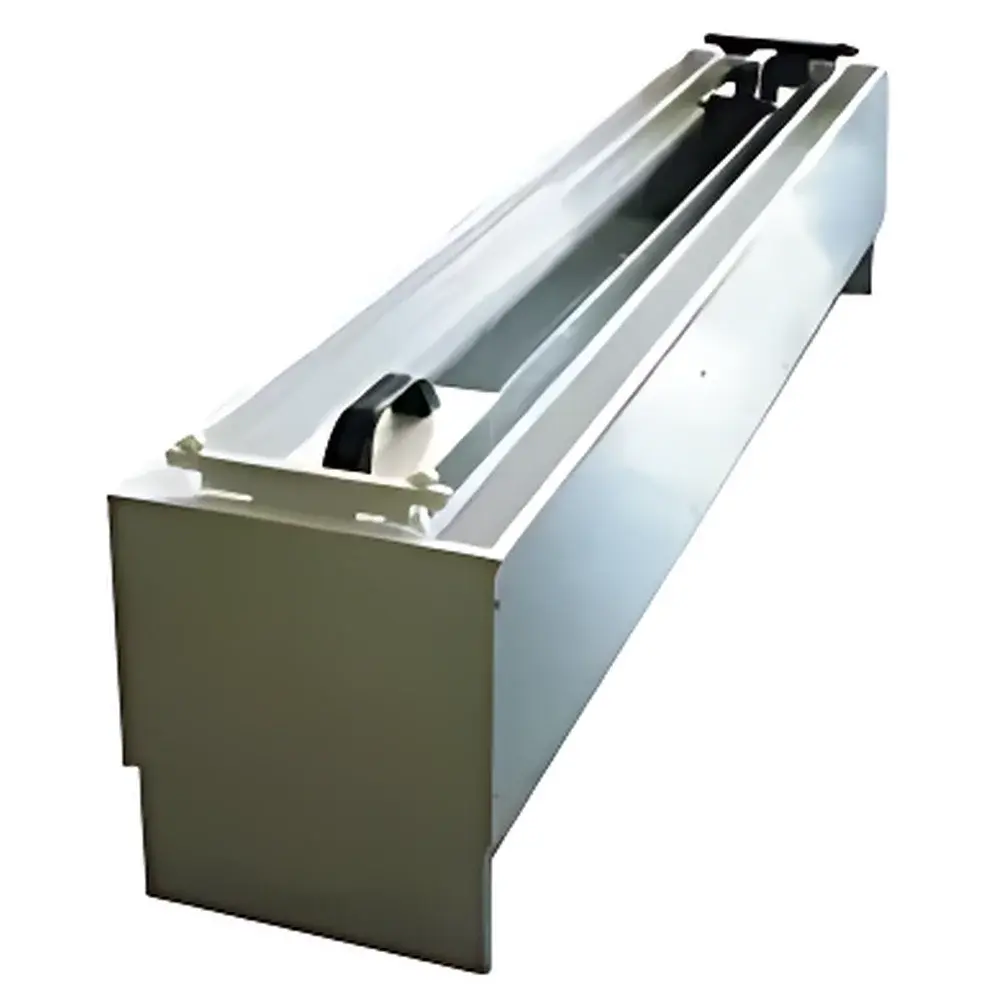
Bioseb FMA-R/FMA-M Rodent Foot Fault Analyzer
| Origin | Imported |
|---|---|
| Manufacturer Type | Authorized Distributor |
| Model | FMA-R (Rat) / FMA-M (Mouse) |
| Price | USD 13,800 (FOB) |
| Sensor Resolution | 10 ms |
| Track Length | 100 cm |
| Track Width | 8 cm |
| Total IR Sensors | 154 (77 upper + 77 lower) |
| Adjustable Step Spacing | 1–3 cm |
| Paw Discrimination | Automated forelimb/hindlimb classification |
| Output Metrics | Foot fault count (fore/hind/tail), error rate (%), latency, average fault interval |
Overview
The Bioseb FMA-R and FMA-M Rodent Foot Fault Analyzers are validated, high-temporal-resolution behavioral phenotyping systems engineered for objective quantification of locomotor coordination deficits in rats and mice. Based on the principle of infrared beam interruption mapping within a calibrated elevated ladder-like track, the system captures discrete foot placement errors—defined as paw missteps through an open-grid floor—as animals traverse from a brightly lit start zone to a dark goal chamber. This ethologically driven paradigm leverages natural aversion to light and preference for enclosed dark spaces, ensuring motivated, voluntary locomotion without food/water deprivation or aversive stimuli. The dual-plane sensor array (77 upper + 77 lower) enables unambiguous detection of both intended limb placement (upper beam break) and failure events (lower beam break when paw penetrates grid), providing spatially resolved, temporally precise (10 ms sampling) gait error data. Unlike open-field or rotarod assays, the FMA delivers orthogonal metrics focused specifically on inter-limb coordination, proprioceptive integration, and fine motor control—critical endpoints in models of cerebellar dysfunction, spinal cord injury, Parkinson’s disease, traumatic brain injury, and neurotoxicity.
Key Features
- 100 cm linear track with modular, removable aluminum rungs enabling graded difficulty adjustment via 1–3 cm step spacing
- 154 high-sensitivity infrared emitters/detectors arranged in mirrored bilateral arrays—77 positioned above and 77 below the walkway grid
- Automated forelimb/hindlimb discrimination algorithm, validated against manual scoring (inter-rater ICC > 0.92)
- Integrated white-light start zone (500–600 lux) and black goal chamber (≤5 lux) to ensure consistent motivation across subjects and sessions
- 8 cm wide animal confinement channel minimizes lateral deviation while permitting natural gait kinematics
- Real-time error logging with timestamped event files (.csv/.txt exportable), supporting synchronization with external video or electrophysiology systems
- Robust aluminum frame with anti-static surface treatment and chemical-resistant anodized finish for repeated disinfection (70% ethanol, 0.5% sodium hypochlorite)
Sample Compatibility & Compliance
The FMA-R is optimized for adult Sprague-Dawley, Wistar, or Long-Evans rats (200–350 g); the FMA-M accommodates C57BL/6, BALB/c, or CD-1 mice (18–35 g). Both systems comply with NIH Guide for the Care and Use of Laboratory Animals and EU Directive 2010/63/EU requirements for refinement and reduction. Hardware design meets IEC 61000-6-3 (EMC emission) and IEC 61000-6-2 (immunity) standards. Data acquisition firmware supports ALCOA+ principles: attributable, legible, contemporaneous, original, accurate—with audit trail capability (user login, parameter changes, file exports) required under GLP-compliant preclinical study protocols.
Software & Data Management
FMA Control Suite v4.2 (Windows 10/11, 64-bit) provides real-time visualization of beam breaks, automatic trial termination upon goal entry, and post-hoc analysis of foot fault distribution per limb pair. Export formats include CSV (for MATLAB, R, Python pandas), Excel-compatible .xlsx, and XML (for LIMS integration). Software modules support batch processing of up to 96 trials, customizable pass/fail thresholds (e.g., ≥3 hindlimb faults in 3 consecutive steps), and statistical summaries (mean ± SEM, ANOVA-ready grouping). Audit logs are encrypted and time-stamped per 21 CFR Part 11 Annex 11 requirements when configured with electronic signatures and role-based access control.
Applications
- Quantitative assessment of motor recovery following cervical or thoracic spinal cord hemisection
- Longitudinal monitoring of progressive ataxia in SCA1 or Lurcher mouse models
- Dose-response evaluation of dopaminergic neuroprotectants in MPTP-lesioned mice
- Screening for off-target motor effects in early-phase CNS drug candidates
- Validation of functional outcomes in CRISPR-Cas9–mediated cerebellar gene editing studies
- Standardized endpoint in ISO 10993-11 neurotoxicity testing of medical device leachables
FAQ
What species and strain ranges are supported?
The FMA-R supports rats 200–350 g; the FMA-M supports mice 18–35 g. Strain-specific calibration files are included for C57BL/6J, BALB/c, and Sprague-Dawley.
Can the system be used for longitudinal studies across multiple weeks?
Yes—hardware is designed for daily use over 5+ years; software retains full backward compatibility with legacy trial files.
Is video synchronization supported?
Yes—TTL trigger output (5 V, 10 µs pulse) aligns beam-break timestamps with external high-speed cameras (e.g., Phantom v2512, Basler acA2000-50gm).
How is data integrity ensured during multi-user lab environments?
Each user account enforces password policies, session timeouts, and immutable audit trails—including who modified parameters, when, and why—meeting FDA and EMA data governance expectations.
Does the system require annual recalibration?
No—solid-state IR sensors and precision-machined track geometry eliminate drift; optional NIST-traceable verification kit available upon request.




