
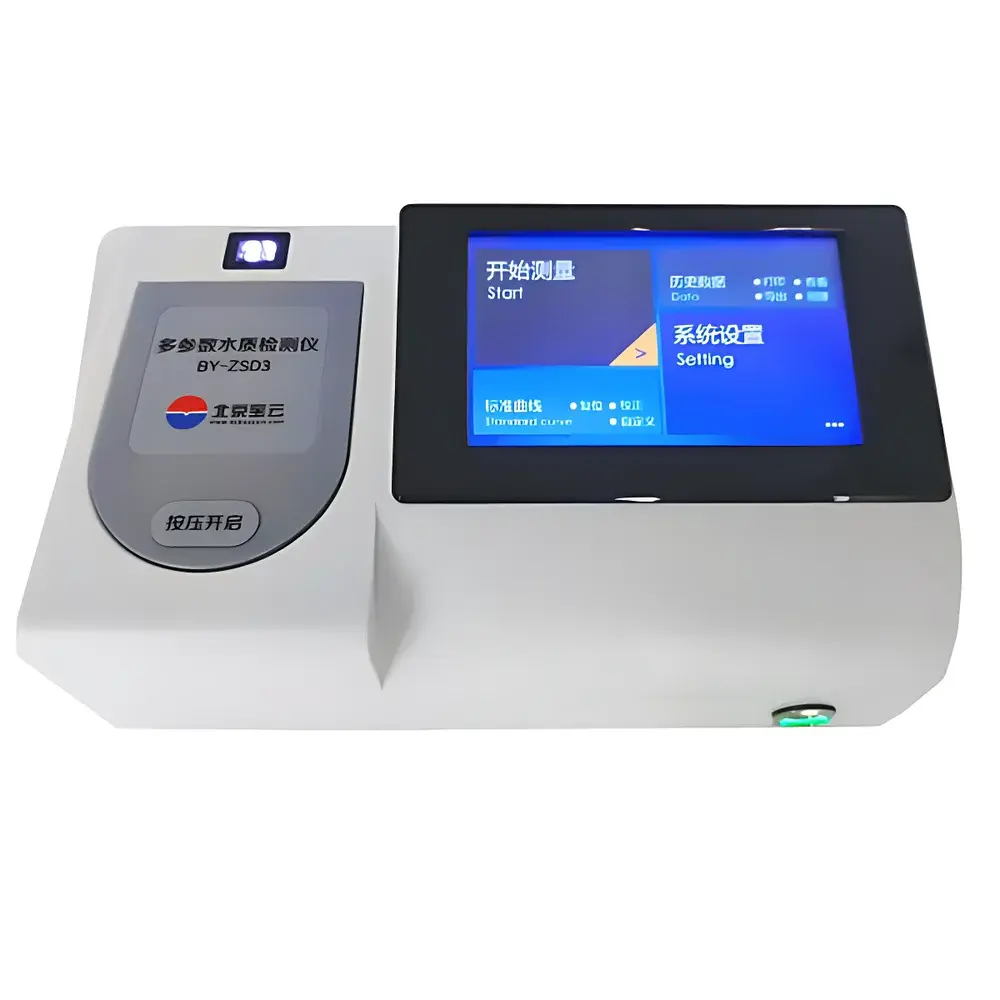
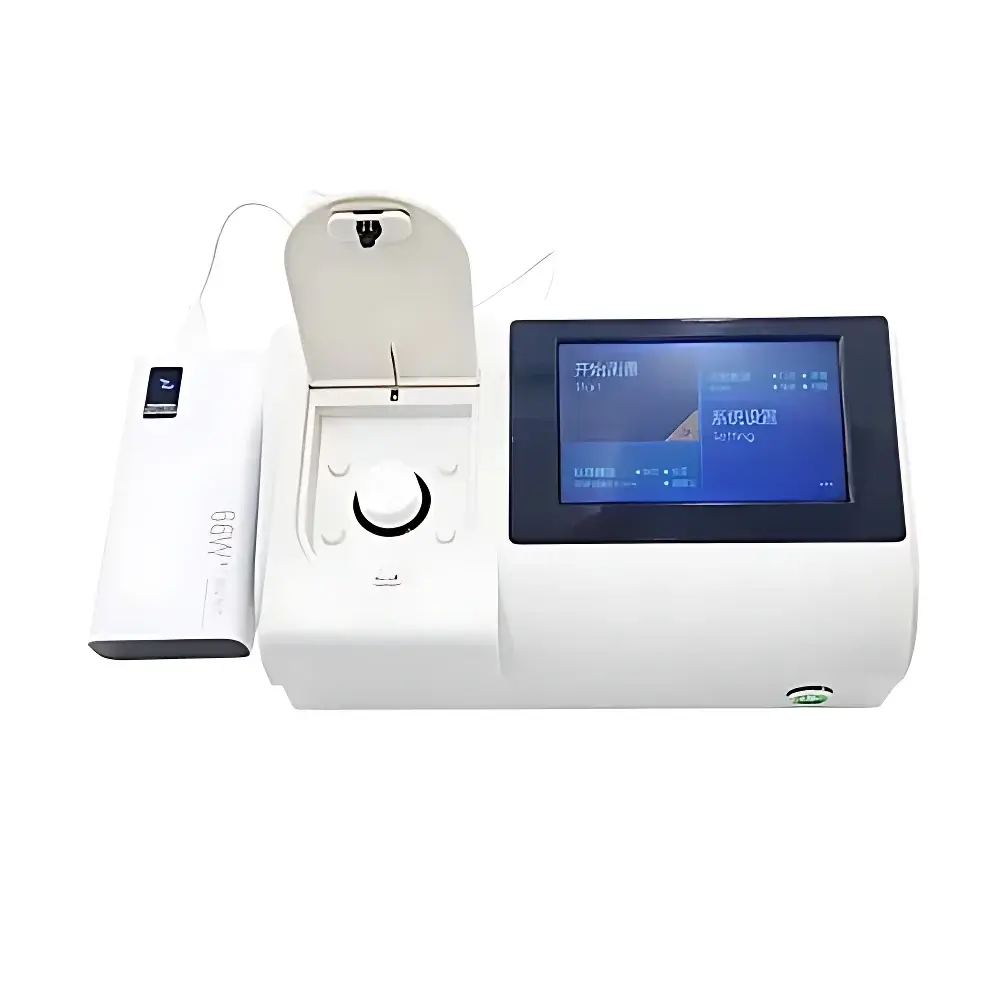
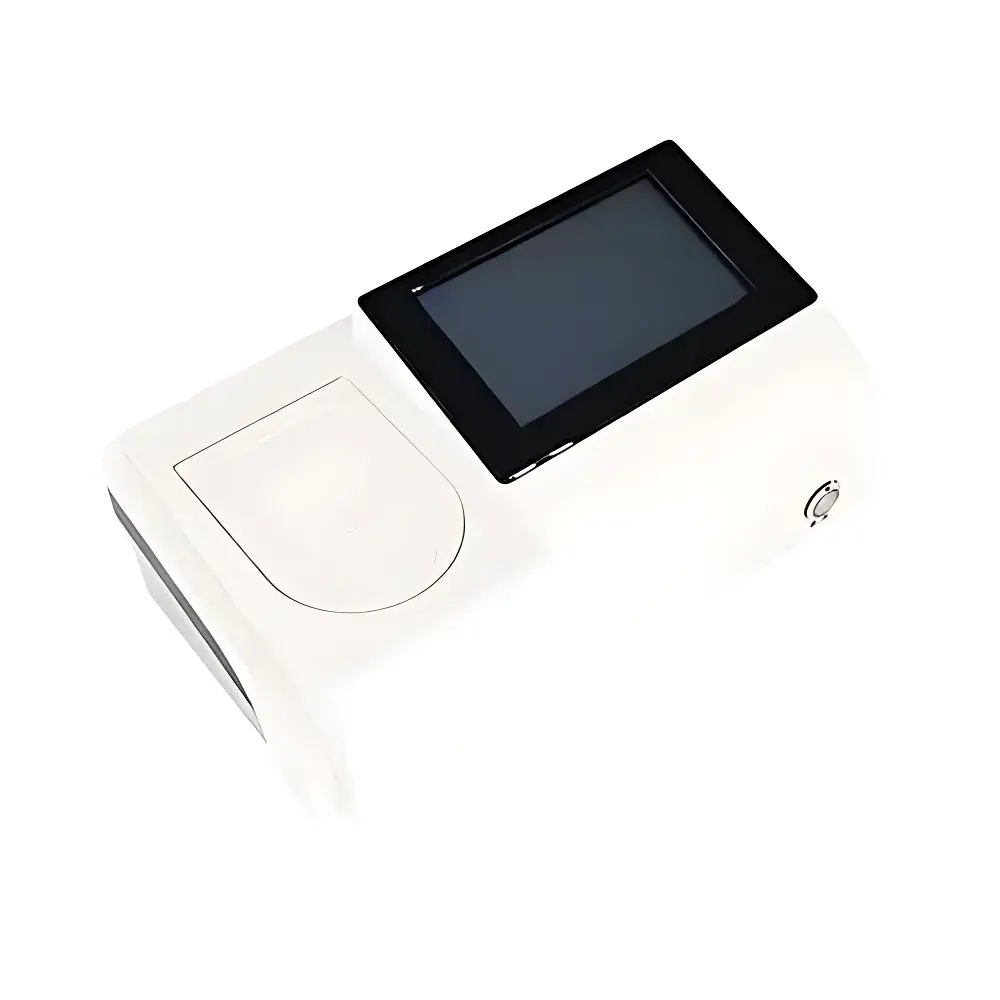
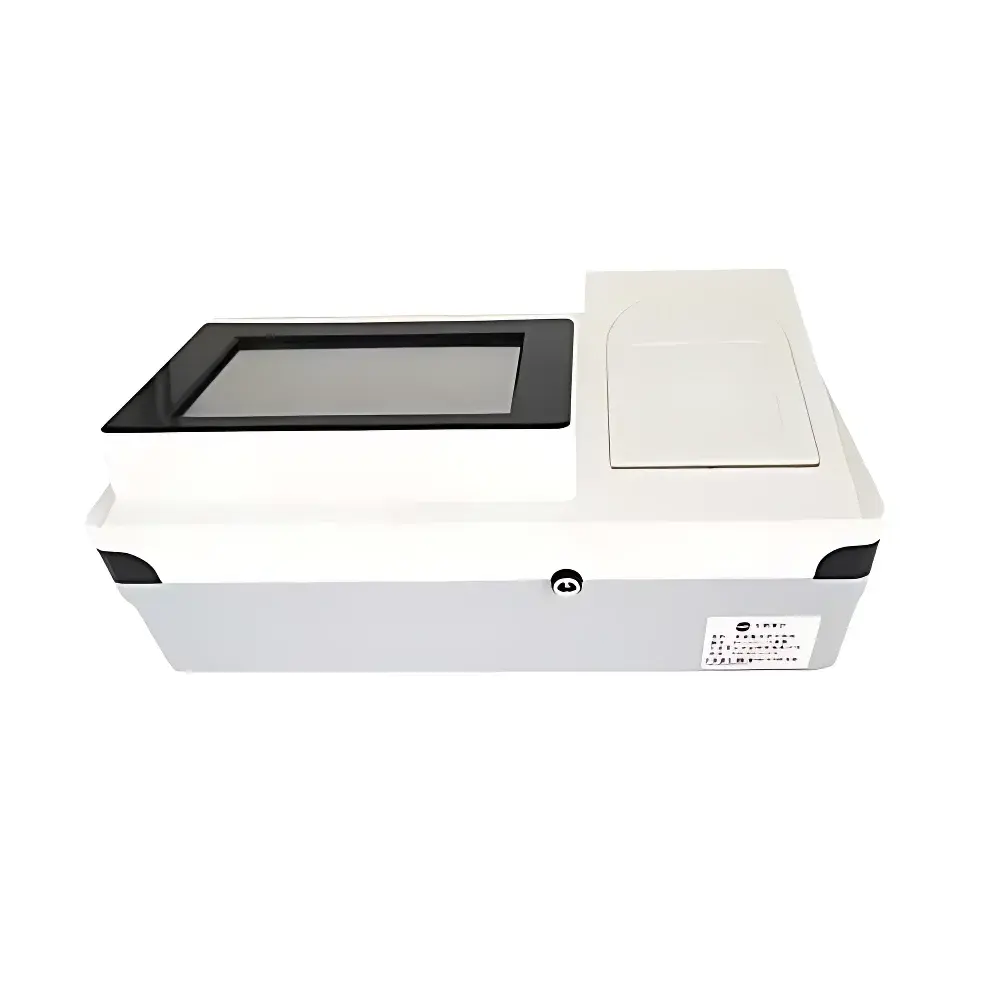
BJBY BY-ZSD3 Portable Multi-Parameter Water Quality Analyzer
| Brand | BJBY |
|---|---|
| Origin | Beijing, China |
| Model | BY-ZSD3 |
| Instrument Type | Portable / Handheld Water Quality Analyzer |
| Detection Parameters | Turbidity, Color, pH, Free Chlorine, Total Chlorine, Combined Chlorine, Chlorine Dioxide, Residual Oxygen, Ozone, Chlorite, Ammonia Nitrogen, Nitrate, Nitrite, Fluoride (SPANDS method), Iron, Manganese, Hexavalent Chromium, COD (Low & High Range), Sulfate, Dissolved Oxygen, Aluminum |
| Wavelengths | 380 nm, 420 nm, 520 nm, 610 nm, White Light |
| Optical Method for Turbidity | 90° Scattering + Transmission |
| Detection Limit for Turbidity | 0.001 NTU |
| Repeatability | ±0.003 Abs |
| Data Storage | 20,000 records with timestamp, user ID, sample ID, source, and matrix metadata |
| Display | 5.0-inch HD color touchscreen |
| Power Supply | External mobile power bank compatible |
| Preloaded Reagents | Yes |
| Dimensions | 19.4 × 19.4 × 11.5 cm |
| Compliance | GB/T 5749–2022, GB/T 5750.4–2006, GB/T 5750.11–2006 |
Overview
The BJBY BY-ZSD3 Portable Multi-Parameter Water Quality Analyzer is an engineered field-deployable instrument designed for on-site compliance verification of drinking water quality in accordance with GB/T 5749–2022, the People’s Republic of China National Standard for Hygienic Standards for Drinking Water. It integrates spectrophotometric, electrochemical, and nephelometric measurement principles into a single compact platform. Turbidity is quantified using dual-optical-path detection—simultaneous 90° scattered light and transmitted light—as specified in GB/T 5750.4–2006, ensuring high linearity and minimal interference from colored or absorbing matrices. pH is measured via calibrated solid-state pH electrodes referenced against NIST-traceable buffer solutions. Free chlorine, total chlorine, chlorine dioxide, ozone, chlorite, nitrite, and other oxidants are determined by standardized DPD (N,N-diethyl-p-phenylenediamine) or SPANDS (sodium 2-(chloroformyl)-1,3-indanedione) colorimetric methods per GB/T 5750.11–2006 and GB/T 5750.4–2006. The analyzer employs a multi-wavelength LED optical engine (380 nm, 420 nm, 520 nm, 610 nm, and broadband white light), automatically selecting optimal excitation wavelengths based on assay-specific absorption maxima to minimize spectral overlap and cross-reactivity.
Key Features
- Field-ready portable architecture: Compact footprint (19.4 × 19.4 × 11.5 cm) and mobile power compatibility enable uninterrupted operation during remote sampling campaigns, emergency response, or routine distribution system monitoring.
- Multi-parameter capability: Simultaneous quantification of 21 regulated parameters—including turbidity (0.001–2000 NTU), pH (6.00–8.50), free/total/combined chlorine (0.01–5.00 mg/L), chlorine dioxide (0.02–10.00 mg/L), dissolved oxygen (0.2–6.0 mg/L), nitrate (0.50–15.00 mg/L), and hexavalent chromium (0.004–1.000 mg/L)—without hardware reconfiguration.
- Optical precision: Dual-path turbidity detection delivers repeatability of ±0.003 absorbance units and resolution down to 0.001 NTU, meeting the sensitivity requirements of GB/T 5750.4–2006 for Class I drinking water assessment.
- Preloaded reagent system: All consumables are factory-prepared, lyophilized, or stabilized in sealed vials—eliminating field-based reagent preparation, minimizing operator error, and ensuring inter-laboratory comparability.
- Comprehensive data governance: Stores up to 20,000 test records with embedded metadata (date/time stamp, operator ID, sample ID, source location, matrix type), supporting traceability under GLP-aligned workflows.
- Intuitive human interface: 5.0-inch capacitive touchscreen with context-sensitive menus, real-time calibration prompts, and multilingual UI support (English, Chinese, Spanish).
Sample Compatibility & Compliance
The BY-ZSD3 is validated for raw water, finished drinking water, distribution system tap samples, and bottled water matrices. Its optical and electrochemical modules accommodate turbidities up to 2000 NTU (with optional dilution protocol), chromaticities up to 500 degrees (Platinum-Cobalt scale), and pH ranges from 6.00 to 8.50—fully aligned with GB/T 5749–2022 maximum allowable limits. Method validation reports confirm adherence to GB/T 5750.4–2006 (turbidity, color, pH), GB/T 5750.11–2006 (chlorine species), and ISO 7027-1:2016 (nephelometric turbidity). While not certified to US EPA or ASTM standards out-of-the-box, its photometric performance (stray light <0.5%, wavelength accuracy ±2 nm) meets baseline requirements for adaptation to EPA Method 180.1 (turbidity) and Standard Methods 4500-Cl G (DPD chlorine) with site-specific validation per 40 CFR Part 136.
Software & Data Management
Data export is supported via USB-C and Bluetooth 5.0 to Windows/macOS platforms. The companion desktop software (v3.2+) enables batch report generation compliant with GB/T 5749–2022 Annex A reporting templates, including automatic flagging of nonconformances against regulatory thresholds. Audit trails record all calibration events, firmware updates, and user-initiated data edits—supporting internal QA/QC reviews and readiness for GLP/GMP documentation audits. The system logs full instrument diagnostics (lamp intensity decay, detector drift, temperature stabilization status) and supports CSV/Excel export with ISO 8601 timestamps and UTF-8 encoding for multilingual character retention.
Applications
- Drinking water utilities: Routine compliance monitoring at treatment plant effluent points, booster stations, and consumer taps per GB/T 5749–2022 surveillance schedules.
- Public health laboratories: Rapid screening during waterborne disease outbreak investigations or post-disaster water safety assessments.
- Regulatory inspection agencies: Field verification of municipal water quality reports without requiring fixed-lab infrastructure.
- Environmental consulting firms: Integrated surface water and groundwater quality surveys across multi-site projects.
- Educational institutions: Undergraduate and graduate-level environmental chemistry labs emphasizing method standardization and field analytical rigor.
FAQ
Does the BY-ZSD3 comply with international standards such as ISO or ASTM?
It is fully compliant with Chinese national standards (GB/T series) and aligns with core technical requirements of ISO 7027-1:2016 and ASTM D1889–07 for turbidity; however, formal certification to ISO/IEC 17025 or ASTM E2577 requires laboratory-specific validation per local accreditation body protocols.
Can the instrument be used for wastewater or seawater analysis?
It is optimized for potable water matrices. High-salinity or highly organic wastewater may require matrix-specific dilution, filtration, or method adaptation—not covered under default calibration curves.
What is the expected lifetime of the optical source?
The integrated LED array is rated for ≥50,000 hours of operational stability, with factory calibration validity maintained for seven years under typical field-use conditions.
Is remote firmware update supported?
Yes—firmware updates are delivered via encrypted USB drive or Bluetooth, with version rollback capability and SHA-256 checksum verification.
Are calibration standards supplied with the instrument?
Primary turbidity standards (Formazin or AMCO AEPA-1 equivalents), pH buffers (pH 4.01, 6.86, 9.18), and DPD chlorine standards are included in the initial kit; annual recalibration kits are available separately.







