
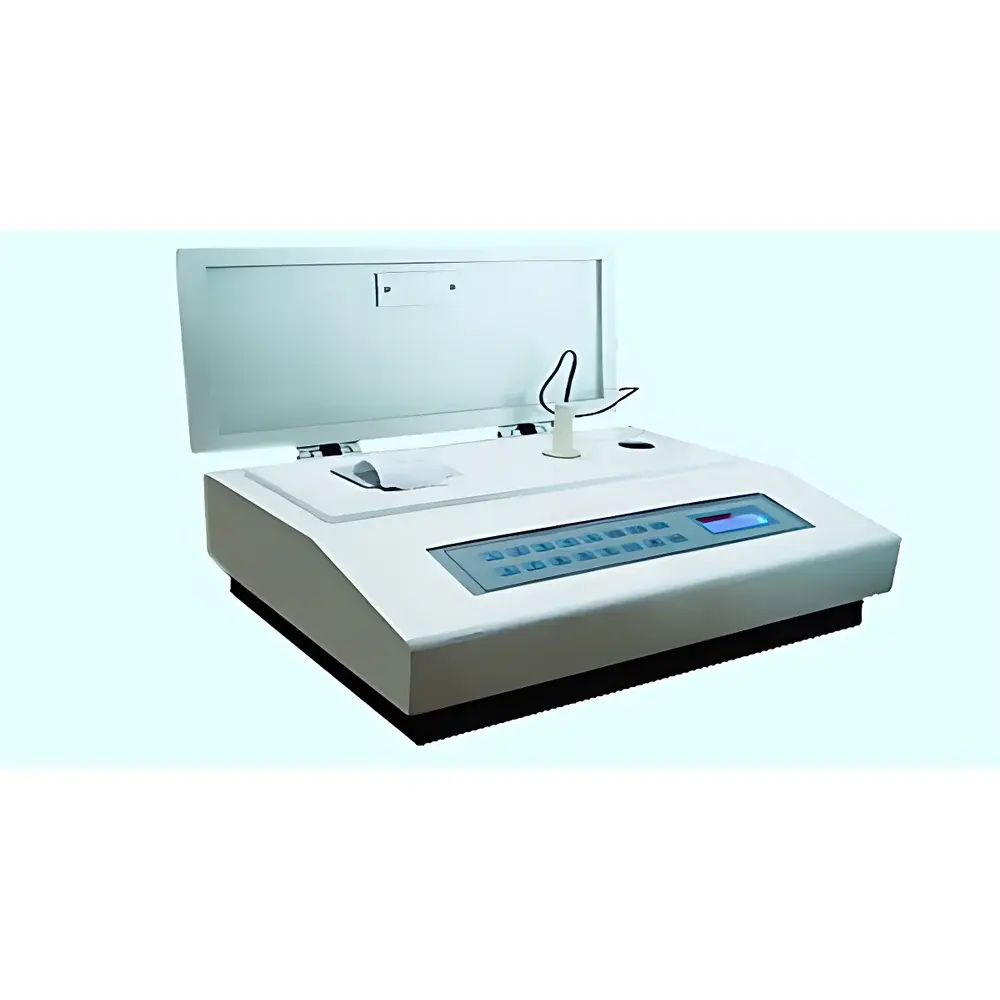
BOD-1A Microbial BOD Analyzer
| Origin | Beijing, China |
|---|---|
| Manufacturer Type | Authorized Distributor |
| Origin Category | Domestic (China) |
| Model | BOD-1A |
| Price Range | USD 1,400 – 7,000 |
| Instrument Type | Laboratory BOD Analyzer |
| Measurement Principle | Microbial Electrode Method |
| Measurement Range | 2–4000 mg/L |
| Detection Limit | 5 mg/L |
| Accuracy | ±≤5% |
| Single-Sample Analysis Time | 8 min |
| Repeatability | ≤3% |
Overview
The BOD-1A Microbial BOD Analyzer is a laboratory-grade instrument engineered for rapid, reliable quantification of biochemical oxygen demand (BOD) in aqueous environmental samples. Unlike conventional 5-day dilution methods (BOD5), this system employs a standardized microbial electrode methodology—fully compliant with China’s Environmental Protection Industry Standard HJ/T 86–2002 and listed as Method A (“Microbial Sensor Rapid Determination”) in the *Methods for Monitoring and Analysis of Water and Wastewater*, 4th Edition. The core measurement principle relies on the oxygen consumption kinetics of immobilized aerobic microorganisms under controlled, flow-through conditions. A biocatalytic membrane containing BOD5-specific bacterial strains is integrated directly onto a Clark-type dissolved oxygen (DO) electrode. As sample solution flows through the sensor chamber, viable microbes metabolize biodegradable organic substrates, consuming dissolved oxygen proportionally to BOD concentration. The resulting decrease in DO partial pressure is transduced into a linear current signal, enabling real-time calculation of BOD values within minutes.
Key Features
- Microbial electrode architecture with pre-cultured, strain-optimized BOD5-specific biofilm—no on-site acclimation or culture preparation required.
- Flow-through sensor design ensures consistent mass transfer, minimizes biofouling risk, and supports high reproducibility (RSD ≤3%).
- Precision proportional temperature control maintains stable incubation at 20 °C ±0.5 °C—critical for regulatory comparability with standard BOD5 protocols.
- Direct measurement range of 2–4000 mg/L BOD; samples exceeding 50 mg/L are accommodated via automated or manual dilution per HJ/T 86–2002 guidelines.
- Integrated data logging and thermal printing module enables GLP-compliant record retention—including timestamp, sample ID, operator code, and calibration history.
- Dry-storage stable biosensor: shelf life >12 months at ambient temperature; operational lifetime ≥30 days post-hydration and activation.
Sample Compatibility & Compliance
The BOD-1A is validated for use with surface water, domestic wastewater, and industrial effluents exhibiting moderate to high organic loading. It excludes samples containing cytotoxic compounds (e.g., heavy metals above EPA Method 1664 thresholds), strong disinfectants, or extreme pH (9.0) without pretreatment. All measurements adhere to the performance criteria specified in HJ/T 86–2002, including accuracy (±≤5% vs. reference BOD5), detection limit (5 mg/L), and repeatability (≤3%). While not certified to ISO 5815-1:2019 or ASTM D5210, its operational parameters align with the functional equivalence requirements for rapid BOD screening in routine environmental monitoring programs subject to local regulatory review.
Software & Data Management
The analyzer operates via embedded firmware with a dedicated LCD interface and push-button navigation. No external PC is required for basic operation; however, optional USB data export supports CSV-formatted output for integration into LIMS or QA/QC reporting platforms. Stored records include date/time stamp, sample identification tag, measured BOD value, temperature reading, and sensor status flag. Audit trail functionality meets minimum GLP documentation standards, with immutable timestamped entries and no user-editable fields. Firmware updates are delivered via secure manufacturer portal—no internet connectivity required during routine analysis.
Applications
- Routine BOD screening in municipal wastewater treatment plants for process control and discharge compliance verification.
- Field-deployable lab support for environmental consulting firms conducting rapid site assessments of riverine or lake water quality.
- Academic and research laboratories requiring high-throughput BOD profiling for toxicity assays or biodegradability studies.
- Industrial pretreatment monitoring for food processing, pharmaceutical, and pulp/paper facilities where BOD load variability demands sub-hour turnaround.
- Training and method validation labs seeking an accessible, low-maintenance alternative to multi-day BOD5 incubation systems.
FAQ
What regulatory standards does the BOD-1A comply with?
It conforms to China’s HJ/T 86–2002 and is referenced in the official *Methods for Monitoring and Analysis of Water and Wastewater* (4th Ed.) as Method A for microbial sensor-based BOD determination.
Can the instrument measure undiluted industrial wastewater with BOD >50 mg/L?
Yes—samples up to 4000 mg/L are supported via user-performed serial dilution using calibrated volumetric glassware per HJ/T 86–2002 Section 6.2.
How often must the microbial membrane be replaced?
Under continuous daily use, the activated biosensor remains stable for ≥30 days; storage in dry, cool conditions extends shelf life to ≥12 months.
Is temperature control traceable to national standards?
The proportional heating system maintains 20.0 °C ±0.5 °C, verified using NIST-traceable digital thermometers during factory calibration and user verification.
Does the system support 21 CFR Part 11 compliance?
No—the embedded firmware lacks electronic signature, role-based access control, or audit trail encryption required for FDA-regulated environments; it is intended for environmental monitoring under national/local regulatory frameworks.
Related Products







