
Boode BDFIA-210 Portable and Vehicle-Mountable Flow Injection Analyzer
| [Brand | Boode |
|---|---|
| Origin | Beijing, China |
| Manufacturer Type | Original Equipment Manufacturer (OEM) |
| Product Category | Domestic |
| Model | BDFIA-210 |
| Pricing | Upon Request] |
Overview
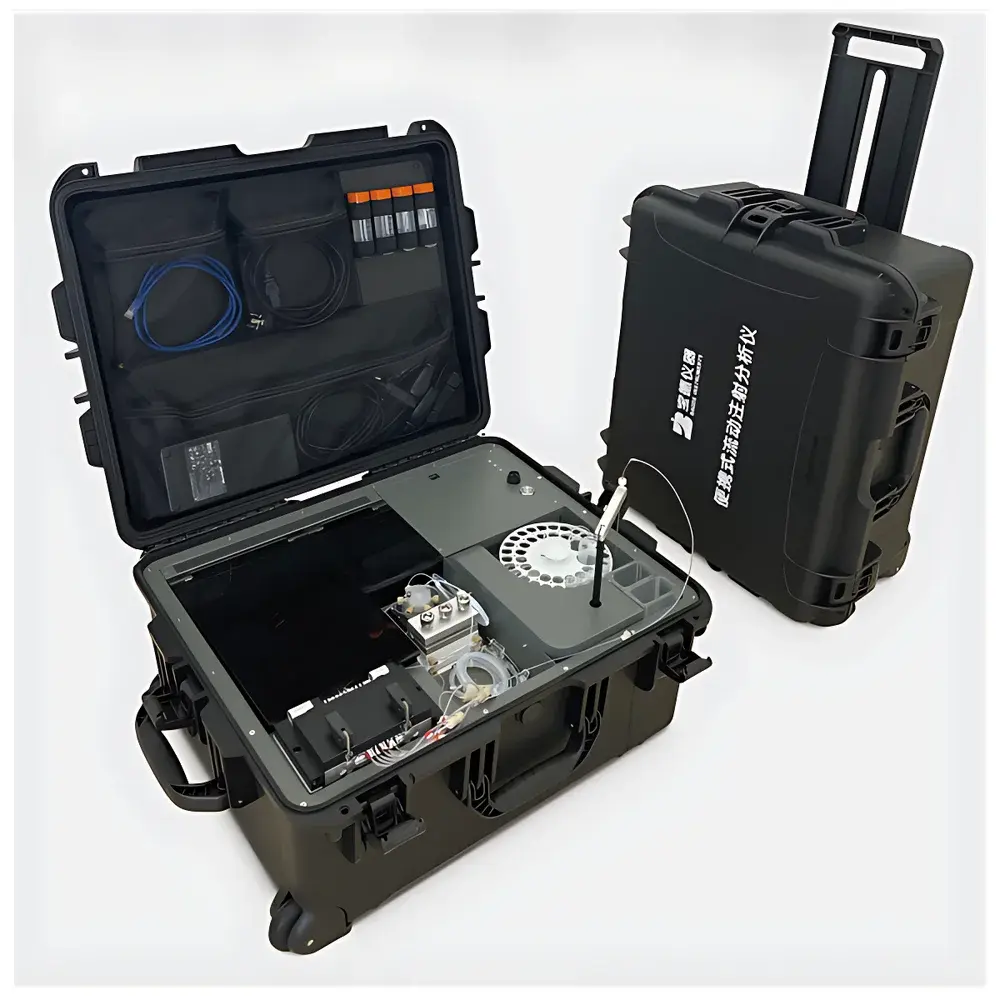
The Boode BDFIA-210 is a fully automated, portable flow injection analyzer engineered for high-precision, on-site water quality analysis in field-deployable environments. It operates on the principle of flow injection analysis (FIA) coupled with visible spectrophotometry—utilizing segmented, carrier-driven reagent-sample zones that undergo controlled mixing, reaction, and detection within a continuous-flow manifold. The system employs a dual-beam optical detection module with high-sensitivity photometric measurement across the visible spectrum (typically 400–750 nm), enabling low detection limits, excellent repeatability (RSD < 3% at typical environmental concentrations), and rapid analytical throughput (up to 60 samples per hour depending on assay configuration). Designed as an integrated instrument-in-a-case solution, the BDFIA-210 conforms to the structural and operational requirements of mobile environmental laboratories—supporting both handheld deployment via ruggedized pull-handle transport case and vehicle-integrated installation with vibration-dampened mounting brackets and DC power interface.
Key Features
- Integrated on-board sample pretreatment modules including programmable online distillation and liquid-liquid extraction—eliminating manual derivatization or separation steps prior to analysis.
- Pre-loaded calibration curves for up to 12 regulated analytes, compliant with Chinese national and environmental monitoring standards (e.g., HJ 823–2017, HJ 671–2013, HJ 908–2017); automatic concentration calculation upon sample injection.
- Self-cleaning fluidic architecture featuring solenoid-actuated wash valves and timed backflush cycles—ensuring minimal carryover (< 0.5%) between sequential samples.
- Embedded intelligent control system with touchscreen HMI, step-by-step guided workflows, and real-time status feedback—optimized for single-operator use under variable ambient conditions.
- 42-position XYZ robotic autosampler with programmable vial recognition and priority queue management—enabling unattended batch analysis during extended field campaigns.
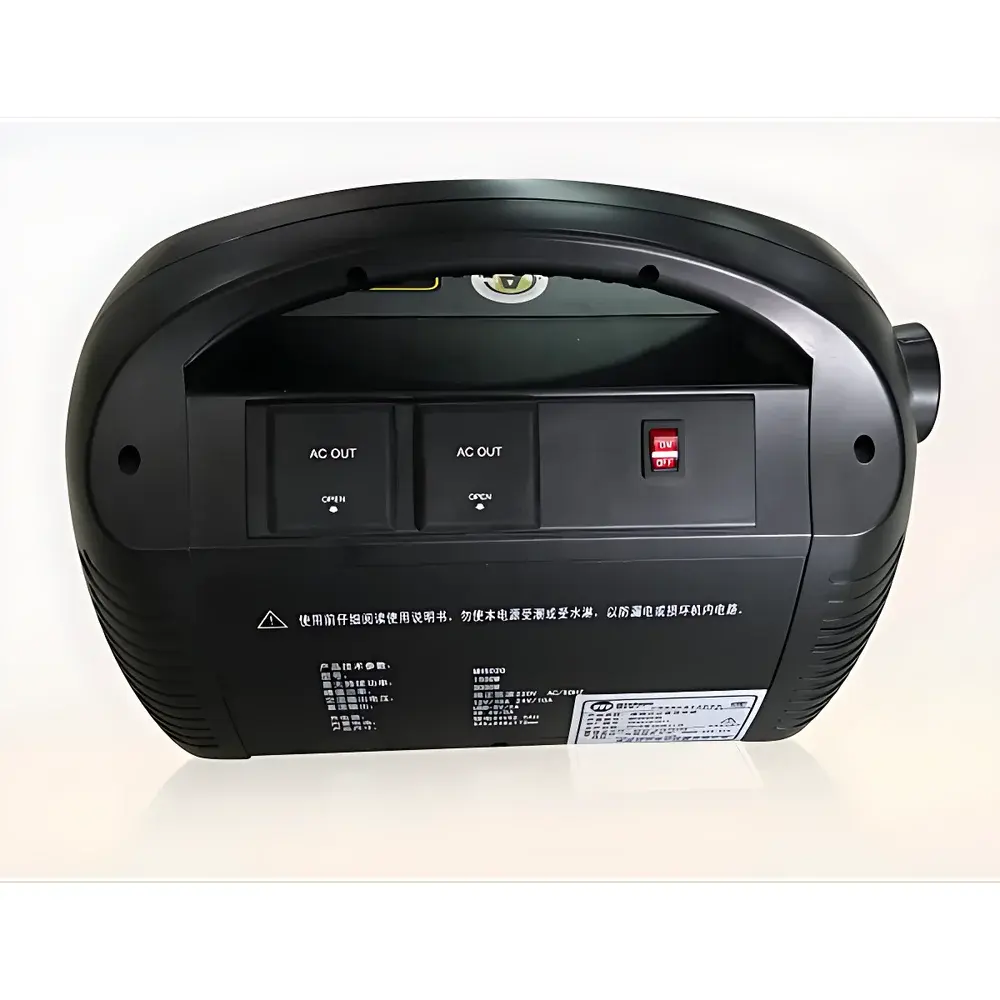
- Dual-power compatibility: supports 12 V DC input (for vehicle integration) and external Li-ion mobile power stations (≥ 200 Wh capacity), with battery-level monitoring and low-voltage shutdown protection.
Sample Compatibility & Compliance
The BDFIA-210 is validated for direct analysis of raw and pretreated aqueous matrices including drinking water, surface water, groundwater, wastewater effluents, and emergency spill runoff. It meets method performance criteria specified in multiple Chinese regulatory standards—including GB 8538–2016 (mineral water testing), HJ 825–2017 (phenols), HJ 823–2017 (cyanide), HJ 671–2013 (total phosphorus), and HJ 908–2017 (hexavalent chromium). While not certified to ISO/IEC 17025 or EPA methods out-of-the-box, its modular FIA design permits traceability alignment with ISO 8466-2 (calibration of analytical instruments) and supports GLP-compliant data recording when paired with audit-trail-enabled software configurations. All fluidic pathways are constructed from chemically inert PTFE and PEEK tubing, minimizing adsorption and ensuring compatibility with acidic, basic, and chelating reagent systems.
Software & Data Management
The instrument runs Boode FIAControl v3.x firmware—a deterministic, real-time operating system with embedded database logging (SQLite3 format). Raw absorbance signals, peak integration parameters, calibration metadata, and operator annotations are timestamped and stored locally on removable microSD card (up to 32 GB). Export options include CSV, PDF analytical reports (with embedded chromatograms and calibration plots), and XML files compatible with LIMS platforms via USB or optional Wi-Fi dongle (IEEE 802.11n). Audit trail functionality records all user-initiated actions—including method selection, calibration updates, and result overrides—with immutable timestamps and operator ID tagging—supporting compliance with data integrity expectations under China’s CNAS-CL01:2018 and international GLP frameworks.
Applications
- Rapid response to water contamination incidents (e.g., industrial chemical spills, cyanide leaks, or nutrient over-enrichment events).
- Mobile river/lake transect monitoring along fixed or adaptive sampling grids using GPS-synchronized sample logging.
- Regulatory compliance verification at municipal water intake points, wastewater treatment plants, and aquaculture facilities.
- Field validation of laboratory-based results during inter-laboratory comparison exercises or QA/QC audits.
- Long-term unattended deployment in remote catchments when integrated with solar-charged power systems and telemetry modules.
FAQ
What power sources does the BDFIA-210 support?
It accepts 12 V DC input (via vehicle cigarette lighter or dedicated terminal block) and operates with external rechargeable lithium-ion power stations rated ≥200 Wh. Internal battery backup provides up to 45 minutes of grace operation during power transition.
Can the system be calibrated remotely?
No—calibration requires physical introduction of standard solutions into the autosampler. However, calibration history, drift correction factors, and QC check results can be reviewed and exported remotely via USB or Wi-Fi.
Is the instrument compliant with FDA 21 CFR Part 11?
Out-of-the-box, it does not provide electronic signature enforcement or role-based access control required for full Part 11 compliance. These capabilities may be enabled through optional Boode SecureLink software license and external authentication server integration.
How is cross-contamination prevented between high-concentration and low-concentration samples?
The system executes mandatory post-run cleaning sequences (including air purge, acid wash, and deionized water rinse) triggered automatically after each sample. Optional high-stringency cleaning protocols are configurable for trace-metal or ultra-low-level organic analyses.
Does the BDFIA-210 support method development or only pre-programmed assays?
While factory-loaded methods cover 12 priority parameters, the open-access FIAControl scripting interface allows qualified users to define custom manifold configurations, timing sequences, and detection algorithms—subject to validation per ISO/IEC 17025 Clause 7.2.2.




