
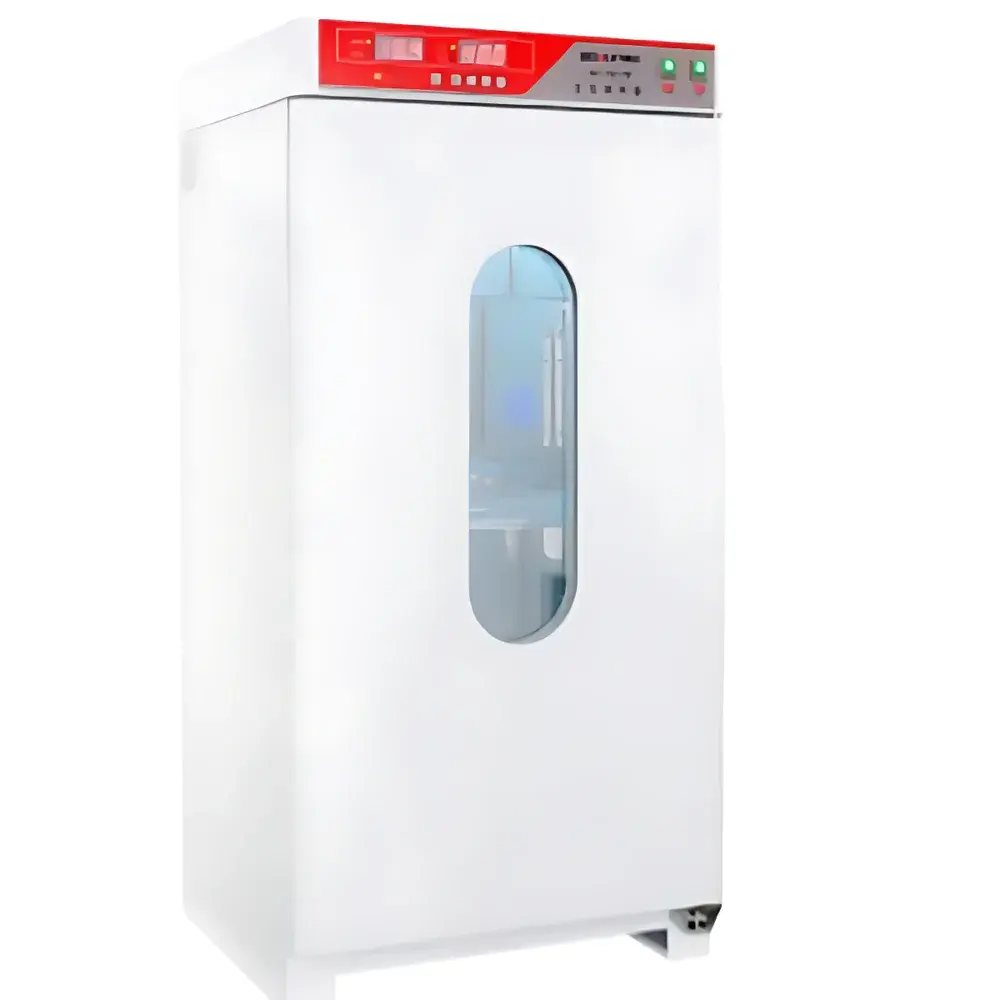
BOXUN SPX-250B-Z Biochemical Incubator
| Brand | BOXUN |
|---|---|
| Origin | Shanghai, China |
| Refrigeration Type | Compressor-based |
| Air Circulation | Forced Convection |
| Temperature Range | 0–50 °C |
| Temperature Resolution | 0.1 °C |
| Temperature Fluctuation | ±1 °C (heating), ±2 °C (cooling) |
| Temperature Uniformity | ±2 °C |
| Chamber Capacity | 250 L |
| External Dimensions (W×D×H) | 615 × 560 × 1597 mm |
| Input Power | 360 W |
| Refrigerant | R134a |
| Timer Range | 0–999 h |
| Standard Shelves | 3 (max. 7) |
| Shelf Load Capacity | 15 kg per shelf |
| Interior Material | Mirror-finish stainless steel |
| Exterior Material | Cold-rolled steel with electrostatic powder coating |
Overview
The BOXUN SPX-250B-Z Biochemical Incubator is a microprocessor-controlled, forced-air laboratory incubator engineered for precise and stable temperature maintenance across life science, environmental, pharmaceutical, and agricultural research applications. Designed in accordance with fundamental thermal management principles for biological sample integrity, it employs compressor-based refrigeration combined with optimized airflow dynamics to achieve uniform thermal distribution within the chamber. Its operational range of 0–50 °C supports a broad spectrum of microbiological culture protocols—including BOD testing, bacterial and fungal propagation, algal growth studies, seed germination, and short-term sample storage—where ambient or sub-ambient temperature control is required without humidity regulation. The unit complies with general laboratory equipment safety standards (IEC 61010-1) and incorporates fail-safe thermal protection circuits to prevent overheating or compressor overload.
Key Features
- Microprocessor-based PID temperature control system with 0.1 °C resolution and dual-display LED interface for simultaneous setpoint and real-time chamber temperature readout
- Forced convection air circulation via a low-noise centrifugal fan and rear-mounted air ducts ensures ±2 °C temperature uniformity across the full 250 L working volume
- Robust chamber construction: mirror-polished 304 stainless steel interior for corrosion resistance and ease of decontamination; cold-rolled steel exterior with electrostatic epoxy-powder coating
- Adjustable shelving system: three standard stainless steel shelves (expandable to seven), each rated for 15 kg load capacity and vertically repositionable without tools
- Integrated lighting module with high-transmittance tempered double-glazed observation window (vacuum-insulated) for non-intrusive visual monitoring
- Power-loss recovery function: automatic restoration of pre-interruption setpoints and timer status following mains failure or system reset
- Programmable timer with 0–999 h range supports unattended operation for extended incubation cycles
Sample Compatibility & Compliance
The SPX-250B-Z accommodates standard microbiological vessels—including Petri dishes, test tubes, flasks, and multi-well plates—within its spacious, shelf-configurable chamber. Its temperature stability profile meets typical requirements for ISO/IEC 17025-accredited laboratories performing routine microbial enumeration (e.g., ISO 6222, ISO 8199), EPA Method 1681 (BOD₅), and APHA Standard Methods for water quality analysis. While not certified for GMP manufacturing environments, the unit’s design facilitates GLP-aligned documentation practices through reproducible parameter logging (when interfaced with external data loggers). It is not equipped for CO₂, humidity, or O₂ control; therefore, it is intended exclusively for temperature-critical, non-sterile, aerobic or anaerobic (non-gas-regulated) applications.
Software & Data Management
The SPX-250B-Z operates as a standalone instrument with no embedded software stack or network connectivity. All control logic resides in its dedicated PMMA-I microcontroller firmware, which provides deterministic response to user inputs and thermal feedback signals. Data output is limited to real-time digital display only; however, analog voltage outputs (0–5 V or 4–20 mA) can be added via optional third-party signal adapters for integration into centralized lab monitoring systems (e.g., LabVIEW, SCADA). For regulatory traceability, users are advised to pair the incubator with validated external temperature data loggers compliant with FDA 21 CFR Part 11 requirements—particularly when supporting audit-ready workflows in QC/QA or clinical trial support labs.
Applications
- Biochemical oxygen demand (BOD) assays in environmental water testing laboratories
- Cultivation and maintenance of mesophilic bacteria (e.g., E. coli, Enterococcus) and fungi (Aspergillus, Candida) under standardized conditions
- Plant tissue culture initiation and callus proliferation at controlled temperatures
- Seed viability testing and germination rate assessment per ISTA guidelines
- Short-term storage of reagents, media plates, and biological standards requiring stable sub-ambient or ambient temperature
- Supporting ASTM D5210 (anaerobic biodegradability) and ISO 11737-1 (microbial enumeration) sample incubation steps
FAQ
Does the SPX-250B-Z support humidity control?
No. This model is a temperature-only incubator. Humidity regulation is not implemented; users requiring RH control must select a dedicated constant-humidity or combined temp/RH incubator series.
Is the unit suitable for sterile cell culture work?
No. It lacks HEPA filtration, UV sterilization, and positive-pressure chamber architecture. It is not appropriate for mammalian or primary cell culture applications.
Can the incubator be validated for IQ/OQ/PQ protocols?
Yes—third-party qualification is feasible using standard thermocouple mapping procedures (per ISO 14644-3 or EU GMP Annex 15), though the manufacturer does not supply formal validation documentation or URS templates.
What refrigerant is used, and is it environmentally compliant?
R134a is employed—a zero-ozone-depletion-potential (ODP = 0) hydrofluorocarbon refrigerant compliant with current international shipping and handling regulations for laboratory equipment.
Are calibration certificates available from the factory?
Factory calibration is performed at time of manufacture, but NIST-traceable calibration certificates require separate purchase and on-site verification by an accredited metrology provider.





