
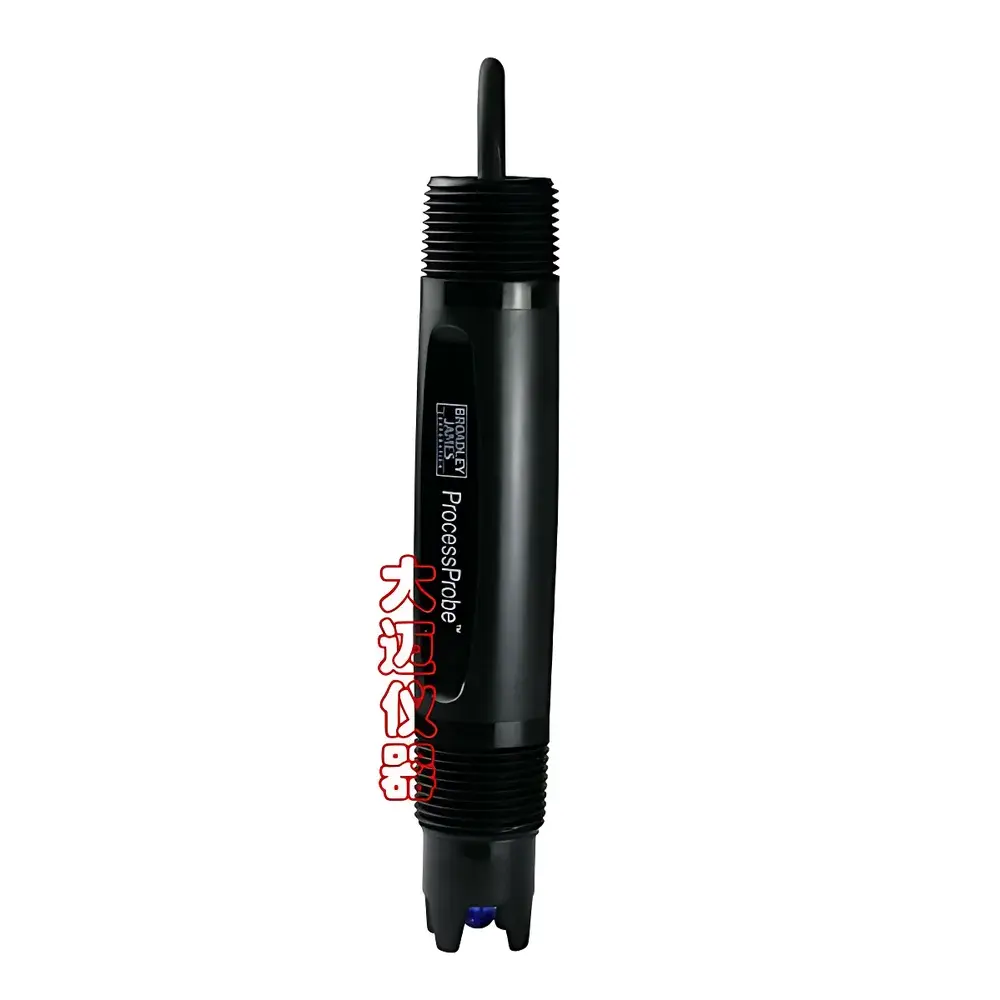
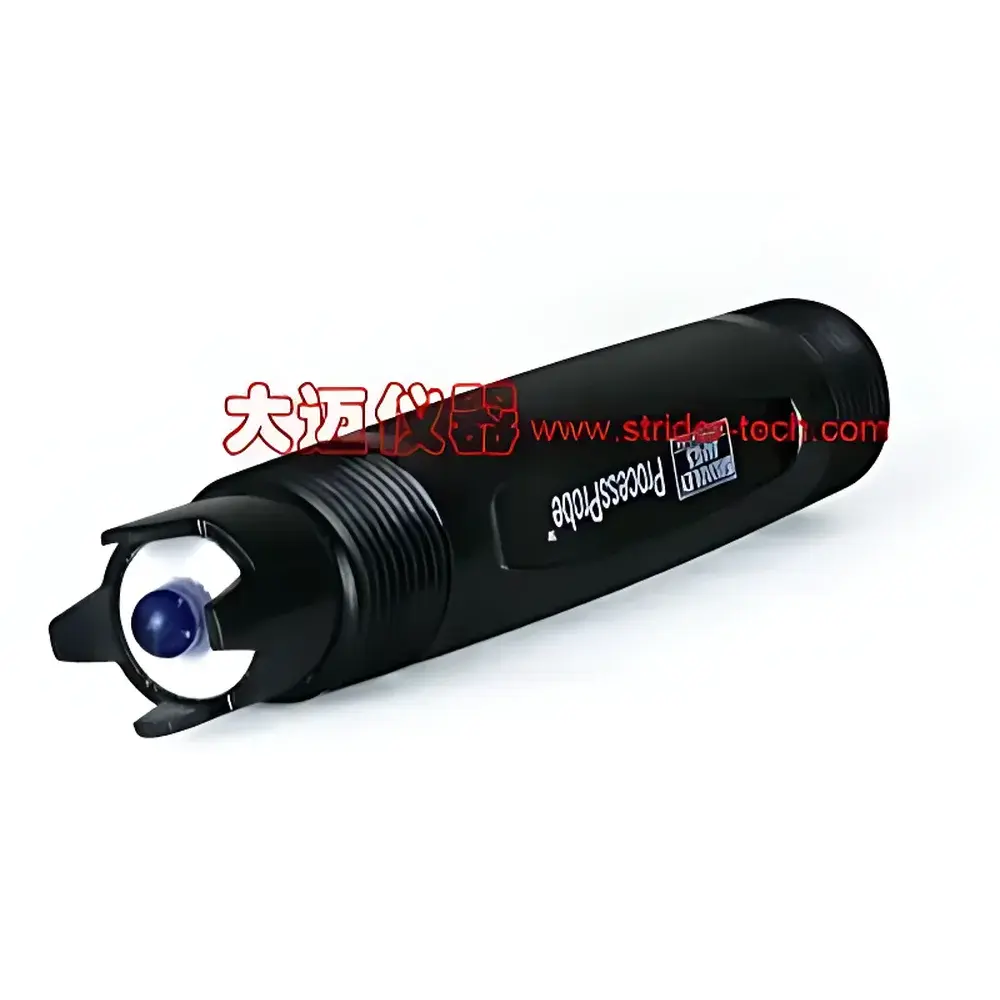
Broadley-James S400-RT33H-E10FF Industrial pH Electrode with Integrated Pt1000 Temperature Sensor
| Origin | USA |
|---|---|
| Manufacturer Type | Authorized Distributor |
| Origin Category | Imported |
| Model | S400-RT33H-E10FF |
| Pricing | Available Upon Request |
Overview
The Broadley-James S400-RT33H-E10FF is a high-performance, heavy-duty industrial pH electrode engineered for continuous online monitoring in aggressive and highly contaminated process environments. Designed using Couette-flow-compatible reference junction architecture and a low-impedance glass sensing element (<50 MΩ), it delivers stable, reproducible potential readings under dynamic flow conditions where conventional electrodes exhibit drift or signal noise. Its measurement principle relies on the Nernstian response of a pH-sensitive hydrated silica gel layer on the internal surface of a specialized UV-stabilized blue borosilicate glass membrane (HT-3 formulation), coupled with a robust double-junction reference system filled with saturated KCl electrolyte and sealed with a porous Ryton®/Tefcor® ceramic frit. The integrated Pt1000 RTD enables simultaneous temperature measurement per ASTM D1293 and ISO 10523 protocols, supporting automatic temperature compensation (ATC) in compliant data acquisition systems.
Key Features
- UV-resistant HT-3 blue glass bulb: Minimizes photolytic degradation of the Ag/AgCl reference system, extending operational lifetime in outdoor or UV-exposed installations.
- Low-impedance pH-sensing element: Typical impedance <50 MΩ at 25°C—significantly lower than standard electrodes (~200 MΩ)—reducing susceptibility to electromagnetic interference and cable capacitance effects.
- Large-area annular ceramic junction: Provides uniform electrolyte outflow, resists clogging in slurry-laden or high-suspended-solids streams (e.g., electroplating rinse tanks, PCB etch lines), and facilitates rapid cleaning via backflushing.
- Chemically inert wetted materials: Process-contact surfaces consist exclusively of Ryton® (PPS), Tefcor® (modified PTFE), and UV-stabilized borosilicate glass—resistant to strong oxidizers, halogens, acids (pH 0–2), and alkaline caustics (pH 12–14).
- High-pressure/high-temperature rating: Rated for continuous operation up to 100 psig at 100°C; validated per ASME B16.5 Class 150 flange compatibility when mounted with optional sanitary or NPT process adapters.
- Standard 3-meter (10 ft) shielded PVC cable with integral Pt1000 RTD wiring: Supports direct connection to industrial pH transmitters compliant with NAMUR NE43, HART 7, or FOUNDATION Fieldbus protocols.
Sample Compatibility & Compliance
The S400-RT33H-E10FF is validated for use in wastewater treatment streams, printed circuit board (PCB) etching and plating baths, textile dyeing effluents, metal finishing rinse waters, and high-TDS desalination brines. It meets material compatibility requirements outlined in ASTM D1129 (Standard Terminology Relating to Water), EPA Method 150.1 (pH Measurement in Wastewater), and EU Directive 2000/60/EC (Water Framework Directive). The Pt1000 sensor conforms to IEC 60751 Class B tolerance (±0.3°C from 0–100°C). The electrode assembly supports GLP/GMP audit trails when paired with FDA 21 CFR Part 11–compliant data loggers and transmitter firmware.
Software & Data Management
No proprietary software is required. The electrode interfaces seamlessly with third-party industrial automation platforms—including Emerson DeltaV, Honeywell Experion PKS, Siemens Desigo CC, and Yokogawa CENTUM VP—via analog 4–20 mA output or digital HART communication. Raw mV and temperature signals are accessible for custom calibration curve implementation (e.g., segmented Nernst slope correction per USP ). Transmitter-side linearization supports dual-point calibration (pH 4.01/7.00 or 7.00/10.01) with slope and offset validation reporting. Audit logs capture calibration timestamps, operator IDs, and deviation alerts—fully traceable for ISO 17025-accredited laboratories.
Applications
- Real-time pH control in semiconductor wet benches and acid copper plating baths
- Effluent monitoring in municipal and industrial wastewater treatment plants (especially after chlorine disinfection or lime softening)
- In-line pH verification during textile dye fixation and reduction clearing processes
- Continuous alkalinity titration endpoint detection in boiler feedwater conditioning loops
- Corrosion inhibitor dosing control in closed-loop cooling water systems
- Regulatory compliance reporting for NPDES permits requiring hourly pH logging
FAQ
Does the S400-RT33H-E10FF require periodic refilling of the reference electrolyte?
No. It features a sealed, gel-filled double-junction reference system with extended service life—typically 12–18 months in continuous operation under recommended conditions.
Can this electrode be used in non-aqueous or low-ionic-strength samples?
It is optimized for aqueous solutions with conductivity >100 µS/cm. For deionized water or organic solvent blends, consult the S400-RT330-M10FF variant with asymmetric liquid junction design.
Is the Pt1000 sensor independently replaceable?
No—the Pt1000 is potted integrally within the electrode body and calibrated as a single unit; replacement requires full electrode refurbishment through authorized Broadley-James service centers.
What is the maximum allowable flow velocity across the sensing tip?
Rated for continuous exposure to linear flow velocities up to 3 m/s (10 ft/s); exceeding this may accelerate junction erosion in abrasive slurries.
How often should two-point calibration be performed in harsh industrial environments?
Daily calibration is recommended for critical control loops; weekly verification suffices for monitoring-only applications—always following ASTM D1293 Section 8.2 procedures.





