
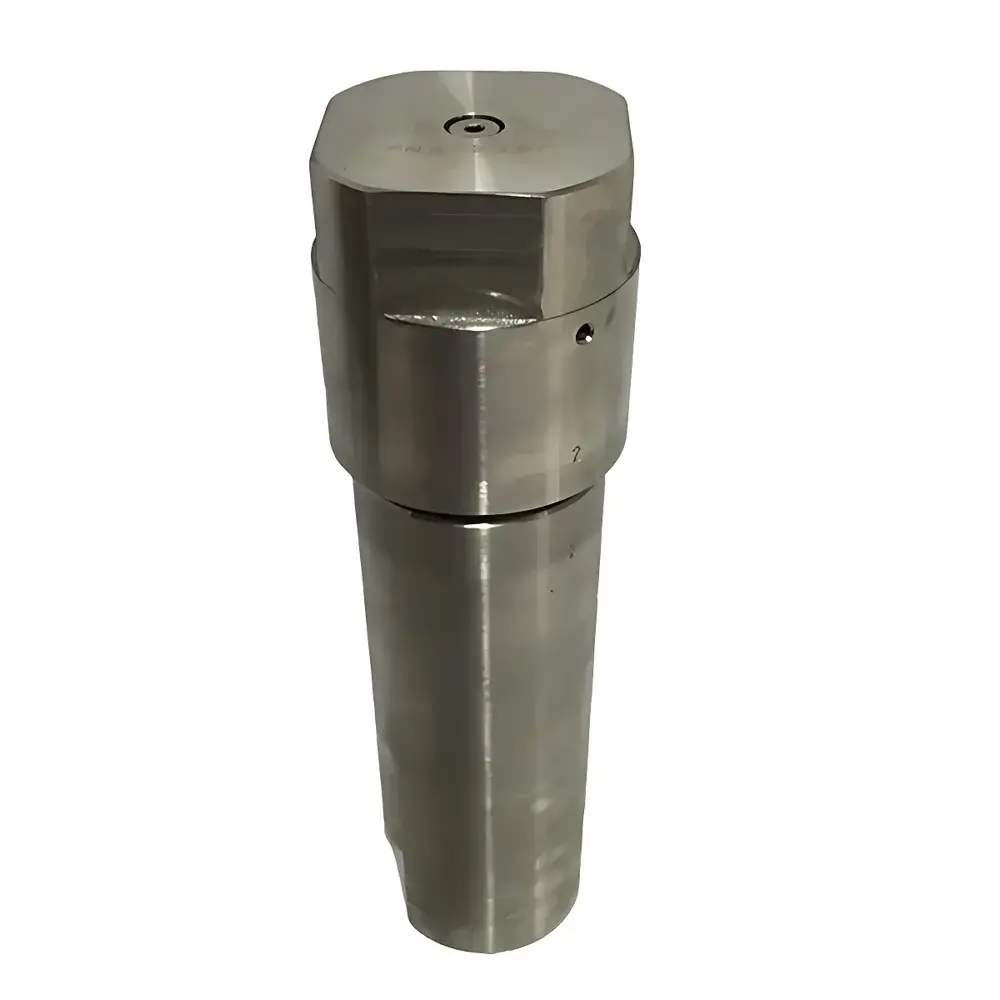
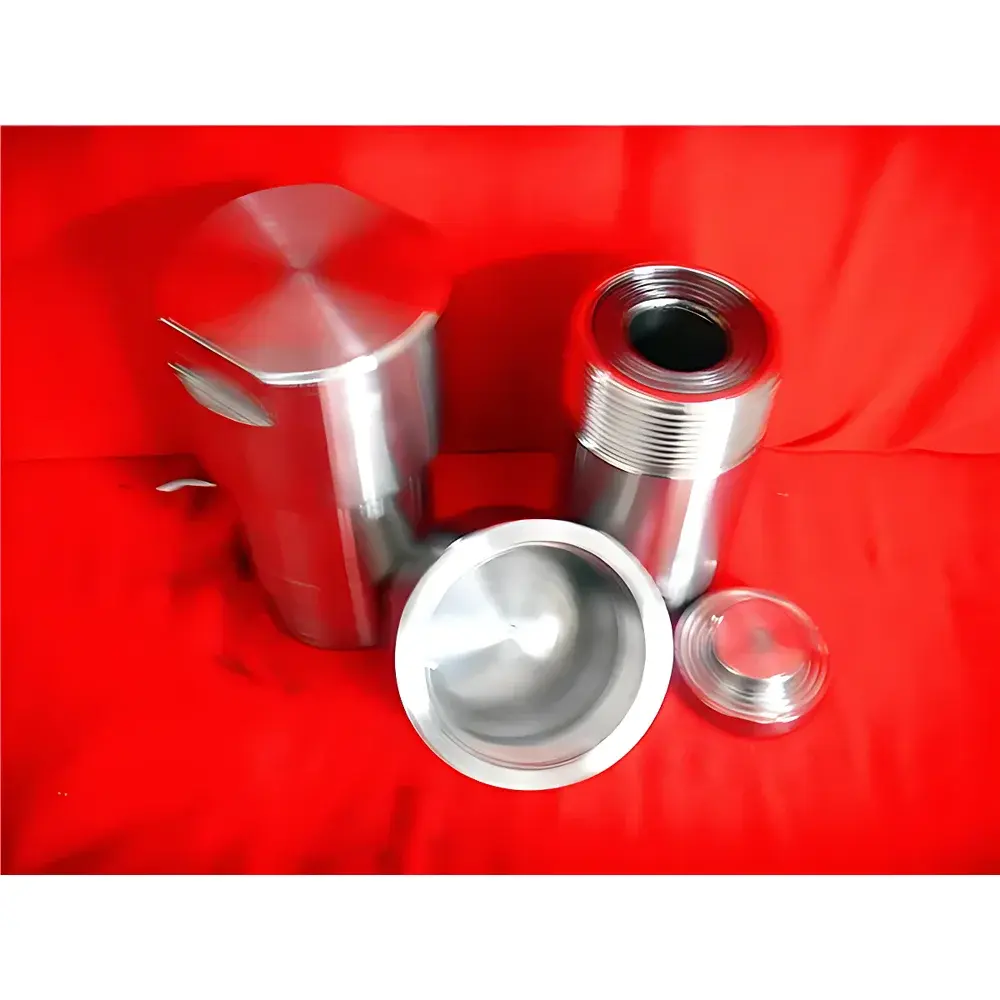
ZxYiqi PS-30ML High-Temperature Stainless Steel Mini Reactor
| Brand | ZxYiqi |
|---|---|
| Origin | Jiangsu, China |
| Manufacturer Type | Authorized Distributor |
| Country of Origin | China |
| Model | PS-30ML |
| Volume Capacity | 30 mL |
| Construction Material | 316L Stainless Steel |
| Maximum Operating Pressure | ≤0.6 MPa (gauge) |
| Vacuum Capability | ≤−0.1 MPa (absolute) |
| Temperature Range | Ambient to 250 °C (with optional heating mantle or oil bath) |
| Sealing Type | Dual-cone PTFE-sealed threaded lid with torque-controlled closure |
Overview
The ZxYiqi PS-30ML High-Temperature Stainless Steel Mini Reactor is an engineered laboratory-scale pressure reaction vessel designed for controlled synthesis, catalytic screening, and small-volume chemical transformation under elevated temperature and mild overpressure conditions. Based on Couette-type mechanical integrity principles and ASME BPVC Section VIII Division 1 design conventions for low-pressure vessels, the reactor employs a monolithic 316L stainless steel body with precision-machined internal surfaces to ensure corrosion resistance, thermal stability, and long-term dimensional fidelity. Its compact 30 mL working volume targets applications where reagent conservation, rapid thermal equilibration, and iterative parameter optimization are critical—such as homogeneous catalysis development, hydrothermal material synthesis, and kinetic studies requiring strict stoichiometric control. The unit operates within a validated thermal envelope of ambient to 250 °C when paired with external heating sources (e.g., programmable heating mantles or silicone oil baths), and maintains structural integrity under static internal pressures up to 0.6 MPa (gauge) and vacuum down to −0.1 MPa (absolute).
Key Features
- Monolithic 316L stainless steel construction with electropolished interior finish (Ra ≤ 0.4 µm) for enhanced passivation and reduced surface adsorption.
- Threaded dual-cone sealing interface with integrated PTFE gasket and calibrated torque-limiting lid mechanism to ensure repeatable seal integrity across thermal cycles.
- Standardized 1/4″ NPT female ports (3×) for integration with pressure transducers, thermocouple wells, gas inlet/outlet lines, or sampling valves—compatible with Swagelok® and Parker A-LOK® fittings.
- Externally accessible pressure relief port fitted with a reusable burst disc (rated at 0.8 MPa) compliant with ISO 4126-2 for overpressure protection.
- Thermal mass-optimized geometry enabling <5 min ramp-to-target temperature (200 °C) using standard 300 W heating mantles.
- Surface hardness ≥200 HV, verified per ASTM E384, ensuring resistance to mechanical wear during repeated assembly/disassembly.
Sample Compatibility & Compliance
The PS-30ML reactor accommodates liquid-phase, slurry-phase, and gas–liquid heterogeneous reactions involving organic solvents (e.g., DMF, THF, ethanol), aqueous acidic/basic media (pH 1–13), and low-viscosity molten salts below 250 °C. It is not intended for exothermic runaway-prone systems without external cooling capability or for halogenated oxidizers above 120 °C. All wetted components comply with ASTM A240/A240M for 316L plate specification and meet FDA 21 CFR 178.3570 requirements for indirect food additive contact. Design documentation supports GLP-compliant recordkeeping per OECD Series on Principles of Good Laboratory Practice, and pressure containment verification follows EN 13445-3 Annex C methodology.
Software & Data Management
As a standalone hardware platform, the PS-30ML does not include embedded electronics or firmware. However, it is fully compatible with third-party data acquisition systems (e.g., Omega iSeries, National Instruments DAQmx) via analog 4–20 mA or 0–5 V signal inputs from externally mounted sensors. Users may integrate real-time pressure, temperature, and agitation data into LIMS or ELN platforms—including LabArchives and Benchling—using CSV export workflows. Audit trails for calibration records, maintenance logs, and operational SOPs can be maintained in accordance with ISO/IEC 17025:2017 clause 7.7 and FDA 21 CFR Part 11 requirements when paired with validated electronic signature tools.
Applications
- Screening of transition-metal catalysts under inert or reducing atmospheres (e.g., H₂, CO, syngas) at 100–220 °C.
- Solvothermal synthesis of metal–organic frameworks (MOFs) and perovskite precursors with precise solvent-to-solute ratios.
- Accelerated aging studies of polymer formulations under controlled thermal–oxidative stress.
- Small-scale hydrogenation, amination, and esterification reactions requiring pressure-assisted mass transfer enhancement.
- Method development for API crystallization processes under subcritical solvent conditions.
FAQ
What is the maximum recommended operating temperature for continuous use?
Continuous operation is validated up to 250 °C when using external heating sources rated for Class H insulation (180 °C minimum) and equipped with independent overtemperature cutoff.
Can the reactor be used under vacuum for solvent removal or degassing?
Yes—the dual-cone seal and body metallurgy support sustained vacuum down to −0.1 MPa (absolute); however, prolonged exposure to aggressive vapors (e.g., HCl, HF) requires post-use passivation per ASTM A967.
Is third-party pressure certification available?
Hydrostatic test reports (1.5× MAWP at 23 °C) and material mill certificates (EN 10204 3.1) are provided with each unit; ASME U-stamp certification is available upon request with additional lead time and cost.
How is cleaning and maintenance performed between runs?
Disassembly follows a defined torque sequence (supplied in manual); ultrasonic cleaning in acetone or isopropanol is recommended, followed by nitrogen purge and visual inspection for gasket deformation or thread wear per ISO 15848-1.
Does ZxYiqi provide application support for process scale-up?
Yes—application engineers offer technical consultation on geometric similarity scaling (e.g., constant power/volume, Reynolds number matching) from PS-30ML data to pilot-scale reactors (1–5 L), including heat transfer coefficient estimation and mixing time correlation.



