
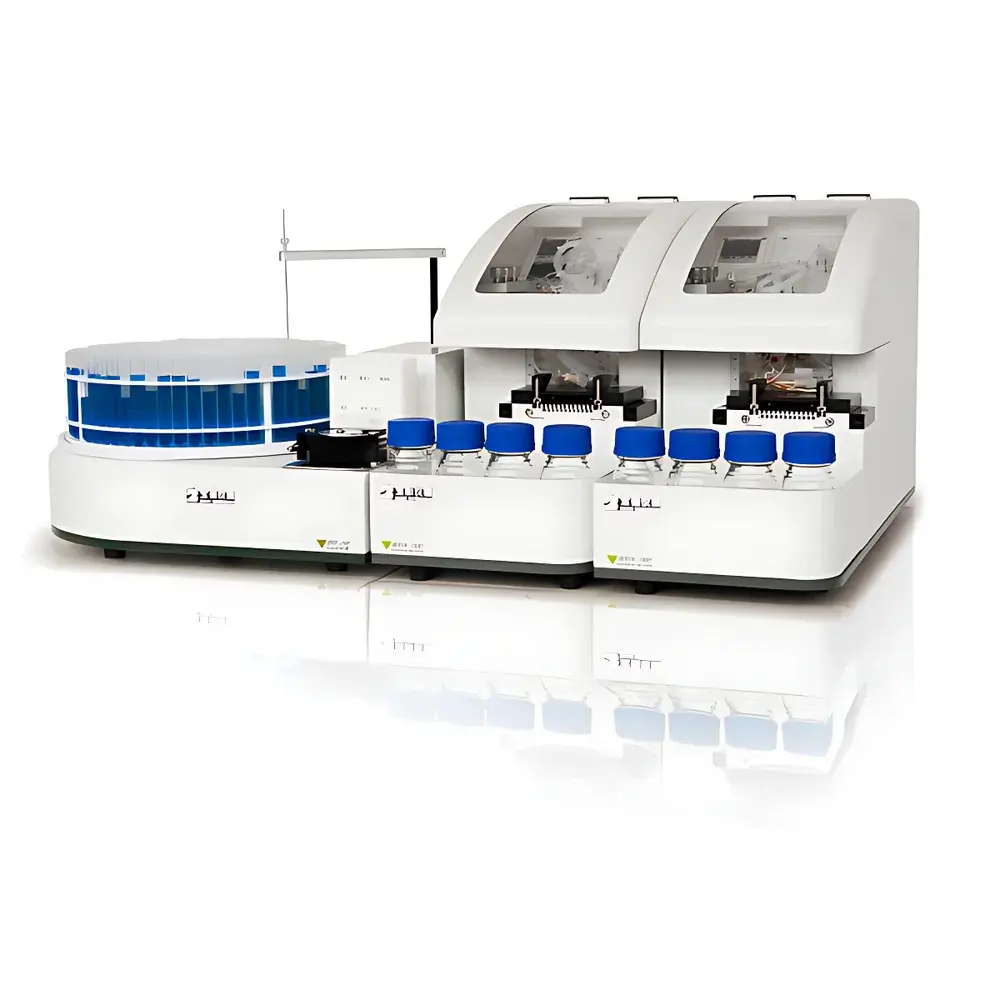
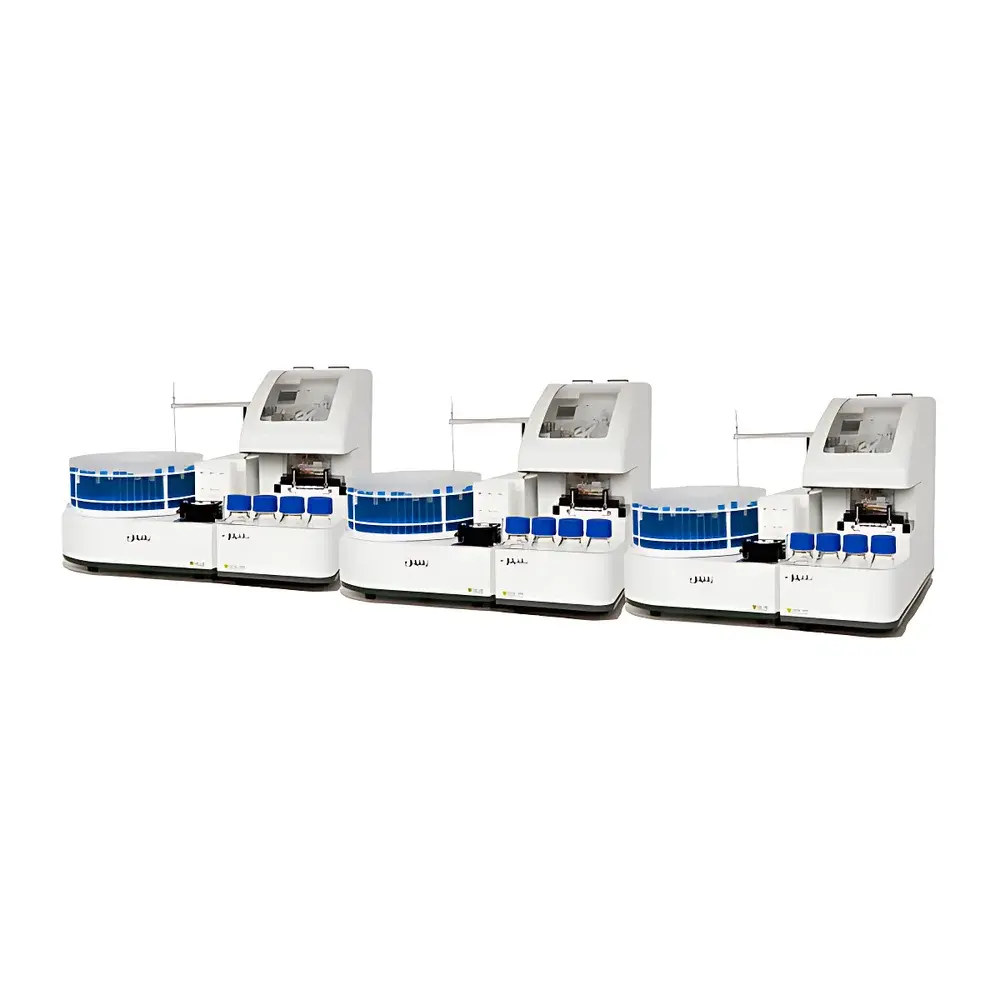
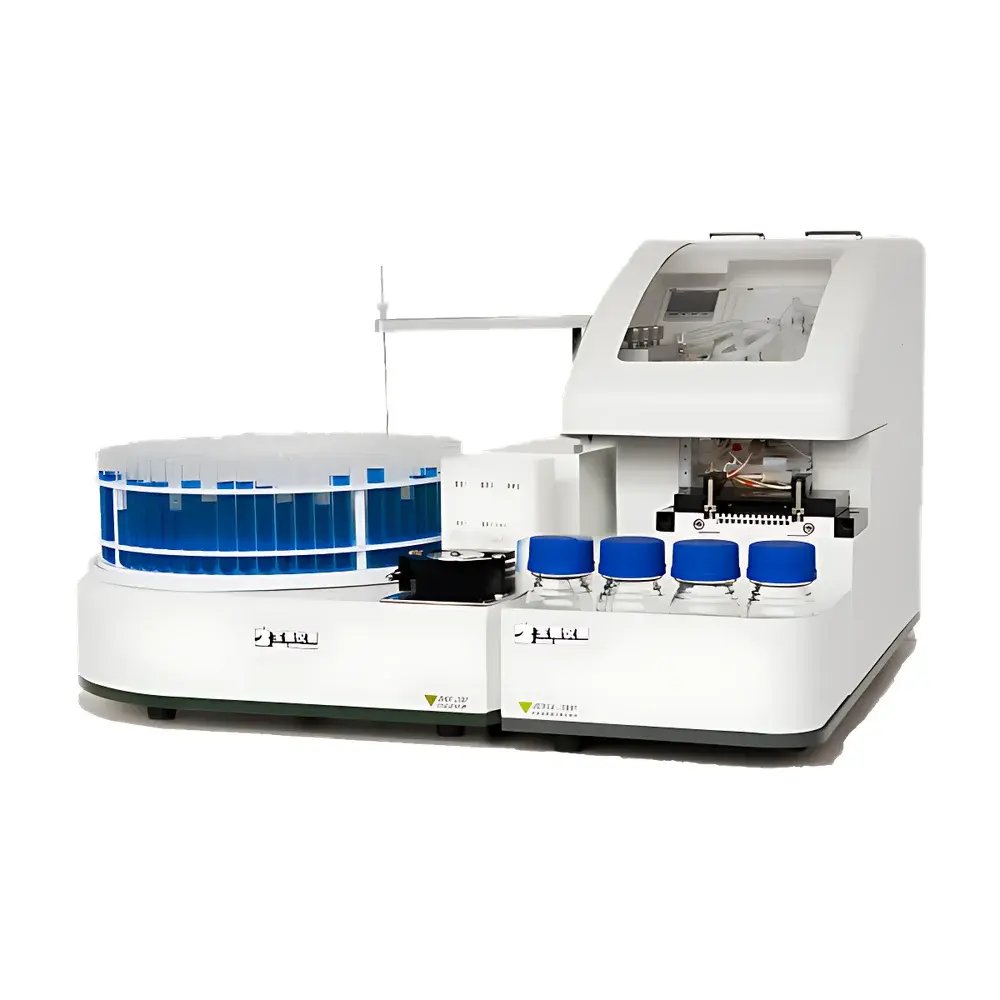
Brookdale BDFIA-7000 Fully Automated Flow Injection Analyzer
| Brand | Brookdale |
|---|---|
| Origin | Beijing, China |
| Manufacturer Type | Original Equipment Manufacturer (OEM) |
| Product Origin | Domestic (China) |
| Model | BDFIA-7000 |
| Pricing | Upon Request |
Overview
The Brookdale BDFIA-7000 Fully Automated Flow Injection Analyzer is an integrated, multi-parameter analytical platform engineered for high-throughput, trace-level quantification of inorganic and organic analytes in environmental, agricultural, food, and industrial samples. It operates on the fundamental principles of flow injection analysis (FIA), combining precise segmented fluidic handling with on-line sample pretreatment and UV-Vis spectrophotometric detection. Unlike classical batch methods or discrete autoanalyzers, the BDFIA-7000 utilizes a continuous carrier stream to introduce discrete sample zones into a controlled chemical reaction environment—enabling reproducible mixing kinetics, minimized reagent consumption, and reduced risk of cross-contamination. Its modular architecture supports programmable sequence control of peristaltic pumping, valve switching, thermal treatment (heating/distillation), phase separation (liquid–liquid extraction), reduction, condensation, and optical measurement—all coordinated via a centralized software interface. Designed for compliance with routine laboratory workflows under ISO/IEC 17025 and EPA Method-compliant protocols (e.g., EPA 354.1 for nitrate/nitrite, EPA 365.4 for phosphate), the system delivers robust performance in regulated testing environments including municipal water laboratories and contract environmental testing facilities.
Key Features
- Fully integrated single-chassis design with synchronized peristaltic pumps, multi-position selection valves, and embedded UV-Vis photometer (wavelength range: 190–1100 nm, resolution: 1.0 nm)
- On-line pretreatment modules: programmable heating (up to 120 °C), micro-distillation, liquid–liquid extraction, chemical reduction (e.g., Cd-reduction for nitrate), and reflux condensation
- Automated end-to-end analysis: sample aspiration, dilution, matrix removal, derivatization, reaction timing, signal acquisition, and report generation—all executed without manual intervention
- Real-time safety monitoring: integrated leak detection sensors, waste reservoir level tracking with overflow alarm, and liquid surface position feedback for pump priming validation
- Modular channel configuration: supports up to 8 independent analytical channels; each channel independently programmable for different chemistries and reaction times
- Compliance-ready architecture: audit trail logging, user access levels, electronic signature support, and data integrity safeguards aligned with FDA 21 CFR Part 11 and GLP/GMP documentation requirements
Sample Compatibility & Compliance
The BDFIA-7000 accommodates aqueous extracts, digested soil leachates, food homogenates, fertilizer solutions, and clarified beverage matrices without prior offline preparation. It meets methodological equivalency to ASTM D3867 (cyanide), ISO 6878 (phosphate), ISO 11905-1 (total nitrogen), ISO 11261 (total phosphorus), and EPA 450.1 (phenols). All wet chemistry protocols are validated per ISO 8466-1 for calibration linearity and IUPAC guidelines for limit of detection (LOD) estimation. Instrument qualification includes IQ/OQ documentation packages supporting installation in accredited laboratories subject to CNAS, UKAS, or DAkkS audits.
Software & Data Management
Control and data acquisition are managed through Brookdale FIA-Control v3.2—a Windows-based application compliant with IEEE 11073 and HL7 standards for instrument interoperability. The software provides method editor with drag-and-drop protocol builder, real-time chromatogram visualization, peak integration using tangent skim baseline correction, and automated QC flagging (e.g., drift >5% RSD across calibration, absorbance saturation, or valve timeout). Raw spectral data and processed results are stored in encrypted SQLite databases with SHA-256 hash verification. Export formats include CSV, PDF analytical reports (with metadata embedding), and LIMS-compatible XML files adhering to ASTM E1467-05.
Applications
- Water quality monitoring: simultaneous determination of NH₃-N, NO₂⁻, NO₃⁻, PO₄³⁻, Cr(VI), CN⁻, phenol, and SiO₂ in drinking water, wastewater effluent, groundwater, and boiler feedwater
- Soil and plant tissue analysis: quantification of extractable boron, fluoride, sulfate, and total Kjeldahl nitrogen following EPA 3050B digestion
- Food and beverage testing: formaldehyde in fish products, nitrite in cured meats, sulfite in wines, and phosphoric acid in soft drinks
- Agricultural inputs: total P and K in fertilizers, urea in foliar sprays, and alkalinity/hardness in irrigation water
- Industrial process control: real-time monitoring of chromate passivation baths, cyanide in electroplating rinse streams, and phenolic content in resin manufacturing
FAQ
What regulatory standards does the BDFIA-7000 support for method validation?
The system enables implementation of EPA, ISO, ASTM, and Chinese HJ standards—including HJ 484 (cyanide), HJ 503 (phenols), HJ 636 (TN), and HJ 671 (TP)—with full traceability of calibration curves, spike recoveries, and blank corrections.
Can the BDFIA-7000 be integrated into an existing LIMS environment?
Yes. It supports bidirectional communication via ASTM E1394-compliant ASCII file exchange or optional OPC UA server module for real-time data streaming to enterprise LIMS platforms.
Is method development supported for non-standard analytes?
The open protocol architecture allows custom method creation using user-defined pump sequences, reaction coil configurations, and wavelength selection—validated through internal lab SOPs or third-party method transfer studies.
What maintenance intervals are recommended for long-term operational stability?
Per manufacturer specifications: daily priming verification, weekly tubing inspection and replacement (peristaltic pump segments), quarterly photometer wavelength calibration with NIST-traceable holmium oxide filter, and annual full system performance qualification (SPQ) per ISO/IEC 17025 Annex A.3.




