
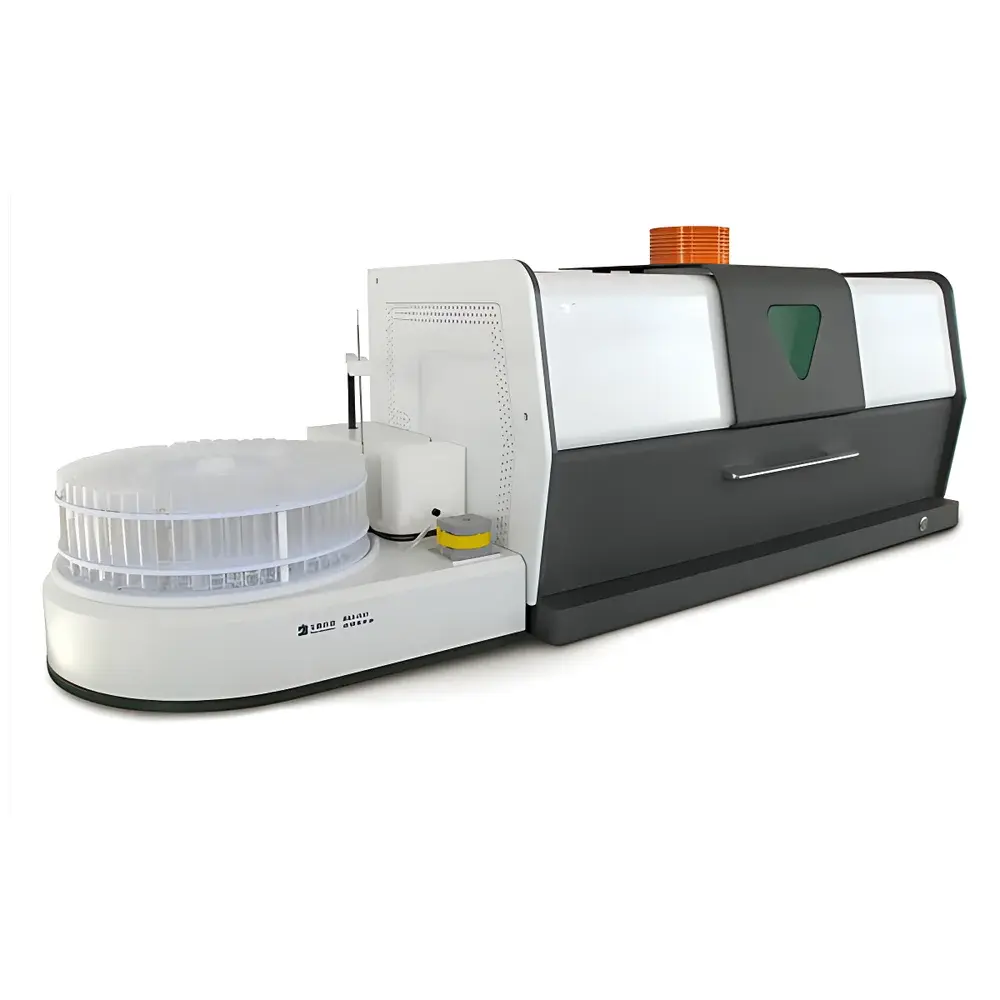
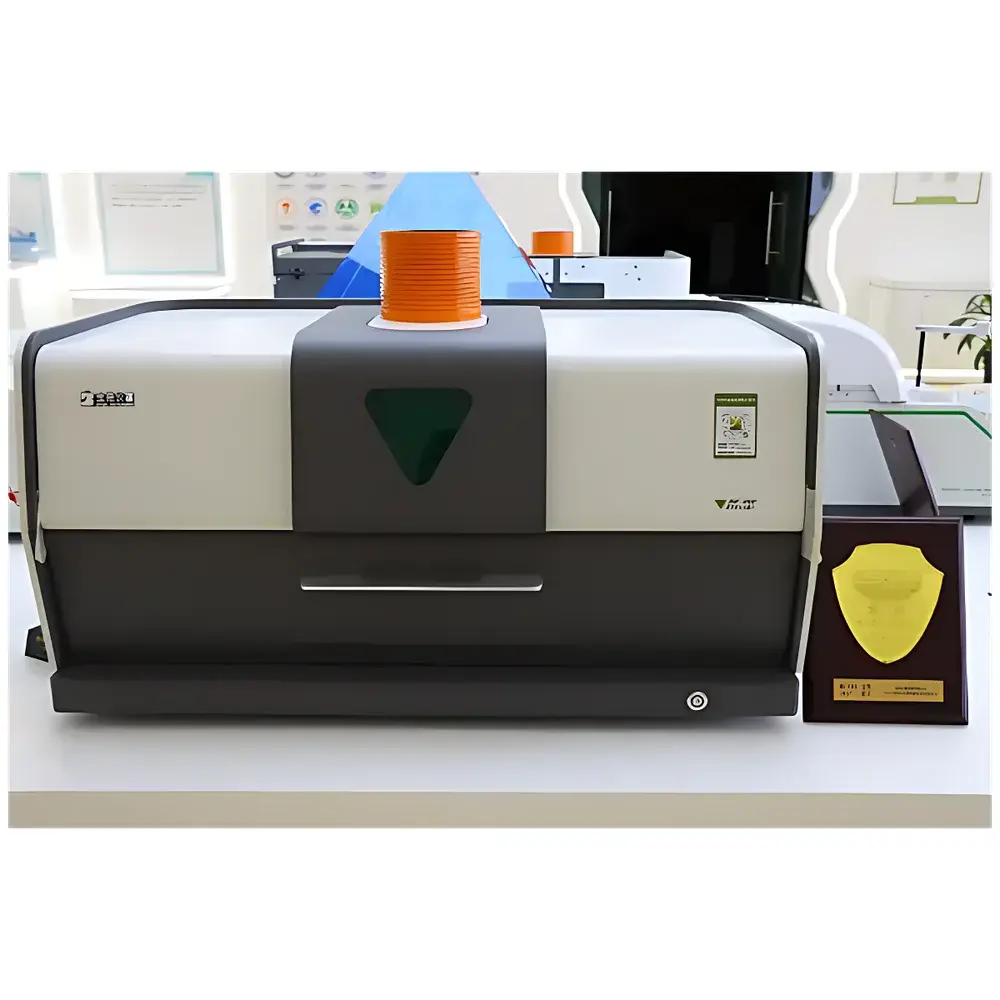
Brookfield BAF-4000 Multi-Channel Atomic Fluorescence Spectrometer
| Brand | BoDe Instruments |
|---|---|
| Origin | Beijing, China |
| Manufacturer Type | Direct Manufacturer |
| Product Category | Domestic |
| Model | BAF-4000 |
| Instrument Type | Multi-Channel Atomic Fluorescence Spectrometer |
| Sample Introduction Mode | Vapor Generation / Hydride Generation |
| Gas Flow Control | Mass Flow Controller |
| Detectable Elements | As, Se, Sn, Sb, Hg, Cd, Te, Bi, Ge, Zn, Au |
| RSD (Relative Standard Deviation) | ≤0.7% |
| Linear Dynamic Range | ≥3 orders of magnitude |
| Detection Limits | As, Sb, Se, Hg, Sn ≤ 0.01 µg/L |
| PMT Wavelength Range | Standard 160–320 nm (customizable upon request) |
| Atomizer Temperature Control Range | Standard ambient temperature |
Overview
The Brookfield BAF-4000 Multi-Channel Atomic Fluorescence Spectrometer is a high-performance, four-channel hydride vapor generation atomic fluorescence instrument engineered for trace elemental analysis in complex matrices. It operates on the principle of atomic fluorescence spectroscopy (AFS), where analyte elements—after chemical reduction to volatile hydride species or cold vapor formation—are atomized in a quartz cell and excited by a high-intensity hollow cathode lamp (HCL). The resulting fluorescence emission at element-specific wavelengths is detected by a low-noise photomultiplier tube (PMT), enabling quantitative determination at sub-part-per-trillion levels. Designed for routine compliance testing and research-grade quantification, the BAF-4000 meets core requirements for environmental monitoring, food safety screening, clinical toxicology, and pharmaceutical quality control under regulatory frameworks including EPA Method 1631E, ISO 17294-2, and GB/T 22105.2–2008.
Key Features
- Four-Channel Simultaneous Detection: Independent optical paths for four elements allow concurrent measurement without sequential lamp switching—reducing analysis time by up to 75% compared to single-channel AFS systems while maintaining inter-channel spectral isolation and minimizing cross-talk.
- Optimized Dual-Optics Architecture: Patented low-background optical design enhances signal-to-noise ratio by ~30% versus conventional collimated beam configurations, directly improving detection sensitivity and long-term baseline stability.
- Automated Mercury Lamp Management: Integrated mercury lamp auto-ignition circuit eliminates manual pre-ignition with auxiliary tools; real-time lamp intensity monitoring and dynamic drift compensation ensure consistent excitation energy over extended operational cycles.
- Zero-Adjustment Light Source Alignment: Motorized auto-focusing mechanism aligns hollow cathode lamps to the optical axis upon insertion—removing manual alignment procedures and ensuring reproducible beam positioning across lamp replacements and maintenance intervals.
- Precision Mass Flow Controlled Gas Delivery: Digital mass flow controllers regulate carrier gas (Ar) and reaction gas (H₂) with ±0.5% full-scale accuracy, ensuring stoichiometric consistency in hydride generation and minimizing blank variability.
- Programmable Atomizer Thermal Control: Optional heated quartz atomizer (25–450 °C) enables optimized atomization efficiency for refractory hydride-forming elements (e.g., Te, Bi) and supports method development for speciation workflows.
Sample Compatibility & Compliance
The BAF-4000 accommodates liquid samples ranging from 0.5 to 10 mL volume, compatible with both direct aqueous analysis and post-digestion extracts (e.g., microwave-assisted HNO₃/H₂O₂ digestion per EPA 3052). It supports solid sampling via slurry nebulization for soils, sediments, and biological tissues. Certified reference materials (CRMs) including NIST SRM 1640a (Trace Elements in Natural Water), GBW 07605 (Human Hair), and ERM-CA713 (Bovine Muscle) are routinely used for method validation. The system complies with GLP data integrity requirements through hardware-enforced audit trails, electronic signature support, and secure user role management—fully aligned with FDA 21 CFR Part 11 and ISO/IEC 17025 documentation standards.
Software & Data Management
BoDe AFS Studio v4.2 provides intuitive method setup, real-time signal visualization, multi-point calibration (linear and quadratic), and automated QC flagging (e.g., drift >2%, blank exceedance, peak asymmetry). Raw spectral data and processed results are stored in vendor-neutral .csv and .xml formats compliant with LIMS integration protocols. All acquisition parameters—including lamp current, PMT voltage, delay time, and integration window—are timestamped and version-controlled. Software logs include operator ID, method name, sample ID, and instrument status flags, supporting full traceability during regulatory audits.
Applications
- Environmental: Quantification of As, Hg, and Se in drinking water (per WHO Guidelines), wastewater effluents, and marine sediment porewater.
- Food & Agriculture: Screening of rice, seafood, and infant formula for inorganic arsenic and methylmercury precursors.
- Clinical & Forensic Toxicology: Blood and urine analysis for chronic heavy metal exposure assessment (e.g., occupational Hg monitoring).
- Pharmaceuticals: Residual catalyst metal testing (e.g., Pd, Pt) in API intermediates using hydride-free cold vapor mode.
- Geochemical Exploration: Rapid field-deployable analysis of rock leachates and soil extracts for Sb, Bi, and Te as pathfinder elements.
- Academic Research: Coupling with HPLC for As(III)/As(V)/DMA speciation and development of novel hydride-generation chemistries for Ge and Sn.
FAQ
What hydride-forming elements can be measured without modification?
The standard configuration supports As, Se, Sb, Bi, Te, Sn, Pb, and Ge via sodium borohydride reduction. Cd and Zn require potassium ferricyanide–enhanced hydride generation, while Hg is analyzed via cold vapor atomic fluorescence.
Is the instrument compatible with EPA Method 1631E for mercury in water?
Yes—the BAF-4000 meets all instrumental performance criteria specified in EPA Method 1631E, including the ≤0.001 µg/L MDL requirement for cold vapor Hg, validated using spiked reagent water and matrix spike duplicates.
Can the PMT wavelength range be extended beyond 320 nm?
Custom configurations with UV-enhanced PMTs and fused silica optics support operation up to 365 nm, enabling detection of weakly fluorescent elements such as Tl and Pb under optimized conditions.
Does the software support 21 CFR Part 11 compliance out-of-the-box?
Yes—audit trail logging, electronic signatures, and role-based access control are enabled by default; full validation documentation (IQ/OQ/PQ protocols) is available upon request.







