
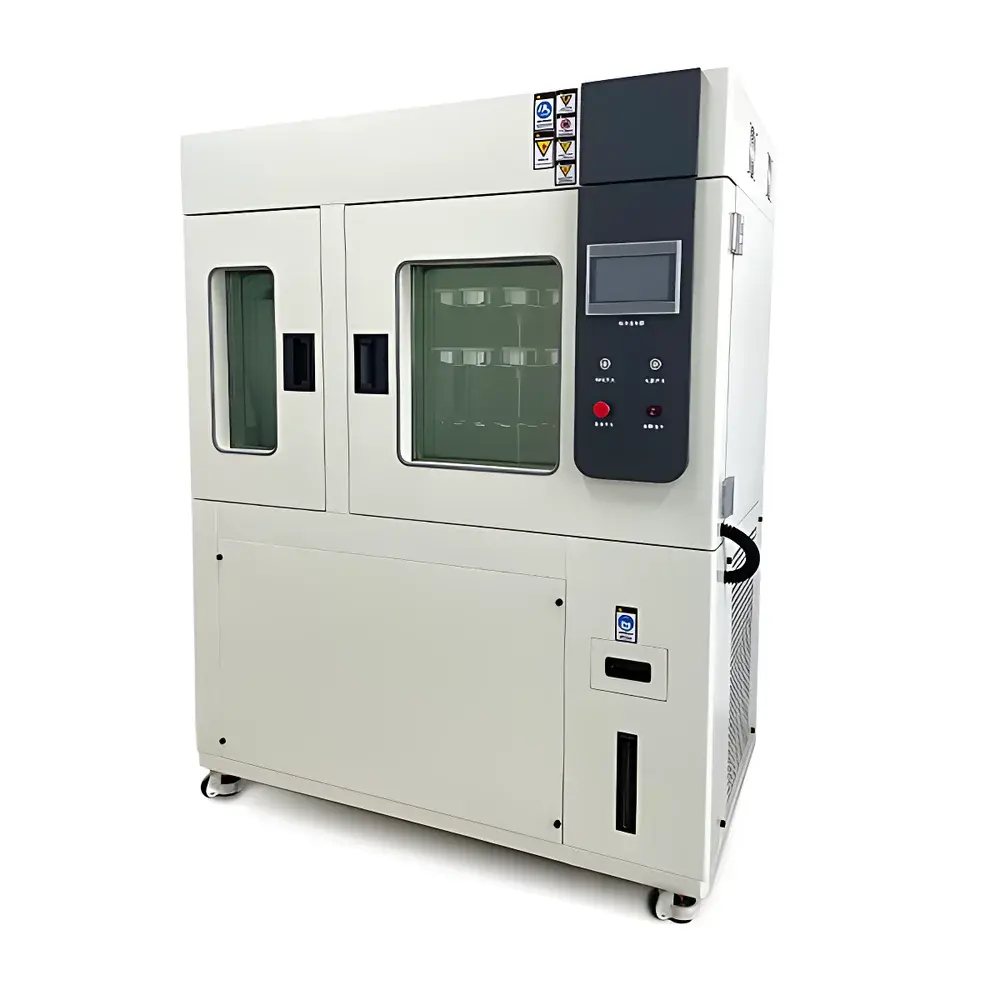
Brookfield BDCW-50 Automated Temperature- and Humidity-Controlled Weighing System
| Brand | Brookfield |
|---|---|
| Origin | Beijing, China |
| Manufacturer | Producer |
| Country of Origin | Domestic (China) |
| Model | BDCW-50 |
| Pricing | Upon Request |
Overview
The Brookfield BDCW-50 Automated Temperature- and Humidity-Controlled Weighing System is an engineered solution for gravimetric analysis under strictly regulated environmental conditions. Designed in accordance with the fundamental principles of controlled-environment metrology, the system integrates a precision analytical balance within a sealed, microclimate-controlled chamber—maintaining stable temperature (typically 15–30 °C ±0.5 °C) and relative humidity (typically 30–60% RH ±2% RH) throughout the weighing cycle. This architecture eliminates ambient fluctuations that induce hygroscopic drift, electrostatic interference, and thermal buoyancy effects—common sources of uncertainty in manual filter weighing for particulate matter (PM) monitoring per EPA Method 201A, ISO 12103-1, and HJ 656-2013. The BDCW-50 supports weight-based quantification across environmental, food, clinical, and industrial laboratories where trace-level mass stability (<10 µg repeatability) and procedural reproducibility are mandated by regulatory frameworks including US EPA, CNAS-CL01, and GLP-compliant quality management systems.
Key Features
- Integrated dual-climate control module with independent PID-regulated heating, refrigeration, and desiccant-based humidity modulation—ensuring long-term chamber stability without condensation or thermal stratification.
- Automated robotic sample handling mechanism with multi-position carousel (up to 48 positions), enabling unattended sequential weighing of filters, crucibles, evaporating dishes, low-concentration sampling heads, and membrane carriers.
- Programmable multi-step workflows: pre-conditioning → drying (optional integrated hot-air drying at ≤105 °C) → cooling → stabilization → tare → gross weighing → post-weighing data validation.
- Real-time environmental logging (temperature, RH, pressure, balance status) with timestamped audit trail compliant with FDA 21 CFR Part 11 requirements for electronic records and signatures.
- Overload protection circuitry with dual-stage thermal cutoff (high-temperature alarm + automatic power shutdown) and pressure-relief venting for safe operation during extended无人值守 cycles.
- Modular design compatible with optional upgrades: NIST-traceable internal mass calibration kit, anti-vibration optical table integration, and ISO 17025-accredited installation qualification (IQ/OQ/PQ) documentation support.
Sample Compatibility & Compliance
The BDCW-50 accommodates standard environmental media including quartz fiber filters (e.g., Pallflex Tissuquartz®), PTFE membranes, glass fiber filters, stainless-steel crucibles (10–50 mL), and custom-designed low-concentration sampling assemblies. It meets methodological requirements for EPA Method 201A (PM2.5/PM10), ISO 7709 (ambient dust gravimetry), HJ 656-2013 (Chinese ambient PM monitoring), and GB/T 5750.4-2023 (drinking water TDS and suspended solids). All internal surfaces are electropolished stainless steel (316L), minimizing particle adhesion and facilitating decontamination between batches. System validation adheres to ISO/IEC 17025:2017 clause 5.5 (equipment verification) and ASTM E2587-21 (statistical process control for analytical balances).
Software & Data Management
The embedded Windows-based control software provides role-based user access (administrator, analyst, reviewer), configurable SOP-driven protocols, and automated report generation in PDF/XLSX formats—including uncertainty budgeting per GUM (JCGM 100:2008). Raw balance readings, environmental logs, and operator actions are stored in encrypted SQLite databases with immutable timestamps. Data export supports LIMS integration via ASTM E1384-compliant HL7 or CSV batch transfer. Audit trails retain full revision history for all method edits, calibration events, and result approvals—fully traceable for regulatory inspection or accreditation audits.
Applications
- Ambient air and stack emission monitoring: automated gravimetric analysis of PM1, PM2.5, PM10, TSP, and deposition dust per national and international reference methods.
- Water quality testing: determination of dissolved solids (TDS), total suspended solids (TSS), and total α/β radioactivity in drinking water, groundwater, wastewater, and surface water matrices.
- Food and agricultural analysis: moisture content (AOAC 950.46), dry matter, and ash yield quantification in cereals, dairy products, and processed foods.
- Hazardous waste characterization: moisture and volatile solids measurement in municipal sludge, incinerator ash, and contaminated soils per EPA SW-846 Method 3010A.
- Research applications: source apportionment studies requiring high-precision filter mass differentials; atmospheric aerosol hygroscopicity modeling; and inter-laboratory comparison trials.
FAQ
What standards does the BDCW-50 comply with for environmental filter weighing?
It supports compliance with EPA Method 201A, ISO 12103-1, HJ 656-2013, and GB/T 15432-1995 for gravimetric PM analysis.
Can the system perform both drying and weighing in one automated sequence?
Yes—integrated hot-air drying (up to 105 °C) followed by controlled cooling and humidity-stabilized weighing is fully programmable.
Is remote monitoring and control supported?
Local Ethernet connectivity enables remote desktop access and real-time status viewing via secure VPN; cloud-based data backup requires on-premise server configuration.
How is balance calibration maintained during long-term operation?
Internal motorized calibration mass deployment occurs automatically before each batch or at user-defined intervals, traceable to NIST SRM 31a.
Does the system meet GLP or ISO/IEC 17025 documentation requirements?
Yes—full electronic audit trail, instrument qualification templates (IQ/OQ), and raw data archiving satisfy GLP, ISO/IEC 17025, and CNAS-CL01 documentation mandates.



