
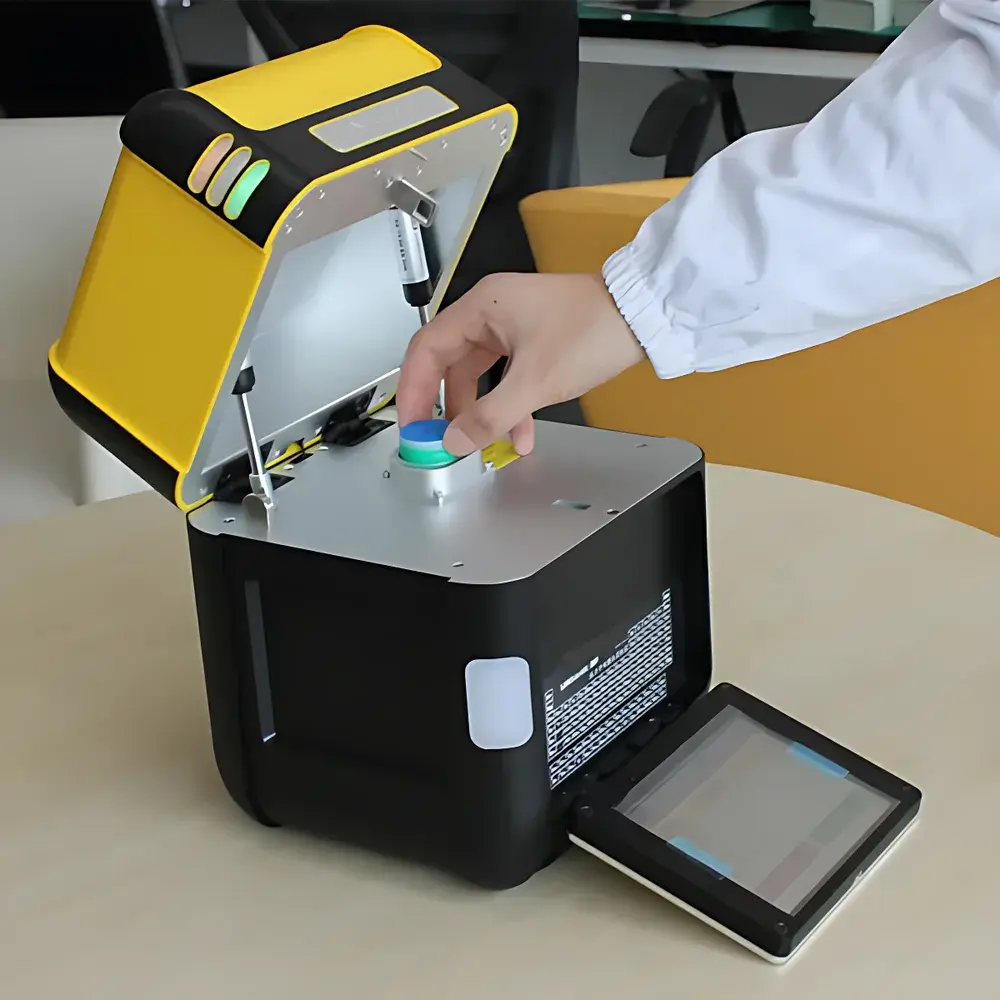
Brookfield PeDX OIL+ / PeDX OIL C3 Portable Energy-Dispersive X-Ray Fluorescence (EDXRF) Analyzer for Sulfur and Wear Metal Analysis in Petroleum Products
| Brand | LANScientific |
|---|---|
| Origin | Jiangsu, China |
| Manufacturer Type | Original Equipment Manufacturer (OEM) |
| Country of Origin | China |
| Model | PeDX OIL+ / PeDX OIL C3 |
| Form Factor | Handheld / Portable |
| Instrument Type | Benchtop-Portable Hybrid EDXRF Spectrometer |
| Industry-Specific Design | Petroleum & Lubricants Quality Control |
| Compliance | ASTM D4294–22, ISO 8754:2003, IP 561, EN ISO 20884:2020 |
Overview
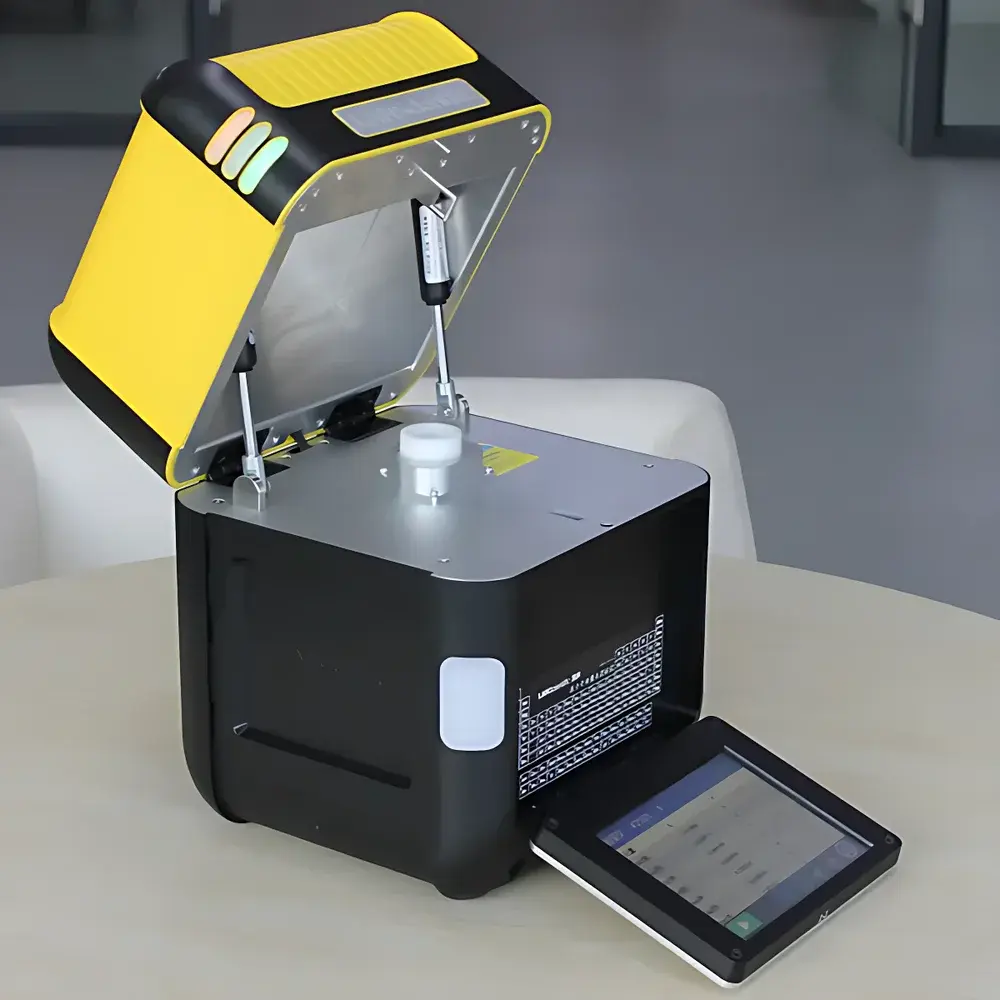
The Brookfield PeDX OIL+ and PeDX OIL C3 are handheld–portable energy-dispersive X-ray fluorescence (EDXRF) spectrometers engineered for rapid, on-site elemental analysis of sulfur and critical wear metals in liquid petroleum products. Based on fundamental XRF physics—where primary X-rays excite characteristic secondary (fluorescent) X-rays from sample atoms—the instruments quantify sulfur (S), calcium (Ca), zinc (Zn), phosphorus (P), barium (Ba), magnesium (Mg), iron (Fe), chromium (Cr), nickel (Ni), copper (Cu), lead (Pb), silicon (Si), sodium (Na), and other elements at concentrations ranging from sub-ppm to several wt% levels. Unlike benchtop WDXRF or combustion-based UV-Fluorescence analyzers, the PeDX OIL series delivers laboratory-grade precision without sample digestion or solvent extraction, enabling direct measurement of unprepared oils—including viscous residuals, low-volatility distillates, and multi-phase lubricants—in field, refinery, marine, or depot environments.
Key Features
- Optimized X-ray optics with Peltier-cooled silicon drift detector (SDD) offering <145 eV Mn Kα resolution at 100,000 cps count rate, ensuring high peak-to-background ratio for low-sulfur diesel (<10 ppm) and marine fuel (0.1–1.5 wt%) quantification.
- Dual-anode Ag/Rh microfocus X-ray tube with automatic kV/mA switching—adaptive excitation for light-element sensitivity (S, P, Si) and heavy-metal line separation (Zn, Pb, Fe).
- Integrated oil-specific calibration libraries pre-validated against CRM reference materials traceable to NIST SRM 2721 (used oil), NIST SRM 1634c (diesel), and BCR-681 (lubricating oil).
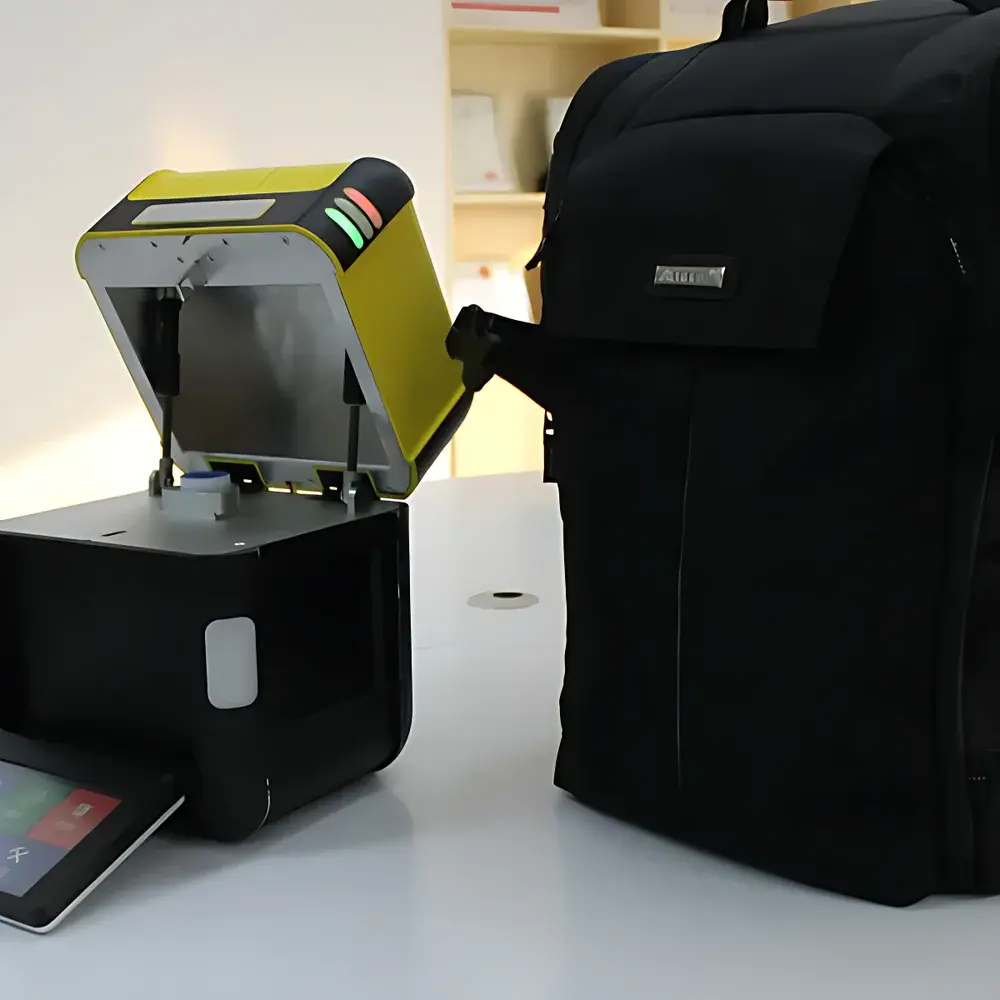
- Ruggedized IP54-rated magnesium alloy housing with shock-absorbing rubber overmold, rated for continuous operation at –10 °C to +50 °C ambient and up to 95% RH non-condensing.
- Real-time spectral deconvolution using LANScientific’s Super-FP fundamental parameters algorithm—correcting for matrix effects, absorption, and enhancement without empirical standards for each oil type.
- Onboard touch interface with guided workflow: “Power On → Aim → Trigger → View Result” — full quantitative report generated in ≤8 seconds per measurement.
Sample Compatibility & Compliance
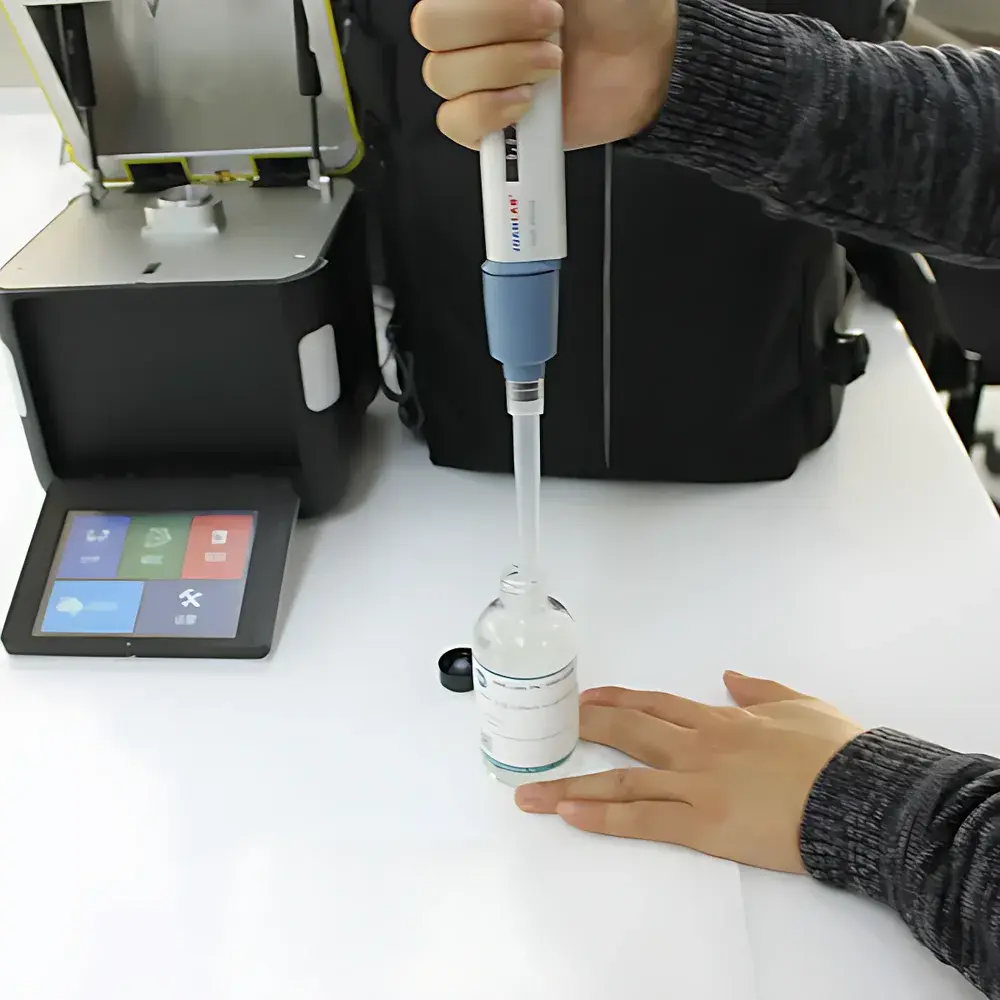
The PeDX OIL+ and PeDX OIL C3 support direct analysis of neat liquids (no filtration required), solid deposits scraped from filters or engine components, and semi-solid sludges when loaded into standard 10-mm diameter sample cups with Mylar or polyimide film windows. Instruments comply with ASTM D4294–22 (Standard Test Method for Sulfur in Petroleum and Petroleum Products by Energy-Dispersive X-Ray Fluorescence Spectrometry), ISO 8754:2003 (Petroleum products — Determination of sulfur content — Energy-dispersive X-ray fluorescence spectrometry), and EN ISO 20884:2020 (Petroleum products — Determination of sulfur content of automotive fuels — Wavelength dispersive X-ray fluorescence spectrometry). All firmware and data handling modules meet GLP audit-trail requirements, including timestamped user logins, measurement history with raw spectra storage, and electronic signature support for regulated environments.
Software & Data Management
PeDX Control Suite v4.2 (Windows/macOS compatible) enables remote instrument configuration, method transfer, and batch report generation. Quantitative results export natively to Excel (.xlsx) with embedded metadata (operator ID, GPS coordinates, instrument serial, measurement time, spectrum checksum), allowing traceability per ISO/IEC 17025:2017 clause 7.7. PDF reports include customizable headers (company logo, address, QA stamp), spectral overlays, calibration verification logs, and uncertainty estimates derived from counting statistics and FP modeling error propagation. Data files adhere to ASTM E1392–21 (Standard Practice for Exchange of Analytical Data) XML schema for interoperability with LIMS platforms.
Applications
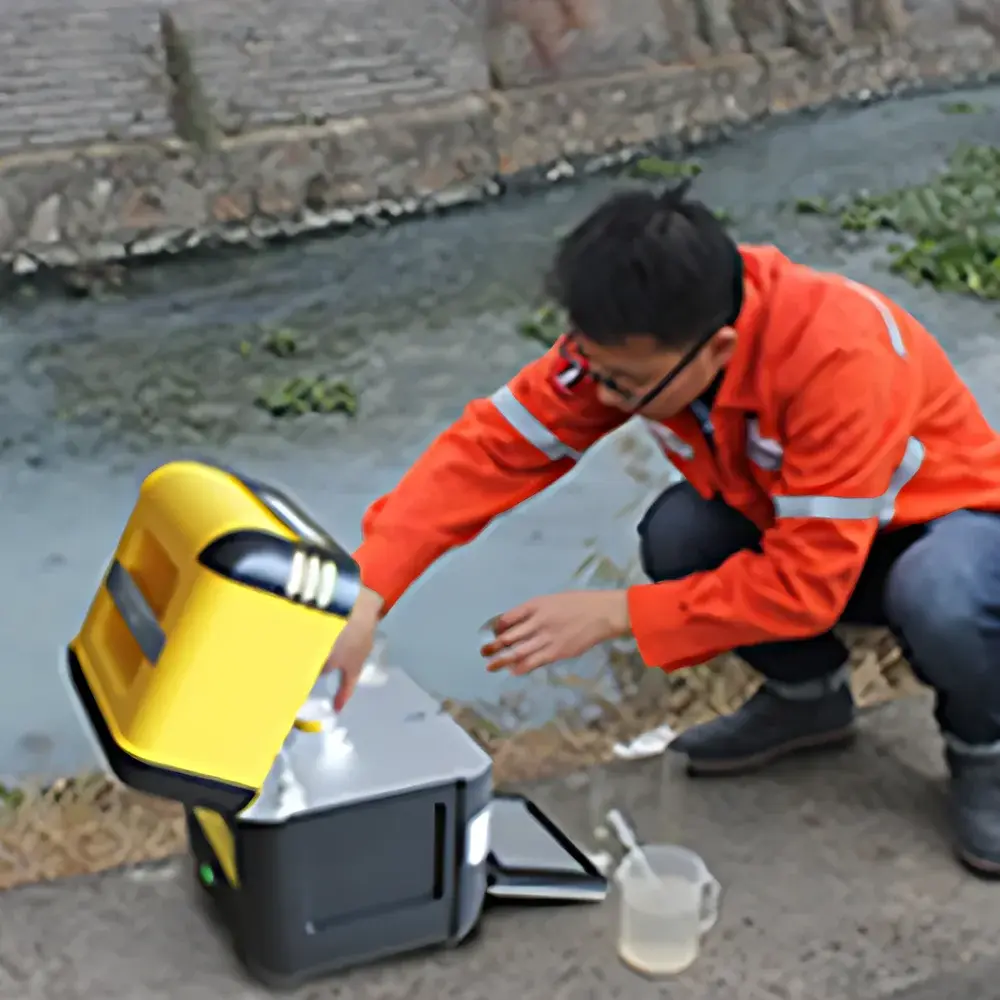
- Marine bunker fuel compliance monitoring per IMO MARPOL Annex VI (0.50% m/m global cap; 0.10% in ECAs) — real-time verification prior to vessel bunkering.
- In-line quality assurance at refinery blending racks and pipeline terminals for diesel, jet fuel (ASTM D1655), and marine gas oil (ISO 8217).
- Engine oil condition monitoring: trending of wear metals (Fe, Cr, Al), additives (Ca, Zn, P, Mg), and contamination (Si, Na, Cl) to support predictive maintenance programs aligned with SAE J300 and OEM specifications.
- Used oil re-refining feedstock screening: sulfur and halogen content assessment for distillation feed qualification.
- Field verification of biodiesel (B5–B20) blend ratios via sulfur depletion signatures and catalyst residue detection (e.g., Na, K).
FAQ
Does the PeDX OIL series require sample preparation before analysis?
No—neat oils, filtered samples, or dried residues can be measured directly. Viscous or particulate-laden oils benefit from brief homogenization but do not require acid digestion or dilution.
How is measurement accuracy verified across different oil matrices?
Each unit ships with matrix-matched calibration sets validated against ≥12 certified reference materials spanning base oils, API Group I–III stocks, and finished fuels. Daily verification uses onboard check standards traceable to NIST.
Can the instrument differentiate between organic sulfur and inorganic sulfates?
No—EDXRF measures total sulfur regardless of chemical speciation. For speciation analysis (e.g., mercaptans vs. thiophenes), complementary techniques such as GC-SCD or XANES are recommended.
Is the device compliant with FDA 21 CFR Part 11 for electronic records?
Yes—audit trail logging, role-based access control, and electronic signature capability are enabled via optional PeDX Compliance Pack, supporting GxP-aligned workflows in regulated refining QA/QC labs.
What is the typical detection limit for sulfur in ultra-low-sulfur diesel (ULSD)?
Under optimized conditions (60 s counting time, 3 mm beam collimation), the practical detection limit is 1.2 ppm (3σ), consistent with ASTM D4294 repeatability requirements for ULSD.
Related Products





