
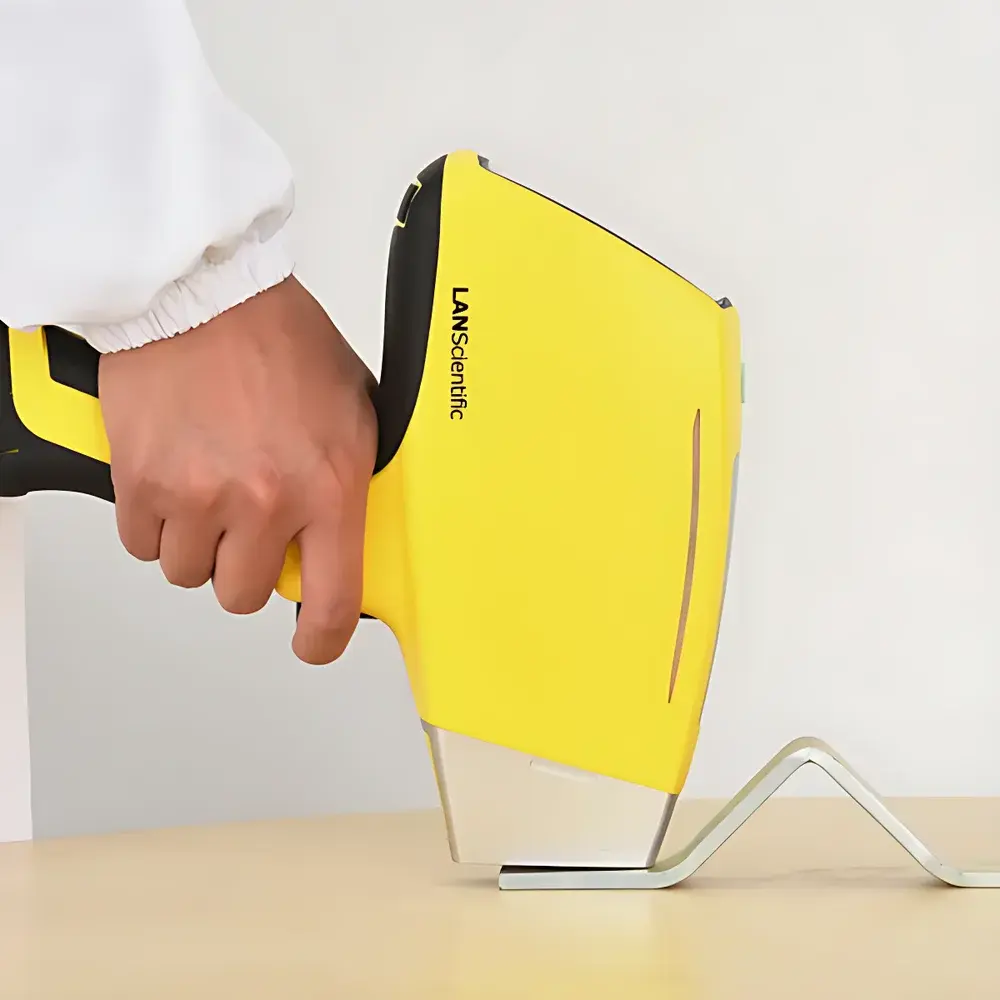
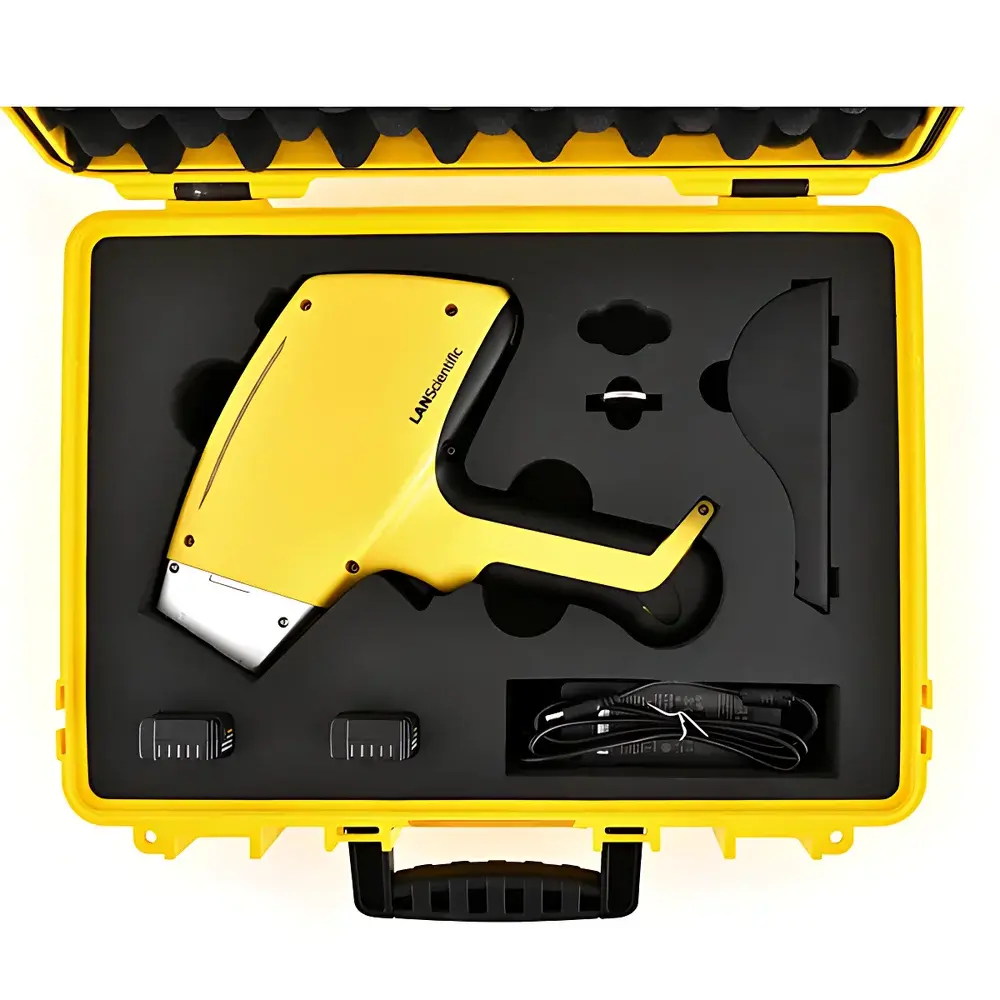
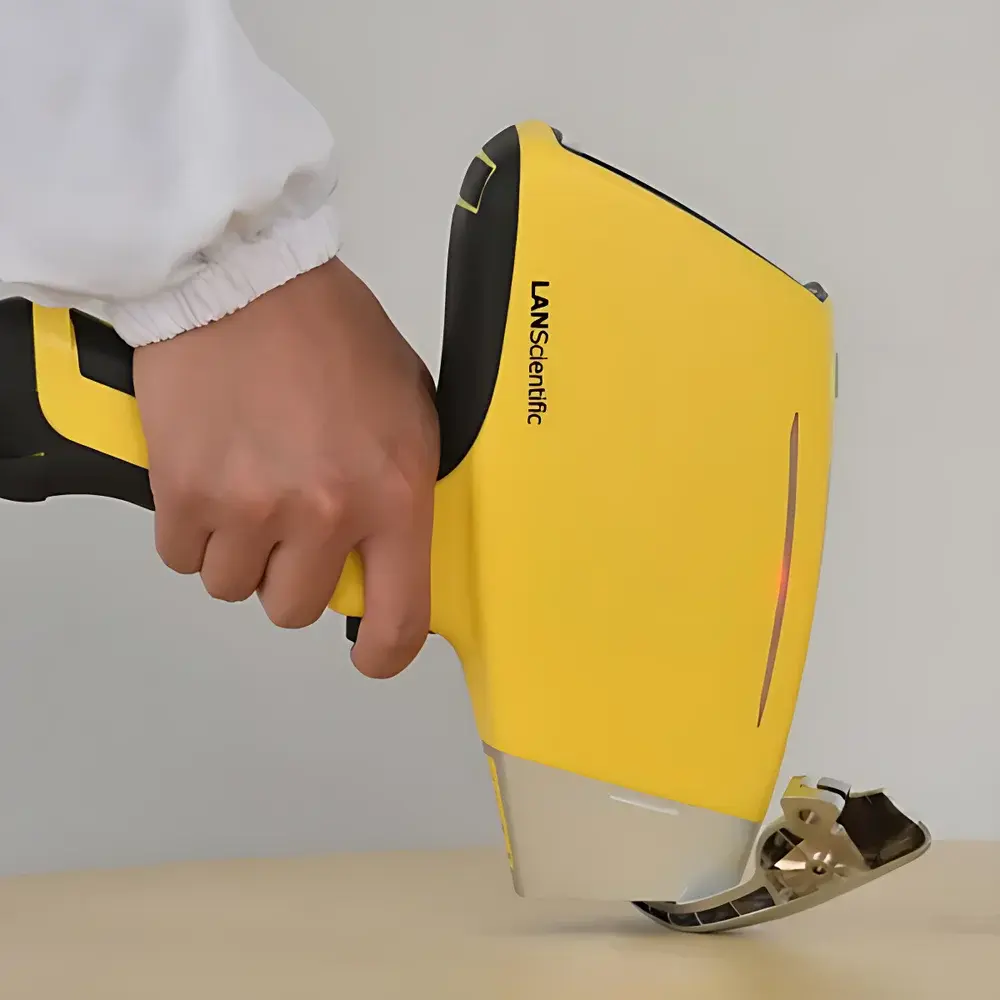
LANScientific TrueX COAT2 Portable X-Ray Fluorescence Coating Thickness Analyzer
| Brand | LANScientific |
|---|---|
| Origin | Jiangsu, China |
| Manufacturer Type | Manufacturer |
| Region Category | Domestic (China) |
| Model | TrueX COAT2 |
| Price Range | USD 14,000 – 28,000 |
Overview
The LANScientific TrueX COAT2 is a handheld energy-dispersive X-ray fluorescence (EDXRF) analyzer engineered for non-destructive, in-situ measurement of metallic coating thickness and elemental composition. Based on fundamental parameter (FP) modeling and optimized excitation-detection geometry, the instrument operates by irradiating the sample surface with a focused X-ray beam and measuring the characteristic secondary X-rays emitted from constituent elements. Its compact, ergonomic design integrates a high-stability miniature X-ray tube, a large-area silicon drift detector (SDD), and real-time spectral processing firmware—enabling rapid quantification of single- or multi-layer coatings (e.g., Zn/Ni/Cr on steel, Sn/Pb on PCBs, Au/Ni/Cu on connectors) without sample preparation or vacuum requirements. Designed for industrial field use, the TrueX COAT2 meets ISO 3497:2022 (Metallic coatings — Measurement of coating thickness — X-ray spectrometric methods) and supports traceable calibration against certified reference materials (CRMs) traceable to NIST and BAM standards.
Key Features
- Portable EDXRF platform with integrated battery (≥8 hours continuous operation) and ruggedized IP54-rated enclosure for workshop, plant floor, and outdoor deployment.
- Optimized excitation geometry featuring dual-filtered Rh anode X-ray tube (max 50 kV, 200 µA) and collimated beam path for enhanced signal-to-background ratio in thin-film analysis.
- Large-area silicon drift detector (SDD) with <135 eV Mn Kα resolution at 0°C, enabling precise separation of overlapping peaks (e.g., Cr–Fe, Ni–Cu, Sn–Pb) critical for multi-layer quantification.
- Advanced spectral deconvolution algorithms including Super-FP (Fundamental Parameters) and empirical calibration curve fitting—both supporting matrix correction and inter-element absorption/enhancement compensation.
- T-slot active thermal management system maintaining detector and tube temperature stability within ±0.5°C over extended measurements—eliminating need for forced cooldown cycles between analyses.
- On-device touch interface with preloaded coating-specific calibrations (e.g., ASTM B568, ISO 2178, ISO 2808) and customizable method templates for rapid setup in QA/QC workflows.
Sample Compatibility & Compliance
The TrueX COAT2 accommodates flat, curved, and irregularly shaped substrates—including stamped parts, fasteners, printed circuit boards, piping, and coated wires—with minimum sample area ≥3 mm² and maximum curvature radius ≥5 mm. It supports analysis of coatings ranging from ~0.01 µm (e.g., electroless Ni-P) to ~50 µm (e.g., hot-dip galvanized Zn), depending on substrate density and element atomic number. The analyzer complies with IEC 61000-6-3 (EMC emissions), IEC 61000-6-2 (immunity), and GB/T 18268.1–2010 (industrial EDXRF safety). Firmware includes audit trail logging and user access control aligned with GLP/GMP documentation requirements. Optional 21 CFR Part 11-compliant software module available for regulated environments requiring electronic signatures and data integrity assurance.
Software & Data Management
The instrument ships with LANScientific CoatingSuite™ v3.2—a Windows-based desktop application supporting method development, CRM library management, statistical process control (SPC) charting, and automated report generation (PDF/CSV/XLSX). Raw spectra, measurement metadata (operator ID, timestamp, GPS coordinates), and calibration history are stored in encrypted SQLite databases. Data export supports LIMS integration via ODBC and HL7-compatible interfaces. Cloud-enabled firmware updates and remote diagnostics are accessible through secure TLS-encrypted channels. All quantitative results include expanded uncertainty estimates calculated per ISO/IEC Guide 98-3 (GUM).
Applications
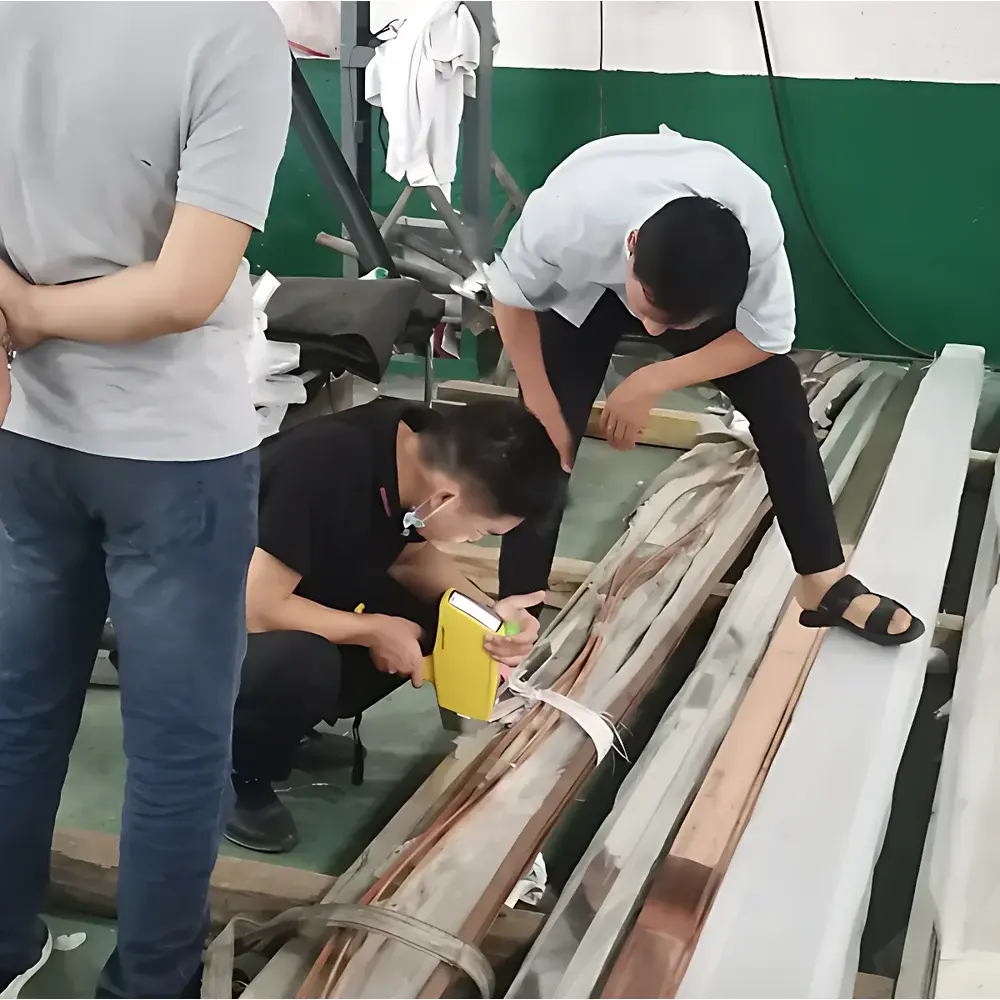
- Quality assurance in electroplating lines: real-time monitoring of bath composition (Ni, Cu, Cr, Sn, Zn, Pb) and deposit thickness uniformity across rack-mounted parts.
- Recycling and scrap sorting: rapid identification of alloy substrates (e.g., 304 vs. 316 stainless, Al 6061 vs. 7075) and coating types (Cd, Cr(VI), RoHS-compliant alternatives) to optimize material recovery streams.
- Electronics manufacturing: verification of ENIG (electroless nickel immersion gold), ENEPIG, and OSP coatings on PCB pads and connectors per IPC-4552B and IPC-4556A.
- Aerospace MRO: on-wing inspection of cadmium and chromium conversion coatings on aluminum airframes and titanium fasteners per AMS 2400 and ASTM B633.
- Automotive Tier-1 suppliers: incoming inspection of zinc-nickel coated brake calipers, fuel rails, and EV battery busbars meeting ISO 10289 and VW TL 226.
- Pharmaceutical equipment: validation of passivation layers (Cr-rich oxide films) on stainless steel vessels and piping per ASTM A967 and USP .
FAQ
What coating thickness ranges can the TrueX COAT2 measure accurately?
Typical measurable range spans 0.01 µm to 50 µm, depending on coating-substrate pair, element mass absorption coefficient, and instrument geometry. Thinner films require longer counting times and optimized excitation conditions.
Does the analyzer require helium purge or vacuum for light element analysis?
No. The SDD and optimized low-energy X-ray optics enable reliable detection of elements from Mg (Z=12) to U (Z=92) in air; no gas purge or vacuum chamber is needed.
Can it quantify multi-layer stacks such as Cu/Ni/Cr on ABS plastic?
Yes—provided layer sequence and approximate thicknesses are known a priori, the Super-FP algorithm resolves individual layer contributions using iterative spectrum fitting constrained by physical attenuation models.
Is calibration transfer possible between multiple TrueX COAT2 units?
Yes. Calibration files—including detector response functions, tube spectra, and FP parameters—are portable across instruments of the same model series when operated under identical environmental conditions.
How does the instrument handle surface roughness or curvature effects?
Built-in topography correction uses integrated distance sensor feedback and geometric normalization algorithms; users may also apply manual correction factors derived from reference measurements on representative roughness standards.



