
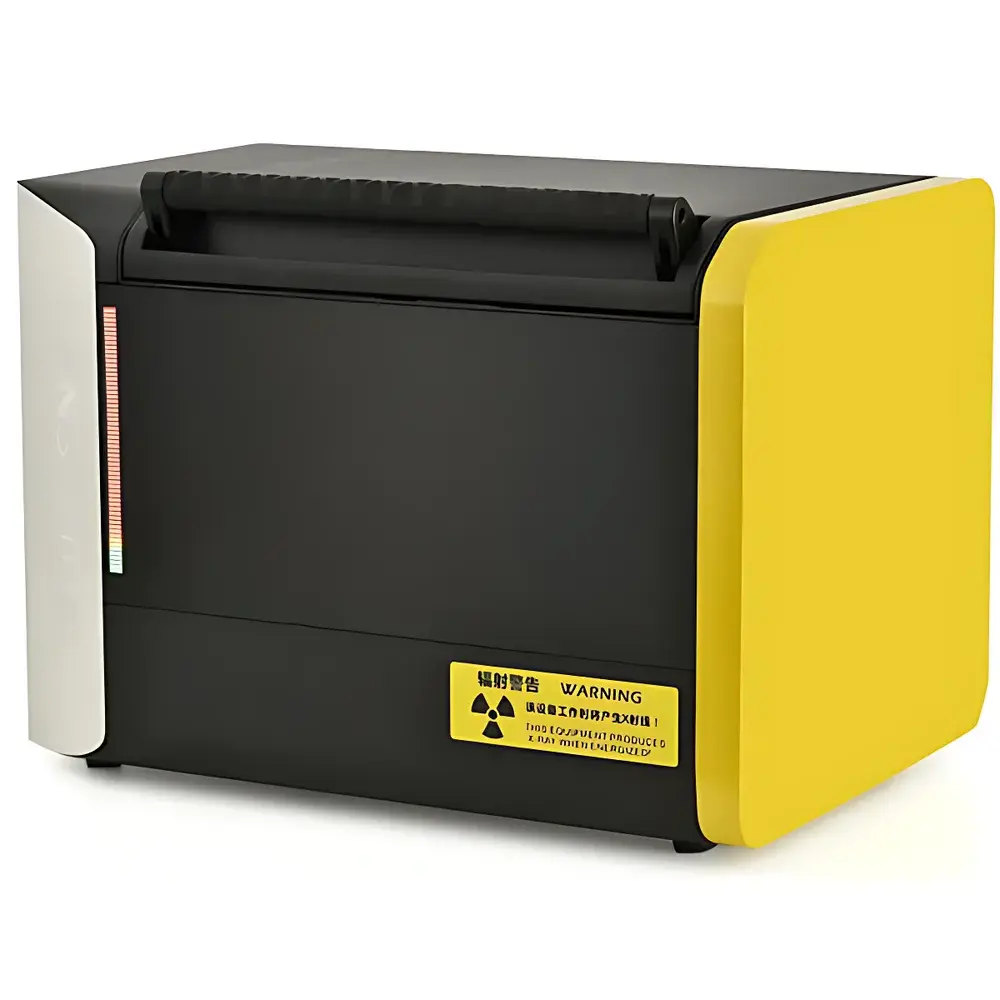
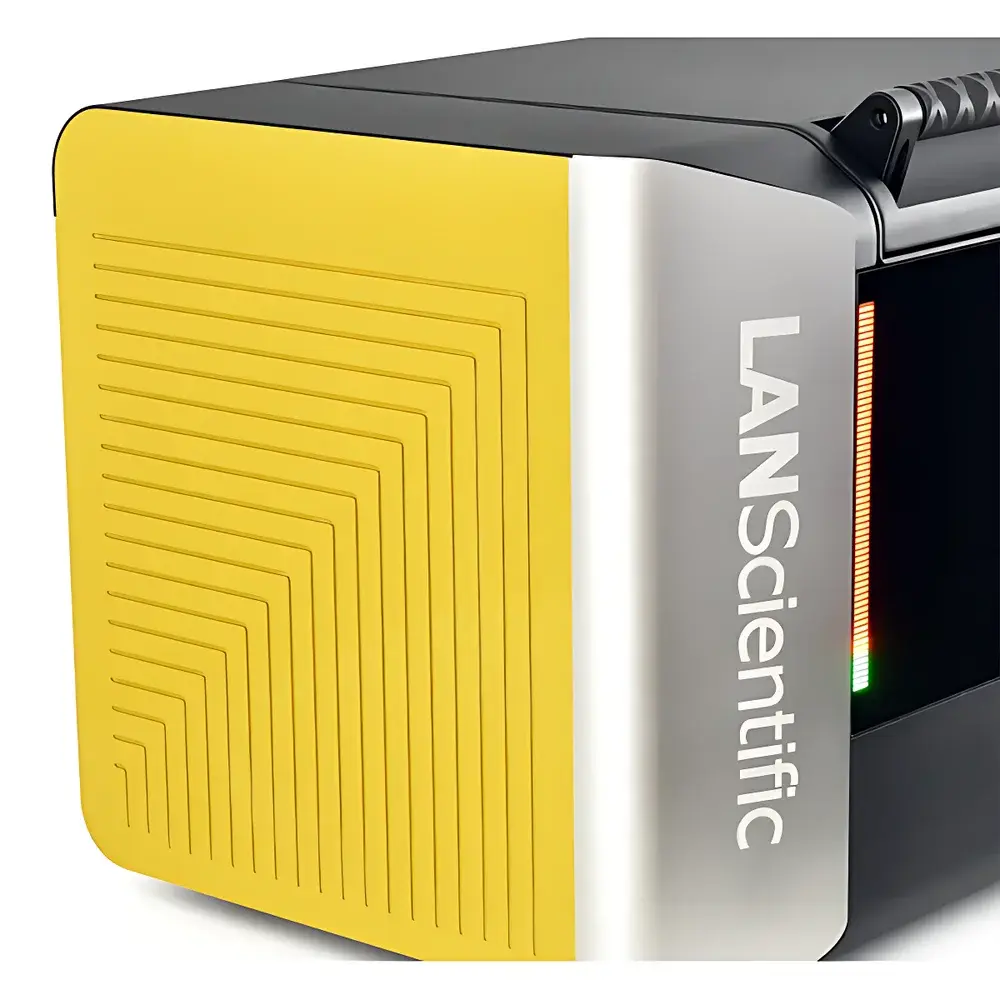
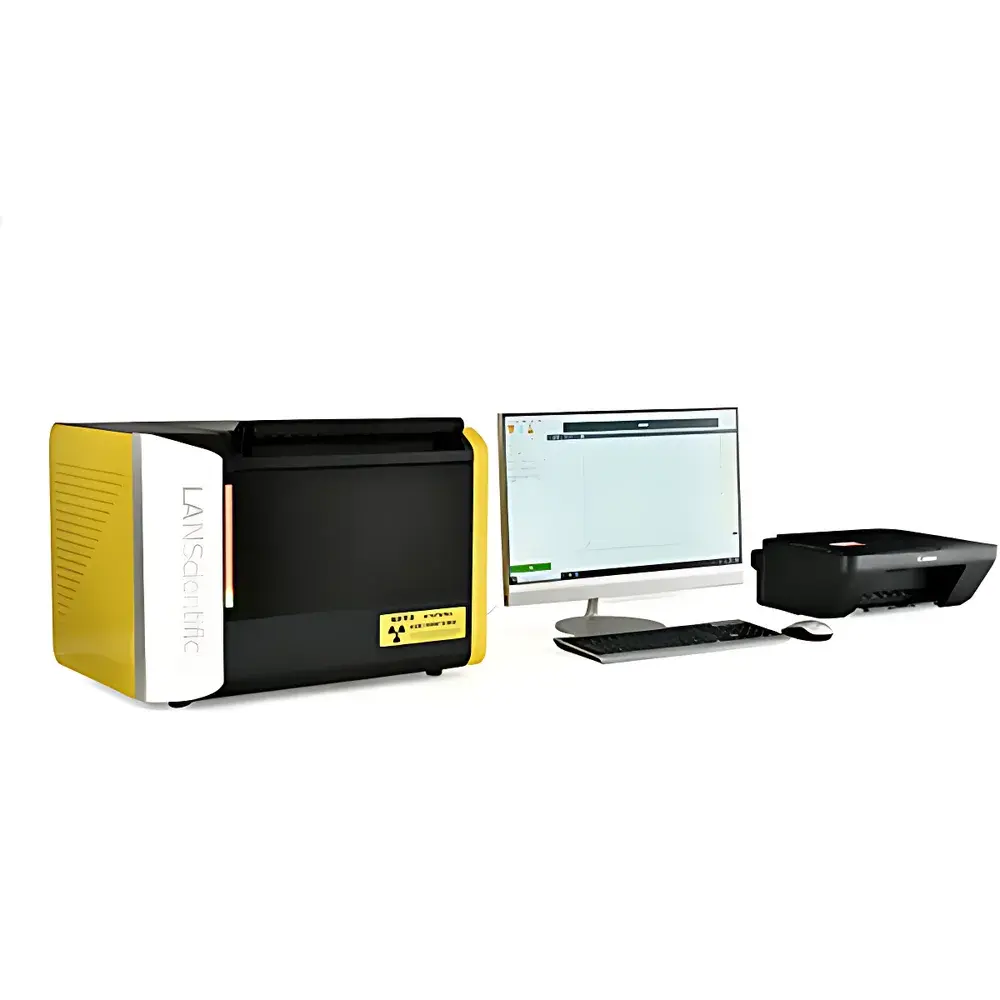
LANScientific ScopeX G59 Benchtop Energy Dispersive X-Ray Fluorescence Spectrometer for Ultra-High-Purity Gold and Noble Metal Analysis
| Brand | LANScientific |
|---|---|
| Origin | Jiangsu, China |
| Manufacturer Type | Direct Manufacturer |
| Instrument Type | Benchtop/Free-Standing ED-XRF Spectrometer |
| Application Field | Non-Ferrous Metals & Precious Metals |
| Elemental Range | Al (13) to U (92) |
| Detection Limit for Ag/Cu | ≤10 ppm |
| Quantitative Accuracy | ±0.001% for Au (99.999 wt%) |
| Detector | Large-Area Silicon Drift Detector (SDD) |
| Excitation Geometry | Vertical Beam Path Configuration |
| Compliance | ASTM E1621, ISO 8256, GB/T 17724–2022, RoHS Directive 2011/65/EU |
Overview
The LANScientific ScopeX G59 is a benchtop energy dispersive X-ray fluorescence (ED-XRF) spectrometer engineered specifically for ultra-high-purity gold analysis—ranging from AU9999 (99.99% Au) to AU99999 (99.999% Au)—and precise quantification of trace impurities such as silver (Ag), copper (Cu), iron (Fe), nickel (Ni), and platinum group elements (PGEs). Operating on the fundamental principle of X-ray fluorescence emission, the instrument irradiates solid samples with a high-stability X-ray tube, inducing characteristic secondary X-ray emissions from constituent elements. These emissions are resolved by a large-area silicon drift detector (SDD), enabling high-count-rate acquisition and sub-ppm detection sensitivity for key alloying and contaminant elements. Its vertical beam path design minimizes geometric scattering and optimizes excitation efficiency for flat, irregular, or high-density metallic specimens—critical for jewelry, bullion, refinery feedstock, and scrap evaluation in regulated precious metal supply chains.
Key Features
- Vertical optical configuration with optimized primary beam collimation and detector geometry for enhanced signal-to-noise ratio in high-Z matrix analysis.
- Large-area SDD detector (≥50 mm² active area) delivering >120,000 cps count rate capability and energy resolution <125 eV at Mn Kα, supporting rapid, high-precision quantification.
- Multi-aperture collimator set (Ø0.1 mm to Ø4.0 mm) enabling micro-spot analysis of solder joints, plating layers, or grain boundaries without sample destruction.
- Automated filter wheel with five selectable primary beam filters (Al, Cu, Ti, Mo, none) for matrix-adaptive excitation and suppression of spectral interferences.
- Motorized XYZ sample stage with integrated height sensor for repeatable positioning and automatic focus compensation across uneven surfaces.
- Built-in thermal stabilization system maintaining detector and X-ray tube temperature within ±0.5°C to ensure long-term calibration stability.
Sample Compatibility & Compliance
The ScopeX G59 accommodates solid metallic samples up to 300 × 300 × 120 mm (W × D × H) in its spacious chamber—compatible with finished jewelry, granular scrap, cast ingots, wire segments, and foil strips. No vacuum or helium purge is required for routine analysis of Au, Ag, Cu, Pt, Pd, and Rh; atmospheric operation ensures minimal downtime and operator intervention. The system complies with international standards governing precious metal assay and reporting: ASTM E1621 (standard test method for elemental analysis of metal alloys by ED-XRF), ISO 8256 (gold content determination in jewelry articles), and China’s GB/T 17724–2022 (XRF methods for gold purity verification). All measurement protocols support GLP-compliant audit trails, including user authentication, parameter logging, and raw spectrum archiving.
Software & Data Management
Controlled via LANScientific’s proprietary QuantMaster XRF software, the ScopeX G59 integrates multiple quantitative methodologies—including empirical calibration curves, fundamental parameters (FP) modeling, and iterative matrix correction algorithms—to deliver robust accuracy across heterogeneous alloy systems. Software features include real-time spectral visualization, peak deconvolution with background subtraction, automated interference correction (e.g., Au L-lines overlapping Pb M-lines), and customizable report templates compliant with ISO/IEC 17025 documentation requirements. Data export supports CSV, PDF, and XML formats; full audit logs record operator ID, timestamp, measurement parameters, and raw spectra—enabling compliance with FDA 21 CFR Part 11 when configured with electronic signature modules.
Applications
- Refinery quality assurance: Verification of Au99999 purity in electrolytic cathodes and doré bars prior to certification.
- Jewelry manufacturing: In-line control of alloy composition (e.g., 18K white gold: Au–Ni–Zn–Pd), plating thickness validation, and solder contamination screening.
- Retail & appraisal: On-site verification of hallmark claims in gold shops, pawnbrokers, and auction houses—supporting consumer transparency and regulatory reporting.
- Recycling & scrap sorting: Rapid identification and grading of mixed precious metal streams (e.g., catalytic converters, electronic PCBs, dental alloys).
- Research & development: Compositional mapping of experimental alloys, diffusion layer analysis, and corrosion product characterization.
FAQ
Does the ScopeX G59 require vacuum or helium purging for gold analysis?
No—ambient air operation is sufficient for all major precious metals (Au, Ag, Pt, Pd) and common impurities (Cu, Fe, Ni). Helium mode is optional for light-element extension (e.g., Mg, Al, Si) but not needed for standard noble metal assays.
Can the instrument quantify gold in layered or plated samples?
Yes—using multi-layer FP modeling and variable collimation, it resolves Au coating thickness and substrate composition (e.g., Au/Ni/Cu on brass) with depth resolution down to ~0.1 µm.
Is spectral data export compatible with third-party chemometric tools?
Yes—raw spectra (.spe) and processed results (.csv) are fully exportable; ASCII-based format enables integration with MATLAB, Python (SciPy), or commercial multivariate analysis platforms.
What calibration standards are recommended for daily verification?
Certified reference materials (CRMs) traceable to NIST or BIPM—such as NIST SRM 1135c (Au–Ag–Cu ternary alloy) or custom multi-element Au matrices—are recommended for daily drift correction and linearity validation.
How does the system ensure long-term reproducibility across operators?
Through role-based access control, standardized SOP-driven workflows, automatic calibration checks, and embedded hardware diagnostics—each measurement is tagged with environmental sensor data (temperature, humidity, tube voltage/current) for full traceability.






