
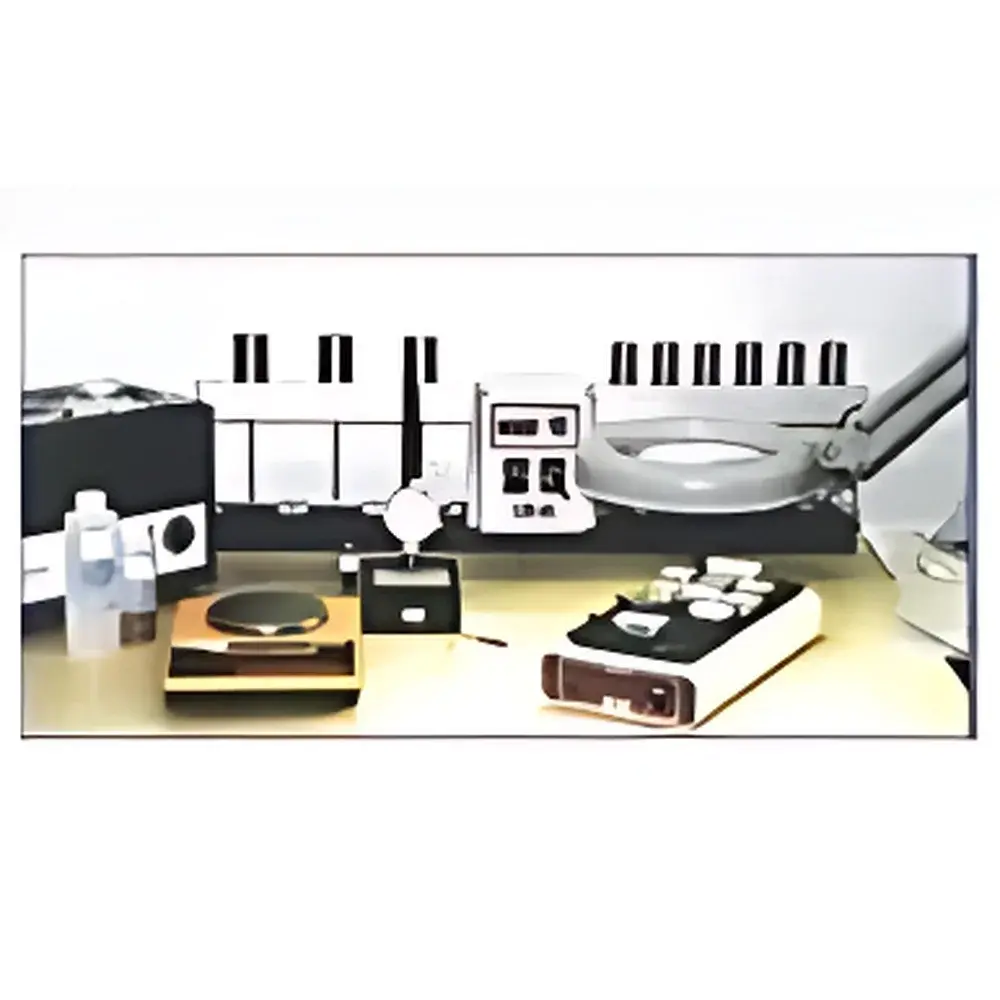
BROT J0400 Thin-Section Mounting Press System
| Brand | BROT |
|---|---|
| Origin | France |
| Manufacturer Type | Authorized Distributor |
| Import Status | Imported |
| Model | J0400 |
| Pricing | Available Upon Request |
Overview
The BROT J0400 Thin-Section Mounting Press System is a precision-engineered laboratory platform designed for the reproducible, contamination-free preparation of petrographic and mineralogical thin sections. It operates on a thermally controlled, mechanically constrained bonding principle—utilizing regulated conductive heating, uniform pressure application via a weighted parallel frame, and real-time temperature monitoring—to ensure consistent adhesive polymerization between polished rock or ceramic specimens and glass or quartz mounting substrates. Unlike ambient-cure epoxies or vacuum-press systems, the J0400 eliminates void formation, edge delamination, and fluorescence interference by enforcing isothermal compression during crosslinking. The system is purpose-built for geological laboratories, materials science core facilities, and accredited testing labs requiring ISO/IEC 17025-compliant sample preparation workflows prior to polarized light microscopy (PLM), electron microprobe analysis (EMPA), or X-ray diffraction (XRD) characterization.
Key Features
- Integrated temperature-regulated hotplate (adjustable from 40 °C to 80 °C in 1 °C increments) with ±0.5 °C stability over 60 min, enabling precise control of epoxy cure kinetics
- Weighted parallel pressing frame with calibrated stainless-steel loading rod (standard mass: 2.5 kg), delivering uniform compressive stress (~0.3 MPa) across specimen–slide interfaces
- Dedicated pre-mounting station featuring a 40 kHz ultrasonic cleaner for solvent-free removal of particulate residue from specimen surfaces prior to adhesive application
- Optical inspection module with 10× magnification and coaxial LED illumination for real-time verification of adhesive spread, bubble exclusion, and slide alignment before curing
- Digital micrometer-based thickness gauge (range: 0–25 mm, resolution: 1 µm) integrated into the mounting workflow to verify final section thickness compliance with ASTM D7091 and ISO 14689 standards
- High-precision analytical balance (0.1 mg readability, 220 g capacity) included for gravimetric dosing of low-viscosity, non-fluorescent epoxy resins (e.g., EpoTek 301-2, Araldite GY6010)
Sample Compatibility & Compliance
The J0400 accommodates specimens up to 45 mm × 30 mm × 15 mm (L×W×H) and standard 26 mm × 46 mm glass slides or fused silica substrates. It supports both thermosetting epoxies and low-shrinkage acrylic mounting media compatible with subsequent grinding and polishing steps. All wetted components are chemically inert (316 stainless steel, borosilicate glass, PTFE-coated surfaces), ensuring no leachable contaminants that could interfere with trace-element analysis or cathodoluminescence imaging. The system conforms to ISO 14688-1 for geotechnical sample preparation and supports GLP documentation requirements through optional timestamped log export (via RS-232 interface). No volatile organic compounds (VOCs) are emitted during operation; all adhesives used with this system meet USP extractables specifications for non-metallic components in analytical instrumentation.
Software & Data Management
While the J0400 is a hardware-dominant benchtop system without embedded firmware, it includes a USB-connected data logger (optional) capable of recording temperature profiles, dwell times, and press activation events at 1-second intervals. Exported CSV logs are compatible with LIMS platforms and support audit trails required under FDA 21 CFR Part 11 for regulated environments. Calibration certificates for the hotplate, balance, and micrometer are provided with each unit and traceable to COFRAC-accredited national standards (France). Firmware-upgradable controller modules (part no. J0400-CTRL-V2) are available for automated multi-step protocols including ramp-hold-cool sequences.
Applications
- Petrographic thin-section fabrication for optical mineralogy and structural geology studies
- Preparation of polished sections for quantitative SEM-EDS mapping of ore minerals and gangue phases
- Mounting of brittle ceramic or composite fragments for fracture-surface analysis
- Standardized sample fixation in accredited environmental testing labs performing ASTM D5777 soil thin-section analysis
- Research-grade mounting of meteorite fragments and lunar regolith simulants for synchrotron-based µ-XRF
FAQ
What adhesive types are validated for use with the J0400 system?
Non-fluorescent, low-viscosity epoxies (e.g., EpoTek 301-2, Buehler EpoxiCure 2) and UV-inhibiting acrylics (e.g., Technovit 5071) have been verified for full cure within the specified temperature/time matrix.
Can the system accommodate custom substrate sizes beyond standard glass slides?
Yes—custom aluminum or graphite platens (max. 50 mm × 50 mm) can be ordered as accessories; thermal mass compensation algorithms are applied during temperature calibration.
Is operator training and method validation documentation included?
A comprehensive SOP manual (EN/ISO 22341 compliant), including inter-laboratory reproducibility data (n=12 labs, CV <2.3% for section bond strength), is supplied with each unit.
Does the J0400 require external ventilation or fume extraction?
No—its closed-cure architecture and VOC-free adhesive protocols eliminate the need for ducted hoods or activated carbon filtration.



