
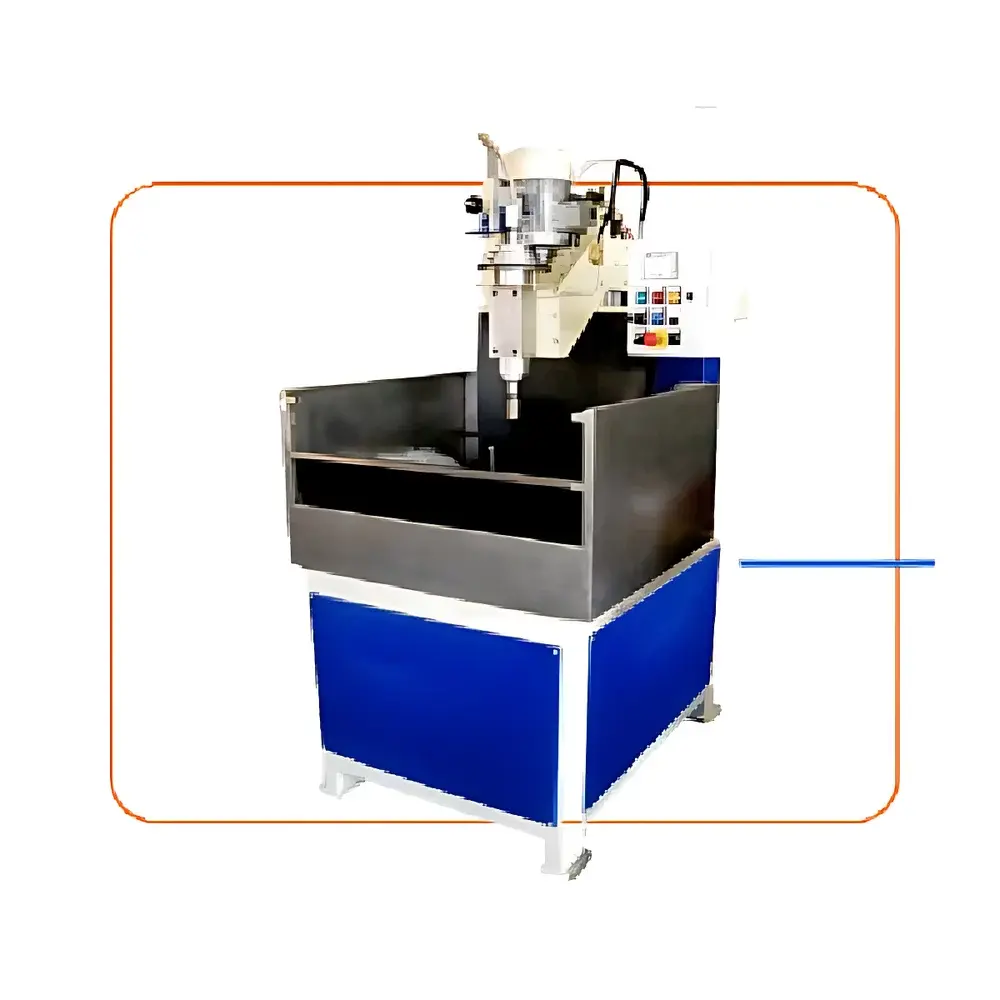
BROT-LAB Auto Core Drilling Machine Model 1 22 12
| Brand | French BROT-LAB |
|---|---|
| Origin | France |
| Manufacturer Type | Authorized Distributor |
| Origin Category | Imported Equipment |
| Model | 1 22 12 |
| Pricing | Upon Request |
Overview
The BROT-LAB Auto Core Drilling Machine Model 1 22 12 is an industrial-grade, fully automated core drilling system engineered for high-precision, repeatable extraction of cylindrical specimens from brittle and heterogeneous geological and construction materials. Based on a robust coaxial feed mechanism and servo-controlled vertical axis actuation, the machine operates under constant-force or constant-speed drilling modes—enabling controlled penetration rates essential for minimizing thermal cracking, micro-fracturing, and edge chipping in sensitive substrates. Designed and assembled in France, the 1 22 12 integrates mechanical stability with programmable process repeatability, making it suitable for laboratories engaged in petrographic analysis, geomechanical testing (e.g., uniaxial compressive strength, permeability, and porosity characterization), building material certification, and mineralogical sample preparation.
Key Features
- Heavy-duty welded steel frame with vibration-dampening base plate, ensuring structural rigidity during high-torque diamond core drilling operations
- Motorized Z-axis with digital position feedback and adjustable feed rate (0.1–5 mm/min), supporting both manual jog and automated sequence execution
- Integrated coolant delivery system with adjustable flow control and recirculation tank, compatible with water-based and oil-based drilling fluids
- Universal clamping system accommodating irregularly shaped specimens up to 1200 mm in width, with dual-point mechanical locking and T-slot table configuration
- Interlocked safety enclosure with optical curtain and emergency stop circuit compliant with EN ISO 13857 and EN 60204-1 standards
- Modular tooling interface supporting standard ISO 5211-compliant diamond core bits (diameters from 10 mm to 150 mm) and segmented or full-face configurations
Sample Compatibility & Compliance
The Model 1 22 12 is validated for core drilling across a broad spectrum of low-to-medium hardness materials including siliceous and calcareous rocks (e.g., granite, basalt, limestone, sandstone), engineered stone (quartz composites, sintered stone), architectural glass (annealed, tempered, laminated), carbonaceous matrices (coal, coke, graphite electrodes), and ceramic composites. Sample thickness range extends from 10 mm to 300 mm, with maximum specimen width limited only by the 1200 mm clamping span. All operational parameters—including rotational speed (50–1200 rpm), feed force (up to 8 kN), and coolant pressure (0.2–0.6 MPa)—are traceable and configurable via onboard HMI. The system meets CE marking requirements and supports laboratory compliance with ASTM D2938 (Standard Test Method for Direct Tensile Strength of Intact Rock Core Specimens), ISO 14689-1 (Geotechnical Investigation and Testing — Identification and Classification of Rock), and EN 12390-1 (Testing Hardened Concrete — Shape, Dimensions and Other Requirements for Specimens).
Software & Data Management
While the Model 1 22 12 operates as a standalone electromechanical system with integrated PLC control, optional RS-485/Modbus RTU or Ethernet/IP interfaces enable integration into centralized lab automation platforms. Drill cycle logs—including bit ID, total runtime, cumulative feed distance, average torque, and coolant temperature—are timestamped and exportable in CSV format for audit trail generation. When deployed in GLP- or GMP-regulated environments, the system supports 21 CFR Part 11–compliant electronic record retention through third-party LIMS synchronization (e.g., LabWare, STARLIMS), provided user-defined role-based access controls and audit trail activation are implemented at the host software layer.
Applications
- Preparation of standardized rock cores for triaxial and uniaxial compression testing per ASTM D7012 and ISRM suggested methods
- Sectioning of geological thin sections and polished slabs for SEM-EDS, XRD, and micro-CT imaging workflows
- Extraction of representative concrete or asphalt cores for density, chloride ingress, and carbonation depth profiling
- Manufacturing QA/QC of engineered stone panels and façade systems requiring dimensional consistency verification
- Core sampling from coal seams and carbon-rich sediments for proximate/ultimate analysis and calorific value determination
- Calibration specimen production for non-destructive testing (NDT) equipment validation, including ultrasonic velocity and pulse echo systems
FAQ
What diamond core bit sizes are supported by the Model 1 22 12?
Standard mounting accepts ISO 5211 flange-mounted diamond core bits ranging from 10 mm to 150 mm in nominal diameter; custom adapters available upon request.
Is the machine compatible with wet and dry drilling protocols?
Wet drilling is mandatory for all applications involving rock, concrete, or glass; dry drilling is not supported due to thermal management and dust containment requirements.
Does the system include built-in data logging capabilities?
Yes—cycle-level operational metadata (feed distance, RPM, elapsed time, coolant status) is stored locally for up to 10,000 cycles and exportable via USB or serial interface.
Can the Model 1 22 12 be integrated into a laboratory information management system (LIMS)?
With optional communication modules and external middleware, bi-directional integration with LIMS is achievable using Modbus TCP or OPC UA protocols.
What maintenance intervals are recommended for long-term reliability?
Lubrication of linear guides and gearboxes every 500 operating hours; hydraulic fluid and filter replacement every 2,000 hours; annual calibration of feed force transducers and position encoders by certified BROT-LAB service engineers.



