
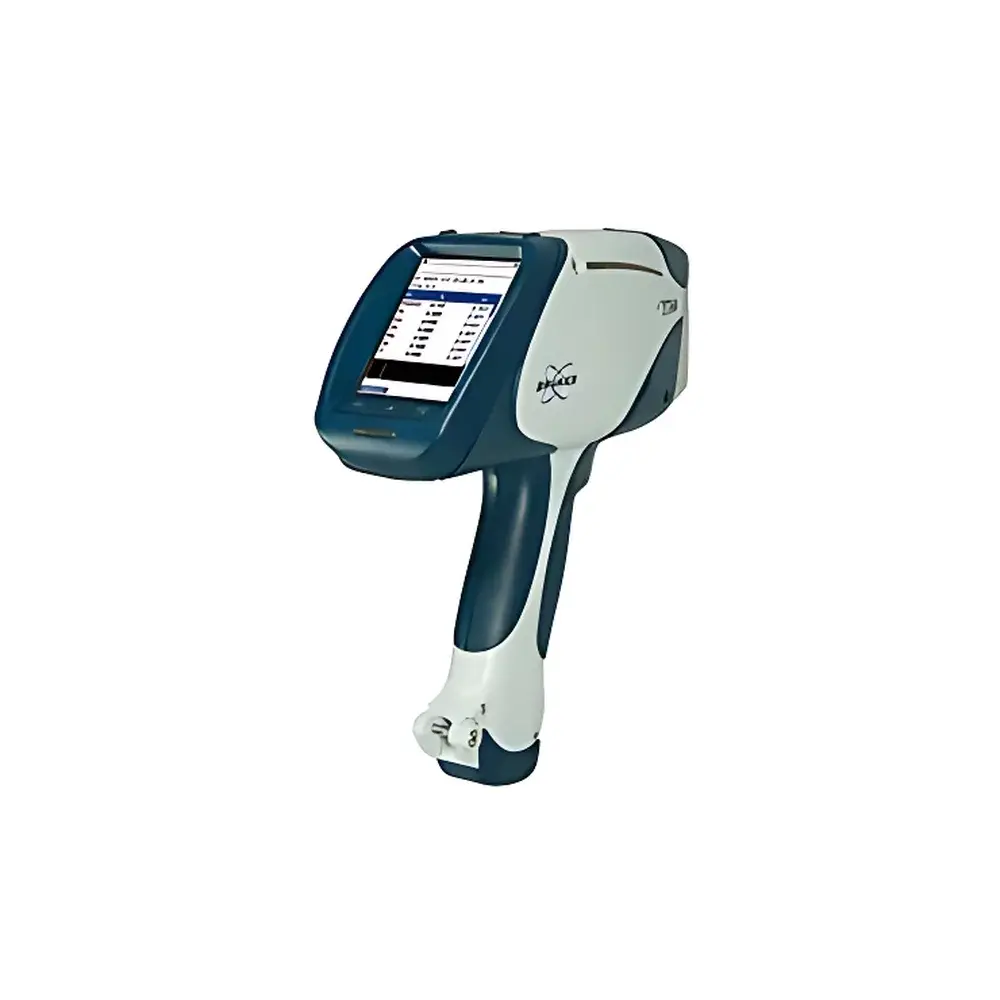
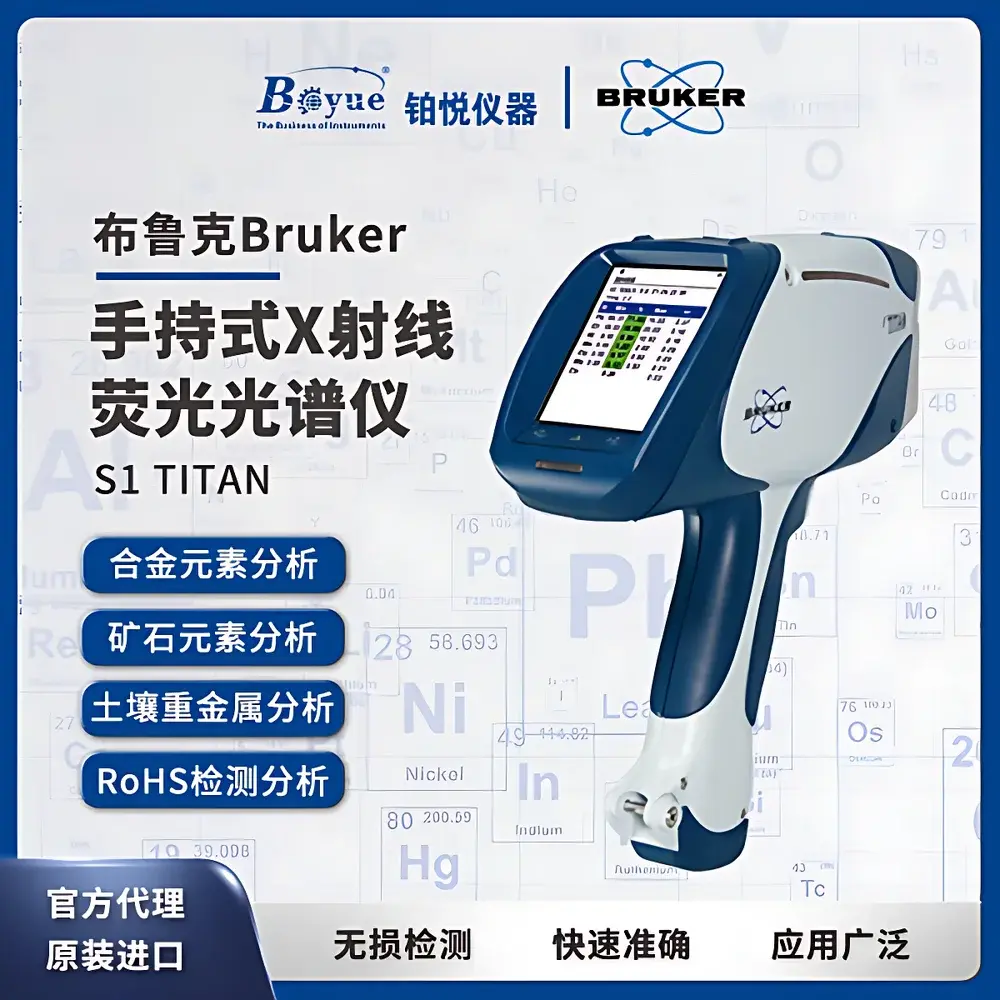
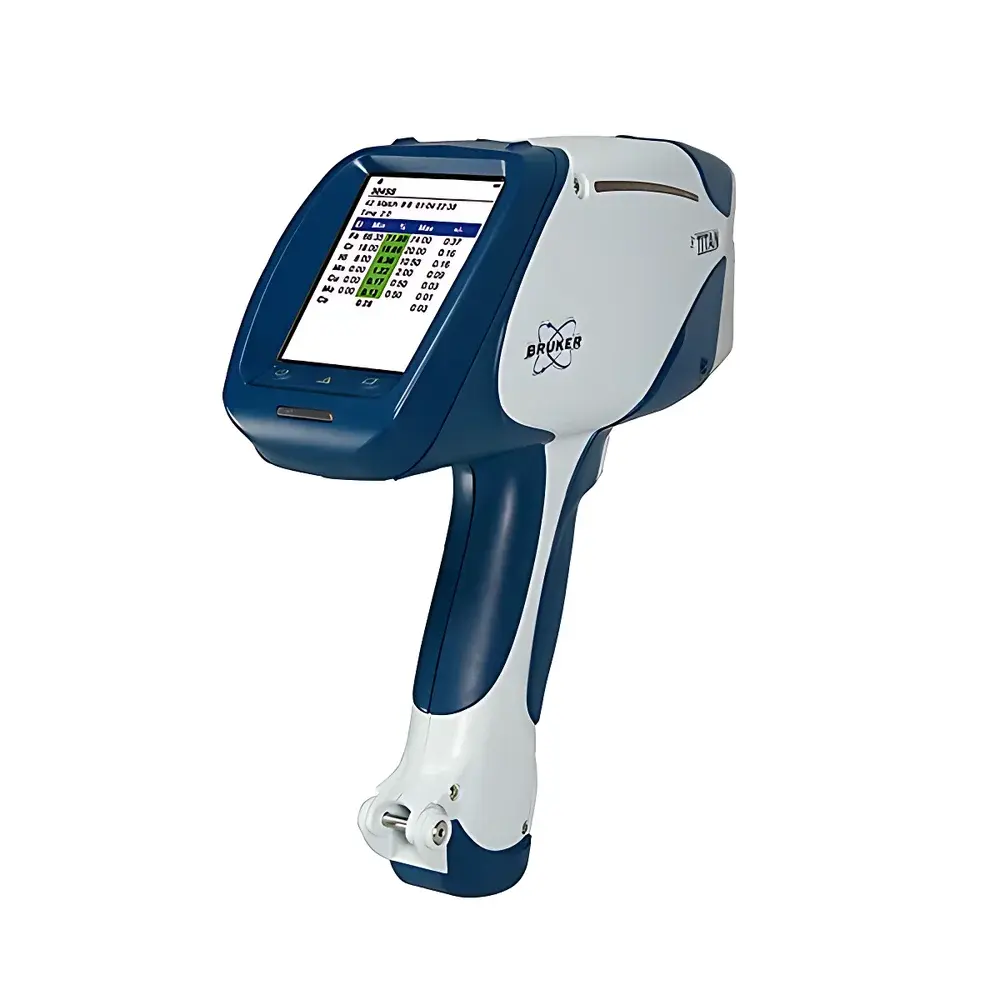
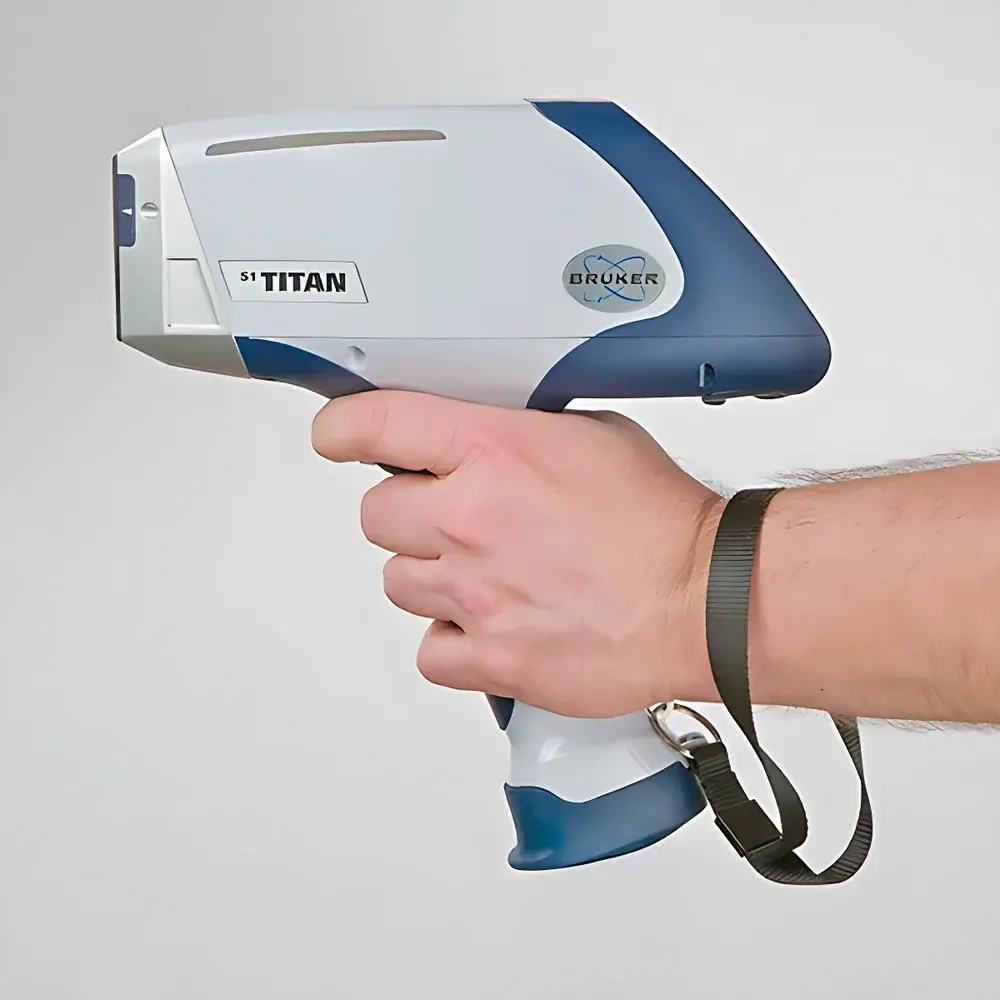
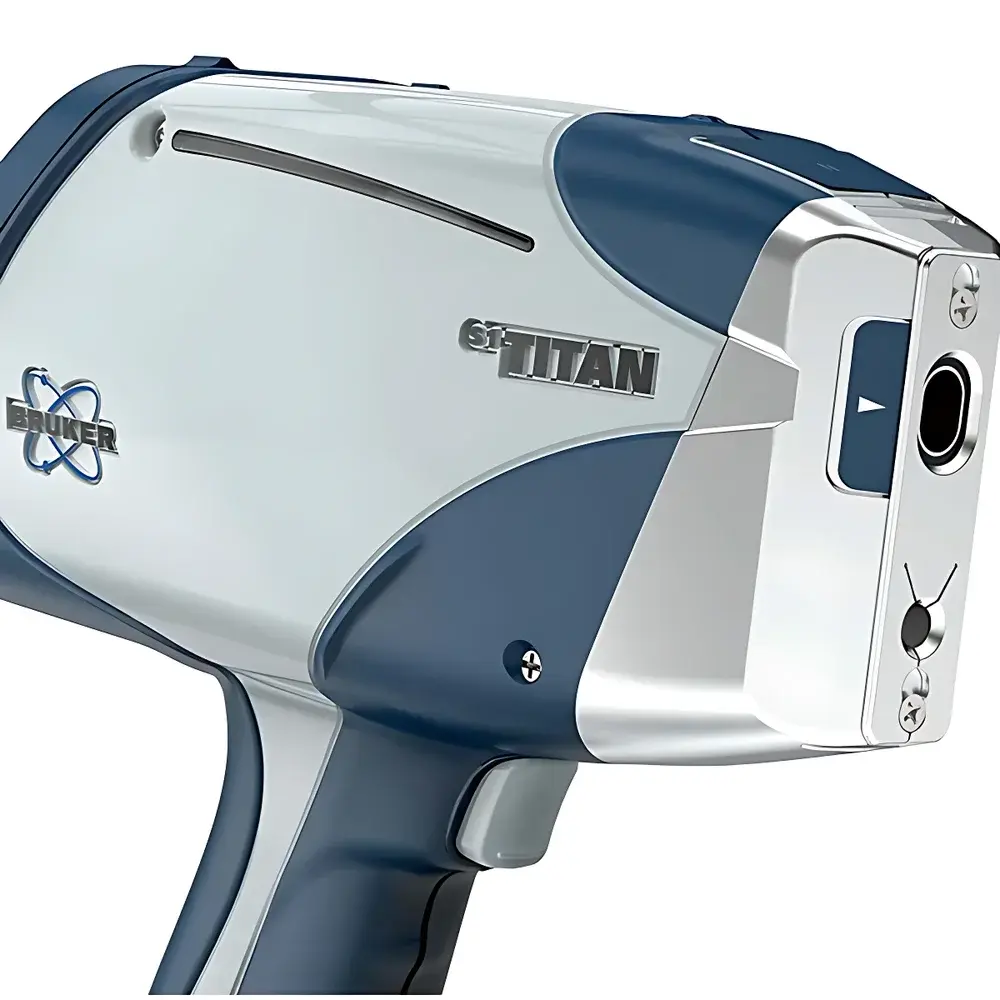
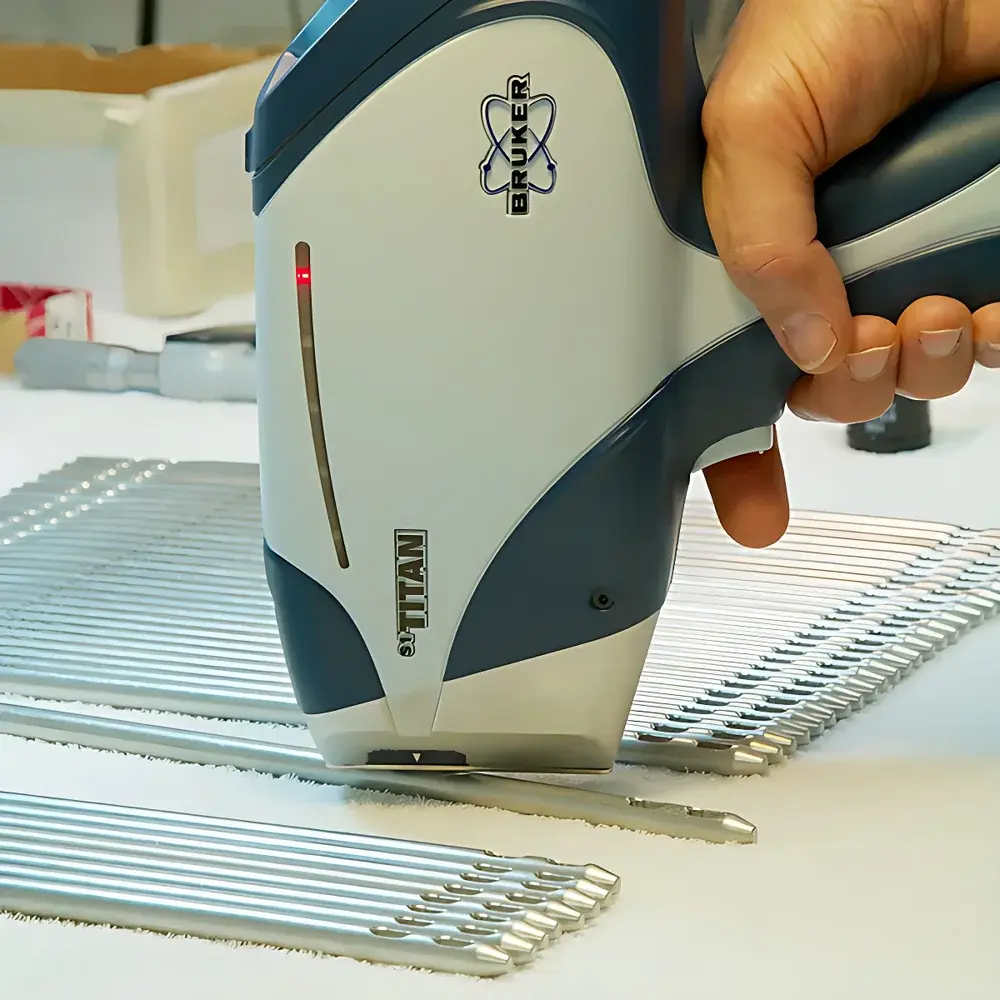
Bruker S1 TITAN Handheld Energy Dispersive X-Ray Fluorescence (ED-XRF) Spectrometer
| Brand | Bruker |
|---|---|
| Origin | Germany |
| Model | S1 TITAN |
| Application | Handheld/Portable |
| Industry Type | General-Purpose |
| Elemental Range | Mg–U (High-End Configuration) / Ti–U (Standard Configuration) |
| Quantification Range | 1 ppm – 99.99 wt% |
| Energy Resolution | < 140 eV (at Mn Kα) |
| Repeatability | ≤ 0.1% RSD (for major elements under controlled conditions) |
| Detector | Silicon Drift Detector (SDD) |
Overview
The Bruker S1 TITAN is a field-deployable, handheld energy dispersive X-ray fluorescence (ED-XRF) spectrometer engineered for rapid, non-destructive elemental analysis of solid, powdered, and coated samples in situ. Based on the fundamental principle of X-ray fluorescence—where primary X-rays excite atoms in a sample, causing emission of characteristic secondary X-rays—the S1 TITAN leverages high-intensity microfocus X-ray tube excitation and a high-resolution silicon drift detector (SDD) to deliver laboratory-grade qualitative and quantitative performance outside the lab. Its ruggedized industrial design meets IP54 environmental protection standards and MIL-STD-810G shock/vibration requirements, enabling reliable operation in harsh field environments including mining sites, scrap yards, construction zones, and manufacturing floors. The instrument supports real-time spectral acquisition, live spectrum display, and on-device quantification using fundamental parameters (FP) and empirical calibration models.
Key Features
- Microfocus X-ray tube with selectable voltage (up to 50 kV) and current (up to 200 µA), optimized for light-element excitation (Mg, Al, Si, P, S) and heavy-metal sensitivity (Pb, Cd, Hg, Cr, Br).
- Silicon drift detector (SDD) with <140 eV energy resolution at Mn Kα (5.9 keV), ensuring precise peak separation for overlapping elemental lines (e.g., V/Cr, Mn/Fe, Pb/As).
- Integrated camera and laser targeting system for accurate measurement positioning and spatial documentation of analysis spots.
- Battery-powered operation with hot-swappable Li-ion batteries supporting >8 hours of continuous use; optional external power supply for extended stationary operation.
- Onboard calibration management supporting user-defined, factory-provided, and third-party certified calibrations—including RoHS-compliant, alloy grade identification, and geological matrix-matched standards.
- Embedded Android-based operating system with intuitive touchscreen interface, offline data storage (≥32 GB internal memory), and USB-C/Bluetooth/Wi-Fi connectivity for secure data export.
Sample Compatibility & Compliance
The S1 TITAN accommodates heterogeneous, irregular, and coated samples without requiring extensive preparation—enabling direct analysis of alloys, ores, soils, slags, ceramics, polymers, and painted or plated surfaces. It complies with international regulatory frameworks including IEC 62321-5:2013 (RoHS screening), ASTM E1621 (standard practice for ED-XRF analysis of metals), and ISO 12885:2020 (guidance for portable XRF in environmental soil testing). For regulated industries, the instrument supports audit-ready data logging with time-stamped spectra, operator ID, GPS coordinates (optional), and full traceability per FDA 21 CFR Part 11 and GLP/GMP requirements when used with Bruker’s PC-based S1 PX software suite.
Software & Data Management
Data acquisition, processing, and reporting are managed via Bruker’s proprietary S1 PX software platform, which runs natively on the device and synchronizes seamlessly with desktop applications. The software implements FP-based quantification with matrix correction algorithms, automatic peak deconvolution, and statistical outlier detection. All spectra and results are stored with embedded metadata (instrument ID, calibration version, measurement parameters), enabling full chain-of-custody documentation. Export formats include CSV, PDF reports (with customizable templates), and XML for LIMS integration. Firmware updates and method libraries are distributed through Bruker’s secure cloud portal, ensuring compliance with evolving regulatory thresholds and analytical best practices.
Applications
- Metallurgy & Scrap Sorting: Rapid alloy grade identification (e.g., stainless steels, Ni-based superalloys, Ti alloys) and sorting of mixed metal streams with <0.1% repeatability for major constituents.
- Geoscience & Mining: In-field assay of exploration core, drill cuttings, and bulk ore samples for base metals (Cu, Zn, Pb), precious metals (Au, Ag), and pathfinder elements (As, Sb, Bi) from Mg to U.
- Environmental Monitoring: Soil and sediment screening for regulated contaminants (Pb, As, Cd, Cr, Hg) at sub-ppm detection limits; compliant with EPA Method 6200 and EU Council Directive 2004/107/EC.
- RoHS & Consumer Product Compliance: Screening of plastics, coatings, and electronic components for restricted substances per EU RoHS II (2011/65/EU) and China RoHS II (SJ/T 11364-2014).
- Coating & Thin-Film Analysis: Quantitative determination of coating mass thickness (mg/cm²) for single- and multi-layer systems (e.g., Sn/Cu, Ag/Ni/Cu, Zn/Fe) using fundamental parameter modeling calibrated against certified reference materials.
FAQ
Does the S1 TITAN require external cooling or vacuum for light-element analysis?
No. The instrument uses an ultra-thin polymer window and optimized X-ray tube settings to enable reliable detection of Mg, Al, Si, P, and S in air—no He purge or vacuum pump required.
Can the S1 TITAN be used for regulatory reporting in certified laboratories?
Yes—when operated with validated methods, documented calibration records, and traceable CRM usage, it meets ISO/IEC 17025 requirements for field screening and semi-quantitative reporting; final compliance decisions should be confirmed per jurisdiction-specific validation protocols.
How is measurement reproducibility ensured across different operators and sites?
Through standardized measurement protocols, automated geometry control (laser/camera alignment), built-in energy calibration checks, and operator authentication—ensuring consistent data quality regardless of user experience or environmental variability.
Is firmware and method library update support included post-purchase?
Yes. Bruker provides lifetime firmware updates and periodic method library enhancements via secure online portal access, aligned with evolving regulatory limits and application needs.
Related Products




