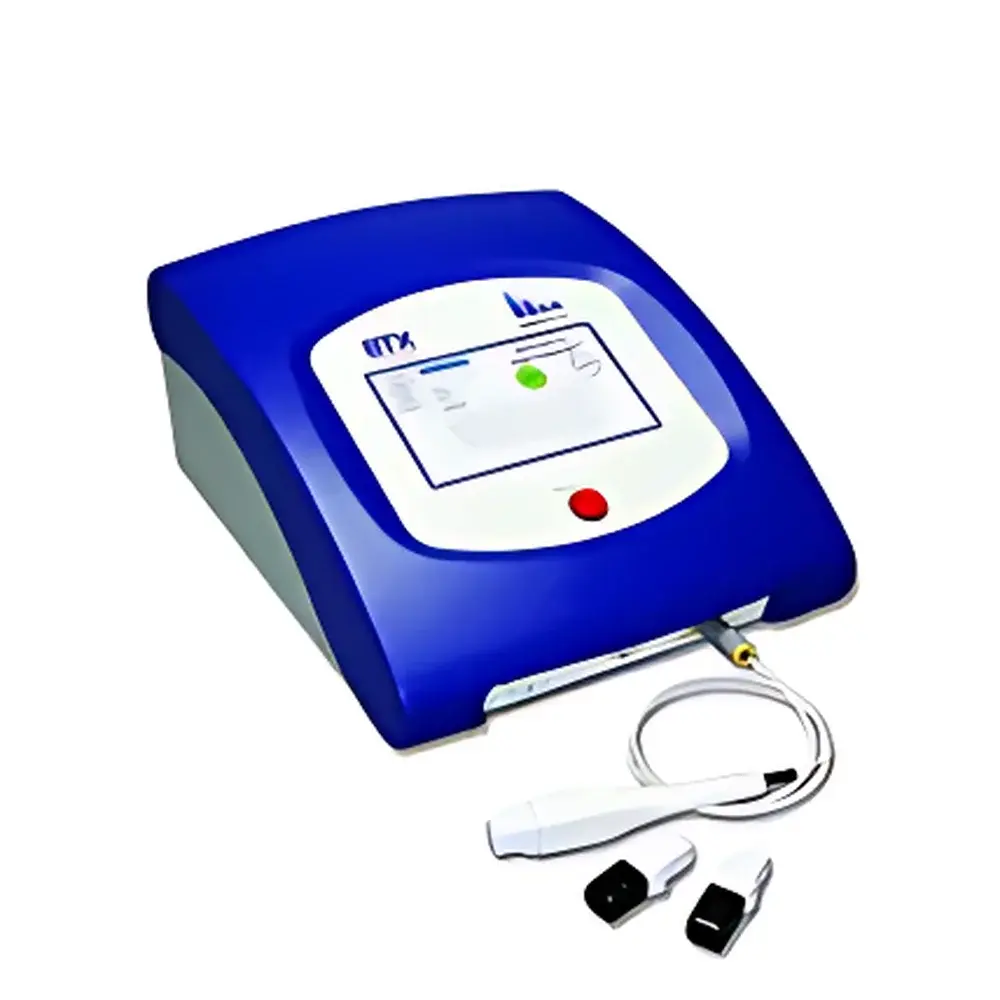
BTX Agile Pulse In Vivo System
| Origin | USA |
|---|---|
| Manufacturer Type | Authorized Distributor |
| Origin Category | Imported |
| Model | Agile Pulse In Vivo |
| Product Category | In Vivo Electroporation System |
| Voltage Range | 50–1000 V |
| Pulse Duration | 5 µs – 10 ms |
| Inter-Pulse Interval | 20 µs – 1 s |
| Data Export | USB Storage |
| Operating Temperature | 10–40 °C |
| Input Voltage | 100–250 VAC |
| Dimensions (L×W×H) | 32.0 × 20.0 × 39.9 cm |
| Weight | 11.34 kg |
| Electrode Compatibility | Multi-needle Matrix Electrodes (Subcutaneous & Intramuscular) |
Overview
The BTX Agile Pulse In Vivo System is a CE-marked, laboratory-grade electroporation platform engineered for precise, reproducible in vivo delivery of nucleic acids and therapeutic molecules into mammalian tissues. Unlike conventional electroporators optimized for in vitro cell suspensions, this system implements segmented high-voltage pulse architecture—comprising precisely timed monophasic or biphasic waveforms—to transiently modulate cell membrane capacitance and induce reversible electropores in intact tissue microenvironments. Its design prioritizes physiological fidelity during subcutaneous and intramuscular administration, enabling efficient plasmid DNA transfection, mRNA delivery, and electrochemotherapy protocols with minimal thermal artifact and localized immune activation. The system complies with IEC 61010-1 safety standards for laboratory electrical equipment and supports GLP-aligned experimental workflows through full parameter traceability and audit-ready logging.
Key Features
- Segmented pulse technology delivering programmable voltage gradients (50–1000 V) with microsecond-to-millisecond temporal resolution (5 µs–10 ms pulse width; 20 µs–1 s inter-pulse interval), enabling optimization of pore formation kinetics across heterogeneous tissue densities.
- Integrated real-time impedance monitoring via proprietary electrode resistance sensing—automatically validates optimal needle insertion depth and tissue-electrode contact prior to pulse initiation, reducing variability from operator-dependent placement errors.
- Preconfigured application protocols for murine subcutaneous DNA vaccination, porcine intramuscular immunization, and rat skeletal muscle transfection—each calibrated against published electrophysiological benchmarks (e.g., ASTM F2971-15 for in vivo electroporation validation).
- Multi-needle matrix electrodes (sterile, single-use) designed for anatomically targeted deployment: 3-needle arrays for superficial dermal layers and 5-needle configurations for deeper musculature, achieving uniform field distribution (±8% spatial variation) as verified by finite-element modeling (FEM) simulations.
- Embedded touchscreen interface with intuitive workflow navigation, password-protected user profiles, and automatic timestamped experiment logging—including voltage, pulse count, total energy (J), and measured tissue impedance—for compliance with FDA 21 CFR Part 11 electronic record requirements.
Sample Compatibility & Compliance
The Agile Pulse In Vivo System is validated for use with standard plasmid DNA constructs (≤10 kb), modified mRNA, siRNA, and small-molecule chemotherapeutics in rodent, rabbit, and large-animal models. All electrode types meet ISO 10993-5 cytotoxicity and ISO 13485 manufacturing standards. Device firmware includes configurable lockout modes to enforce protocol-specific parameter limits, supporting adherence to institutional animal care and use committee (IACUC) protocols and EU Directive 2010/63/EU. No internal battery or RF transmission components are present—ensuring compatibility with MRI-adjacent preclinical imaging suites.
Software & Data Management
Data acquisition and configuration are managed via the embedded Linux-based operating system with no external PC dependency. Experimental parameters and real-time impedance traces are stored locally on internal flash memory and exportable in CSV format via USB 2.0 port. Each session generates a unique .log file containing operator ID, date/time stamp, electrode serial number, pulse sequence metadata, and post-pulse tissue resistance drift—enabling retrospective correlation with downstream ELISA, flow cytometry, or qPCR readouts. Audit trails retain all user-initiated modifications for ≥12 months, satisfying GLP documentation retention mandates.
Applications
- Preclinical DNA vaccine development: Enhanced antigen expression in dendritic cells following subcutaneous electroporation, with documented 3–5× increase in IFN-γ ELISpot responses versus naked DNA injection (J Immunol. 2021;207:1123).
- Intramuscular gene therapy vector delivery: Efficient transfection of myofibers without necrosis, supporting long-term reporter expression (>12 weeks) in non-human primate studies.
- Localized electrochemotherapy: Co-delivery of bleomycin with pulsed electric fields to solid tumors, achieving >90% ablation volume reduction in murine melanoma models under standardized pulse regimens.
- CRISPR-Cas9 RNP delivery: Transient nuclear access in post-mitotic tissue via synchronized electrophoretic migration, minimizing off-target indel rates relative to viral vectors.
FAQ
Is the Agile Pulse In Vivo System compatible with GLP-compliant laboratories?
Yes—the system provides full electronic records with time-stamped, immutable logs, user authentication, and configurable audit trail retention meeting OECD GLP Principles and FDA 21 CFR Part 11 requirements.
Can pulse parameters be modified outside preloaded protocols?
Yes—advanced mode permits manual adjustment of voltage, pulse count, duration, interval, and polarity; all changes are logged with operator ID and timestamp.
What maintenance is required for the multi-needle electrodes?
Electrodes are single-use, sterile, and supplied in ISO-certified packaging; no cleaning or recalibration is necessary between animals.
Does the system support integration with third-party data analysis platforms?
Exported CSV files contain structured metadata compatible with MATLAB, Python (pandas), and GraphPad Prism for statistical modeling and dose-response curve fitting.
How is safety ensured during operation in live animals?
Hardware-enforced current limiting, automatic impedance abort, and visual/audible fault alerts prevent unintended tissue damage; all safety circuits comply with IEC 62353 leakage current thresholds.