
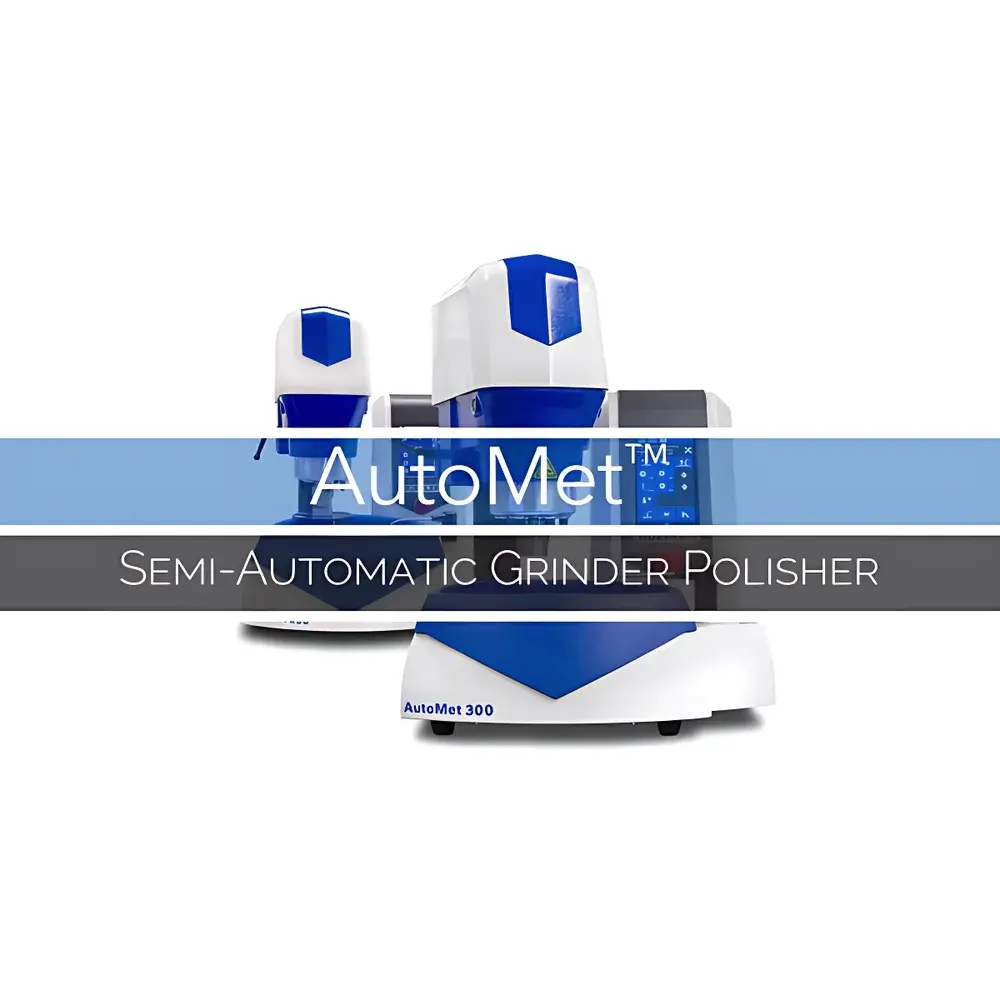
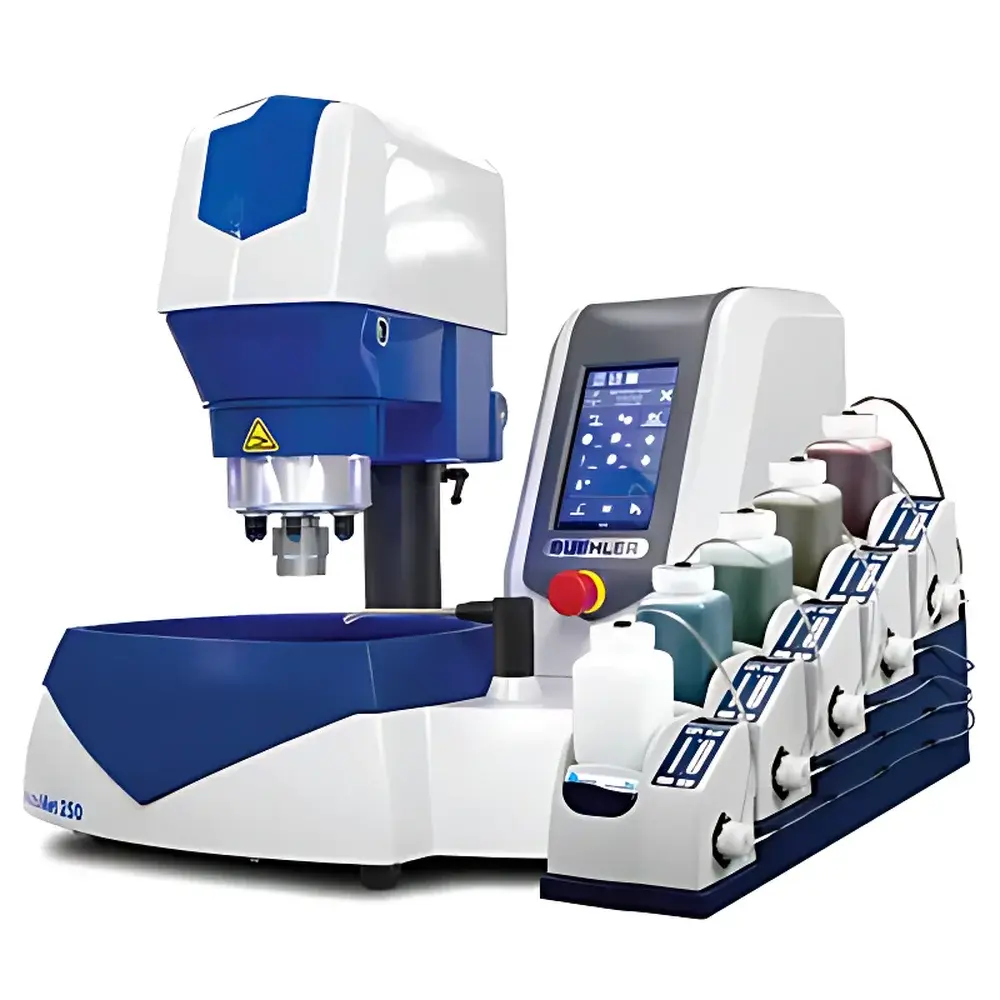
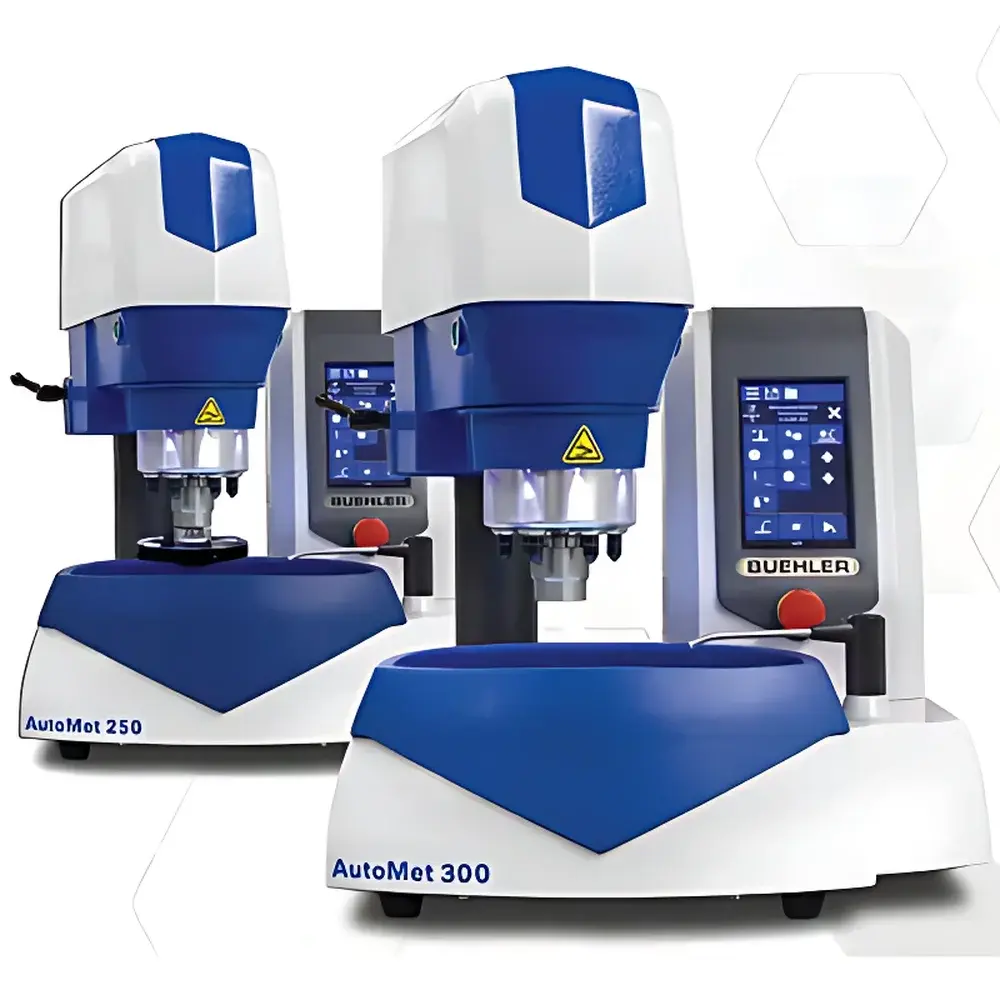
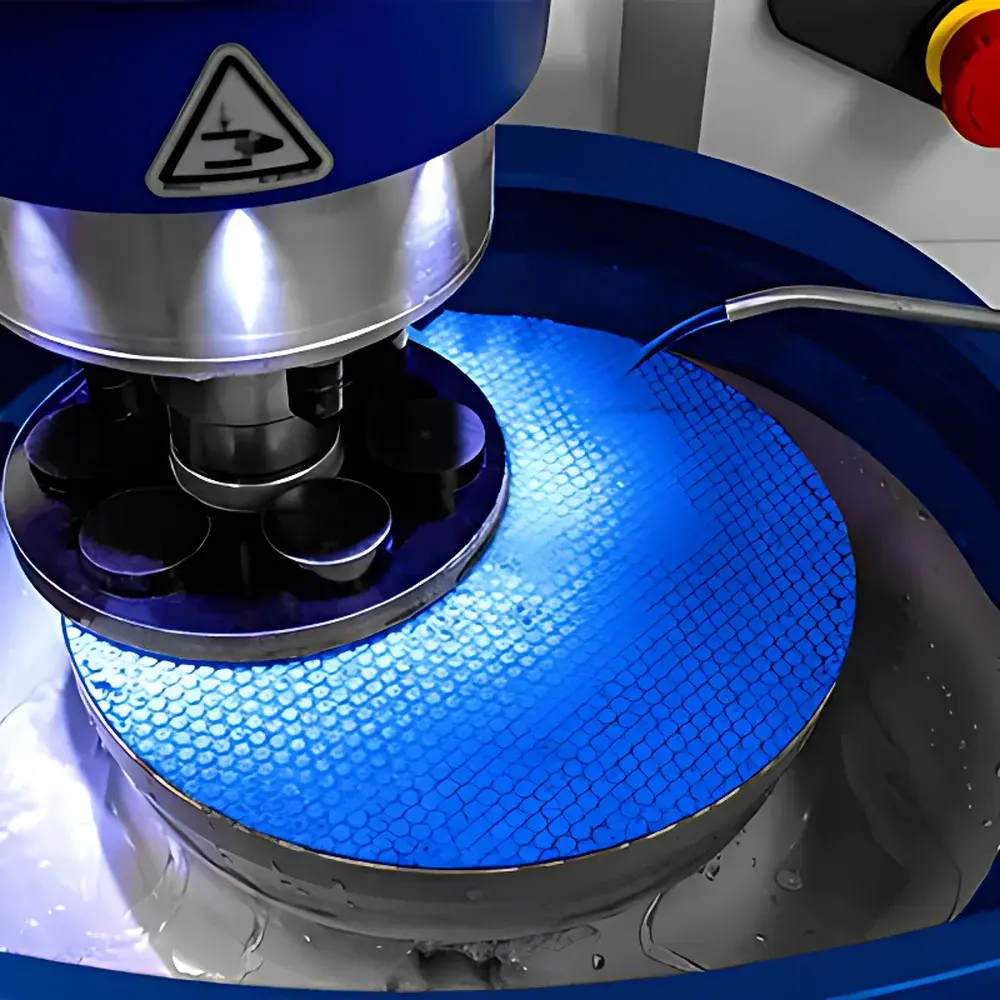
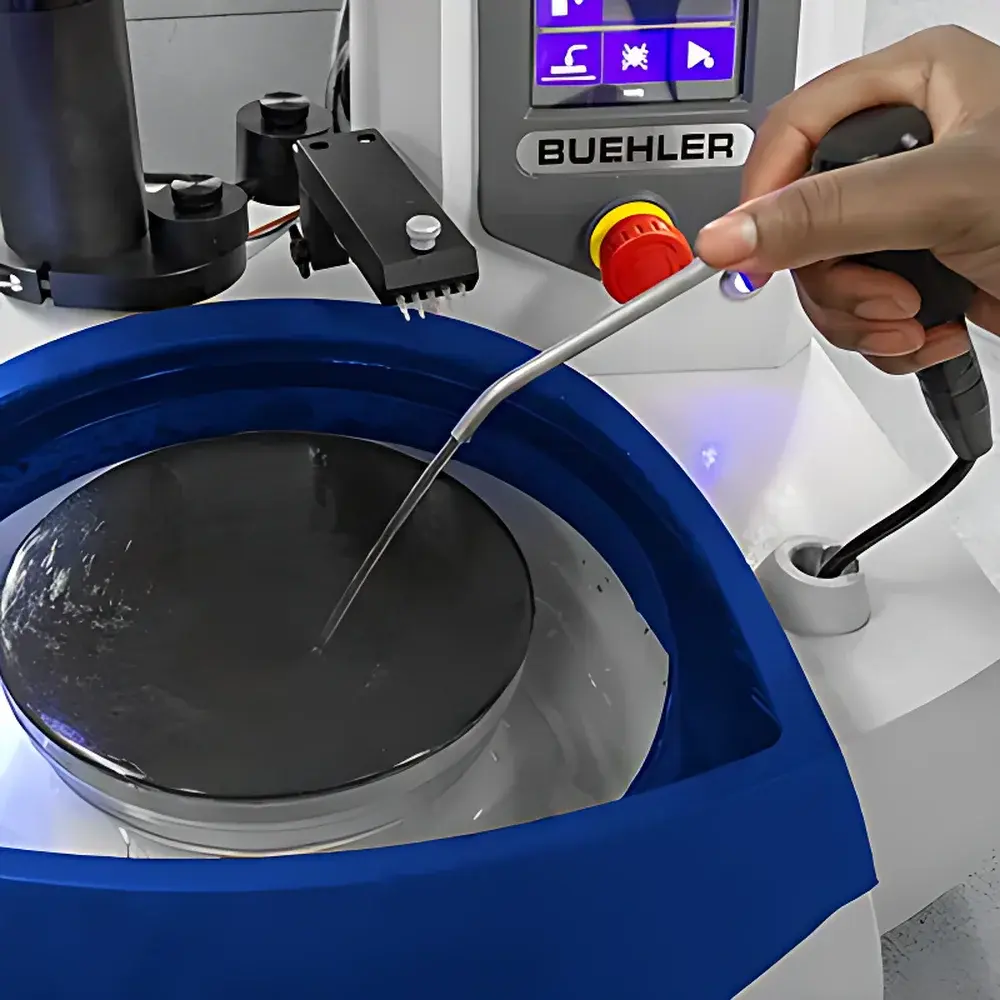
Buehler AutoMet™ 250 Automated Grinding and Polishing System
| Brand | Buehler |
|---|---|
| Origin | USA |
| Model | AutoMet™ 250 |
| Dimensions (L×W×H) | 78 cm × 74 cm × 104 cm |
| Platen Count | 1 |
| Platen Diameter | 203 mm (8 in) or 254 mm (10 in) |
| Platen Speed | 10–500 rpm, adjustable in 10 rpm increments |
| Motor Power (Base Unit) | 750 W (1 HP) |
| Platen Rotation | Clockwise or Counterclockwise |
| Water Supply | 6 mm OD tubing, 275–690 kPa (40–100 psi) |
| Air Supply (for AutoForce™ head) | 6 mm OD tubing, 240 kPa (35 psi) |
| Base Noise Level | 59.5 dB(A) at 100 rpm (measured at 0.5 m) |
| Weight | 77 kg (170 lbs) |
| Compliance | CE-marked per EU Machinery Directive 2006/42/EC and EMC Directive 2014/30/EU |
Overview
The Buehler AutoMet™ 250 Automated Grinding and Polishing System is a precision-engineered, single-platen platform designed for reproducible, high-throughput metallographic sample preparation in demanding industrial quality control laboratories and R&D facilities. Built on Buehler’s decades of expertise in materials science instrumentation, the AutoMet 250 implements a robust mechanical architecture with dual-axis motion control—combining programmable platen rotation and automated force application via its integrated AutoForce™ power head—to ensure consistent material removal rates and surface finish across diverse specimen geometries and hardnesses. Unlike manual or semi-automated systems, the AutoMet 250 employs closed-loop load regulation and real-time speed synchronization between platen and head to minimize edge rounding, relief, and subsurface deformation—critical parameters governed by ASTM E3, ISO 14487, and EN 10365 standards for microstructural analysis. Its modular design supports both routine QC workflows and advanced method development, making it suitable for ferrous alloys, non-ferrous metals, ceramics, composites, and geological specimens requiring precise planarization prior to optical microscopy, SEM, EBSD, or hardness testing.
Key Features
- Single-motor, heavy-duty base unit with variable-speed AC inverter drive (10–500 rpm, 10 rpm increments), delivering high torque stability across the full speed range for uniform abrasive action.
- AutoForce™ power head with dual loading modes: center-force (20–260 N) and single-point force (5–45 N), each calibrated traceably to NIST standards and configurable per step in multi-stage protocols.
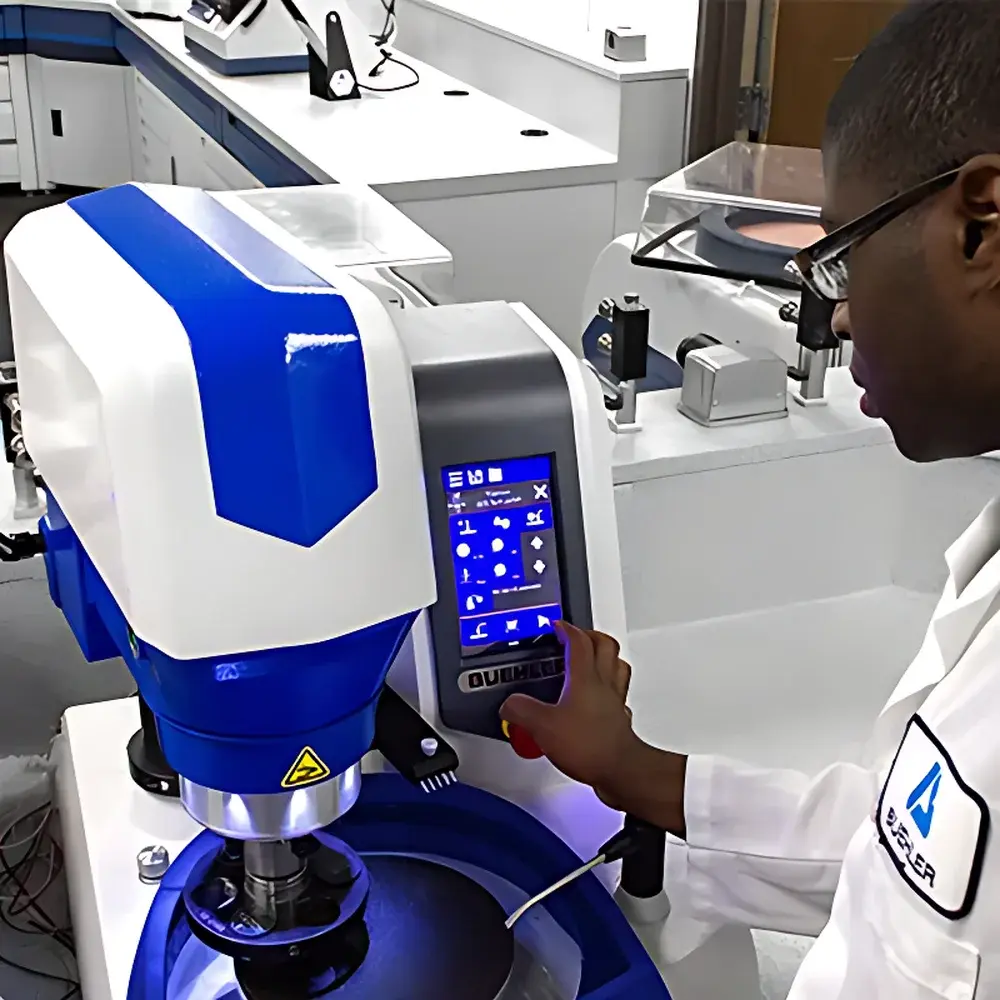
- Intuitive user interface options: standard membrane keypad with 3-digit LED display and status LEDs, or optional 7-inch full-color LCD touchscreen (NEMA 4 / IP65 rated) supporting metric/imperial units and graphical protocol editing.
- Integrated cleaning system featuring retractable 6 mm OD water hose, disposable bowl liner (polypropylene), and 360° rotational rinse cycle—reducing cross-contamination risk and enabling <5-minute turnover between abrasive steps.
- D-style platen mounting mechanism allows tool-free platen exchange between 203 mm (8 in) and 254 mm (10 in) diameters, optimizing consumable utilization and minimizing cost-per-sample without sacrificing flatness or runout (<15 µm TIR).
- Compliance-ready architecture: built-in audit trail logging (when paired with Pro software), electronic signature support, and configurable user access levels aligned with FDA 21 CFR Part 11 and GLP/GMP documentation requirements.
Sample Compatibility & Compliance
The AutoMet 250 accommodates specimens ranging from 25 mm to 100 mm in diameter—or irregular shapes up to 150 mm in length—under either center-force or single-point loading configurations. Its adaptive pressure distribution eliminates localized over-polishing in heterogeneous materials such as welded joints, cast microstructures, or coated substrates. All operational parameters—including speed, dwell time, force profile, and coolant flow—are programmable per step and stored as encrypted method files. The system conforms to CE marking requirements under the EU Machinery Directive (2006/42/EC) and Electromagnetic Compatibility Directive (2014/30/EU). When operated with Buehler’s OmniMet™ software suite, it satisfies data integrity criteria outlined in ISO/IEC 17025:2017 (clause 7.5.2) and supports validation documentation per ASTM E2015 and ISO 13528 for interlaboratory proficiency testing.
Software & Data Management
The AutoMet 250 integrates seamlessly with Buehler’s OmniMet™ software (v4.0+), enabling centralized method deployment, remote monitoring, and secure data archiving. Each preparation cycle logs timestamped metadata—including actual vs. setpoint speed/force, thermal drift compensation values, and operator ID—into a tamper-evident SQLite database. Export formats include CSV, PDF reports with embedded images, and XML for LIMS integration. Audit trail functionality records all parameter modifications, user logins, and calibration events with immutable timestamps, fulfilling traceability mandates for ISO 9001-certified labs and regulated environments subject to FDA or notified body inspections.
Applications
- Routine metallographic preparation of steel, aluminum, titanium, and superalloys for grain size analysis (ASTM E112), inclusion rating (ASTM E45), and phase quantification (ISO 643).
- Preparation of additively manufactured parts where layer boundary integrity and porosity assessment require artifact-free surfaces.
- Geological thin-sectioning and mineralogical polishing per ASTM D3418 and ISO 14688-1 protocols.
- Failure analysis workflows involving fracture surface replication, cross-sectional analysis of solder joints, and coating thickness measurement (ISO 2063).
- High-volume QA labs performing >50 samples/day with minimal operator intervention and statistical process control (SPC) capability via exported cycle metrics.
FAQ
What platen sizes are supported, and how does size selection affect consumable costs?
The AutoMet 250 accepts interchangeable 203 mm (8 in) and 254 mm (10 in) platens. Smaller platens reduce abrasive paper and diamond suspension consumption by up to 35% for specimens ≤40 mm, improving cost efficiency without compromising flatness or repeatability.
Is the system compatible with third-party abrasives and lubricants?
Yes—the AutoMet 250 operates with industry-standard consumables including silicon carbide papers, alumina suspensions, colloidal silica, and diamond pastes from all major suppliers; no proprietary chemistry lock-in is enforced.
Can the AutoMet 250 be integrated into an automated sample handling line?
Absolutely—the system features RS-232, Ethernet, and dry-contact I/O ports for synchronization with robotic arms, carousel loaders, and LIMS platforms via Modbus TCP or custom API scripting.
What maintenance intervals are recommended for long-term reliability?
Platen bearing inspection every 12 months; AutoForce™ load cell recalibration annually or after 10,000 cycles; water filter replacement every 6 months under continuous operation.
Does the system support Z-axis material removal quantification?
Yes—when equipped with the Pro software module and optional digital height sensor, the AutoMet 250 calculates volumetric removal rate (µm/sec) and cumulative depth per step, enabling predictive endpoint detection for hard-to-polish materials.



