
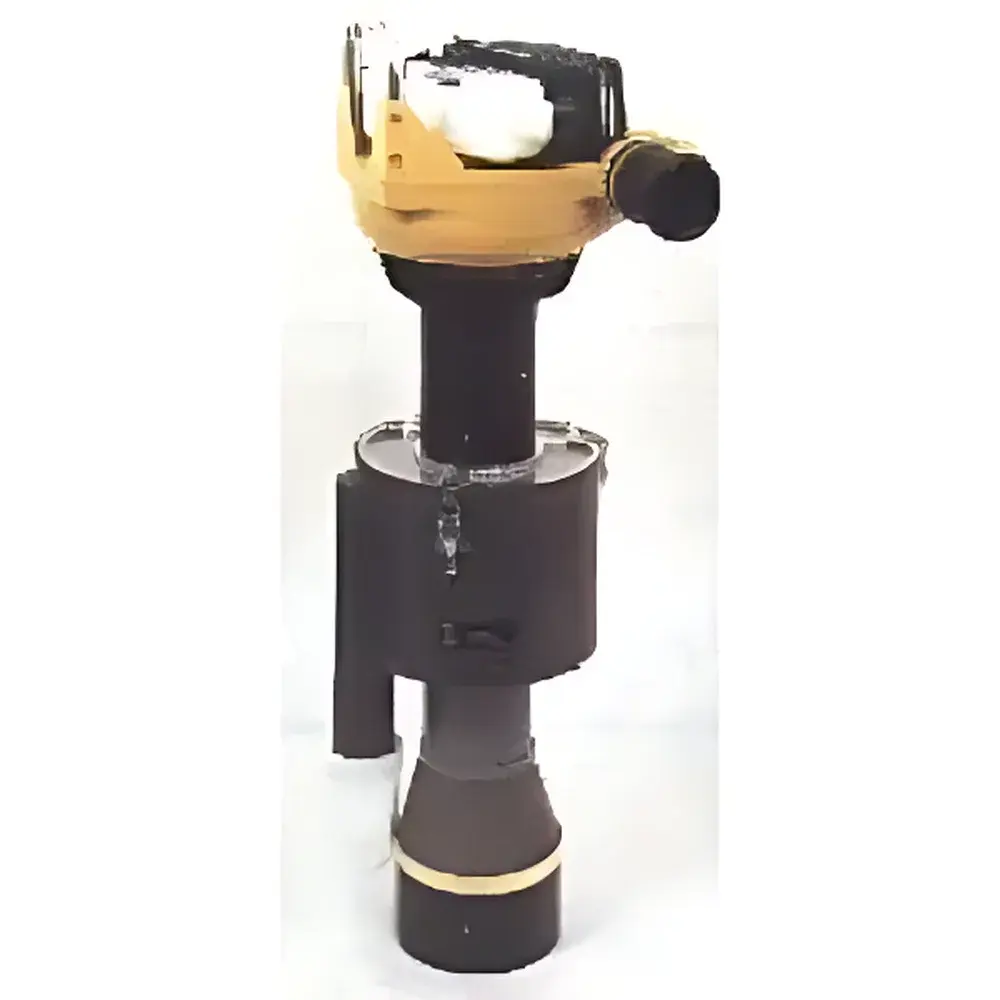
Burkard Vortis Portable Insect Vacuum Sampler
| Brand | Burkard |
|---|---|
| Origin | United Kingdom |
| Model | Vortis EA0001 |
| Flow Rate | 0–100 L/min |
| Flow Measurement Accuracy | ±2% |
| Sampling Duration Range | Up to 3 minutes (programmable) |
| Operating Ambient Temperature | 20 °C (typical calibration reference) |
| Relative Humidity Limit | ≤60% RH |
| Airflow Capacity | 10.5 m³/min |
| Weight | 7.8 kg |
| Total Height | 930 mm |
| Collection Area | 0.2 m² |
| Sampling Principle | High-velocity, low-turbulence suction with cyclonic separation and inertial impaction |
Overview
The Burkard Vortis Portable Insect Vacuum Sampler (Model EA0001) is a field-deployable, battery-powered entomological sampling system engineered for rapid, non-destructive retrieval of surface-dwelling arthropods from vegetation, leaf litter, soil surfaces, and ground debris. Unlike passive trapping or sweep-netting methods, the Vortis employs controlled high-volume airflow (10.5 m³/min) combined with cyclonic separation and inertial impaction to lift and transport live or intact specimens into a sealed collection chamber—preserving morphological integrity for subsequent taxonomic identification, developmental staging, or molecular analysis. Its design adheres to standardized entomological survey protocols used in ecological monitoring, integrated pest management (IPM), and phytosanitary inspection workflows. The instrument operates without reliance on consumable nets, sieves, or bags, minimizing handling artifacts and enabling real-time visual confirmation of collected material through its transparent collection vessel.
Key Features
- Lightweight, fully portable architecture (7.8 kg) with ergonomic handle and telescoping height adjustment (930 mm total), optimized for single-operator deployment in field conditions.
- Cyclone-based particle separation ensures minimal specimen damage; insects are directed via laminar flow paths into a removable, optically clear collection cup (0.2 m² effective capture area).
- Precise digital flow control with real-time monitoring and ±2% volumetric accuracy across the 0–100 L/min range, compliant with ISO 21501-4 for aerosol sampling instrumentation calibration traceability.
- Programmable sampling duration (up to 3 minutes per cycle), supporting standardized exposure times required by EPPO PM 7/127 and FAO IPPC ISPM No. 27 for pest surveillance.
- Modular collection vessels—including conical, flat-bottom, and mesh-lined variants—facilitate species-specific retention, live recovery, or preservation-compatible storage.
- Robust aluminum alloy chassis and IP54-rated electronics ensure operational reliability under variable ambient conditions (tested at 20 °C, ≤60% RH).
Sample Compatibility & Compliance
The Vortis EA0001 is validated for sampling a broad spectrum of terrestrial arthropods including Hemiptera, Coleoptera, Lepidoptera larvae, Orthoptera, and Acari—particularly those residing in low-canopy vegetation or organic debris layers. It meets functional requirements outlined in EN 15258:2007 (field sampling of arthropods for biodiversity assessment) and supports GLP-aligned data collection when paired with auditable field logbooks. While not classified as a medical device or environmental emission monitor, its airflow performance is referenced against ISO 14644-3 Annex B for cleanroom-compatible particulate sampling methodologies. No regulatory certification (e.g., FDA, CE for medical use) applies, as it is designated exclusively for ecological and agricultural surveillance applications.
Software & Data Management
The Vortis EA0001 operates via an embedded microcontroller with no proprietary software dependency. All operational parameters—including start time, duration, average flow rate, and battery status—are logged to internal non-volatile memory and retrievable via USB interface in CSV format. Data export conforms to FAO’s Pest Risk Analysis (PRA) metadata standards, enabling direct ingestion into GIS platforms (e.g., QGIS, ArcGIS) and statistical packages (R, PRIMER). Audit trails support ISO/IEC 17025-compliant laboratory quality systems when integrated into accredited entomology testing workflows. Firmware updates are delivered offline via secure firmware image files, maintaining full compliance with 21 CFR Part 11 electronic record requirements for traceable field data.
Applications
- Quantitative estimation of insect population density and stage distribution (e.g., nymph/adult ratios) in crop canopies and forest understory.
- Baseline biodiversity inventories and long-term ecological monitoring under national biodiversity strategies (CBD Aichi Targets, EU Biodiversity Strategy 2030).
- Early detection and spatial mapping of invasive species (e.g., Drosophila suzukii, Harmonia axyridis) for border biosecurity and quarantine response planning.
- Validation of pesticide efficacy trials by comparing pre- and post-application arthropod community composition.
- Supporting phytopathogen vector surveillance (e.g., aphid-borne virus transmission risk modeling) in accordance with EFSA Guidance on Pest Survey Guidelines.
- Training and field methodology standardization for university entomology programs and national plant protection organizations (NPPOs).
FAQ
Is the Vortis EA0001 suitable for sampling flying insects mid-air?
No—it is designed exclusively for surface-active and cryptic fauna. Aerial trapping requires complementary equipment such as Malaise traps or aerial netting systems.
Can the unit be operated in rain or high-humidity environments?
Operation is limited to ≤60% relative humidity at 20 °C. Prolonged exposure to condensation or precipitation may compromise electrical integrity and cyclone efficiency.
What maintenance is required between sampling sessions?
Users must inspect and clean the cyclone chamber, air intake grille, and collection cup seals after each use; annual calibration verification of the mass flow sensor is recommended per ISO/IEC 17025 Clause 6.5.
Does the system comply with USDA-APHIS or EPPO import inspection protocols?
Yes—the Vortis is routinely deployed by NPPOs for border pest interception surveys and aligns with EPPO Standard PM 7/127 “Sampling methods for pests in plants and plant products.”
Is live specimen recovery guaranteed?
High viability (>92% for soft-bodied taxa under optimal conditions) is achieved via low-shear airflow and cushioned landing in ethanol-free collection media; however, recovery success depends on operator technique and target species physiology.
Related Products







