
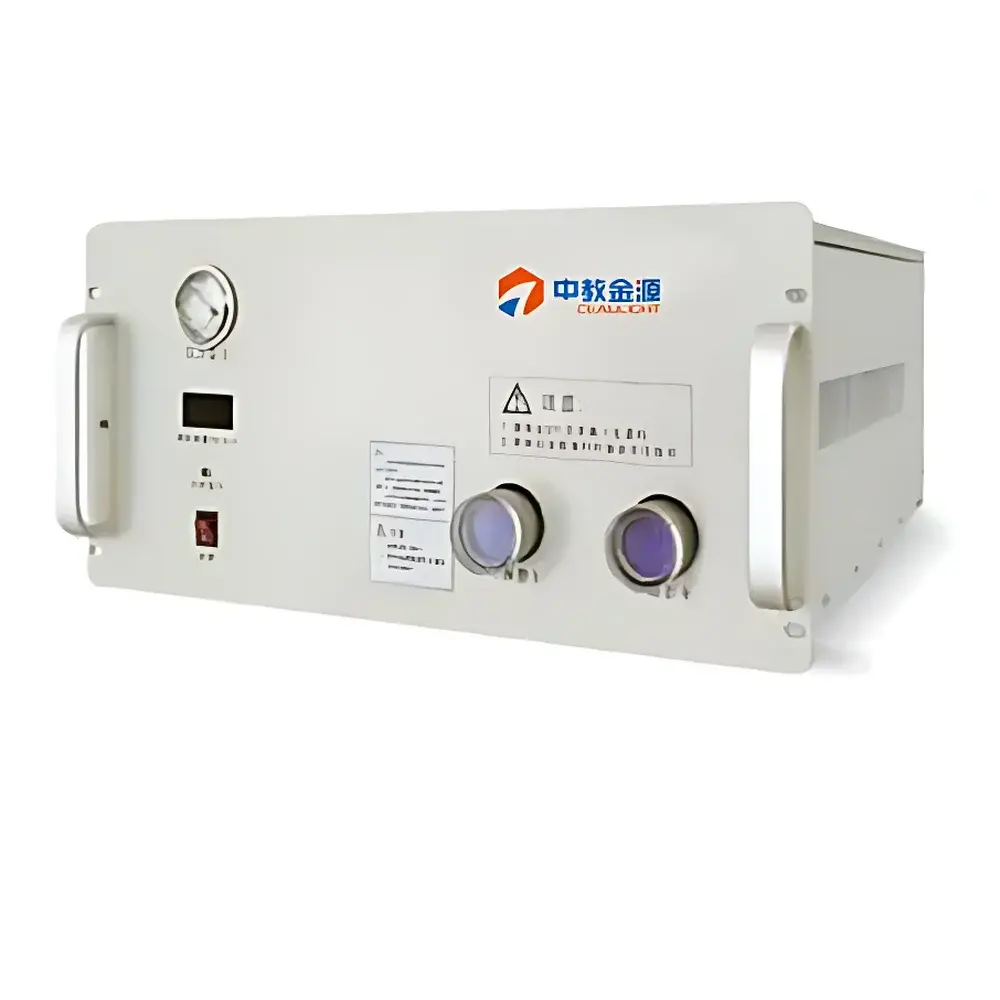
CEHF-300 High-Purity Hydrogen Generator by Zhongjiao Jinyuan
| Brand | Zhongjiao Jinyuan |
|---|---|
| Origin | Beijing, China |
| Manufacturer Type | Direct Manufacturer |
| Country of Origin | China |
| Model | CEHF-300 |
| Power Input | 220 V AC, 50 Hz |
| Max. Power Consumption | 150 W (standard), 180 W (peak) |
| Operating Temperature | 0–40 °C |
| Relative Humidity | <85% RH |
| H₂ Purity | 99.999% (v/v, O₂-equivalent basis) |
| Output Flow Rate | 0–300 mL/min |
| Output Pressure | 0.4 MPa (adjustable upon factory configuration) |
| Dimensions | 5U rack-mount form factor |
| Weight | ~12 kg |
Overview
The CEHF-300 High-Purity Hydrogen Generator is an electrolytic gas generation system engineered for continuous, on-demand production of ultra-high-purity hydrogen (99.999% v/v) in laboratory and analytical instrumentation environments. It operates on the principle of alkaline water electrolysis—using a proprietary cylindrical electrolytic cell (bucket-type design) to simultaneously perform electrolyte storage, hydrogen generation, and oxygen separation. Unlike conventional plate-type electrolyzers, this architecture delivers larger effective electrode surface area, lower operational cell temperature (<45 °C under steady-state load), and enhanced long-term stability. The system integrates pressure-regulated gas delivery, real-time flow monitoring via LED digital display, and passive thermal management—ensuring consistent output across variable demand conditions without manual intervention. Designed for integration with GC carriers, fuel cell test benches, and catalytic reaction systems, it eliminates the logistical and safety constraints associated with high-pressure hydrogen cylinders.
Key Features
- Integrated bucket-type alkaline electrolyzer with optimized Ni-based electrodes—enabling simultaneous electrolyte retention, H₂ generation, and O₂ venting for improved thermal efficiency and extended service life.
- Auto-compensating pressure regulation: maintains stable 0.4 MPa output pressure while dynamically modulating hydrogen production rate (0–300 mL/min) in response to downstream consumption—no flow throttling or pressure spikes.
- Digital LED flow meter with ±2% full-scale accuracy provides immediate visual feedback; calibrated traceably to NIST-traceable standards.
- Fail-safe anti-backflow mechanism prevents electrolyte migration into gas lines—critical for protecting sensitive downstream components such as GC injectors and palladium membranes.
- Stainless-steel gas purification column (containing dual-stage desiccant and oxygen scavenger) ensures removal of residual moisture, oxygen, and trace alkali mist—meeting ASTM D7217 and ISO 8573-1 Class 1 requirements for instrument-grade hydrogen.
- Intelligent water-level management: automatic top-up function supports unattended operation for >72 hours under typical lab usage profiles; compatible with deionized water (≥1 MΩ·cm resistivity).
Sample Compatibility & Compliance
The CEHF-300 is compatible with all standard hydrogen-dependent analytical platforms—including gas chromatographs (GC), hydrogen flame ionization detectors (FID), thermal conductivity detectors (TCD), and electrochemical hydrogen sensors. Its output meets the purity and particulate specifications required for USP , ISO 8573-1:2010 Class 1 (compressed air/gas quality), and ASTM D7217-18 (hydrogen for fuel cell testing). While not certified to IEC 61000-6-3 or ATEX, the unit complies with GB/T 14048.1–2012 (Chinese national standard for low-voltage switchgear) and incorporates overtemperature cutoff, pressure relief valve (set at 0.6 MPa), and earth leakage protection per GB 4793.1–2007. Documentation supports GLP-compliant audit trails when paired with external data loggers.
Software & Data Management
The CEHF-300 operates as a standalone hardware system with no embedded firmware or network interface. All operational parameters—including real-time flow, pressure status, and electrolyzer temperature—are conveyed via front-panel indicators only. For laboratories requiring electronic recordkeeping, analog 0–5 V or 4–20 mA output signals (optional add-on module) enable connection to SCADA, LIMS, or PLC systems. Raw sensor outputs are compatible with ISO/IEC 17025-accredited calibration protocols. No proprietary software is required; integration follows Modbus RTU or analog signal conventions common in analytical infrastructure.
Applications
- Carrier gas supply for capillary GC and GC-MS systems requiring ultra-dry, oxygen-free hydrogen.
- Fuel source for hydrogen-powered detectors (e.g., FID, HID) where cylinder replacement introduces downtime or contamination risk.
- Controlled atmosphere generation in catalysis research reactors and material synthesis gloveboxes.
- Calibration gas standard preparation in metrology labs adhering to ISO/IEC 17025.
- On-site hydrogen feed for PEM electrolyzer performance testing and durability evaluation.
FAQ
What water quality is required for optimal operation?
Deionized water with resistivity ≥1 MΩ·cm and total organic carbon (TOC) <50 ppb is recommended. Tap water or distilled water must not be used—silica, chloride, or calcium impurities cause electrode passivation and reduce membrane lifespan.
Can the output pressure be adjusted beyond 0.4 MPa?
Yes—custom pressure configurations (up to 1.0 MPa) are available upon factory order; however, higher pressures require reinforced fittings and validation against local pressure equipment regulations (e.g., PED 2014/68/EU).
Is the CEHF-300 compliant with FDA 21 CFR Part 11 for electronic records?
No—the device lacks audit-trail-capable digital logging or user-accessible firmware. For Part 11 compliance, integrate with third-party validated data acquisition systems that capture analog outputs and enforce electronic signatures.
How often does the electrolyte require replacement?
Under continuous operation with DI water input, the KOH electrolyte typically remains effective for 12–18 months; visual inspection for discoloration or precipitate formation serves as the primary maintenance indicator.
Does the unit include a built-in gas leak detection system?
No—hydrogen leak detection is not integrated. Users must deploy external semiconductor or catalytic bead sensors (e.g., compliant with IEC 60079-29-1) in the installation environment per local safety codes.



