
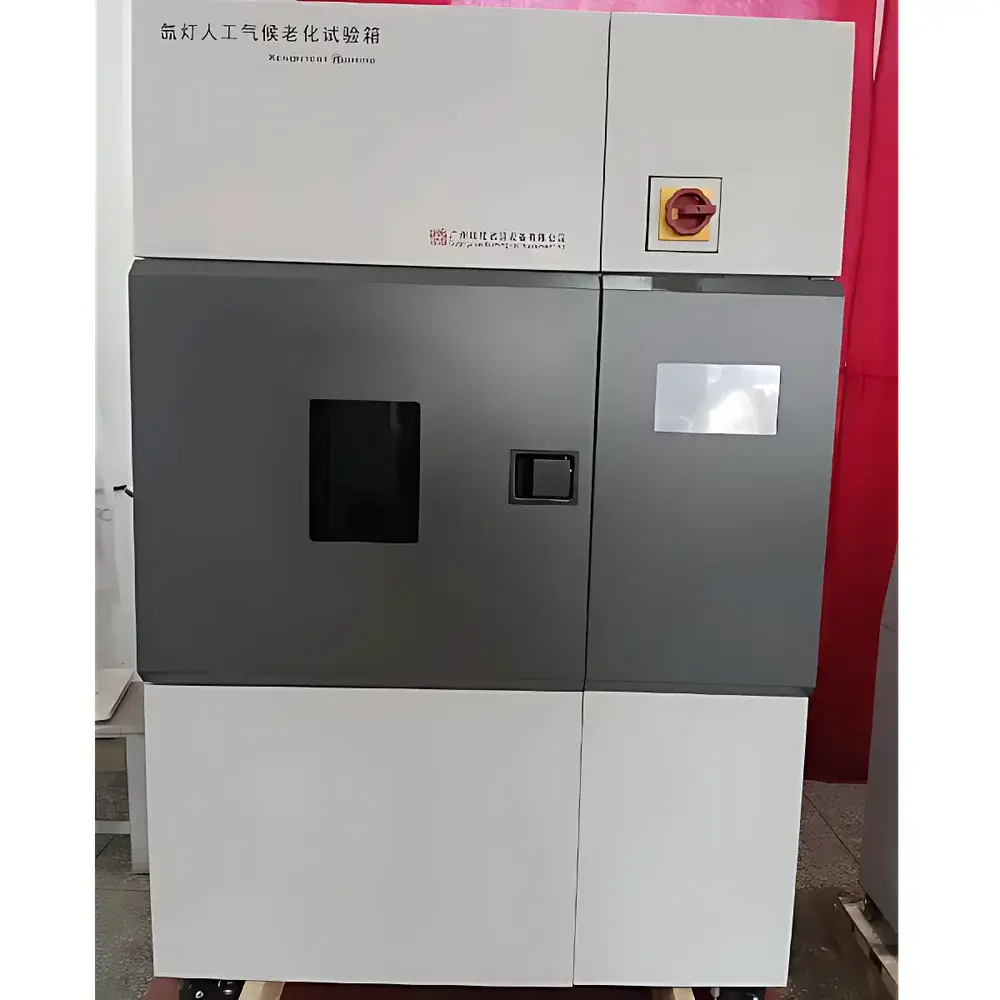
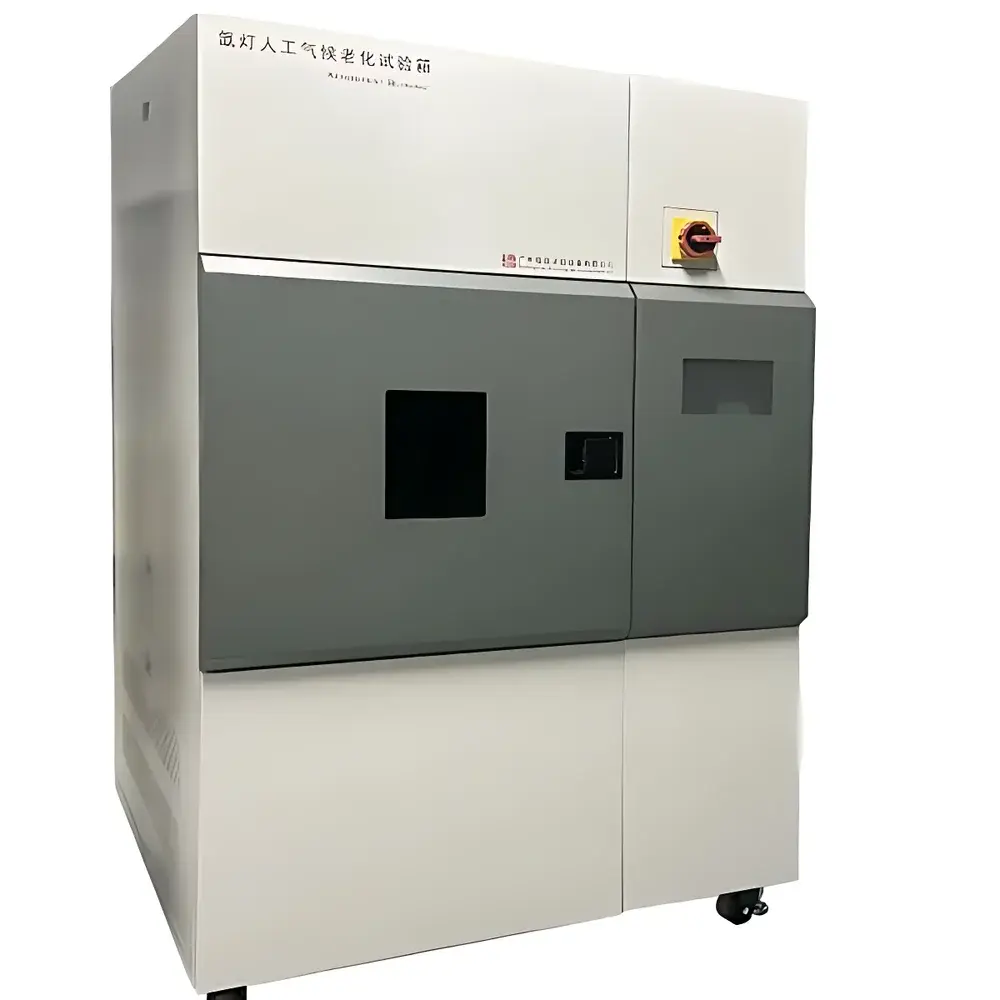
Changchun Intelligent GZRM-XII45 Xenon Arc Weathering Test Chamber
| Brand | Changchun Intelligent |
|---|---|
| Origin | Guangdong, China |
| Manufacturer Type | Authorized Distributor |
| Origin Category | Domestic (China-made) |
| Model | GZRM-XII45 |
| Pricing | Available Upon Request |
| Lamp Power Options | 1800 W, 2500 W, 4500 W, 7500 W |
| Spectral Filtering Configurations | Borosilicate/Borosilicate, Borosilicate/Soda-Lime, Quartz/Borosilicate, Quartz/Quartz, Lithium-Quartz/Quartz, Quartz/Long-Pass (Ford FLTM B0-116-01), etc. |
| Irradiance Control Range | 0.21–2.05 W/m² @ 340 nm |
| Typical Test Standards Compliance | ISO 105-B02/B06, AATCC TM16, ASTM G155, SAE J2412/J2527, VDA 75202, Ford FLTM B0-116-01, GB/T 16422.2, IEC 60068-2-9 |
Overview
The Changchun Intelligent GZRM-XII45 Xenon Arc Weathering Test Chamber is a precision-engineered environmental test system designed to simulate and accelerate the effects of natural sunlight, heat, and moisture on materials. It employs a high-intensity xenon arc lamp as the radiation source—spectrally calibrated to closely replicate terrestrial solar irradiance across UV, visible, and near-infrared wavelengths (290–800 nm). Unlike UV fluorescent or metal halide sources, xenon arc technology provides full-spectrum output with controllable spectral distribution via interchangeable internal and external filter combinations. This enables rigorous simulation of diverse climatic exposures—including equatorial daylight, window-filtered indoor illumination, automotive interior conditions, and accelerated UV-rich aging—while maintaining traceable irradiance uniformity and temporal stability per ISO 4892-2 and ASTM G155 requirements.
Key Features
- Modular xenon lamp system with selectable power ratings (1800 W, 2500 W, 4500 W, and 7500 W) to support both small-batch qualification and large-scale production validation.
- Dual-filter architecture: Independent internal and external filter selection allows precise spectral tailoring—e.g., borosilicate/borosilicate for general weathering, quartz/borosilicate for enhanced UV-A/UV-B exposure, lithium-quartz/Quartz for daylight-cutoff matching, and long-pass quartz for automotive interior simulation per Ford FLTM B0-116-01.
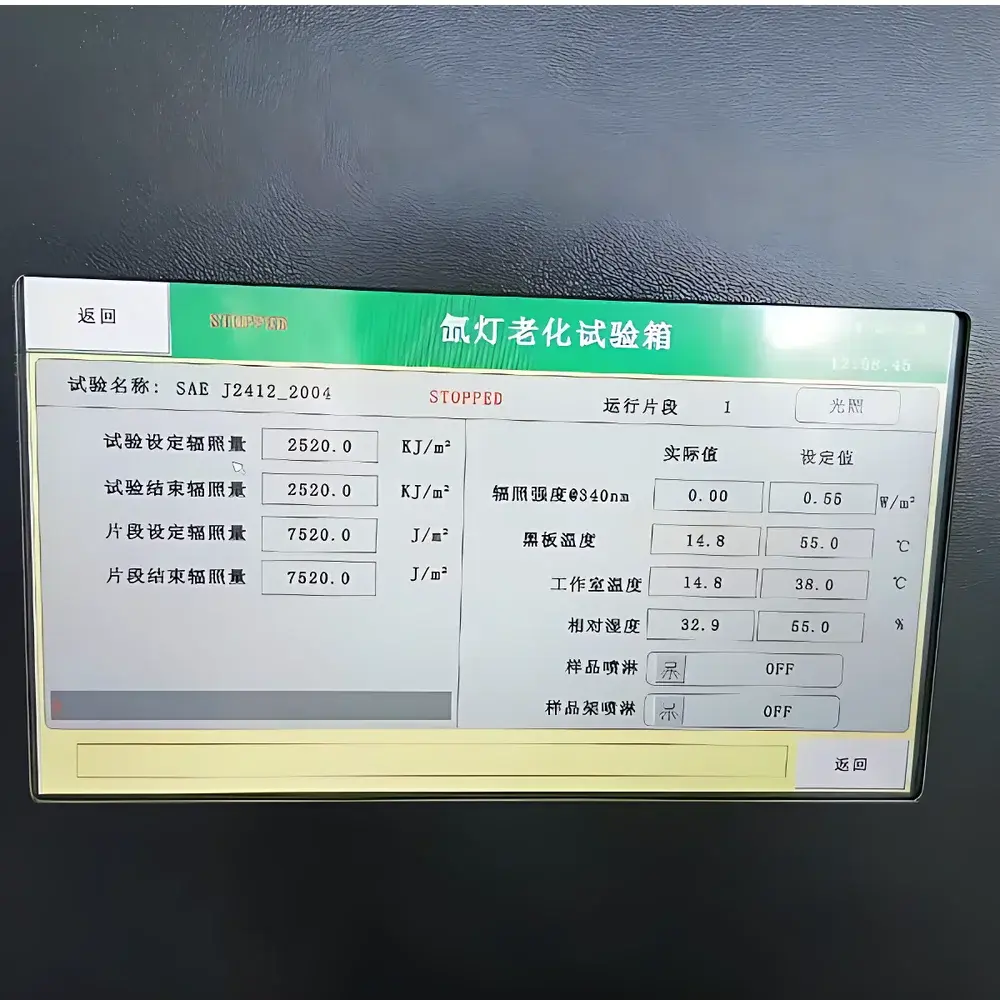
- Real-time irradiance monitoring and closed-loop control at 340 nm, 420 nm, or TUV (total UV) bands, ensuring compliance with ±5% irradiance tolerance limits specified in ISO 105-B06 and AATCC TM16.
- Integrated black-panel temperature (BPT) and chamber air temperature (CAT) regulation with PID-controlled heating, refrigeration, and humidification systems—capable of sustaining 10–80°C BPT and 20–70°C CAT with ±0.5°C stability.
- Programmable cyclic testing: Independent control of irradiance, temperature, and relative humidity enables complex multi-step profiles—such as light/dark cycles with condensation, spray intervals, or low-temperature dark periods aligned with IEC 60068-2-9 and GB/T 16422.2.
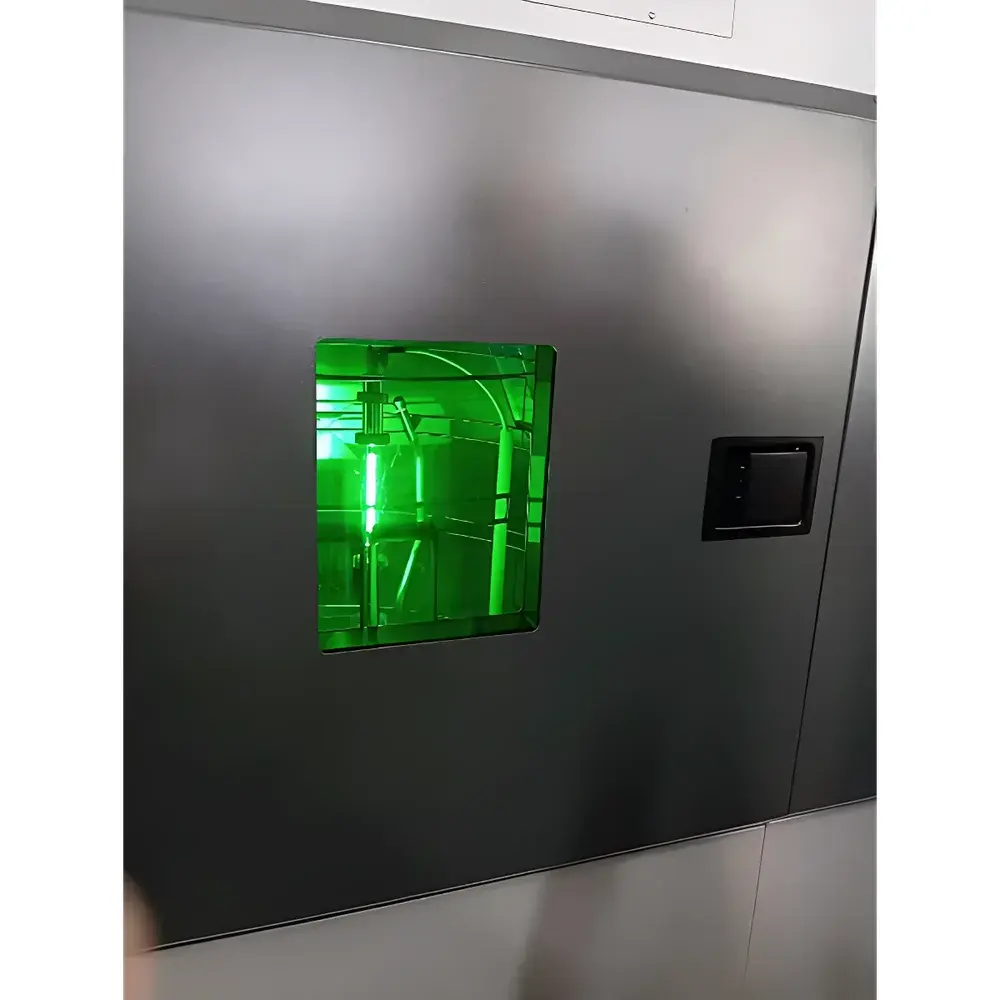
- Stainless-steel test chamber with quartz viewing window, corrosion-resistant sample racks, and CE-compliant safety interlocks including lamp overheat protection and door-open irradiance cutoff.
Sample Compatibility & Compliance
The GZRM-XII45 accommodates flat-panel specimens up to 600 mm × 600 mm (standard rack) or custom fixtures for 3D components (e.g., automotive trim, textile swatches, polymer housings). Its spectral fidelity supports regulatory and industry-standard testing protocols including ISO 105-B02 (colorfastness to artificial light), ISO 105-B06 (Xenon arc method), ASTM D4329/D4459 (plastics), ASTM D2565 (rubber), SAE J2412/J2527 (automotive exterior), VDA 75202 (interior materials), and Ford FLTM B0-116-01. The system meets GLP-relevant operational documentation requirements and supports audit-ready calibration records per ISO/IEC 17025 guidelines when used with certified radiometers and NIST-traceable reference standards.
Software & Data Management
Equipped with proprietary Windows-based control software, the GZRM-XII45 delivers intuitive profile programming, real-time parameter visualization (irradiance, BPT, CAT, RH), and automatic data logging at user-defined intervals (≥1 Hz resolution). All test logs—including setpoints, actual values, alarm events, and lamp operating hours—are timestamped and exportable in CSV or XML format. Audit trail functionality complies with FDA 21 CFR Part 11 principles through electronic signature support, user access levels (admin/operator/viewer), and immutable log archiving. Optional integration with LIMS or MES platforms is available via Modbus TCP or OPC UA interfaces.
Applications
This chamber is routinely deployed in QC laboratories, R&D centers, and third-party testing facilities for evaluating photostability, color shift, gloss loss, cracking, chalking, and mechanical degradation in textiles, coatings, plastics, elastomers, adhesives, and automotive interiors. It serves critical roles in pre-compliance screening prior to outdoor exposure (e.g., Arizona or Florida field trials), supplier qualification against OEM specifications (e.g., BMW GS 97035, VW TL 226), and formulation development for UV-stabilized polymers. Its flexibility in spectral filtering and environmental cycling makes it suitable for both comparative ranking studies and quantitative lifetime prediction modeling under controlled acceleration factors.
FAQ
What spectral filters are included standard with the GZRM-XII45?
The base configuration includes borosilicate inner and outer filters. Additional filter sets—such as quartz/borosilicate, quartz/quartz, lithium-quartz/quartz, and long-pass quartz—are available as optional accessories.
Does the system support humidity control during irradiation cycles?
Yes. Integrated ultrasonic humidification and dehumidification modules enable precise RH control (10–95% RH) synchronized with irradiance and temperature profiles.
Can test data be exported for regulatory submission?
Yes. All raw and processed data—including irradiance integrals, temperature/humidity histories, and alarm logs—are exportable in machine-readable formats compliant with regulatory agency expectations (e.g., FDA, EU Notified Bodies).
Is calibration traceable to national standards?
Radiometric calibration is performed using NIST-traceable spectroradiometers; temperature and humidity sensors are certified to ISO/IEC 17025-accredited laboratories upon installation and annually thereafter.
What maintenance is required for the xenon lamp system?
Lamp replacement is recommended every 1,500–2,000 hours of operation; quartz filter cleaning and sensor verification are scheduled quarterly. Full preventive maintenance kits and service contracts are available directly from authorized distributors.
Related Products



