
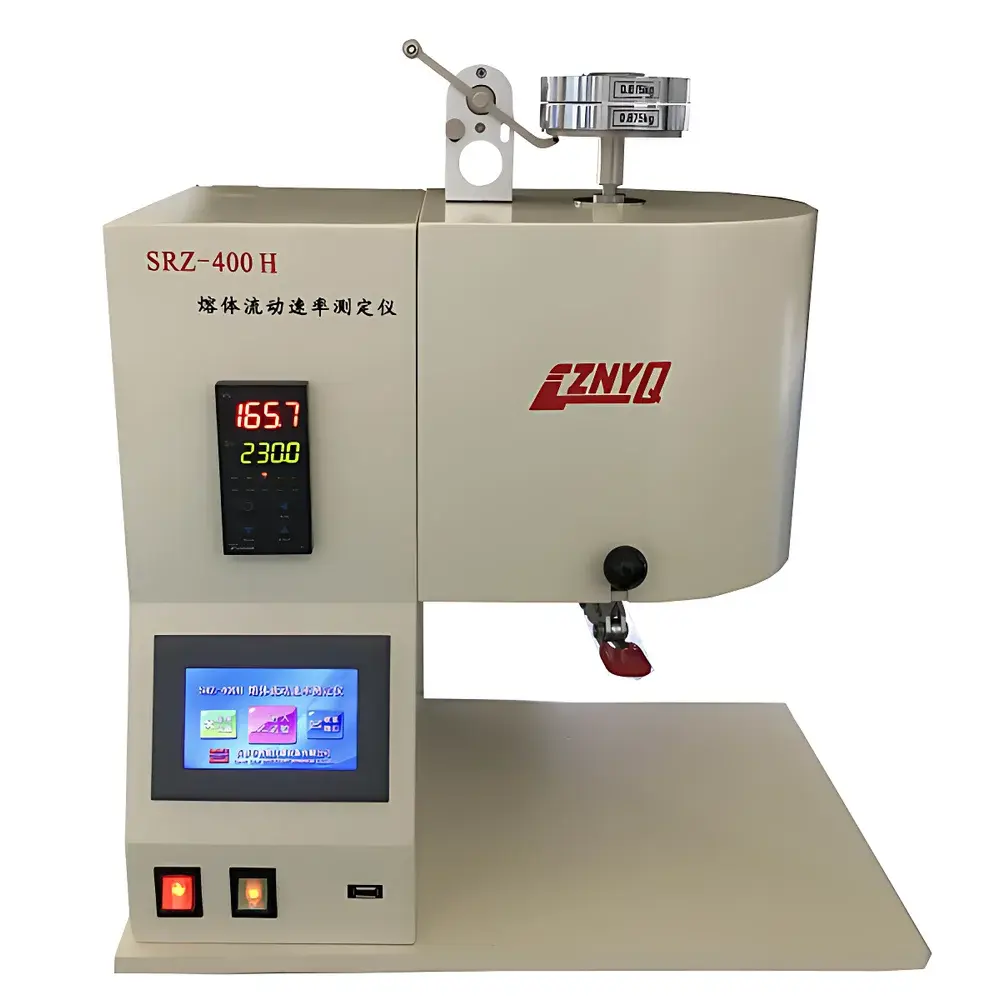
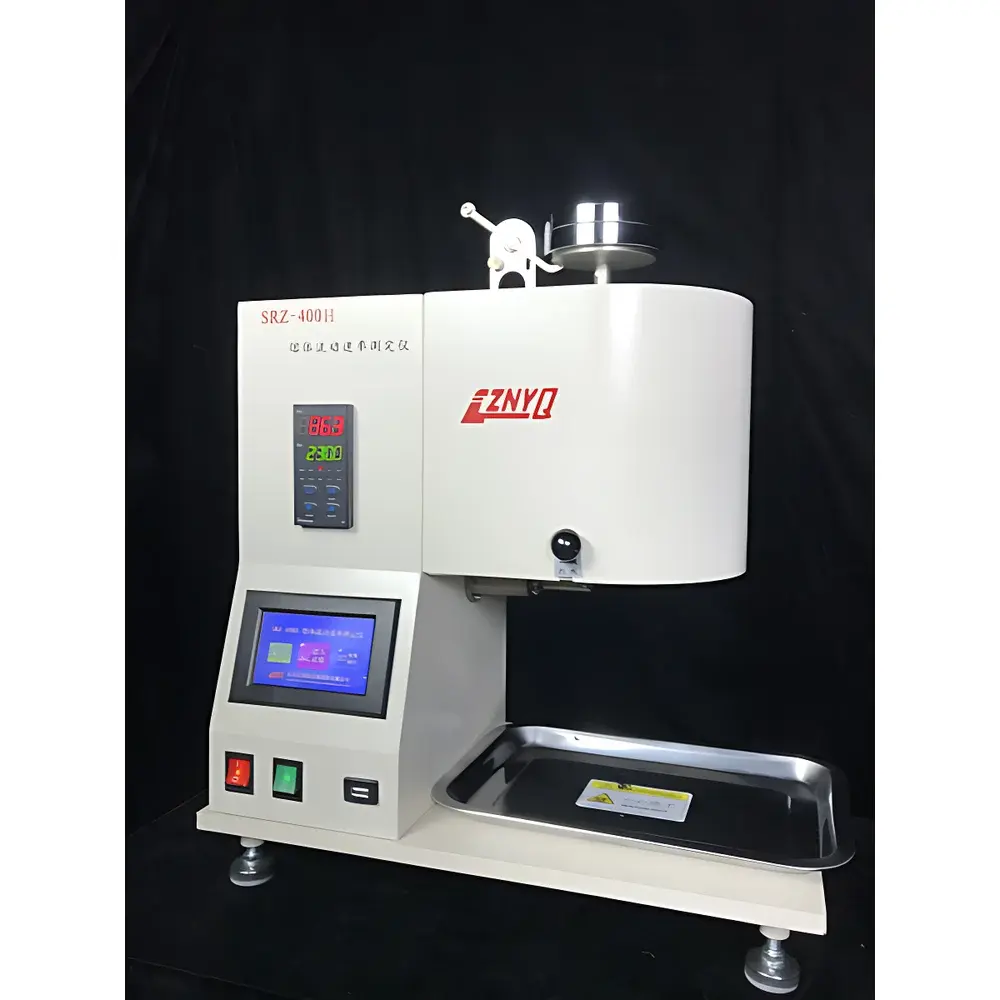
Changchun Intelligent SRZ-400H Melt Flow Indexer
| Brand | Changchun Intelligent |
|---|---|
| Origin | Jilin, China |
| Model | SRZ-400H |
| Temperature Range | 80–400 °C |
| Temperature Accuracy | ±0.2 °C |
| Temperature Resolution | 0.1 °C |
| Die Orifice Diameter | 2.095 mm ± 0.005 mm |
| Barrel Bore Diameter | 9.550 mm ± 0.025 mm |
| Piston Head Diameter | 9.475 mm ± 0.015 mm |
| Piston Head Length | 6.35 mm ± 0.1 mm |
| Standard Load Positions | 30 mm spacing |
| Power Consumption | ≤0.5 kW |
| Recovery Time after Load Change | 4 min |
| Weight | 50 kg |
| Dimensions (L×W×H) | 460 × 280 × 415 mm |
| Supply | AC 220 V |
| Accuracy Class | Class 1 |
| Compliance | GB/T 3682–2000 (Method A), ISO 1133:2011, ASTM D1238 |
Overview
The Changchun Intelligent SRZ-400H Melt Flow Indexer is a precision-engineered instrument designed for the quantitative determination of melt mass-flow rate (MFR) of thermoplastic polymers under standardized thermal and mechanical conditions. It operates on the principle of extrusion plastometry—applying a defined load to molten polymer within a heated barrel, forcing it through a standardized capillary die, and measuring the mass of extrudate collected over a fixed time interval. This method conforms strictly to ISO 1133:2011, ASTM D1238, and GB/T 3682–2000 (Method A), making it suitable for routine quality control, incoming material verification, and process development in polymer compounding, extrusion, and injection molding facilities. The SRZ-400H is optimized for high repeatability across a broad temperature range (80–400 °C), supporting characterization of conventional resins—including polyethylene (PE), polypropylene (PP), polystyrene (PS), ABS, polyamide (PA), polyacrylates, polyoxymethylene (POM), fluoropolymers (e.g., PTFE), and polycarbonate (PC)—as well as engineering-grade and high-temperature thermoplastics.
Key Features
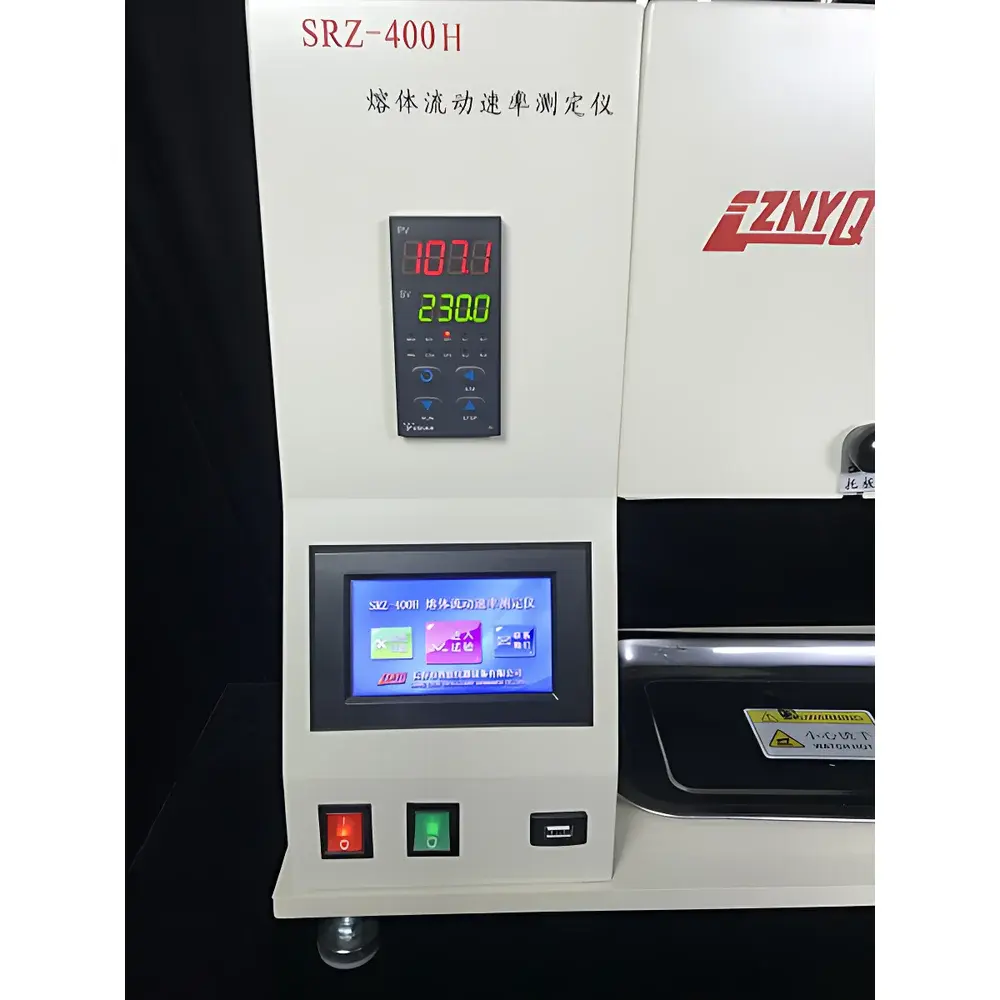
- High-stability temperature control system with dual-display Japanese PID controller, achieving ±0.2 °C accuracy and 0.1 °C resolution across the full operating range (80–400 °C); temperature recovery time ≤4 minutes after load or setpoint change.
- Precision-machined barrel and piston assembly meeting ISO 1133 tolerances: barrel bore diameter 9.550 mm ± 0.025 mm; piston head diameter 9.475 mm ± 0.015 mm; piston head length 6.35 mm ± 0.1 mm; capillary die orifice 2.095 mm ± 0.005 mm.
- Integrated microprocessor-based control architecture with color TFT LCD interface, voice-guided operation, and capacitive touch-screen navigation for intuitive workflow execution.
- Automated cutting mechanism capable of severing high-viscosity, rigid extrudates—including filled and reinforced thermoplastics—without manual intervention or operator variability.
- Class 1 accuracy certification per national metrological standards, ensuring traceable compliance with international calibration requirements for QC laboratories operating under ISO/IEC 17025 or internal GMP-aligned protocols.
- Low-power thermal design (≤0.5 kW) with efficient heating uniformity and minimized thermal drift, reducing energy consumption while maintaining long-term stability during extended test sequences.
Sample Compatibility & Compliance
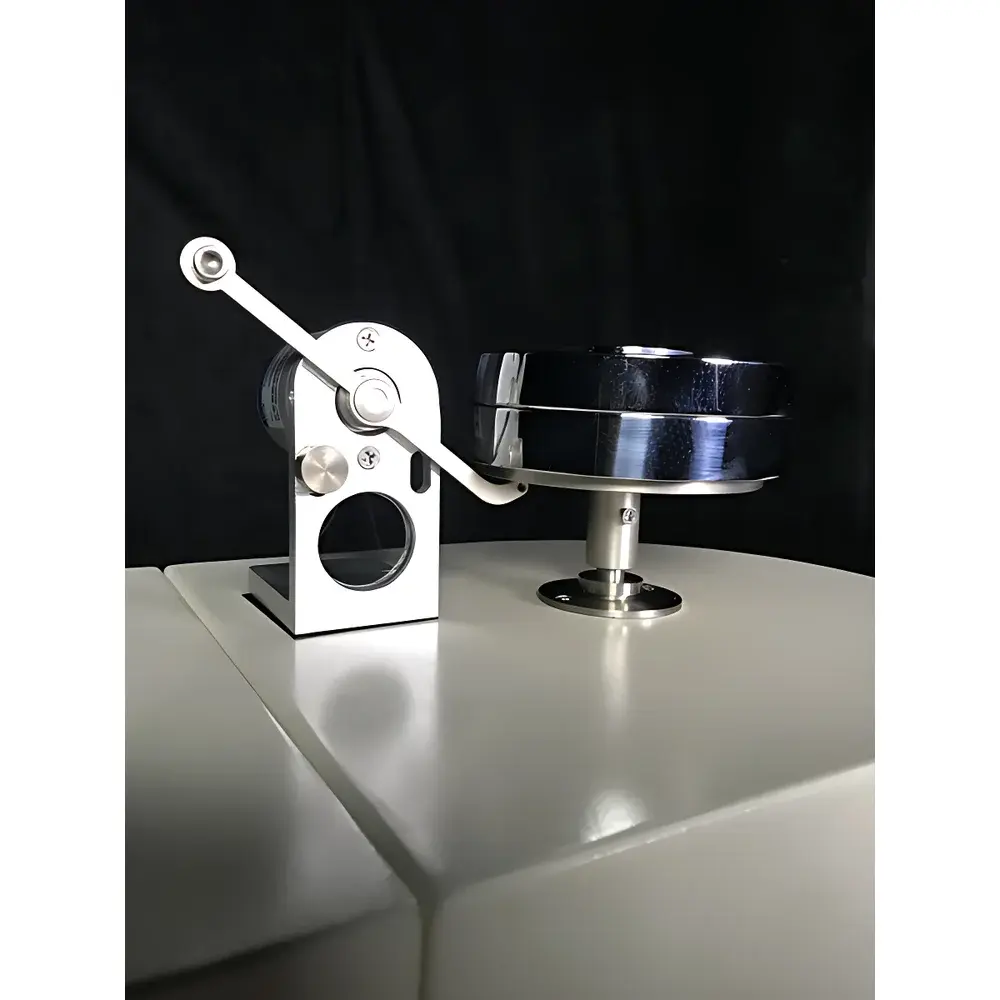
The SRZ-400H supports all standard test loads specified in ISO 1133 and ASTM D1238, including common combinations such as 2.16 kg, 5.00 kg, and 10.00 kg—delivered via five calibrated weights (0.325 kg, 0.875 kg, 0.960 kg, 1.200 kg, and 1.640 kg) that collectively span the required loading range. Its robust mechanical architecture accommodates both virgin and compound formulations containing fillers (e.g., calcium carbonate, talc, glass fiber), flame retardants, and pigments—provided they remain thermally stable below 400 °C. All hardware components—including the stainless-steel sample tray, mirror-assisted alignment tool, funnel, and cleaning kit—are manufactured to dimensional and surface-finish specifications aligned with ISO 1133 Annex B. The instrument’s design facilitates straightforward validation per ASTM E2554 (verification of measurement systems) and supports documentation traceability required for GLP and ISO 9001 environments.
Software & Data Management
The embedded microcontroller firmware includes built-in data logging, real-time MFR calculation, and statistical processing (mean, standard deviation, CV%) for up to 99 test records. Raw time–mass data is exportable via USB to external PCs for further analysis. Optional PC-based software provides enhanced functionality: automated report generation compliant with internal QA templates, audit trail logging (user ID, timestamp, parameter changes), and export to CSV or PDF formats compatible with LIMS integration. While not certified for FDA 21 CFR Part 11 compliance out-of-the-box, the system supports configuration for electronic signature workflows when deployed with validated third-party software and documented procedural controls—meeting baseline requirements for regulated polymer manufacturing sites.
Applications
- Quality assurance of incoming polymer pellets and regrind batches in contract manufacturing and OEM supply chains.
- Process optimization in extrusion line start-up, where MFR trends correlate with melt temperature, screw speed, and backpressure settings.
- Stability assessment of polymer degradation during multiple extrusion passes or residence time studies.
- Comparative evaluation of molecular weight distribution shifts induced by peroxide-catalyzed degradation or controlled rheology additives.
- Supporting technical data sheet (TDS) generation for masterbatch producers and compounders seeking ISO 9001-conformant test evidence.
- Academic research in polymer physics labs investigating shear-thinning behavior, thermal history effects, and filler–matrix interfacial interactions.
FAQ
What standards does the SRZ-400H comply with?
It meets the dimensional, thermal, and operational requirements of ISO 1133:2011, ASTM D1238, and GB/T 3682–2000 (Method A) for melt mass-flow rate determination.
Can the instrument be used for melt volume-rate (MVR) testing?
No—the SRZ-400H is configured exclusively for mass-based measurement (MFR). MVR capability requires volumetric displacement sensing (e.g., encoder-driven piston tracking), which is not implemented in this model.
Is calibration certification included with purchase?
A factory calibration report is provided, documenting as-delivered performance against reference standards; however, end-user periodic verification using NIST-traceable reference materials remains the responsibility of the laboratory per ISO/IEC 17025 Clause 6.6.
How is temperature uniformity verified across the barrel zone?
Uniformity is ensured via axial heater zoning and calibrated platinum RTD feedback; users may perform routine verification using a certified immersion thermometer at three axial positions (top, middle, bottom) per ISO 1133 Clause 6.2.2.
What maintenance intervals are recommended?
Daily cleaning of the barrel, die, and piston with supplied tools; quarterly inspection of die orifice geometry using optical comparator; annual recalibration of temperature and load sensors by an accredited service provider.





