
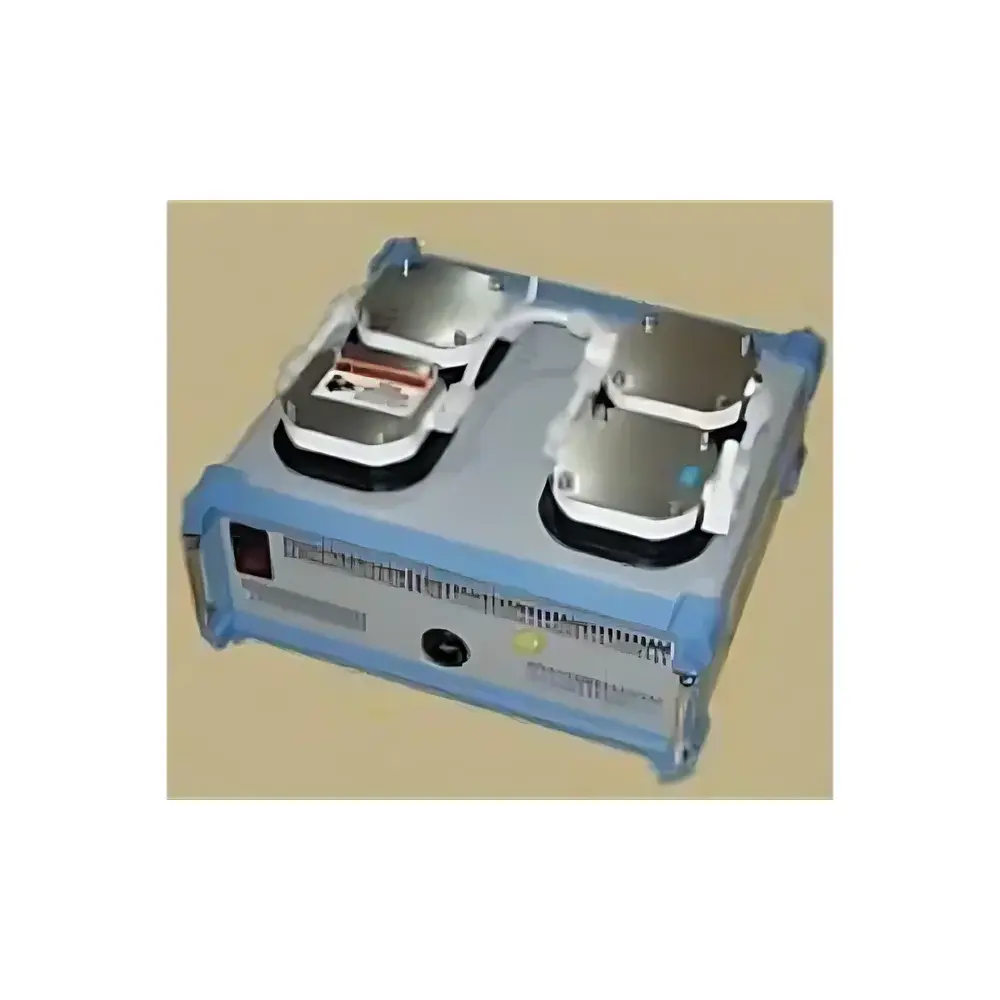
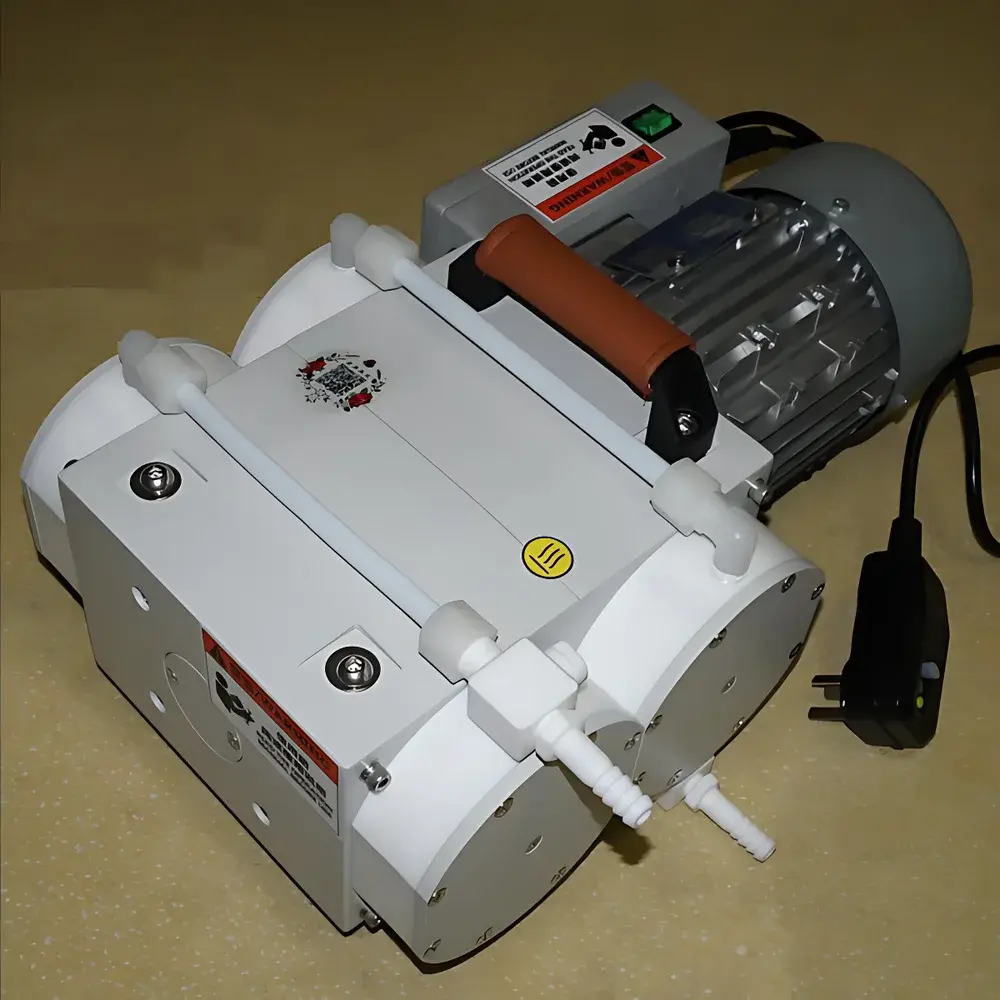
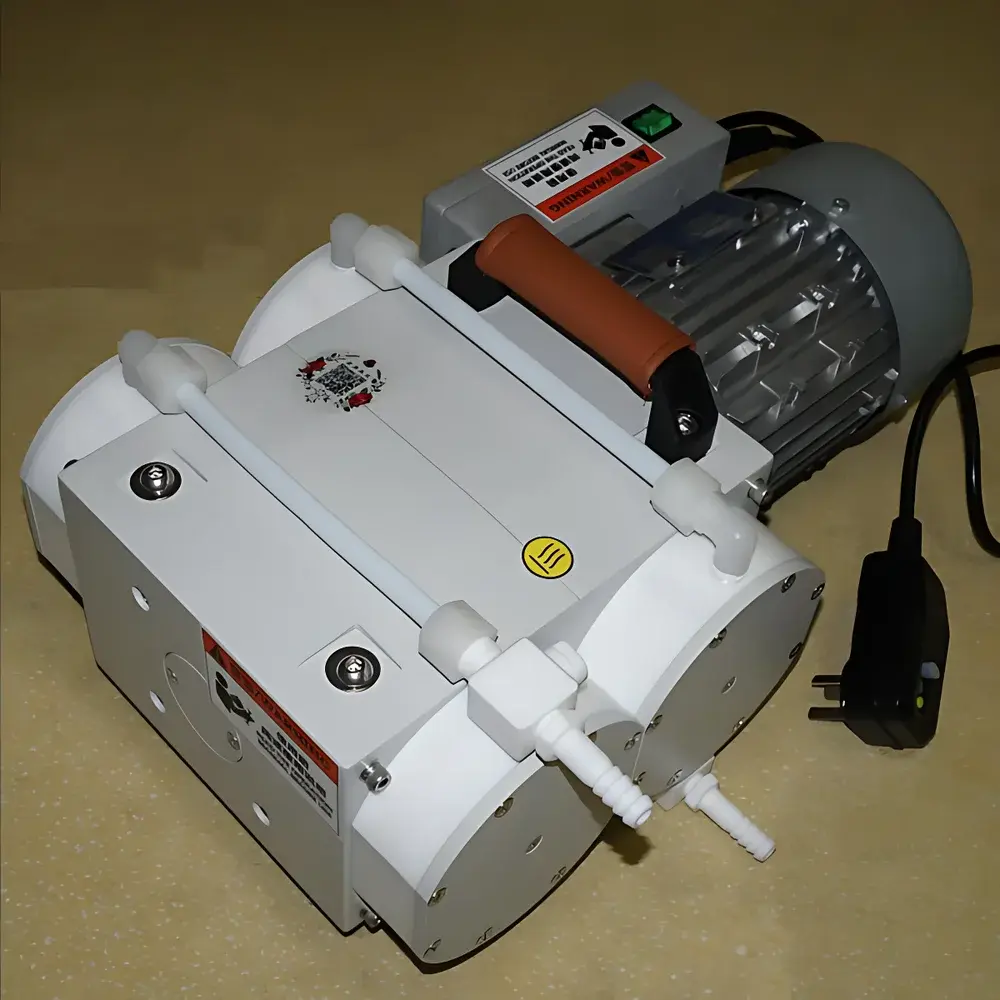
Chengmeng CM275/CM278 Chemical-Resistant Diaphragm Vacuum Pump
| Brand | Chengmeng |
|---|---|
| Origin | Beijing, China |
| Model | CM275 / CM278 |
| Pump Type | Oil-Free Diaphragm Vacuum Pump |
| Ultimate Vacuum | ≤2 mbar (200 Pa) |
| Maximum Flow Rate | 75 L/min (CM275) / 78 L/min (CM278) |
| Motor Power | 265 W (CM275) / 370–400 W (CM278) |
| Dimensions (W×D×H) | 420×420×250 mm (CM275) / 250×450×210 mm (CM278) |
| Weight | 25 kg (CM275) / 20.5 kg (CM278) |
| Inlet/Outlet Port | NW8–10 mm (ID 8–10 mm tubing) |
| Enclosure Rating | IP54 (CM278) |
| Noise Level | 52 dB(A) (CM275) / 50 dB(A) (CM278) |
| Motor Protection | Thermal cutoff at 90°C, integrated overcurrent & leakage protection (0.1 s response), ATEX II 2G IIB+H2 T3X compliant circuitry |
| Diaphragm Material | PTFE-coated EPDM (CM275) / PTFE-composite EPDM (CM278) |
| Valve Material | FFKM |
| Wetted Parts | PTFE solid components + PTFE-coated metal (CM275) |
| Cooling | Internal brushless fan + low-thermal-rise motor design |
| Compliance | Meets requirements for GLP/GMP environments with audit-ready operational stability and material traceability |
Overview
The Chengmeng CM275 and CM278 are precision-engineered, oil-free diaphragm vacuum pumps designed for demanding chemical laboratory applications where contamination control, corrosion resistance, and long-term reliability are critical. Operating on the positive displacement principle, these pumps utilize a reciprocating PTFE-coated or PTFE-composite diaphragm to generate vacuum without lubricants—eliminating risk of oil backstreaming, hydrocarbon contamination, or degradation in aggressive chemical vapors. Both models achieve an ultimate vacuum of ≤2 mbar (200 Pa), significantly surpassing conventional water aspirators (≈30 mbar) and standard rotary vane pumps in chemically sensitive workflows. The CM275 is optimized for stable ambient laboratory conditions, featuring open-frame heat dissipation and four large-diameter (Ø106 mm) pump heads for high volumetric throughput. The CM278 upgrades to full PTFE-wetted construction—including solid PTFE pump housing, FFKM valves, and factory-integrated PTFE inlet/outlet tubing—and incorporates a fully aluminum-encapsulated motor with IP54 ingress protection, making it suitable for corrosive, humid, or particulate-laden environments common in process chemistry labs or pilot-scale synthesis suites.
Key Features
- Chemical inertness: All gas-path components in contact with process media are constructed from or coated with polytetrafluoroethylene (PTFE), including pump heads, valve plates (FFKM), and diaphragms (PTFE-modified EPDM). The CM278 extends this to fully solid PTFE wetted surfaces and optional PTFE hose connections.
- Dual safety architecture: Integrated thermal cutoff (90°C motor winding protection) and fast-acting electronic circuit protection (<0.1 s response to overcurrent, overload, or earth leakage) conform to ATEX II 2G IIB+H2 T3X requirements for safe operation in potentially explosive atmospheres containing hydrogen or volatile solvents.
- Stable dry-start capability: Engineered to initiate vacuum generation directly from atmospheric pressure without priming or pre-evacuation—critical for integration with rotary evaporators, vacuum ovens, and filtration manifolds requiring rapid duty-cycle transitions.
- Low-noise, low-vibration operation: Acoustic emissions limited to 50–52 dB(A) under full load; achieved via balanced multi-head kinematics, acoustic damping mounts, and optimized airflow paths—enabling placement on shared benchtops without compromising adjacent instrumentation.
- Thermally managed motor design: Brushless internal cooling fan combined with low-thermal-resistance motor windings minimizes diaphragm temperature rise, slowing elastomer aging and extending service life beyond 10,000 hours under continuous operation.
Sample Compatibility & Compliance
These pumps are compatible with a broad spectrum of organic solvents (e.g., acetone, THF, dichloromethane, ethyl acetate), acidic vapors (HCl, HNO₃, HF up to 10% concentration), alkaline gases (NH₃, NaOH aerosols), and halogenated compounds. They are routinely deployed in ASTM E2654-compliant solvent recovery systems, USP vacuum drying validation protocols, and ISO 8573-1 Class 0 air purity-critical applications requiring zero hydrocarbon carryover. All wetted materials comply with FDA 21 CFR §177.1550 (PTFE) and §177.2600 (EPDM), supporting use in pharmaceutical R&D and QC laboratories operating under GLP or GMP frameworks. Documentation packages include material certificates (EN 10204 3.1), RoHS/REACH declarations, and CE conformity statements per EU Machinery Directive 2006/42/EC.
Software & Data Management
While standalone analog operation is standard, both models support optional RS-485 Modbus RTU interface (add-on module) for integration into centralized lab automation platforms (e.g., LabVantage, STARLIMS, or custom SCADA). Real-time monitoring includes motor current draw, runtime accumulation, and thermal status—enabling predictive maintenance scheduling and 21 CFR Part 11–compliant audit trails when paired with validated data acquisition software. No proprietary drivers or cloud dependencies are required; communication adheres strictly to open industrial protocol standards.
Applications
- Rotary evaporation: Primary vacuum source for 20 L rotovaps handling heat-sensitive APIs, natural product extracts, or polymer solutions—maintaining stable sub-2 mbar vacuum across variable solvent loads and bath temperatures.
- Vacuum filtration: High-flow support for Büchner or sintered glass funnels in crystallization workups, catalyst recovery, or cell culture harvest—resisting clogging from fine precipitates due to large-port NW8–10 mm interfaces.
- Centrifugal concentration: Backing pump for cold trap systems in SpeedVac®-style concentrators, ensuring consistent vapor removal during lyophilization prep or nucleic acid purification.
- Gas scavenging & glovebox transition: Interlocked operation with inert gas purging systems for Schlenk line maintenance or controlled-atmosphere sample transfer—leveraging rapid pump-down kinetics and zero oil outgassing.
- Pre-stage pumping: Dedicated forepump for turbomolecular or diffusion vacuum systems in surface science or mass spectrometry labs, where hydrocarbon-free backing is mandatory.
FAQ
What is the difference between the CM275 and CM278 models?
The CM275 uses PTFE-coated metal pump heads and EPDM diaphragms with PTFE surface modification, suited for clean, climate-controlled labs. The CM278 features fully solid PTFE pump bodies, PTFE-composite diaphragms, and an IP54-rated aluminum-motor enclosure—designed for high-humidity, corrosive, or dusty environments.
Can these pumps handle hydrogen chloride (HCl) or hydrofluoric acid (HF) vapors?
Yes—both models are validated for intermittent exposure to ≤10% aqueous HCl and HF vapors. For continuous HF service, consult engineering for optional Hastelloy C-276 valve seat upgrades.
Is a vacuum gauge included?
No—vacuum measurement is external. We recommend pairing with a digital Pirani/capacitance manometer (e.g., MKS Baratron® 627B) calibrated to NIST-traceable standards.
What maintenance intervals are recommended?
Diaphragms and FFKM valves should be inspected every 3,000 operating hours; replacement is typically required after 6,000–8,000 hours depending on chemical duty cycle. No lubrication or oil changes are ever needed.
Do these pumps meet FDA or ISO cleanroom requirements?
They are not classified as cleanroom-grade equipment per ISO 14644, but their zero-oil, PTFE-wetted design satisfies ISO 8573-1 Class 0 requirements for compressed air purity and are widely accepted in pharmaceutical manufacturing for non-product-contact vacuum services under ICH Q7 Annex 11.



