
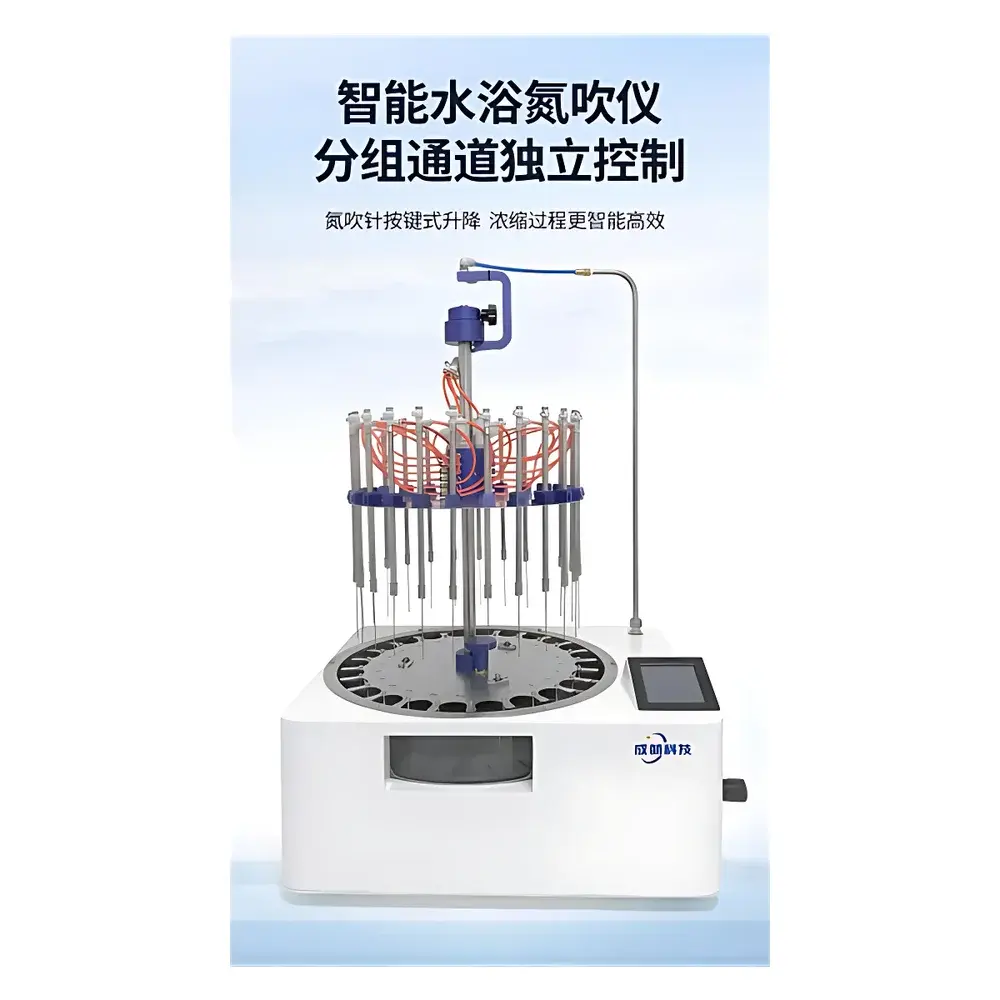
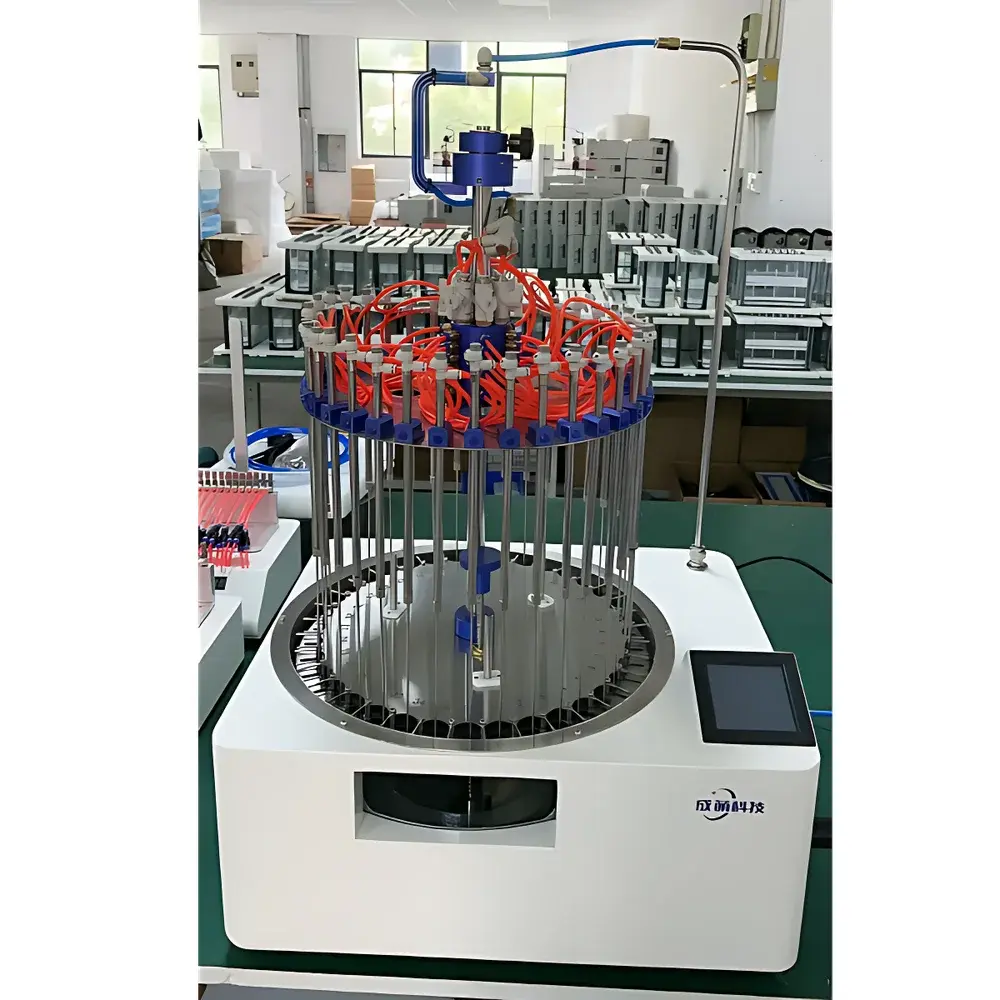
Chengmeng CMDS-36 Intelligent Water Bath Nitrogen Evaporator
| Brand | Chengmeng |
|---|---|
| Origin | Beijing, China |
| Model | CMDS-36 |
| Heating Method | Water Bath |
| Temperature Range | Ambient to 99 °C |
| Temperature Stability | ±0.5 °C |
| Sample Capacity | 36 positions |
| Tube Diameter Compatibility | 10–35 mm |
| Nitrogen Flow Rate | 0–15 L/min |
| Heating Power | 1500 W |
Overview
The Chengmeng CMDS-36 Intelligent Water Bath Nitrogen Evaporator is an engineered solution for parallel sample concentration in analytical laboratories, designed to meet the reproducibility, traceability, and operational efficiency requirements of modern QC/QA, environmental testing, food safety, and pharmaceutical R&D workflows. It operates on the principle of gentle, uniform thermal energy transfer via a precisely controlled water bath, combined with directed nitrogen gas flow across sample surfaces to accelerate solvent evaporation without thermal degradation. Unlike dry-block or air-heated concentrators, the water bath design ensures exceptional temperature homogeneity (±0.5 °C) across all 36 positions—critical for inter-sample comparability in regulated environments. The system integrates real-time process monitoring, programmable multi-stage protocols, and fail-safe liquid-level detection to support unattended overnight operation while maintaining full compliance with GLP-aligned documentation practices.
Key Features
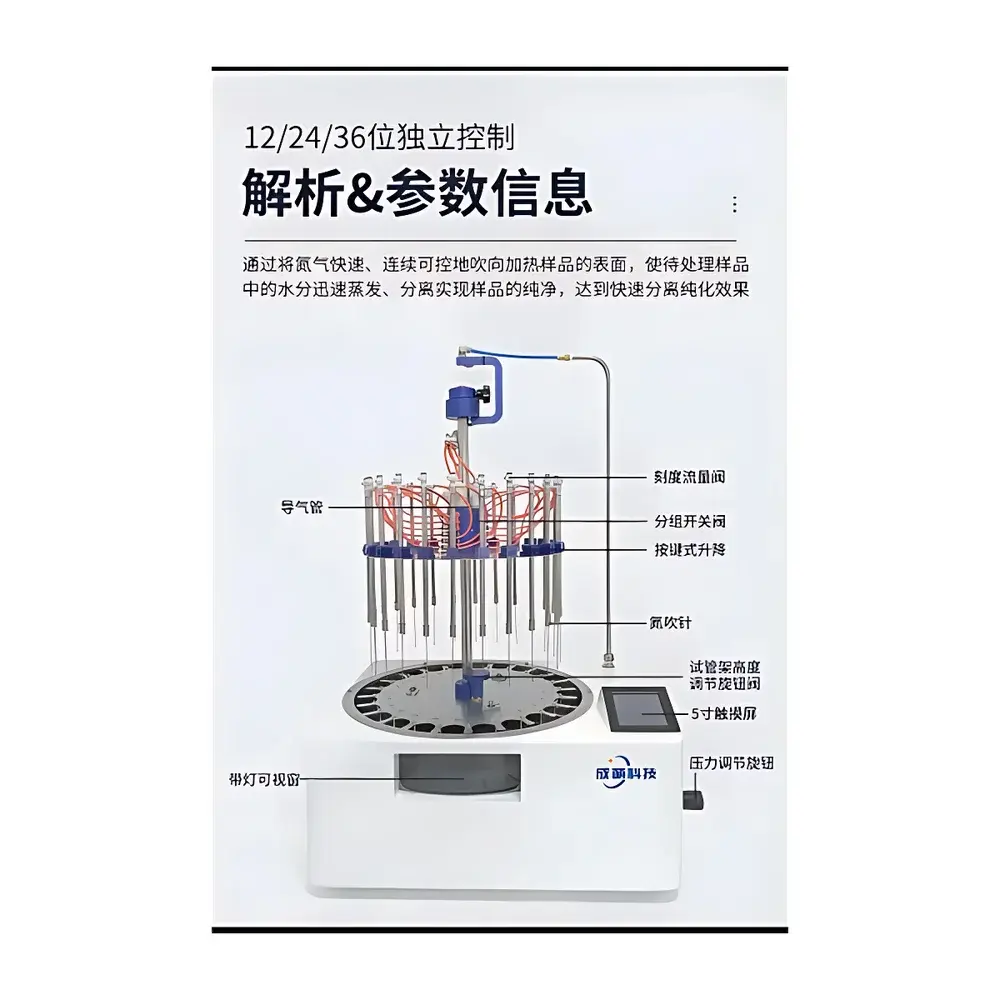
- 5-inch high-resolution color touchscreen interface with animated status visualization, supporting intuitive navigation and real-time parameter adjustment during operation.
- PID-controlled water bath heating with ±0.5 °C accuracy across the full range (ambient to 99 °C), using corrosion-resistant 304 stainless steel bath chamber (PTFE-coated option available).
- 36-position rotating circular sample platform with 360° free rotation—eliminates tubing entanglement and maintains precise needle-to-tube alignment throughout operation.
- Independent digital flow control per channel via calibrated needle valves, enabling group-wise activation (6/12/18/24/30/36 channels) to optimize nitrogen consumption.
- One-touch pneumatic lift mechanism for nitrogen needles (0–200 mm travel), supporting rapid height adjustment and quick-change needle modules (304 stainless steel standard; 316 SS or PTFE-coated options available).
- Integrated low-level detection with audible/visual alarm, automatic heater shutoff, and nitrogen valve closure—prevents dry-bath conditions and eliminates risk of tube cracking or analyte loss.
- Front-accessible illuminated bath window allows continuous visual monitoring of sample volume reduction without lifting the rack or interrupting workflow.
- Smart quick-connect drain port enables tool-free bath water exchange; compatible with standard laboratory drainage tubing.
- Modular sample holder design accommodates tubes (10–35 mm OD), centrifuge tubes, Kuderna-Danish (KD) flasks, conical vials, round-bottom flasks, and custom geometries upon request.
- Configurable up to 30-step programmable methods with time, temperature, flow, and alarm thresholds—stored locally with timestamped execution logs.
Sample Compatibility & Compliance
The CMDS-36 supports broad consumable compatibility—including glass and polypropylene tubes (10–35 mm diameter), microcentrifuge vials, 15–50 mL conical tubes, and specialized evaporation vessels such as KD concentrators—without requiring adapter kits. Its open architecture permits integration into validated workflows under ISO/IEC 17025, USP , and FDA 21 CFR Part 11-compliant data management systems when paired with external audit-trail software. While the instrument itself does not include built-in electronic signatures, its parameter logging, method recall, and alarm event records align with GLP/GMP documentation expectations for sample preparation steps. All wetted parts are constructed from 304 stainless steel; optional 316 stainless steel or electropolished PTFE-coated components are available for aggressive solvents (e.g., chlorinated hydrocarbons, strong acids/bases).
Software & Data Management
The embedded firmware provides local storage of up to 30 user-defined methods, each configurable with segment-specific temperature ramps, dwell times, nitrogen pressure profiles, and endpoint actions (e.g., auto-shutdown, alarm trigger). Real-time display includes bath temperature, elapsed time, remaining countdown, nitrogen supply pressure (via integrated gauge), and fluid level status. Event logs record all critical transitions—method start/stop, alarm triggers, manual interventions—with timestamps. For regulatory environments, exported CSV logs (via USB port) can be imported into LIMS or ELN platforms. Optional RS-485 or Ethernet communication modules enable remote monitoring and centralized fleet management in multi-instrument labs.
Applications
This evaporator is routinely deployed in residue analysis (pesticides, veterinary drugs), environmental contaminant quantification (PAHs, PCBs, phthalates), clinical toxicology (drug metabolites in plasma/urine), and natural product isolation. Its stable thermal environment and precise gas delivery make it suitable for concentrating thermolabile compounds—such as prostaglandins, cannabinoids, and certain peptides—where conventional rotary evaporation may induce decomposition. The 36-position capacity supports high-throughput screening applications, including EPA Method 525.3 (drinking water), ASTM D7066 (sediment extracts), and ISO 18856 (aquatic biota), particularly when coupled with SPE or QuEChERS sample prep workflows.
FAQ
What is the maximum recommended operating temperature for aqueous-based samples?
The water bath is rated to 99 °C at atmospheric pressure; for aqueous solutions, sustained operation above 85 °C is discouraged to minimize bumping and aerosol formation.
Can the CMDS-36 be used with organic solvents like acetonitrile or dichloromethane?
Yes—provided appropriate ventilation and explosion-proof nitrogen supply are implemented; PTFE-coated or 316 stainless steel components are strongly advised for prolonged exposure.
Is method validation support available from Chengmeng?
Chengmeng provides IQ/OQ documentation templates and calibration certificates for temperature and flow sensors; final PQ must be performed in situ by the end user per ISO/IEC 17025 guidelines.
Does the system comply with FDA 21 CFR Part 11 for electronic records?
The base unit supports ALCOA+ principles (Attributable, Legible, Contemporaneous, Original, Accurate); full Part 11 compliance requires integration with third-party audit-trail software and access controls.
What maintenance intervals are recommended for long-term reliability?
Bath water should be replaced daily in high-throughput labs; quarterly inspection of O-rings, needle seals, and flow valve calibration is advised; annual verification of PID controller accuracy using NIST-traceable thermometry.



