
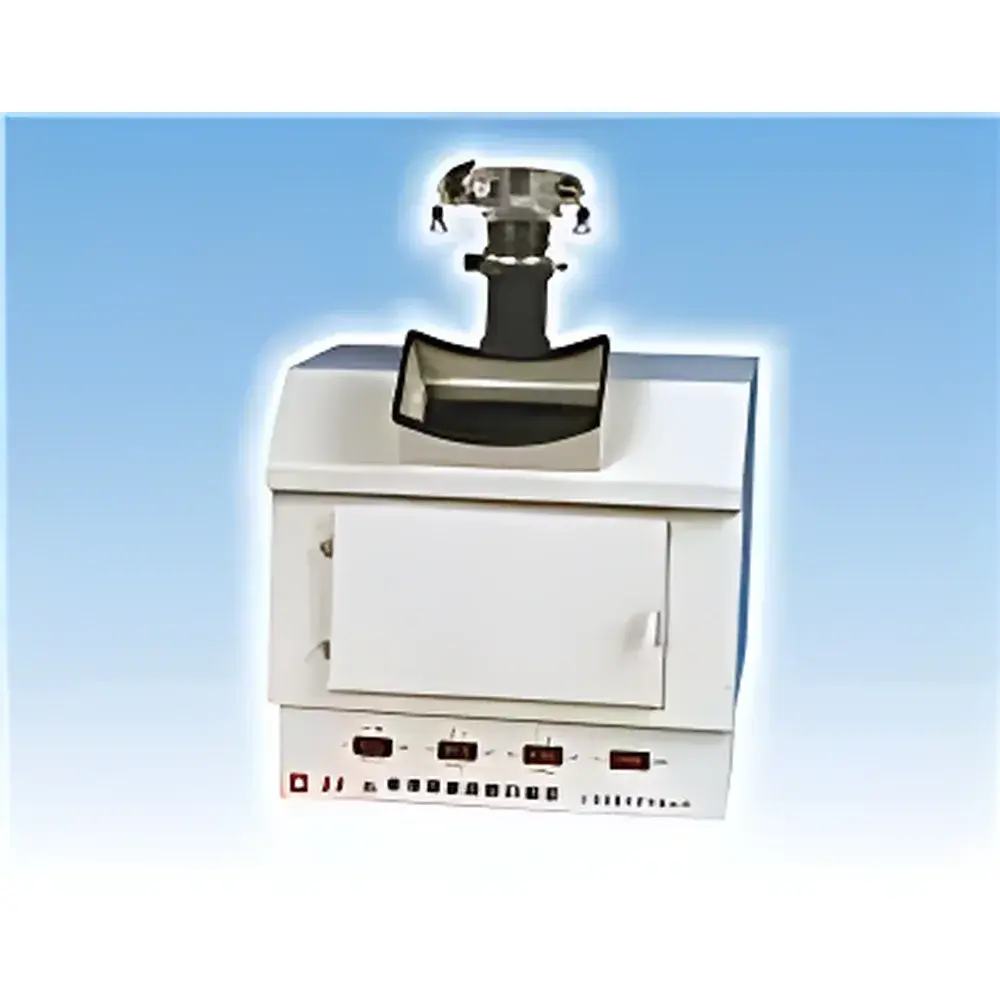
Chu Ding ZF1-II UV Transilluminator with Reflective UV Lamps and Dark Chamber
| Brand | Chu Ding |
|---|---|
| Origin | Shanghai, China |
| Manufacturer Type | Authorized Distributor |
| Region Classification | Domestic (China) |
| Model | ZF1-II |
| Price | USD 750 (FOB Shanghai) |
| Instrument Type | Benchtop |
| Wavelength Options | Single-band (selectable 254 nm, 302 nm, or 365 nm) |
| Transmitted UV Power | 64 W |
| Reflected UV Power | 2 × 24 W (254 nm & 365 nm) |
| White Light Illumination | 40 W |
| Transilluminator Area | 200 × 150 mm |
| Reflector Panel Size | 200 × 80 mm |
| UV Filter Transmission | >95% blocking of UV below 400 nm |
| Input Power | AC 220 V ±10%, 50 Hz |
Overview
The Chu Ding ZF1-II UV Transilluminator is a benchtop dual-mode (transmission + reflection) ultraviolet analysis system engineered for nucleic acid visualization, protein detection, thin-layer chromatography (TLC), and PCR product verification in molecular biology and pharmaceutical quality control laboratories. It operates on the principle of ultraviolet-induced fluorescence: when biomolecules such as ethidium bromide–stained DNA, SYBR-safe–labeled RNA, or fluorescently tagged proteins are exposed to UV radiation at specific wavelengths (254 nm, 302 nm, or 365 nm), they absorb photons and re-emit visible light—enabling rapid, non-destructive qualitative assessment. The instrument integrates a purpose-built dark chamber with UV-shielded viewing glass (>95% UV attenuation), eliminating dependence on dedicated darkrooms and supporting compliant documentation workflows under GLP and ISO/IEC 17025 environments.
Key Features
- Benchtop modular architecture with integrated dark chamber—no external darkroom required
- Three independently switchable UV wavelength options: 254 nm (high-sensitivity nucleic acid detection), 302 nm (optimized balance of sensitivity and reduced photodamage to DNA), and 365 nm (low-energy excitation for UV-stable dyes and native fluorescence)
- Dual reflective UV lamp configuration: one 254 nm and one 365 nm lamp, each adjustable in height and angle for optimal sample illumination and fluorescence contrast
- Transilluminator panel (200 × 150 mm) with uniform UV emission across full area; reflective panel (200 × 80 mm) for surface-based assays including TLC and paper chromatography
- Dedicated white-light illumination (40 W incandescent) for post-UV documentation, enabling precise framing and focus prior to UV exposure
- Camera mounting bracket compatible with standard DSLR/mirrorless systems and macro lenses; supports optional PCR-grade band-pass filters (e.g., 590 nm longpass) for high-fidelity gel photography
- Robust aluminum chassis with thermal management design ensuring stable output over extended operation cycles (≥4 h continuous use)
Sample Compatibility & Compliance
The ZF1-II accommodates standard electrophoresis gels (agarose, polyacrylamide), TLC plates (silica gel 60, aluminum-backed), nitrocellulose/PVDF membranes, and filter papers. It is routinely deployed in applications requiring adherence to ASTM D7254 (fluorescence detection in nucleic acid gels), USP (analytical instrument qualification), and ISO 15190 (laboratory safety for UV-emitting devices). The dark chamber meets IEC 62471 photobiological safety classification for UV-A/UV-B hazard group 1 (low-risk), and its UV-blocking glass complies with EN 170:2002 specifications for protective eyewear filtration. For regulated environments, users may implement manual audit trails for exposure time, wavelength selection, and imaging parameters—supporting basic 21 CFR Part 11 readiness when paired with validated documentation procedures.
Software & Data Management
The ZF1-II is hardware-controlled via front-panel toggle switches and rotary intensity dials—no proprietary software or drivers required. This analog interface ensures compatibility with all imaging platforms (including ImageJ, Fiji, and commercial gel documentation suites) and eliminates cybersecurity or OS-version dependencies. Exposure timing is manually set using external stopwatches or camera-integrated timers, aligning with ALCOA+ principles (Attributable, Legible, Contemporaneous, Original, Accurate) for raw data capture. Optional integration with USB-powered digital cameras enables direct TIFF/PNG export; metadata (wavelength, exposure duration, lens aperture) must be recorded separately in lab notebooks or LIMS-compatible spreadsheets.
Applications
- Visualization and excision of DNA/RNA bands from agarose and PAGE gels under 302 nm illumination—minimizing thymine dimer formation during downstream cloning or sequencing prep
- Quantitative densitometry of stained protein bands following SDS-PAGE, when coupled with calibrated CCD imaging systems
- TLC plate analysis for pharmaceutical intermediates, herbal extracts, and metabolite profiling using UV-active compounds (e.g., alkaloids, flavonoids, coumarins)
- Verification of PCR amplification products and restriction digest patterns without staining reagents
- Fluorescence-based assay development for enzyme kinetics (e.g., luciferase, GFP-tagged constructs) where background UV interference must be controlled
- Educational laboratory instruction in molecular genetics, biochemistry, and analytical chemistry curricula
FAQ
What safety certifications does the ZF1-II comply with?
It conforms to IEC 62471 (Photobiological Safety of Lamps) Class 1 requirements and incorporates EN 170-compliant UV-blocking glass in the dark chamber viewport.
Can the ZF1-II be used for SYBR Gold or GelRed staining?
Yes—302 nm and 365 nm excitation modes are compatible with these safer alternatives to ethidium bromide; optimal signal-to-noise is achieved using 365 nm with longpass emission filters.
Is the transilluminator panel uniform in UV intensity across its entire surface?
Calibration measurements per ASTM E2594 confirm ≤15% spatial variation across the 200 × 150 mm active area at rated power.
Does the instrument support GMP/GLP-compliant recordkeeping?
While the device itself lacks electronic audit trail functionality, its operational simplicity enables full manual traceability of wavelength, exposure time, and sample position—sufficient for Tier-1 instrument qualification under FDA guidance.
What maintenance is required for long-term performance?
Annual inspection of UV lamp output (using NIST-traceable radiometer) and replacement of lamps every 1,000 hours of cumulative use is recommended to maintain consistent irradiance.





