
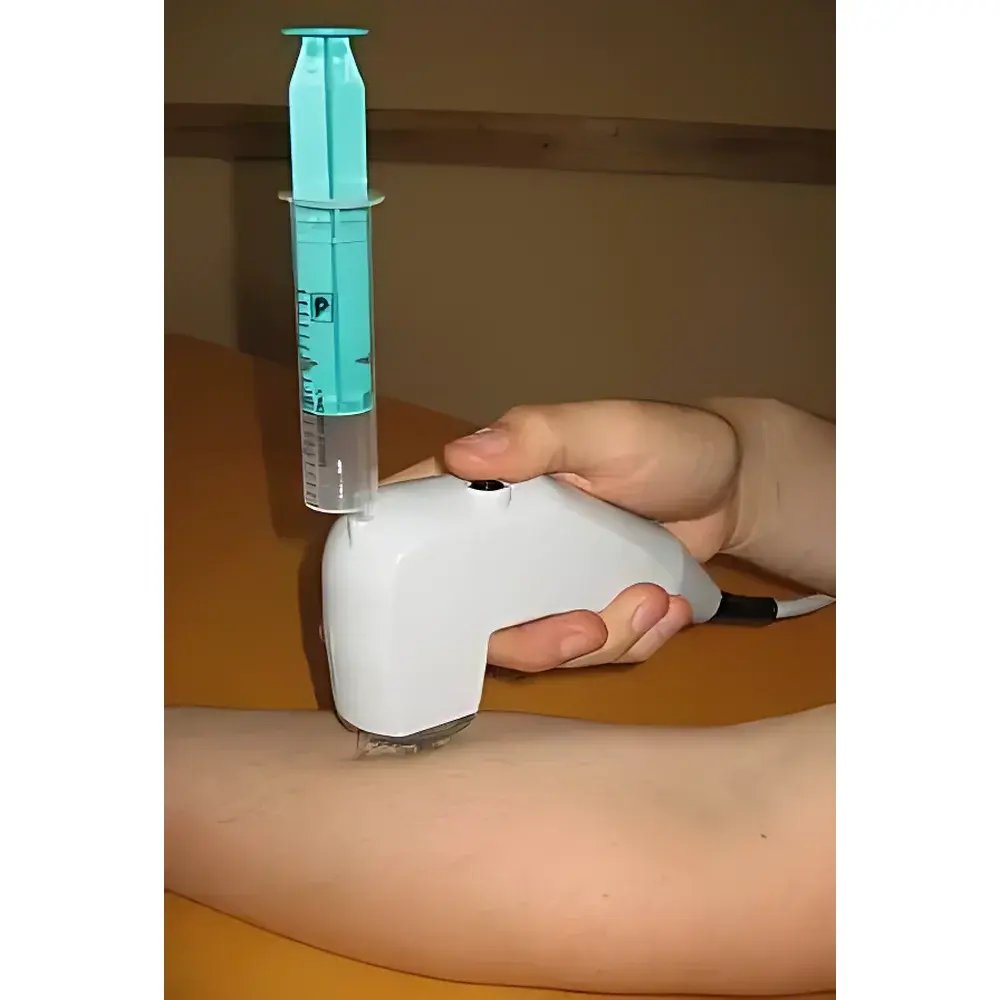
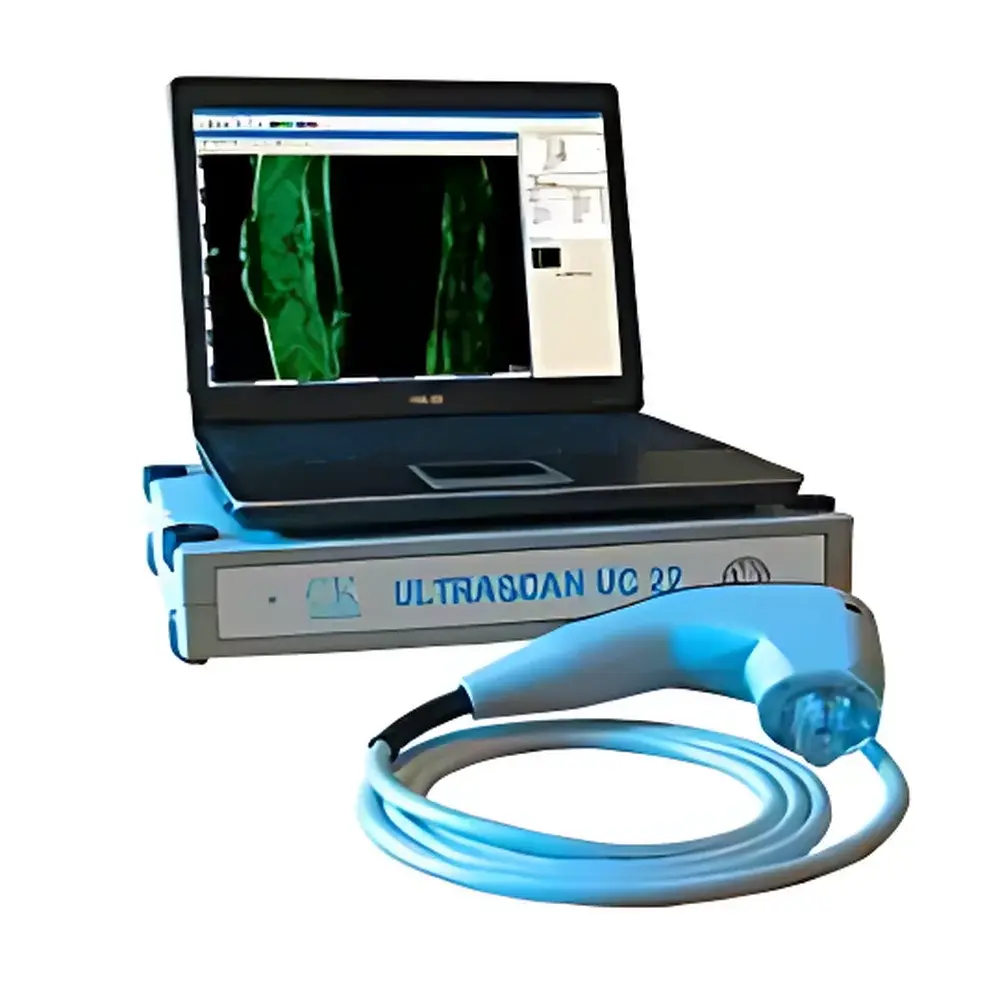
CK Ultrascan UC22 High-Frequency Cutaneous Ultrasound Imaging System
| Brand | CK |
|---|---|
| Origin | Germany |
| Manufacturer Status | Authorized Distributor |
| Origin Category | Imported |
| Model | UC22 |
| Pricing | Upon Request |
Overview
The CK Ultrascan UC22 is a medical-grade, high-frequency (22 MHz) cutaneous ultrasound imaging system engineered for non-invasive, real-time visualization and quantitative assessment of skin microstructure. Unlike conventional diagnostic ultrasound systems operating at lower frequencies (e.g., 7–12 MHz), the UC22 employs focused broadband transducers to achieve axial resolution down to approximately 30 µm and lateral resolution of ~60 µm — enabling micron-level stratigraphic differentiation of epidermis, dermal-epidermal junction, papillary and reticular dermis, subcutaneous fat compartments, and superficial appendageal structures. Its core measurement principle relies on pulse-echo ultrasonography with time-of-flight analysis and digital RF signal processing, calibrated against standardized tissue-mimicking phantoms traceable to PTB (Physikalisch-Technische Bundesanstalt) reference protocols. Designed specifically for dermatological research and clinical trial applications, the UC22 supports longitudinal monitoring of structural biomarkers associated with chronological aging, photoaging, inflammatory dermatoses, wound re-epithelialization, and topical or energy-based intervention efficacy.
Key Features
- 22 MHz linear-array transducer with integrated temperature-stabilized coupling gel interface for consistent acoustic impedance matching and minimal motion artifact
- Dual-mode acquisition: B-mode (brightness-mode) grayscale imaging for anatomical mapping + M-mode (motion-mode) for dynamic elasticity assessment via displacement tracking over time
- Automated skin-layer segmentation algorithm compliant with ISO/IEC 17025-accredited image analysis workflows
- Integrated depth calibration grid with ±1 µm positional accuracy across 0–5 mm imaging depth range
- Rugged, CE-marked medical device housing (Class IIa) meeting IEC 60601-1 and IEC 62304 software lifecycle requirements
- Real-time DICOM-compliant image export with embedded metadata (transducer ID, gain settings, time stamp, patient ID)
Sample Compatibility & Compliance
The UC22 is validated for in vivo human skin assessment on all Fitzpatrick skin types (I–VI), including hyperpigmented, scarred, and post-procedural surfaces. It requires no ionizing radiation, contrast agents, or skin preparation beyond standard alcohol wipe decontamination. The system complies with EU MDR 2017/745 for Class IIa medical devices and supports audit-ready documentation per ISO 13485 quality management standards. Image acquisition protocols align with published consensus guidelines from the European Society of Dermatological Research (ESDR) and the International Investigative Dermatology (IID) task force on non-invasive biometrics. All stored datasets retain full traceability for GLP-compliant clinical studies and regulatory submissions (e.g., FDA IND/IDE pathways, EMA scientific advice dossiers).
Software & Data Management
The UC22 operates with proprietary Ultrascan Analysis Suite v5.2, a Windows-based application validated under 21 CFR Part 11 for electronic records and signatures. Software features include region-of-interest (ROI) quantification of dermal echogenicity, layer thickness profiling (epidermal, papillary, reticular), cross-sectional area calculation, and pixel-intensity histogram analysis. Raw RF data is preserved in vendor-neutral HDF5 format for third-party algorithm development (e.g., machine learning–based texture classification). Audit trails log every user action, parameter change, and image export event with immutable timestamps and operator authentication. Data encryption (AES-256) and role-based access control ensure HIPAA and GDPR compliance during multi-site collaborative trials.
Applications
- Quantitative evaluation of age-related dermal thinning and collagen fragmentation in longitudinal cohort studies
- Objective monitoring of wound healing kinetics: epithelial gap closure rate, granulation tissue density, and scar maturation index
- Pre-/post-intervention assessment of fractional laser resurfacing, microneedling, and radiofrequency treatments
- Formulation efficacy testing in cosmetic science: penetration depth of actives, hydration-induced stratum corneum swelling, and barrier recovery kinetics
- Differentiation of inflammatory vs. fibrotic components in scleroderma, lichen sclerosus, and morphea lesions
- Standardized endpoint measurement in Phase II/III dermatology clinical trials (e.g., as secondary or exploratory endpoints per ICH E9 guidance)
FAQ
What is the maximum imaging depth achievable with the UC22?
The UC22 provides optimal resolution within a 0–4.5 mm depth range; usable signal extends to ~5.0 mm in low-attenuation skin regions (e.g., volar forearm), though resolution degrades progressively beyond 3.5 mm.
Can the UC22 be used on mucosal or periocular skin?
Yes — with appropriate transducer coupling and operator training, it has been validated for use on labial, buccal, and upper eyelid skin under IRB-approved protocols; however, conjunctival or corneal imaging is outside its intended scope.
Is raw RF data accessible for custom algorithm development?
Yes — the system exports unprocessed RF echo streams in HDF5 format with full sampling metadata (center frequency, PRF, digitization bit depth), supporting external MATLAB, Python, or C++ analysis pipelines.
Does the UC22 support automated thickness measurement reporting?
Yes — the software includes FDA-cleared automated layer detection for epidermis and total skin thickness, with manual override capability and inter-rater reliability metrics (ICC >0.92 in multi-center validation studies).
How often does the system require recalibration?
Transducer calibration is performed annually by CK-certified service engineers using NIST-traceable hydrophone and phantom standards; daily user verification is conducted via built-in test pattern and depth gauge check.





