
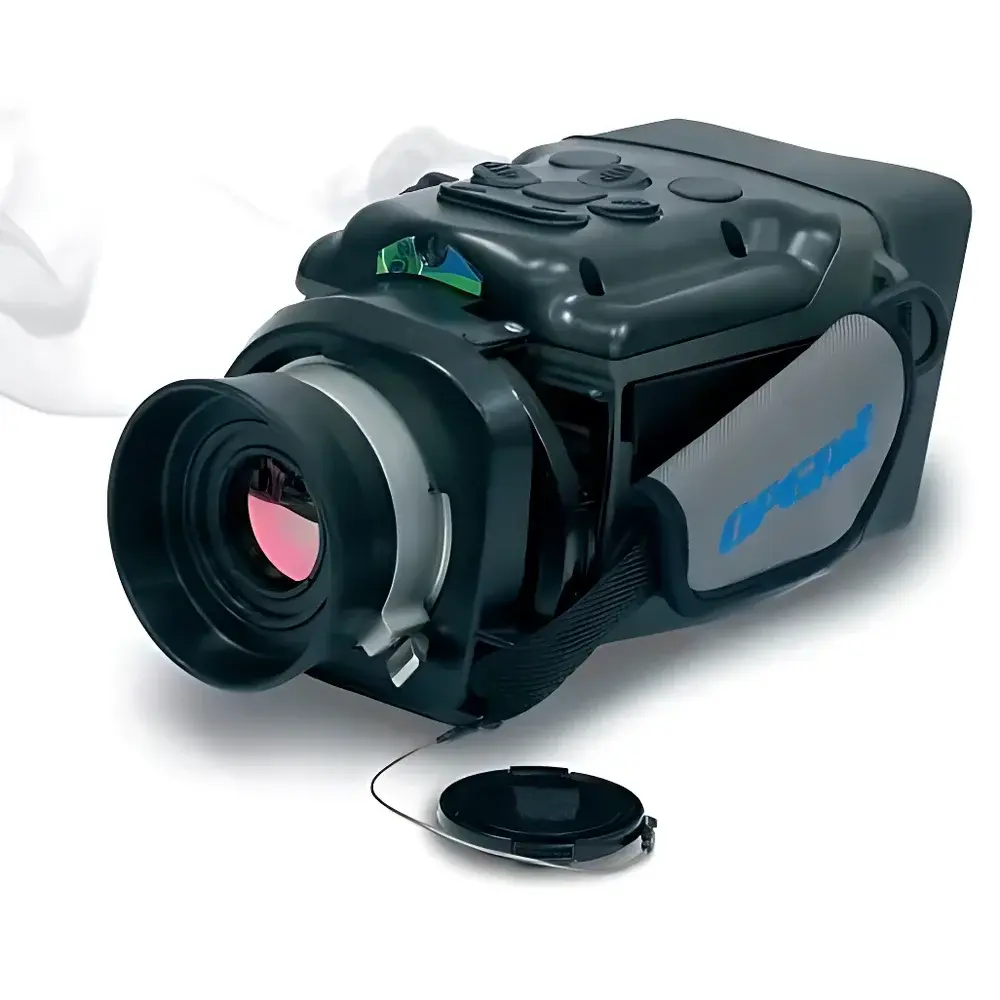
Thermo Fisher Scientific EyeCGas® ECG30A-30Q-ADM Optical Gas Imaging Camera
| Brand | Thermo Fisher |
|---|---|
| Origin | Israel |
| Manufacturer | OPGAL (Thermo Fisher subsidiary) |
| Type | Portable OGI Camera |
| Detection Principle | Infrared Absorption Imaging (Mid-Wave IR, MWIR) |
| Detection Range | >400 VOCs including methane, ethylene, propane, butane, pentane, hexane, heptane, octane, benzene, toluene, xylene, styrene, ethylbenzene, formaldehyde, acetaldehyde, propionaldehyde, butadiene, butene, isobutylene, isoprene, methanol, ethanol, isopropanol, methyl ethyl ketone, acetone, ethyl acetate, methyl acetate, ethylene oxide, propylene oxide, acetic acid, and other hydrocarbons & oxygenates |
| Display Resolution | 640 × 480 |
| Thermal Sensitivity (NETD) | <12 mK @ 25 °C (for methane) |
| Temperature Measurement Accuracy | ±1 °C (0–100 °C) |
| Response Time | Real-time / ≤0.1 s |
| Certifications | ATEX Zone 2 |
| Data Storage | Integrated 64 GB SSD |
| Connectivity | Built-in Wi-Fi for live streaming and remote file transfer |
| LDAR Integration | Onboard LDAR workflow engine with component tagging, geotagging, and Method 21 data fusion (PID/FID) |
Overview
The Thermo Fisher Scientific EyeCGas® ECG30A-30Q-ADM is a high-performance, portable optical gas imaging (OGI) camera engineered for real-time, visual detection of volatile organic compounds (VOCs) and hydrocarbon gases—including methane—using mid-wave infrared (MWIR) absorption imaging. Unlike point-sensor or sniffing-based detectors, the EyeCGas operates on the principle of spectral absorption contrast: gaseous molecules absorb specific MWIR wavelengths (e.g., 3.2–3.4 µm for aliphatic hydrocarbons; 3.3–3.5 µm for aromatics), enabling visualization of plume dynamics against background thermal radiation. This passive, non-contact methodology delivers immediate spatial localization of leaks—critical for Leak Detection and Repair (LDAR) programs mandated under EPA Method 21, 40 CFR Part 60 Subpart OOOOa, and EU IED Directive requirements. Designed and manufactured by OPGAL—a Thermo Fisher Scientific company—in Israel, the system meets stringent international safety and performance benchmarks for use in hazardous locations.
Key Features
- Regulatory-Validated Sensitivity: Certified to EPA OOOOa Tier 2 performance criteria for methane and VOC detection, supporting compliance-driven LDAR inspections without supplemental verification.
- Real-Time Imaging Architecture: Sub-100 ms frame latency enables dynamic tracking of fast-evolving plumes—even during pressurized releases or transient process upsets.
- Integrated LDAR Workflow Engine: Embedded software supports full-cycle LDAR execution: automatic component ID synchronization via barcode/RFID scan, GPS geotagging of each detection event, and time-stamped metadata logging aligned with 40 CFR §60.18 and ASTM D7907.
- Hybrid Data Fusion Capability: Proprietary interface accepts calibrated concentration data from external PID or FID analyzers (e.g., Thermo Fisher TVA2020), correlating plume intensity with Method 21 quantification in a single audit-ready report.
- Hazardous Area Certification: Rated ATEX Zone 2 and ANSI/CSA Class I, Div 2 / Class II, Div 2—enabling safe deployment across refineries, chemical plants, LNG terminals, and biogas facilities.
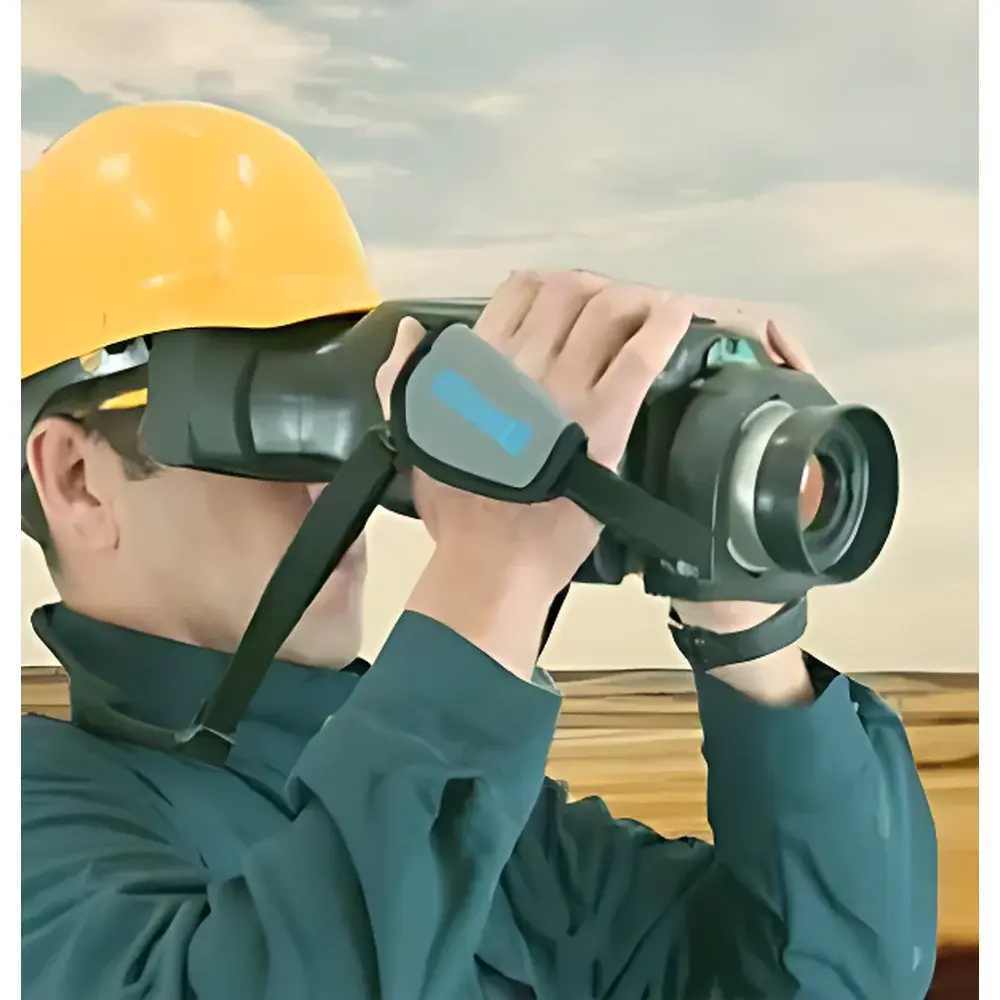
- Field-Optimized Ergonomics: Lightweight (<3.2 kg), balanced design with integrated HD color camera (1080p) for contextual documentation, one-touch snapshot capture, and 64 GB onboard solid-state storage (expandable via microSD).
Sample Compatibility & Compliance
The EyeCGas ECG30A-30Q-ADM detects over 400 VOCs and hydrocarbons across diverse industrial matrices—including vapor-phase emissions from flanges, valves, pumps, compressors, and tank vents. Its MWIR spectral response is optimized for C–H bond vibrational absorption, delivering high contrast for saturated/unsaturated aliphatics, aromatics, oxygenates (alcohols, ketones, esters), and epoxides. The instrument complies with ISO 17025–accredited calibration traceability protocols and supports GLP/GMP-aligned data integrity through encrypted storage, user-access controls, and immutable audit trails. All firmware and software updates adhere to FDA 21 CFR Part 11 requirements for electronic records and signatures when deployed in regulated pharmaceutical or biotech manufacturing environments.
Software & Data Management
EyeCGas 2.0 software (v4.5+) provides post-acquisition analysis, spectral library matching, and automated leak quantification (via correlation with reference gas concentration profiles). Data exports conform to ASTM E2912 and ISO 13843 standards, generating PDF reports with embedded thermal video clips, georeferenced maps, and CSV-formatted metadata suitable for regulatory submission portals (e.g., EPA CDX, UK Environment Agency e-Reporting). Wi-Fi connectivity enables secure TLS 1.2–encrypted streaming to cloud-based asset management platforms (e.g., Meridium, SAP EAM) or on-premise servers. Firmware updates are delivered via signed OTA packages, ensuring cryptographic integrity and version-controlled deployment across fleet-wide instrument deployments.
Applications
- Refinery and petrochemical facility LDAR program execution per 40 CFR Part 60 Subpart VVa and Subpart OOOOa
- Biogas upgrading plant methane slip monitoring and fugitive emission inventorying
- Pharmaceutical manufacturing solvent recovery system integrity verification
- Landfill gas collection system leak surveying and abatement prioritization
- Chemical distribution terminal loading rack and vapor control system validation
- Offshore platform hydrocarbon release surveillance under IMO MSC.1/Circ.1593 guidelines
FAQ
Does the EyeCGas ECG30A-30Q-ADM require periodic calibration with certified gas standards?
Yes—annual factory recalibration is recommended, traceable to NIST SRMs. Field verification using methane reference cells (e.g., 100 ppm·m path length) is performed prior to each LDAR campaign per EPA guidance.
Can the camera detect gases below ambient temperature?
Yes—the MWIR detector maintains sensitivity across a -20 °C to +60 °C operational range; cold plumes (e.g., LNG boil-off) exhibit enhanced contrast due to thermal differential against warmer backgrounds.
Is raw thermal data export supported for third-party analysis?
Yes—radiometric .seq and .csv files containing calibrated pixel-intensity values (in W·sr⁻¹·m⁻²) are exportable for custom plume modeling or academic research applications.
How does the system handle solar glare or reflective surfaces during outdoor surveys?
The camera employs adaptive dynamic range optimization and narrowband spectral filtering to suppress specular reflections; operator training includes best practices for sun-angle avoidance and emissivity compensation.
What cybersecurity protocols govern remote Wi-Fi access?
Wi-Fi uses WPA3-Enterprise authentication with RADIUS integration; all streaming and file transfers enforce TLS 1.2+ encryption and certificate pinning to prevent MITM attacks.
Related Products







