
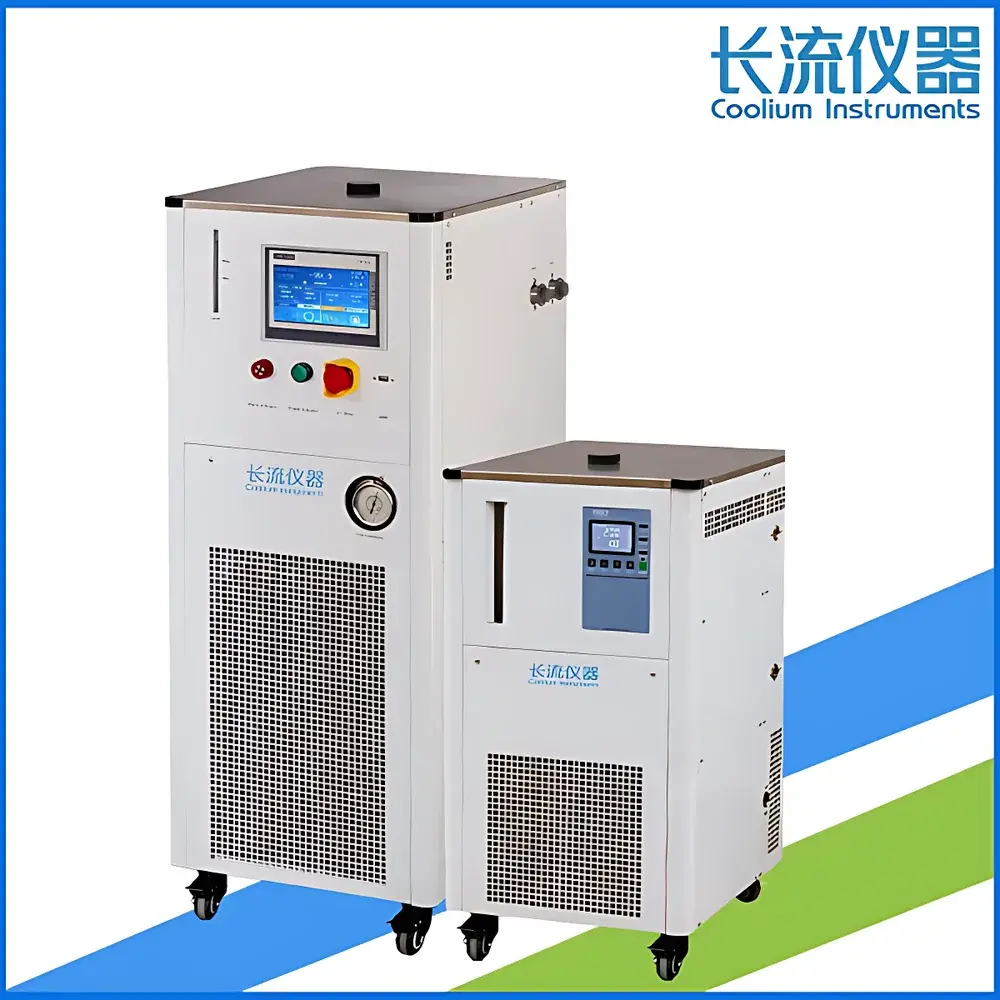
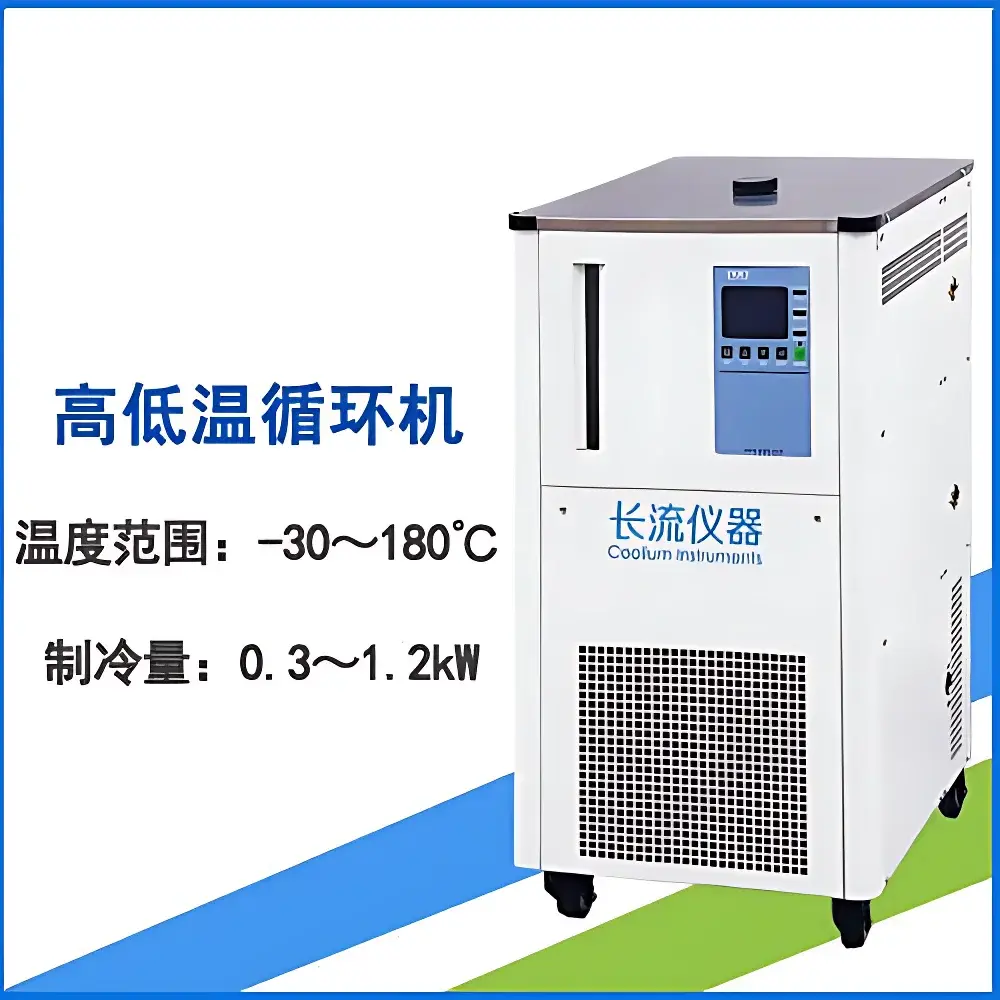
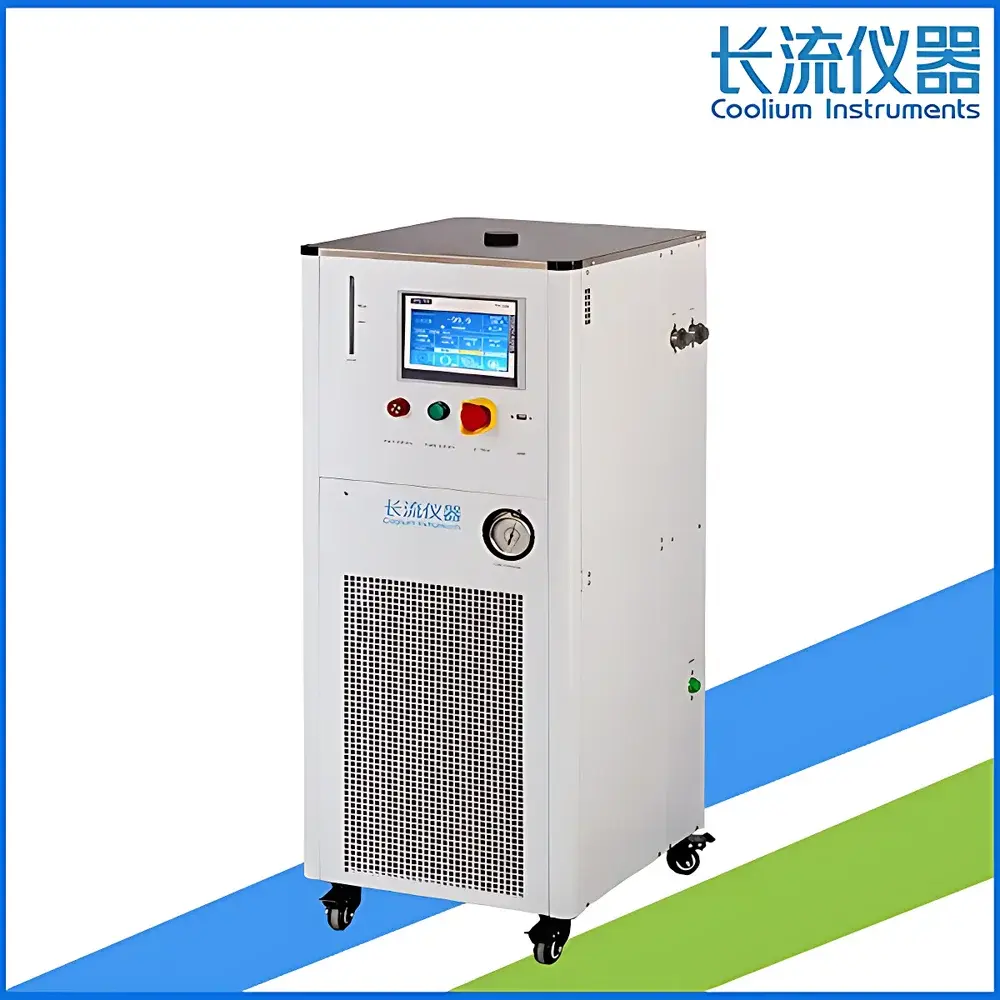
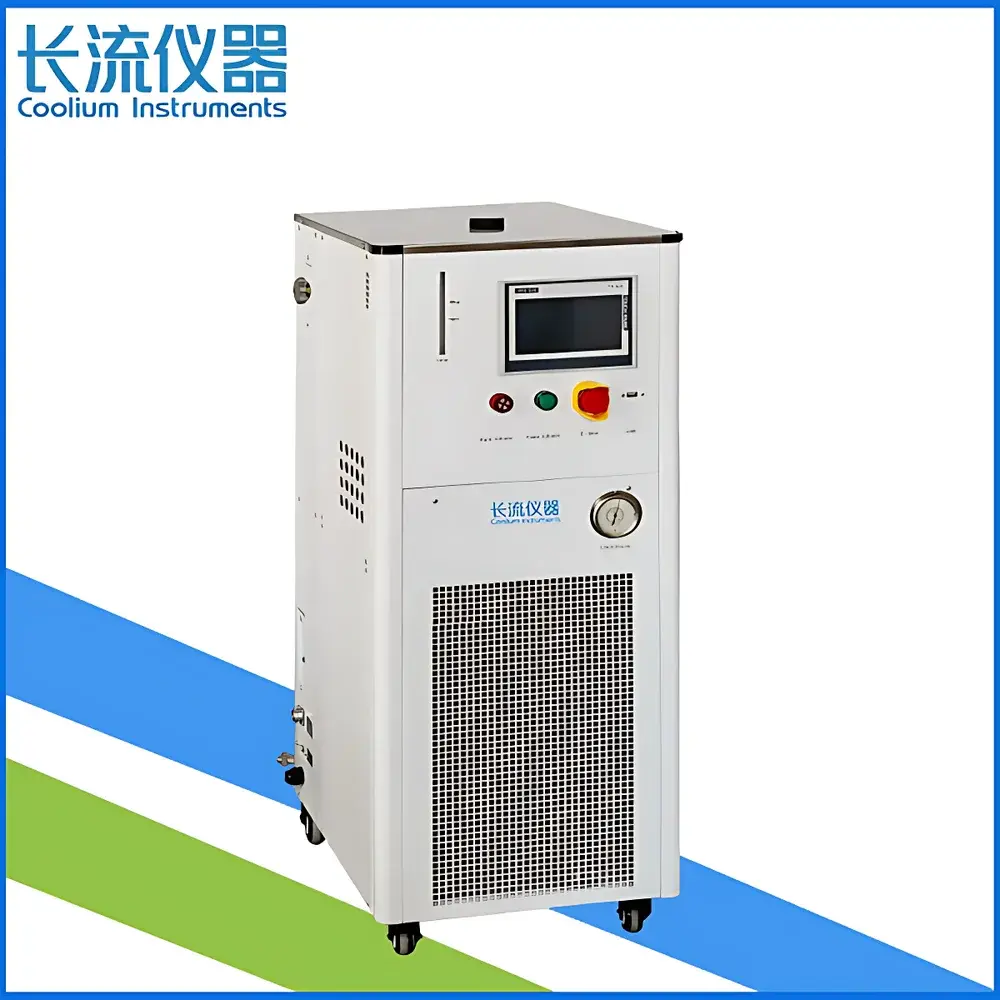
Coolium DX-1006 Ultra-Low Temperature Circulating Chiller
| Brand | Coolium |
|---|---|
| Origin | Beijing, China |
| Model | DX-1006 |
| Instrument Type | Integrated Circulating Chiller |
| Cooling Method | Air-Cooled |
| Temperature Range | −100 °C to −60 °C |
| Cooling Capacity | 300 W @ −100 °C |
| Temperature Stability | ±0.5 °C |
| Circulation Pressure | 0.8 bar |
| Flow Rate | 8 L/min |
| Reservoir Volume | 6 L |
| Operation Mode | Continuous |
Overview
The Coolium DX-1006 is an integrated ultra-low temperature circulating chiller engineered for demanding laboratory and industrial applications requiring precise, stable cooling between −100 °C and −60 °C. It employs a dual-stage cascade refrigeration architecture—combining primary and secondary refrigerant circuits—to achieve deep cryogenic temperatures while maintaining high thermodynamic efficiency and long-term operational reliability. Unlike single-stage chillers limited to −40 °C or higher, the DX-1006 utilizes environmentally compliant HFC/HFO blended refrigerants (R508B/R23 or equivalent) in its cascade loop, enabling consistent heat extraction at sub−80 °C operating points. Its closed-loop circulation system delivers chilled heat-transfer fluid (typically ethanol/water or silicone oil mixtures) under controlled pressure and flow to external equipment—including jacketed reactors, vacuum chambers, cryogenic sensors, and analytical instrumentation—ensuring thermal stability critical for kinetic studies, low-temperature synthesis, and material characterization.
Key Features
- Microprocessor-based PID temperature controller with real-time digital display, enabling setpoint resolution of 0.1 °C and dynamic load compensation for improved thermal response.
- Cascade refrigeration system with high-efficiency scroll compressors from globally certified OEM suppliers (e.g., Embraco, Panasonic), ensuring >15,000 hours MTBF under continuous operation.
- Hermetically sealed stainless-steel reservoir (AISI 304) and circulation tubing, resistant to corrosion from common low-temperature heat-transfer fluids including methanol, ethylene glycol, and specialized cryo-oils.
- Low-temperature optimized magnetic-drive circulation pump rated for continuous duty at −100 °C, eliminating mechanical seal failure and vapor lock risks inherent in standard centrifugal pumps.
- Comprehensive safety interlocks: high/low refrigerant pressure monitoring, compressor oil pressure safeguard, motor overcurrent protection, thermal cutout on condenser and evaporator, and ground-fault circuit interruption (GFCI).
- Modular design supports optional RS485 Modbus RTU interface for integration into centralized lab automation systems; flow meter and alarm relay modules available as factory-installed accessories.
- Air-cooled condenser configuration with intelligent fan speed control reduces ambient noise (<65 dB(A)) and adapts cooling capacity to facility temperature fluctuations.
Sample Compatibility & Compliance
The DX-1006 is compatible with standard laboratory heat-transfer media meeting ASTM D1384 (corrosion inhibition) and ISO 6743-20 (refrigeration lubricants) specifications. Its sealed circulation path prevents solvent evaporation and atmospheric contamination—critical when using flammable or hygroscopic coolants. The unit complies with IEC 61010-1:2010 for electrical safety in laboratory environments and meets CE marking requirements under the EU Machinery Directive 2006/42/EC and EMC Directive 2014/30/EU. All refrigerant handling procedures adhere to ISO 5149-2:2014 for hermetic refrigeration systems. For GxP-regulated labs, optional audit-trail-enabled firmware supports 21 CFR Part 11-compliant electronic records when paired with validated SCADA platforms.
Software & Data Management
While the base model operates via front-panel controls, the RS485 communication option enables bidirectional data exchange with third-party software (e.g., LabVIEW, MATLAB, DeltaV, or custom Python-based DAQ systems). Users can remotely monitor real-time parameters—including actual bath temperature, compressor discharge pressure, flow rate, and fault codes—and execute setpoint changes or emergency shutdowns. Logged data (timestamped at 1-second intervals) can be exported in CSV format for traceability. Optional firmware upgrades provide password-protected user levels (Operator, Technician, Administrator) and configurable alarm thresholds aligned with internal SOPs.
Applications
- Chemical synthesis: Rapid cooldown of exothermic reactions in 10–100 L jacketed reactors; cryogenic Grignard or organolithium chemistry requiring sustained −80 °C operation.
- Materials testing: Thermal conditioning of samples for tensile, impact, or dielectric property measurements per ASTM D792, ISO 178, or IEC 60243.
- Pharmaceutical R&D: Condensation recovery of volatile solvents during lyophilization or API crystallization; cold trapping in glovebox purging systems.
- Advanced manufacturing: Temperature stabilization of optical benches, laser diodes, and electron beam sources in vacuum deposition and semiconductor metrology tools.
- Biotechnology: Cryopreservation support systems, low-temperature cell lysis protocols, and cold-stage microscopy setups.
- Energy research: Thermal management of battery electrochemical test cells (e.g., Arbin, BioLogic) during low-temperature cycling per UN 38.3 and IEEE 1625 standards.
FAQ
What heat-transfer fluids are recommended for operation at −100 °C?
Ethanol/water (30/70 v/v) or specialized low-viscosity silicone oils (e.g., DC-200 series) are validated for this temperature range. Avoid ethylene glycol above −60 °C due to increased viscosity and freezing risk.
Can the DX-1006 be used with water-cooling instead of air-cooling?
Yes—water-cooled condenser kits are available as factory-configured options (model suffix “-W”), supporting inlet water temperatures up to 32 °C and flow rates ≥5 L/min.
Is remote monitoring supported out of the box?
RS485 Modbus RTU communication is optional and requires firmware activation and external interface hardware; no built-in Ethernet or Wi-Fi module is included.
What maintenance intervals are recommended for continuous operation?
Compressor oil analysis every 6,000 hours; refrigerant charge verification annually; filter-drier replacement every 2 years or after any refrigerant system breach.
Does the unit meet GLP/GMP documentation requirements?
With optional audit-trail firmware and calibrated NIST-traceable temperature sensor (available upon request), the system supports GLP-compliant calibration logs and deviation reporting.



