
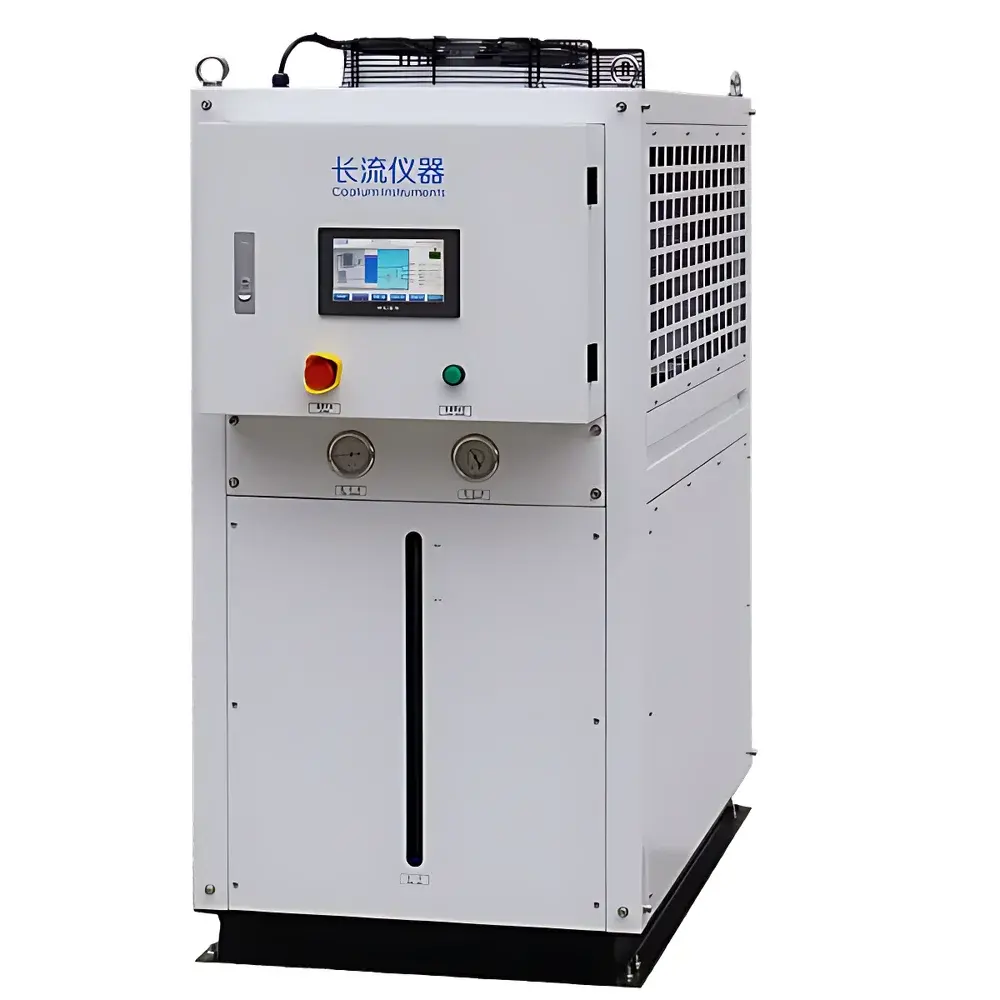
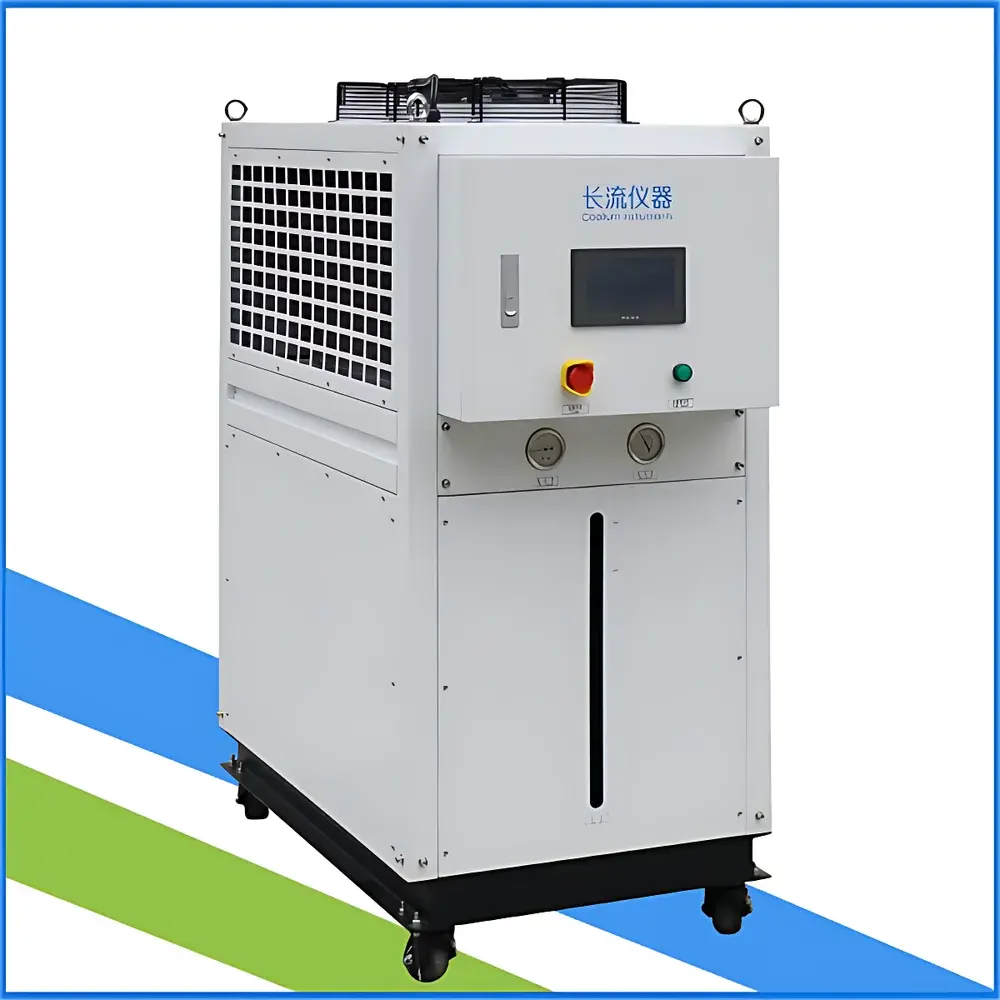
Coolium LX-30K Industrial Circulating Chiller
| Brand | Coolium |
|---|---|
| Origin | Beijing, China |
| Model | LX-30K |
| Type | Integrated Air-Cooled Chiller |
| Temperature Range | 8–25 °C |
| Temperature Stability | ±0.2 °C |
| Cooling Capacity | 30 kW @ 20 °C |
| Reservoir Volume | 160 L |
| Pump Pressure Range | 1.7–4.7 bar |
| Flow Rate | 25–133 L/min |
| Power Supply | AC 380 V / 50 Hz / 25 A |
| Inlet/Outlet Port | DN32 |
| Dimensions (W×D×H) | 940×1960×1960 mm |
| Weight | 490 kg |
Overview
The Coolium LX-30K Industrial Circulating Chiller is an integrated, air-cooled precision temperature control system engineered for continuous-duty operation in demanding laboratory and industrial environments. It employs a vapor-compression refrigeration cycle with optimized scroll or screw compressor architecture (depending on configuration), high-efficiency finned-tube condensers, and a microprocessor-controlled expansion valve to deliver stable thermal management across a defined operating range of 8–25 °C. Its core function is to absorb heat from process equipment—such as electron microscopes, vacuum deposition systems, particle accelerators, and high-power laser sources—and reject it to ambient air via forced convection. Unlike batch or intermittent cooling solutions, the LX-30K is designed for uninterrupted 24/7 operation, maintaining thermal equilibrium critical for instrument stability, measurement repeatability, and long-term component integrity.
Key Features
- High-capacity cooling output of 30 kW at 20 °C ambient—engineered to support high-heat-load instrumentation including TEM/SEM columns, RF sputtering targets, and ion beam sources;
- Precision dual-display PID temperature controller with ±0.2 °C stability over the full 8–25 °C setpoint range, featuring programmable ramp-soak profiles and real-time deviation monitoring;
- Robust circulation system delivering adjustable flow (25–133 L/min) and pressure (1.7–4.7 bar), compatible with high-backpressure applications such as multi-loop distribution manifolds or inline filtration units;
- 160 L insulated stainless-steel reservoir with level sensor, corrosion-resistant internal wetted parts, and optional deionization module (Coolium DI-Kit) for conductivity < 1 µS/cm compliance in ultra-low-contamination workflows;
- Comprehensive safety architecture: high/low refrigerant pressure cutouts, phase-sequence protection, motor overload relays, low-level fluid alarm, and dry-run prevention for pump longevity;
- Industrial-grade enclosure (IP54-rated electrical compartment) with vibration-damped mounting, acoustic insulation, and service-access panels aligned with ISO 5171 maintenance protocols.
Sample Compatibility & Compliance
The LX-30K is specifically validated for integration with high-precision analytical and fabrication platforms requiring thermally stable coolant delivery—including but not limited to scanning electron microscopes (SEM), transmission electron microscopes (TEM), electron probe microanalyzers (EPMA), magnetron sputter coaters, ultra-high-vacuum (UHV) furnaces, and synchrotron beamline optics cooling loops. Its temperature stability and flow consistency meet the operational prerequisites of ASTM E2656 (Standard Practice for Calibration of Temperature-Controlled Baths) and align with GLP/GMP environmental control documentation requirements. The unit complies with IEC 61000-6-2 (EMC immunity) and IEC 61000-6-4 (EMC emission) standards. Optional audit-trail-enabled firmware supports FDA 21 CFR Part 11-compliant electronic recordkeeping when paired with Coolium’s CCM-Link software suite.
Software & Data Management
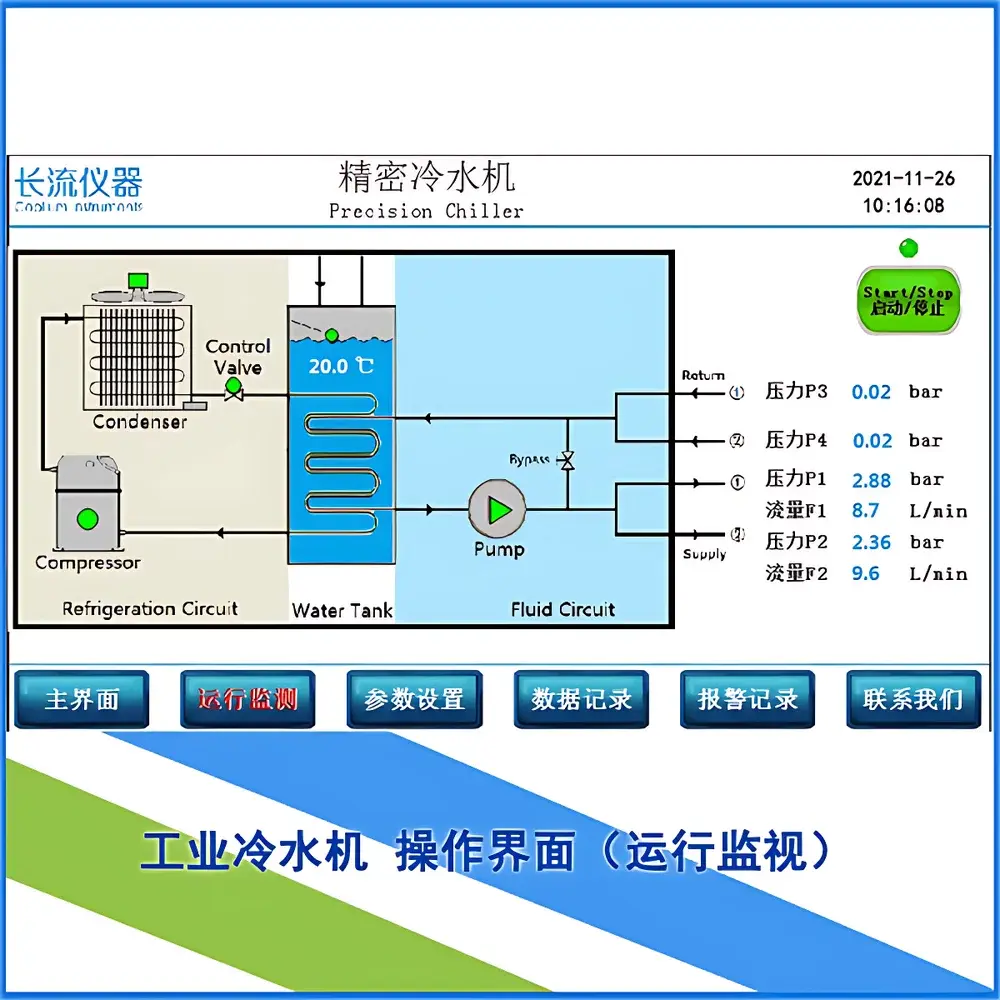
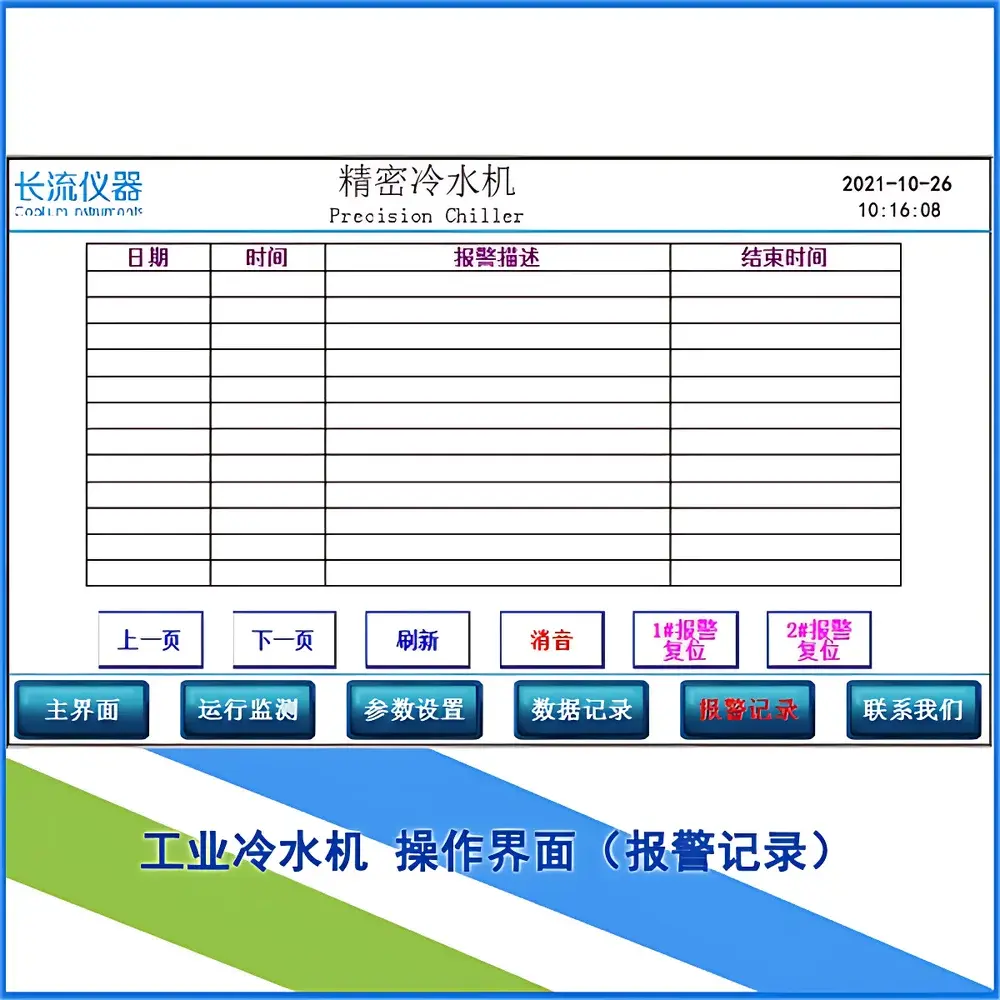
Coolium’s proprietary CCM-Link communication interface enables Ethernet- or RS485-based remote monitoring and control via standard Modbus TCP/RTU protocols. The embedded web server provides real-time access to operational parameters—including actual vs. setpoint temperature, compressor run-time, flow rate, reservoir level, and fault logs—without requiring proprietary client software. All data points are timestamped and exportable in CSV format for integration into LIMS or MES platforms. Configuration changes are logged with user ID and time stamp; firmware updates follow secure signed-package verification. For regulated environments, optional validation packages include IQ/OQ documentation templates compliant with ISO/IEC 17025 and GAMP 5 guidelines.
Applications
- Stabilizing electron optical columns in high-resolution TEM/SEM systems to minimize thermal drift during nanoscale imaging and EDS mapping;
- Maintaining consistent target temperature in RF and DC magnetron sputtering systems to ensure stoichiometric film deposition;
- Controlling thermal load in high-current electron beam welders and ion implanters where localized heating affects beam focus and energy distribution;
- Providing primary cooling for vacuum furnace hot zones and diffusion pump forelines in semiconductor R&D cleanrooms;
- Supporting multi-instrument cooling networks in central utility plants, where flow-splitting manifolds distribute conditioned water to ≥4 independent endpoints with individual pressure regulation.
FAQ
What is the minimum allowable inlet water temperature for the LX-30K?
Operating below 8 °C inlet temperature is not recommended; the chiller’s control logic and refrigerant charge are optimized for 8–25 °C ambient and process-side temperature ranges. Sub-ambient operation requires custom low-temperature variants (e.g., LX-30K-LT).
Can the LX-30K be integrated into a building BMS via BACnet or LonWorks?
Native BACnet MS/TP or IP support is available via optional gateway module (CCM-BAC-GW); standard configuration includes Modbus TCP only.
Is the reservoir volume sufficient for extended unattended operation?
Yes—the 160 L capacity, combined with low-evaporation design and auto-refill compatibility (with external float valve), supports ≥72 hours of continuous operation under nominal load without manual top-up.
Does the unit comply with CE marking requirements for export to the EU?
All LX-series chillers manufactured after Q2 2023 carry CE marking per Machinery Directive 2006/42/EC and EMC Directive 2014/30/EU, with technical documentation available upon request.
What maintenance intervals are recommended for optimal long-term performance?
Compressor oil analysis every 8,000 operating hours; condenser coil cleaning every 6 months in dusty environments; refrigerant circuit leak check annually; full system calibration every 24 months per ISO/IEC 17025 traceable procedure.



