
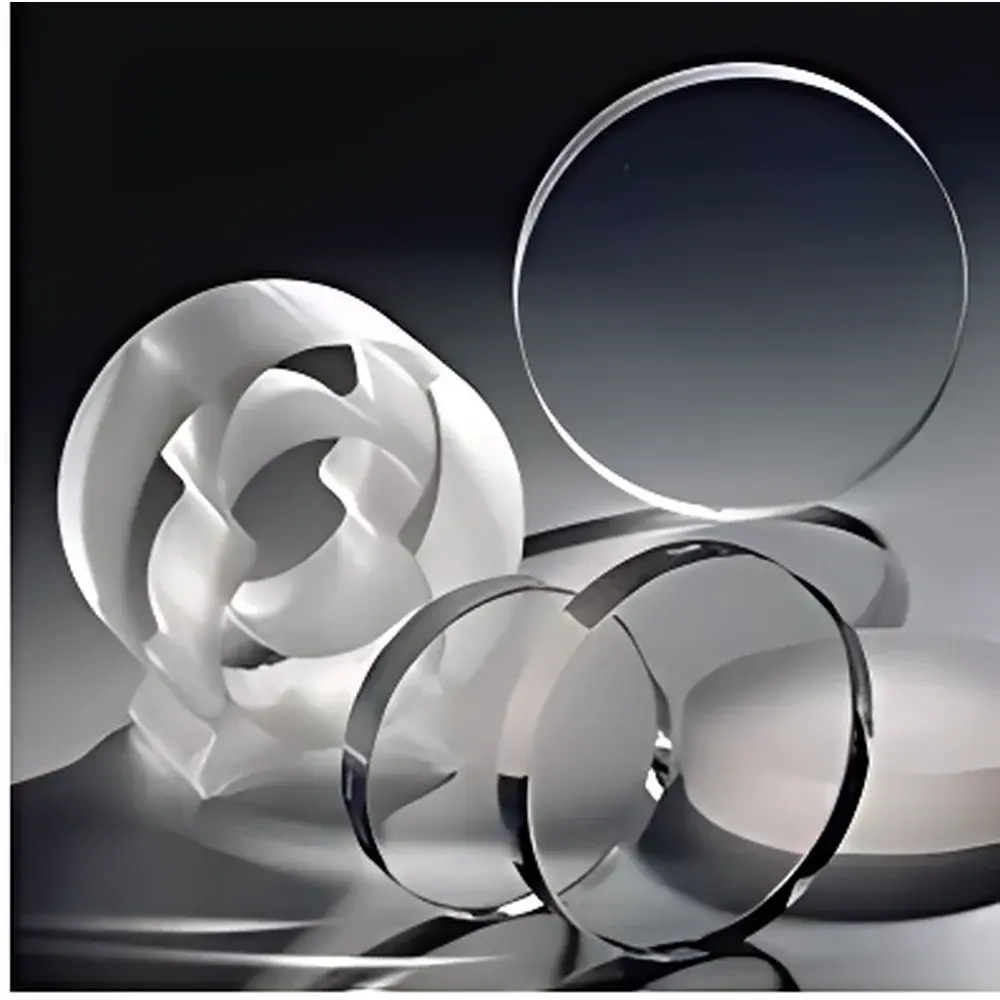
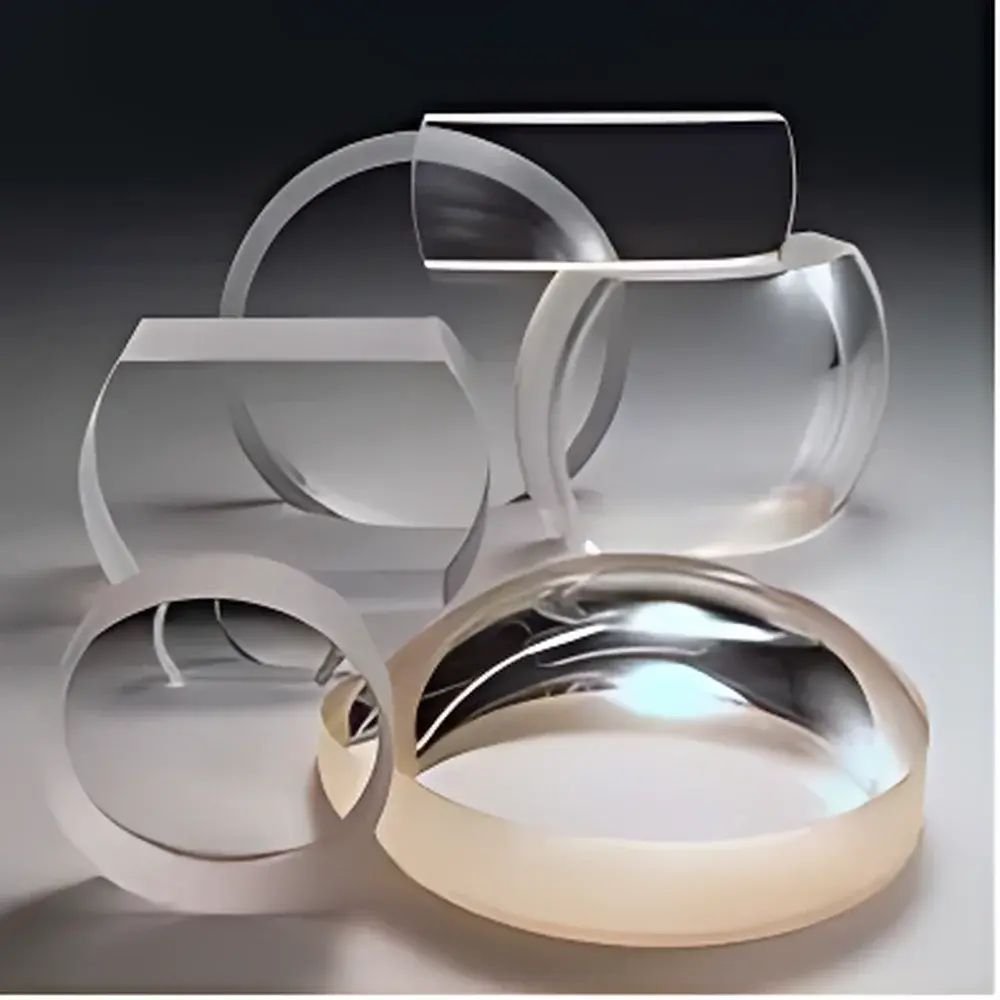
Corning HPFS & ULE Fused Silica Optical Quartz Glass Substrates
| Brand | Corning |
|---|---|
| Origin | USA |
| Product Codes | HPFS® 7980, 7979, 8655 |
| Material Type | High-Purity Synthetic Fused Silica / Ultra-Low-Expansion Titanium-Silicate Glass |
| Optical Transmission Range | Deep UV (185 nm) to Far IR (3.5 µm) |
| CTE (ULE® 7972) | ≤ ±3 × 10⁻⁹ /°C from –60°C to +60°C |
| Refractive Index Homogeneity | Δn ≤ 1 × 10⁻⁶ |
| Birefringence | < 1 nm/cm |
| Max Blank Size (ULE®) | 1500 mm diameter |
| Compliance | ASTM F273, ISO 10110-3, MIL-G-17465A (Type I), USP <85> (for optical-grade purity) |
Overview
Corning HPFS® and ULE® fused silica optical quartz glass substrates represent the benchmark for precision optical component manufacturing in demanding scientific, aerospace, metrology, and lithographic applications. Engineered using flame hydrolysis synthesis (HPFS®) or controlled titanium-doped sol-gel processing (ULE®), these materials deliver exceptional homogeneity, ultra-low thermal expansion, and broadband transmission from deep ultraviolet (185 nm) through visible to mid-infrared (3.5 µm). HPFS® grades (7980, 7979, 8655) are high-purity synthetic fused silica with near-zero hydroxyl content (<1 ppm OH), optimized for minimal absorption and scatter in excimer laser systems and photomask substrates. ULE® 7972 is a zero-expansion titanium-silicon oxide glass engineered for dimensional stability under thermal cycling—its coefficient of thermal expansion (CTE) is certified at ≤ ±3 × 10⁻⁹ /°C over –60°C to +60°C, enabling sub-nanometer stability in interferometric and space-based optical assemblies.
Key Features
- Ultra-Low Thermal Expansion: ULE® 7972 achieves near-zero CTE via precise stoichiometric control of TiO₂–SiO₂ phase separation, validated per ASTM F273 and traceable to NIST standards.
- Optical Homogeneity: Refractive index variation (Δn) ≤ 1 × 10⁻⁶ across 100 mm apertures; birefringence < 1 nm/cm—critical for wavefront fidelity in high-NA lithography optics and gravitational-wave detector mirrors.
- Broadband Transmission: >99.5% transmission per cm at 248 nm (KrF), >99.9% at 193 nm (ArF), and >92% at 3.5 µm—enabling use in DUV stepper lenses, synchrotron beamline windows, and CO₂ laser optics.
- Large-Format Capability: ULE® blanks available up to 1500 mm diameter; HPFS® slabs up to 600 × 600 × 100 mm—suitable for segmented telescope mirrors (e.g., LSST, ELT secondary segments) and EUV mask blanks.
- Processing Robustness: Compatible with deterministic polishing (MRF, IBF), ion-beam figuring, and thin-film coating (e.g., HR coatings for LIGO-type cavities); low surface roughness (<0.12 nm RMS achievable post-polish).
Sample Compatibility & Compliance
These substrates meet stringent material specifications required for Class 10 cleanroom fabrication and qualification-critical environments. HPFS® complies with ISO 10110-3 (surface form tolerance), MIL-G-17465A Type I (optical glass standard), and USP (non-pyrogenic, heavy-metal–free purity). ULE® 7972 is qualified per NASA GSFC-STD-6001 and ESA ECSS-Q-ST-70-02C for spaceflight hardware. All lots undergo non-destructive CTE mapping and full-volume refractive index profiling. Traceability includes lot-specific certificates of conformance, spectral transmittance data (185–3500 nm), and certified CTE curves referenced to ITS-90.
Software & Data Management
Corning provides digital material dossiers (DMDs) for each batch, including spectral transmission scans, CTE maps, homogeneity tomography reports, and polishing-ready surface error predictions. These datasets integrate natively with Zemax OpticStudio (via .DAT import), CODE V, and FRED optical design platforms. For GMP-regulated applications (e.g., semiconductor photomask manufacturing), full audit trails—including raw interferometric data, environmental chamber logs, and operator sign-offs—are maintained in accordance with FDA 21 CFR Part 11 requirements.
Applications
- Astronomical telescope mirror substrates (primary, secondary, and adaptive optics deformable mirrors)
- EUV and DUV photomask blanks for ASML and Nikon lithography tools
- Interferometer reference flats and cavity spacers in gravitational-wave observatories (LIGO, Virgo, KAGRA)
- High-power laser windows and polarizers for industrial and defense laser systems
- Calibration standards for radiometry, spectrophotometry, and ellipsometry
- Spacecraft optical benches and inertial sensor housings requiring long-term dimensional stability
FAQ
What is the difference between HPFS® and ULE® fused silica?
HPFS® is high-purity synthetic fused silica optimized for optical transmission and laser damage resistance; ULE® is a titanium-doped glass engineered specifically for near-zero thermal expansion and long-term dimensional stability.
Can ULE® 7972 be coated with anti-reflective or high-reflective films?
Yes—ULE® exhibits excellent adhesion and thermal match with SiO₂/Ta₂O₅, HfO₂/SiO₂, and TiO₂/SiO₂ multilayer stacks; coating-induced stress is minimized due to matched CTE.
Is metrology data provided for each blank?
All ULE® blanks ≥200 mm include full-aperture CTE mapping and interferometric surface figure data (Zernike coefficients up to 37th order); HPFS® batches ≥100 mm provide spectral transmission and homogeneity reports.
Are custom shapes and thicknesses available?
Yes—Corning supports CNC machining, core drilling, and edge finishing to customer drawings; tolerances down to ±0.005 mm on thickness and ±5 arcsec on wedge angle are routinely achieved.
Do you supply material compliant with ITAR or EAR regulations?
ULE® and HPFS® optical blanks fall under EAR99; export documentation and licensing support are available upon request for dual-use applications.



