
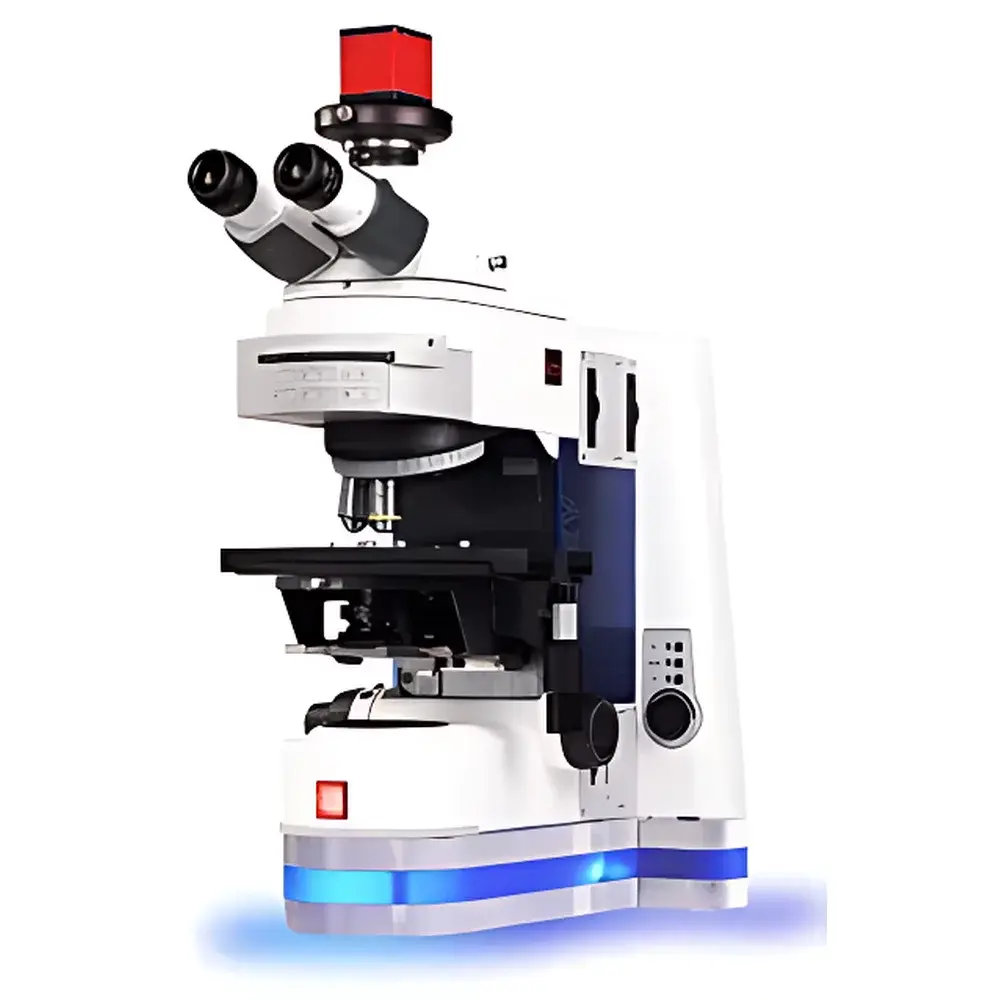
CRAIC UVM-1 UV-Visible-NIR Microspectrometer
| Brand | CRAIC |
|---|---|
| Origin | USA |
| Manufacturer Type | Authorized Distributor |
| Origin Category | Imported |
| Model | UVM-1 |
| Instrument Type | Laboratory |
| Operating Principle | Grating-based, Non-scanning Array Detector |
| Wavelength Range | 200–2500 nm |
| Acquisition Speed | 250 spectra/sec |
| Data Sampling Interval | User-selectable |
| Sample Handling | Automated |
| Chemometrics Software | LambdaFire |
Overview
The CRAIC UVM-1 UV-Visible-NIR Microspectrometer is a high-performance, non-scanning microspectroscopic imaging platform engineered for quantitative spectral analysis and high-resolution spatial mapping across an exceptionally broad electromagnetic range—from deep ultraviolet (200 nm) through the visible spectrum to short-wave near-infrared (2500 nm). Unlike conventional scanning spectrometers or multi-instrument workflows, the UVM-1 integrates a fixed-grating monochromator with a scientific-grade, thermoelectrically cooled CCD/InGaAs array detector system, enabling simultaneous acquisition of full-spectrum data at every pixel in a field of view. Its optical architecture is based on modified microscope optics optimized for broadband transmission, fluorescence excitation (254–546 nm), reflectance, polarization contrast, and transmittance measurements—without mechanical filter wheels or wavelength-tuning mechanisms. This design ensures exceptional photometric stability, high signal-to-noise ratio, and sub-micron spatial resolution under UV illumination—critical for semiconductor defect analysis, thin-film characterization, and micro-scale material identification.
Key Features
- Continuous spectral coverage from 200 nm to 2500 nm in a single instrument configuration, eliminating the need for multiple dedicated UV, visible, or NIR microscopes.
- Non-scanning, array-detector-based acquisition delivering up to 250 full spectra per second—ideal for time-resolved microspectral monitoring and dynamic sample evaluation.
- Automated stage and focus control compatible with programmable measurement protocols, supporting unattended operation and repeatable positioning accuracy within ±0.5 µm.
- Integrated cold solid-state sensor (TE-cooled CCD for UV-Vis; InGaAs for NIR) minimizing dark current and enabling low-light spectral detection with high quantum efficiency across the entire range.
- Modular optical path supporting fluorescence, reflectance, transmittance, and polarized light imaging modes—all selectable via software-controlled motorized components.
- Field-of-view flexibility from 40 µm to 2400 µm, adjustable via interchangeable objectives and zoom optics calibrated to NIST-traceable standards.
Sample Compatibility & Compliance
The UVM-1 accommodates diverse sample formats including polished wafers, thin sections, polymer films, biological tissue slices, forensic trace evidence, and optoelectronic devices. Its non-destructive, contactless measurement methodology complies with ASTM E2821–22 (Standard Practice for Microspectrophotometry), ISO 13694 (Optics and photonics — Determination of spectral transmittance and reflectance), and supports GLP/GMP-aligned workflows through audit-trail-enabled software logging. While not FDA-cleared as a medical device, its spectral fidelity and calibration traceability meet requirements for materials qualification per IPC-7095C (Design and Assembly Process Implementation for BGAs) and JEDEC JESD22-A121 (Electrostatic Discharge Sensitivity Testing). All optical components are certified for UV durability and low-autofluorescence performance.
Software & Data Management
LambdaFire™ chemometrics software provides comprehensive spectral acquisition, multivariate analysis (PCA, PLS, cluster analysis), spectral library matching, and hyperspectral image processing. It supports 21 CFR Part 11-compliant user access controls, electronic signatures, and immutable audit trails for regulated environments. Raw spectral cubes (x, y, λ) are stored in HDF5 format with embedded metadata (wavelength calibration, exposure time, objective magnification, lamp intensity). Batch processing scripts enable automated quantification of film thickness, dopant concentration gradients, or pigment distribution maps. Export options include CSV, SPC, and JCAMP-DX for interoperability with third-party analytical platforms such as MATLAB, Python (SciPy/NumPy), and Thermo OMNIC.
Applications
- Semiconductor failure analysis: Detection of sub-100 nm contaminants and stress-induced defects via UV-induced luminescence and NIR silicon transparency imaging.
- Pharmaceutical solid-state characterization: Polymorph identification, coating uniformity assessment, and API-excipient interaction mapping using spectral unmixing algorithms.
- Forensic fiber and paint chip analysis: Discrimination of dyestuffs and binders across UV-Vis-NIR without sample preparation.
- Art conservation science: Non-invasive identification of historical pigments, varnishes, and degradation products beneath surface layers.
- Advanced materials R&D: Quantitative bandgap determination in 2D materials (e.g., MoS₂, WS₂), graphene layer counting, and plasmonic nanostructure response profiling.
FAQ
Does the UVM-1 require external calibration standards for routine operation?
No—factory-installed NIST-traceable wavelength and photometric calibrations are retained across power cycles. Optional annual recalibration services include spectral responsivity verification and spatial registration validation.
Can the UVM-1 perform real-time spectral imaging during thermal or electrical stimulation?
Yes—via TTL-triggered acquisition synchronized with external stimulus controllers (e.g., temperature stages, source meters), supporting in situ microspectral kinetics studies.
Is LambdaFire compatible with Windows 11 and 64-bit computing environments?
Yes—LambdaFire v6.2+ supports Windows 10/11 (64-bit), requiring ≥32 GB RAM and NVIDIA GPU acceleration for real-time hyperspectral rendering.
What maintenance is required for long-term UV optical performance?
Annual inspection of quartz UV-transmitting optics and deuterium/halogen lamp output stability is recommended; CRAIC provides OEM replacement lamps and alignment verification kits.
How is data integrity ensured during extended automated acquisitions?
LambdaFire implements cyclic redundancy checksums (CRC-32) on all saved spectral cubes and logs hardware error flags (e.g., detector saturation, stage timeout) in real time.
Related Products





