
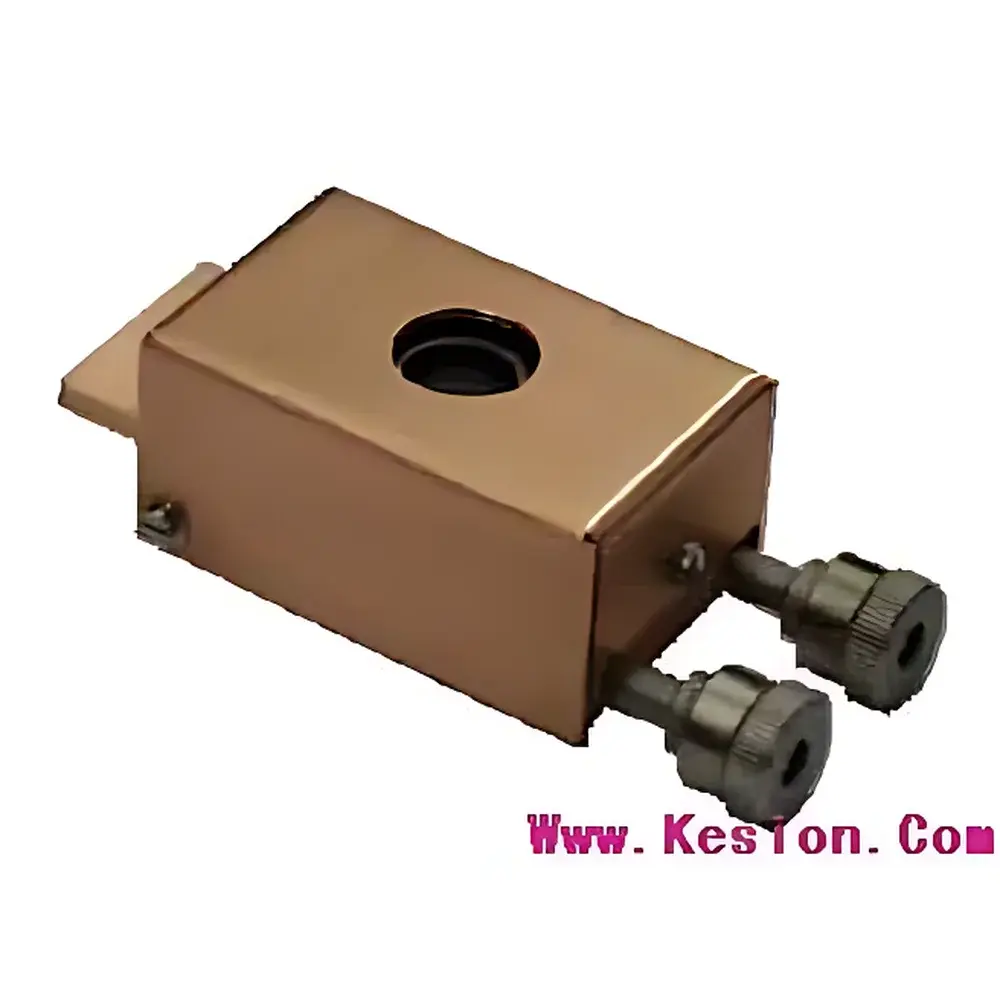
CreaPhys DSU-Metal Series Miniature Metal Sublimator
| Brand | CreaPhys |
|---|---|
| Origin | Germany |
| Model | DSU-Metal Series |
| Crucible Volume | 1 cm³ / 2 cm³ (custom volumes available) |
| Achievable Metal Layer Thickness | >500 nm per deposition cycle at 250 mm source-to-substrate distance |
| Deposition Rate | 1 nm/s (up to 10 nm/s) at 250 mm |
| Heating System | Ceramic crucible holder with integrated metal crucible |
| Temperature Range | 300 °C to 1700 °C |
| Power Supply | <10 V (typ. 9 V), <200 A (typ. 110 A), up to 2 kW |
| Cooling Water Flow | ~15 L/min |
| Optional Configurations | Ceramic or replaceable metal crucibles |
Overview
The CreaPhys DSU-Metal Series Miniature Metal Sublimator is a compact, high-temperature thermal evaporation source engineered for controlled metal thin-film deposition in ultra-high vacuum (UHV) and high-vacuum laboratory environments. Unlike conventional electron-beam or resistive-heating evaporators, the DSU-Metal employs direct-resistive Joule heating of a precisely engineered ceramic crucible assembly, enabling stable, contamination-minimized sublimation of refractory and reactive metals—including Al, Ag, Au, Cr, Ni, Ti, Mo, W, and Fe—without arcing or thermal runaway. Its miniature form factor (≤120 mm footprint) supports integration into multi-source UHV chambers, molecular beam epitaxy (MBE) systems, and in-situ surface science platforms where spatial constraints and thermal management are critical. The device operates on low-voltage, high-current DC power, minimizing electromagnetic interference with adjacent sensitive instrumentation such as LEED, AES, or STM modules.
Key Features
- High-thermal-stability ceramic crucible holder with embedded, material-matched metal crucibles—designed for thermal cycling from ambient to 1700 °C without cracking or outgassing.
- Modular crucible system: interchangeable 1 cm³ and 2 cm³ crucibles; custom volumes available for stoichiometric control in multi-layer stack fabrication.
- Precise thermal gradient management via integrated water-cooled base (15 L/min flow rate) and optional flexible stainless-steel cooling tubing—enabling rapid cooldown between deposition cycles and reducing chamber wall heating.
- Low-voltage (<10 V), high-current (≤200 A) operation ensures stable power delivery even under dynamic load conditions; compatible with standard industrial DC power supplies meeting IEC 61000-4-30 compliance.
- Tool-free mechanical interface for co-mounting with CreaPhys organic sublimators (e.g., DSU-Organic series), facilitating sequential or co-evaporation of metal–organic heterostructures without breaking vacuum.
Sample Compatibility & Compliance
The DSU-Metal accommodates a broad spectrum of metallic elements and alloys, including those with high melting points (>1500 °C) and moderate vapor pressures at elevated temperatures (e.g., Ti, Mo, W). Crucible material selection—tungsten, molybdenum, tantalum, or graphite—is matched to the thermodynamic compatibility of the target metal to prevent interdiffusion or carbide formation. The system meets ISO 14644-1 Class 5 cleanroom handling requirements for pre-installation preparation and conforms to UHV-compatible materials standards (ASTM F1312-22 for vacuum flange integrity and outgassing rates). All wetted components comply with RoHS Directive 2011/65/EU and are documented for traceable material certification (EN 10204 3.1).
Software & Data Management
While the DSU-Metal operates as a standalone hardware module, it integrates seamlessly with third-party vacuum control systems (e.g., Pfeiffer Vacuum ProcessControl, Leybold VacuGraph) via analog 0–10 V temperature feedback and digital TTL interlock signals. Real-time current/voltage logging is supported through standard RS-485 Modbus RTU or optional Ethernet/IP interface. All operational parameters—including ramp rate, dwell time, and maximum setpoint—are recordable with timestamped audit trails compliant with FDA 21 CFR Part 11 when paired with validated SCADA environments. Firmware updates follow IEC 62443-3-3 security guidelines for industrial control systems.
Applications
- Preparation of model catalytic surfaces (e.g., Pt(111), Ni(100)) for surface science studies using XPS, UPS, and TPD.
- Fabrication of seed layers and adhesion promoters (e.g., Cr, Ti) in microelectronics thin-film stacks prior to sputtering or ALD.
- In-situ deposition of magnetic tunnel junction (MTJ) electrodes (CoFeB, NiFe) under UHV conditions for spintronics device prototyping.
- Hybrid organic–metallic film growth (e.g., CuPc/Al, pentacene/Au) for organic photovoltaic and OLED test structures.
- Calibration reference layer deposition for ellipsometry and reflectometry metrology tools.
FAQ
What vacuum level is required for optimal performance?
The DSU-Metal is designed for operation at ≤1×10⁻⁷ mbar base pressure; stable deposition is achievable down to 1×10⁻⁹ mbar in UHV systems.
Can the crucible be cleaned and reused?
Yes—ceramic holders tolerate ultrasonic cleaning in acetone/isopropanol; metal crucibles may be annealed in situ under vacuum to remove residual deposits.
Is remote temperature calibration supported?
Yes—integrated Type K thermocouple output allows two-point calibration traceable to NIST standards; optional PT100 sensor upgrade available.
Does the system include vacuum feedthroughs?
No—feedthroughs must be selected based on chamber flange type (CF35, CF63, ISO-KF40); CreaPhys provides mechanical drawings and torque specifications for integration.
What safety interlocks are built-in?
Over-temperature cutoff (1750 °C hard limit), coolant flow monitoring (flow switch input), and emergency power disconnect via dry-contact relay (IEC 60204-1 compliant).



