
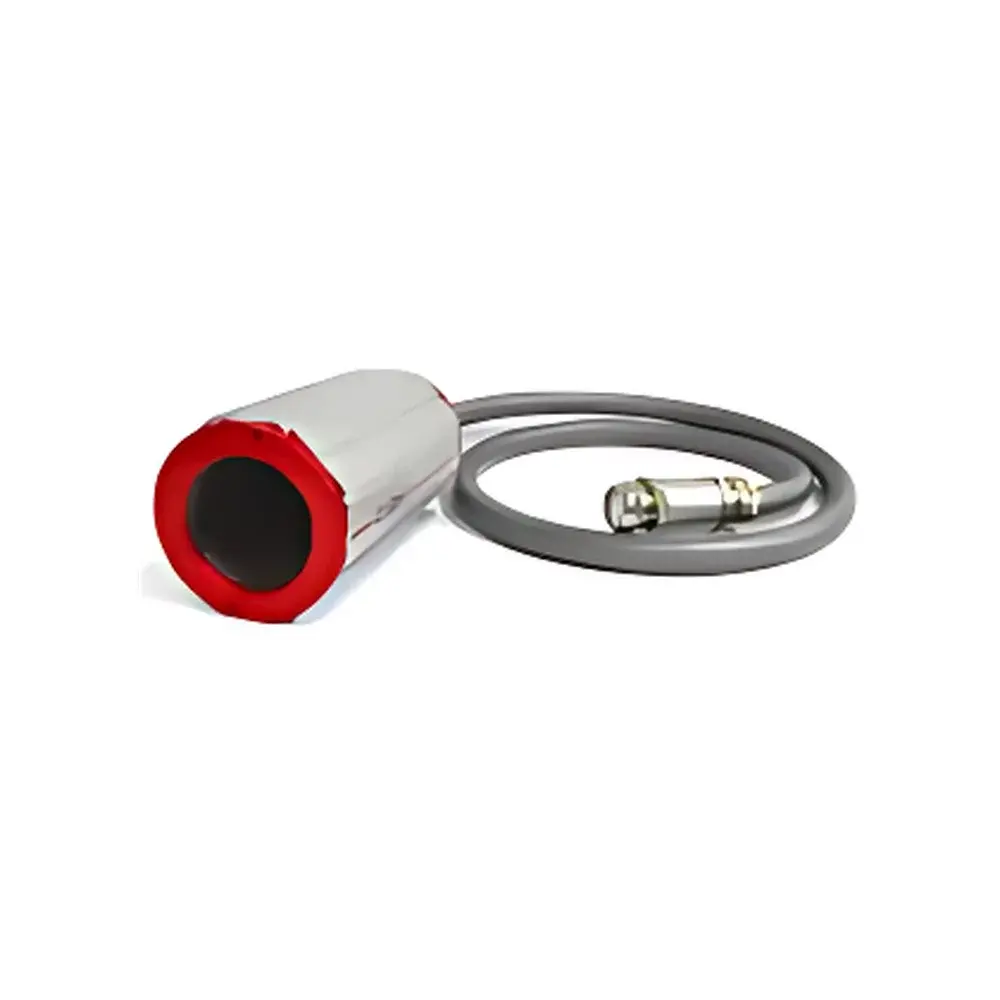
Cubert Ultris 20 Underwater Hyperspectral Imaging System
| Brand | Cubert |
|---|---|
| Origin | Germany |
| Model | U20 |
| Spectral Range | 450–850 nm |
| Spectral Resolution | 4 nm |
| Spatial Sampling | Global-shutter 20 MP CMOS sensor |
| Frame Rate | 6 cubes/s |
| Field of View (TFOV) | 6 cubes/s |
| Instantaneous Field of View (IFOV) | 6 cubes/s |
| IP Rating | IP68 |
| Operating Depth | 10 m for up to 10 hours |
| Housing Weight | 1500 g |
| Imaging Modality | Snapshot-based light-field hyperspectral imaging |
| Compliance | CE, RoHS, IEC 60529 (IP68) |
Overview
The Cubert Ultris 20 Underwater Hyperspectral Imaging System is a purpose-engineered snapshot hyperspectral imager leveraging patented light-field technology to acquire full spectral-spatial datacubes in a single exposure—without scanning, moving parts, or time-lag between bands. Unlike push-broom or tunable-filter systems, the Ultris 20 captures 125 contiguous spectral channels across the visible to near-infrared range (450–850 nm) simultaneously at native spatial resolution, enabling true real-time spectral mapping under dynamic conditions. Its optical architecture integrates a micro-lens array with a high-fidelity 20-megapixel global-shutter CMOS sensor, delivering high radiometric stability and pixel-level spectral registration. Designed specifically for subaquatic deployment, the system features a pressure-rated titanium-alloy housing certified to IP68, validated for continuous operation at 10 meters depth for up to 10 hours—making it uniquely suited for marine benthic surveys, submerged infrastructure inspection, underwater vegetation phenotyping, and in situ biogeochemical monitoring.
Key Features
- Snapshot acquisition: Full 125-band hyperspectral cube captured in one exposure—eliminates motion artifacts and enables synchronization with external triggers or high-speed platforms.
- Light-field optical engine: Proprietary Cubert design ensures intrinsic spectral-spatial co-registration without calibration drift; no moving filters or gratings required.
- Submersible ruggedization: IP68-rated enclosure with corrosion-resistant titanium housing, O-ring sealed optics, and pressure-compensated internal volume; tested per IEC 60529 and ISO 20653.
- High-fidelity sensor: 20 MP global-shutter CMOS detector with low read noise (70% at 550 nm), and linear response across full spectral range.
- Onboard processing: Embedded FPGA enables real-time cube formatting (ENVI-compatible BIL/BIP), dark current subtraction, and optional radiometric correction using integrated thermal sensors.
- Thermal & mechanical stability: Passive thermal management and monolithic optical bench minimize spectral shift (<0.1 nm/°C) and focus drift during prolonged underwater immersion.
Sample Compatibility & Compliance
The Ultris 20 Underwater operates in reflective and transmissive modes, supporting both surface-reflected and water-column transmission measurements. It is compatible with standard underwater lighting sources (e.g., calibrated halogen or LED arrays with known spectral output) and supports post-acquisition correction for water column attenuation using built-in absorption/scattering models (e.g., based on Jerlov water type classification). The system complies with CE marking requirements for electromagnetic compatibility (EMC Directive 2014/30/EU) and low-voltage safety (LVD Directive 2014/35/EU). Its firmware implements audit-trail logging and user-access controls aligned with GLP principles, and raw data export formats (HDF5, TIFF, ENVI) support traceability for regulatory submissions under ISO/IEC 17025-accredited laboratories.
Software & Data Management
Cubert’s proprietary U-Spec software provides end-to-end workflow support—from acquisition parameter configuration (integration time, region-of-interest, binning) to spectral library matching, endmember extraction (e.g., VCA, N-FINDR), and quantitative pigment analysis (e.g., chlorophyll-a, phycocyanin). All data are stored with embedded metadata (GPS, depth, temperature, timestamp, optical path length) in self-documenting HDF5 containers. Export modules include direct integration with ENVI, Python (via cubertio package), MATLAB, and QGIS. For regulated environments, optional FDA 21 CFR Part 11-compliant add-ons provide electronic signatures, role-based access control, and immutable audit logs—fully compatible with laboratory information management systems (LIMS).
Applications
- Marine ecology: Species discrimination of benthic macroalgae, coral health assessment via spectral stress indicators (e.g., photoprotective pigment ratios), and seagrass biomass estimation.
- Underwater infrastructure: Corrosion detection on pipelines and offshore platforms through spectral oxide signature mapping; biofouling quantification using reflectance anomalies at 675 nm and 750 nm.
- Environmental monitoring: In situ detection of harmful algal blooms (HABs) via phytoplankton community fingerprinting; sediment plume tracking using suspended particulate matter (SPM) spectral slope analysis.
- Archaeological survey: Submerged cultural heritage documentation with material-specific spectral unmixing (e.g., distinguishing volcanic tuff vs. limestone vs. ceramic fragments).
- Defense & security: Mine-like object (MLO) detection using spectral contrast against seabed background; underwater camouflage evaluation under variable illumination conditions.
FAQ
Is the Ultris 20 Underwater compatible with ROVs and AUVs?
Yes—the system supports RS-422 serial command interface, GigE Vision protocol, and 12–30 V DC input; mechanical mounting follows ISO 17712 standards for underwater vehicle integration.
Can spectral calibration be performed underwater?
No—radiometric and spectral calibration must be conducted pre-deployment using NIST-traceable reflectance standards and wavelength references; however, onboard dark-frame acquisition compensates for thermal drift during immersion.
What is the maximum data throughput per second?
At full resolution (20 MP × 125 bands), raw data rate is ~1.8 GB/s; onboard compression (lossless HDF5 chunking) reduces sustained write bandwidth to ≤320 MB/s to industrial-grade SSDs.
Does the system support synchronized multi-sensor acquisition?
Yes—hardware trigger input (TTL) enables precise temporal alignment with sonar, LIDAR, or CTD sensors within ±1 µs jitter.
Are firmware updates field-installable?
Yes—updates are delivered as signed .ufw packages via Ethernet; update integrity and rollback capability are enforced by secure boot chain compliant with IEC 62443-3-3 SL2.





