
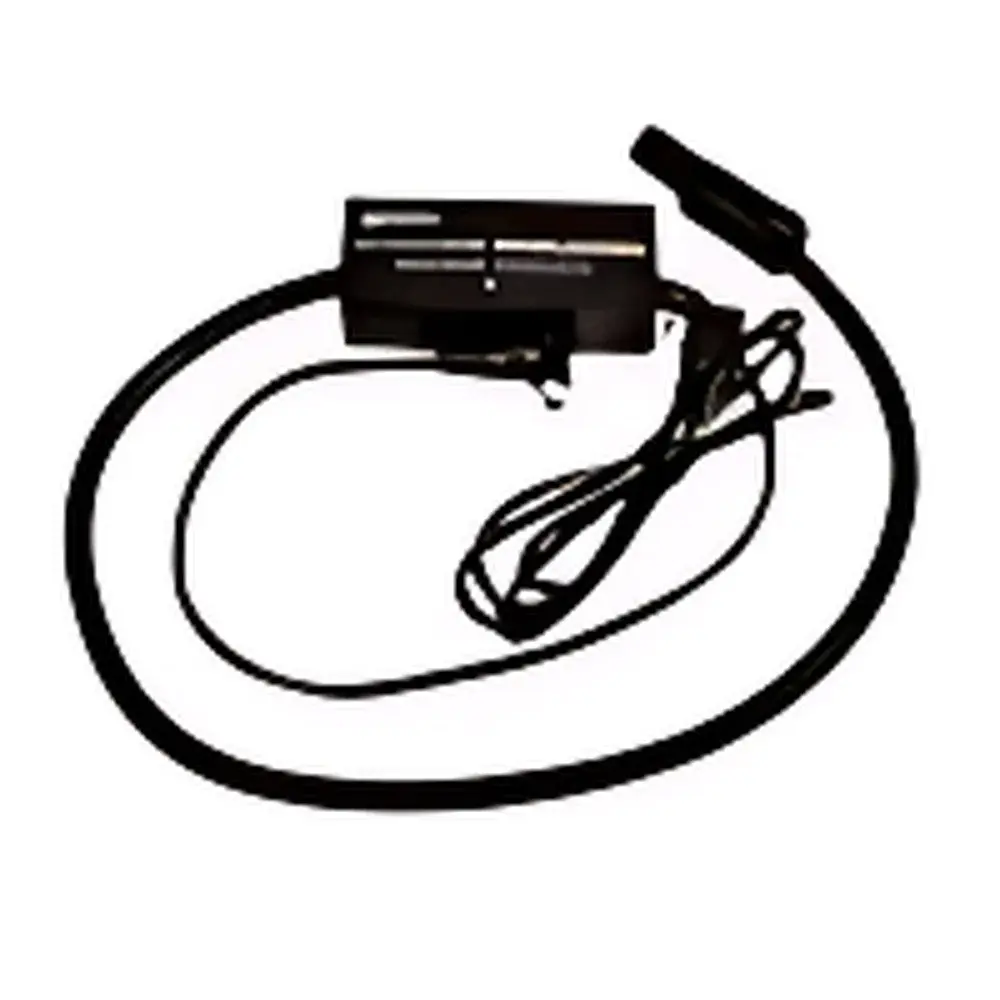
Cyclops Explorer Fluorescence Probe Reader by Turner Designs
| Brand | Turner Designs |
|---|---|
| Origin | USA |
| Model | Cyclops Explorer |
| Type | PC-Based Fluorescence Probe Interface and Data Acquisition System |
| Compliance | CE, RoHS, FCC Class B |
| Communication | USB 2.0 (Virtual COM Port), RS-232 (optional) |
| Software Compatibility | Windows 10/11 (64-bit), .NET Framework 4.8+ |
| Data Storage | Local CSV/Excel export, time-stamped binary logging |
| Real-time Display | Dynamic line chart with adjustable time scale and gain overlay |
Overview
The Cyclops Explorer Fluorescence Probe Reader is a precision-engineered interface device developed by Turner Designs (Sunnyvale, CA, USA) for real-time acquisition, visualization, and control of optical fluorescence measurements from the Cyclops series of submersible and benchtop fluorometric probes. Designed specifically for environmental water quality monitoring, this reader operates on the principle of photometric signal conditioning: it digitizes analog voltage outputs from Cyclops sensors—such as those configured for chlorophyll a, phycocyanin, fluorescein, or CDOM (colored dissolved organic matter)—with high-fidelity analog-to-digital conversion (16-bit resolution). Unlike standalone meters, the Cyclops Explorer functions exclusively as a bridge between probe hardware and host computing environments, enabling laboratory-grade calibration traceability, gain optimization, and synchronized multi-parameter data logging when integrated with third-party SCADA or LIMS platforms.
Key Features
- USB 2.0–based virtual COM port interface ensures plug-and-play compatibility with modern Windows workstations without requiring proprietary drivers beyond standard Microsoft CDC ACM class support.
- Real-time gain adjustment: Users can dynamically modify amplifier gain settings (e.g., ×1, ×10, ×100, ×1000) directly via software GUI to optimize signal-to-noise ratio across varying fluorophore concentrations—critical for detecting low-level algal biomass in oligotrophic lakes or high-turbidity estuarine samples.
- Time-synchronized data acquisition: Timestamped readings are logged at user-selectable intervals (100 ms to 60 s), supporting compliance with EPA Method 445.0 (chlorophyll a quantification) and ISO 10260:2022 (fluorometric measurement of phytoplankton pigments).
- Embedded firmware supports probe self-identification and automatic configuration loading, reducing setup errors during field deployments or multi-probe lab arrays.
- No internal battery or display: Purpose-built for fixed-location or laptop-integrated operation, minimizing thermal drift and electromagnetic interference that compromise low-light fluorescence detection.
Sample Compatibility & Compliance
The Cyclops Explorer interfaces exclusively with Turner Designs Cyclops-series optical probes—including Cyclops-7 (chlorophyll a, 470/685 nm), Cyclops-7b (phycocyanin, 590/650 nm), and Cyclops-LED (dual-excitation, customizable filters). It supports aqueous matrices compliant with ASTM D5257–22 (standard guide for fluorescence-based water quality assessment) and is routinely deployed in USGS, EPA Region 10, and EU Water Framework Directive (WFD) monitoring programs. While the reader itself carries CE, RoHS, and FCC Class B certifications, full system validation requires co-calibration of probe and reader per manufacturer’s Traceable Calibration Protocol (TCP-FL-01), which documents linearity (R² ≥ 0.999 over 0–100 µg/L chl a), limit of detection (<0.02 µg/L), and inter-unit repeatability (±1.3% CV, n=5).
Software & Data Management
Turner Designs provides the free Cyclops Explorer Software Suite (v3.2+), a Windows-native application built on .NET Framework 4.8 with audit-trail capabilities aligned with FDA 21 CFR Part 11 requirements (user authentication, electronic signatures, immutable log files). Data streams are stored in dual formats: human-readable CSV (with metadata headers: timestamp, probe ID, gain setting, raw mV, converted concentration units) and compressed binary (.cyc) for archival integrity. Charting features include overlay plots for comparative analysis (e.g., chl a vs. turbidity from co-deployed sensors), linear/nonlinear regression tools for in-situ calibration curve fitting, and batch export to MATLAB, Python (Pandas), or LIMS via ODBC connector. All logs include embedded GPS coordinates when paired with optional NMEA 0183–compatible GNSS modules.
Applications
- Long-term phytoplankton biomass monitoring in reservoirs, rivers, and coastal zones using calibrated chlorophyll a fluorescence as a proxy for algal standing stock.
- Early-warning detection of cyanobacterial blooms via parallel phycocyanin (PC) and chlorophyll a ratio analysis—supporting WHO guidance values for microcystin risk assessment.
- Method development and validation studies under GLP conditions, where full digital chain-of-custody (probe → reader → PC → archive) satisfies ISO/IEC 17025:2017 clause 7.5.2 (data integrity).
- Integration into autonomous platforms including moored buoys, AUVs, and drone-deployed sondes, leveraging the reader’s low-power USB bus draw (<250 mA) and robust firmware watchdog timer.
FAQ
Is the Cyclops Explorer compatible with Mac or Linux operating systems?
No—Turner Designs officially supports only Windows 10 and 11 (64-bit) due to driver architecture dependencies and certification requirements for regulated environments.
Can I use the Cyclops Explorer without Turner Designs’ proprietary software?
Yes—developers may access raw serial data via documented ASCII command protocol (e.g., “READ?”, “GAIN=100”) using Python, LabVIEW, or MATLAB; however, advanced features like calibration import and audit logging require the official suite.
Does the reader perform temperature compensation internally?
No—temperature correction must be applied externally using simultaneous readings from a co-located PT100 or thermistor sensor; Cyclops probes output temperature-compensated analog signals only when equipped with integrated thermal sensors (e.g., Cyclops-7T variant).
What is the maximum cable length supported between probe and reader?
For optimal signal integrity, Turner Designs specifies ≤30 m for shielded twisted-pair cables (Belden 8761 or equivalent); longer runs require active signal repeaters or fiber-optic media converters to mitigate noise-induced baseline drift.







