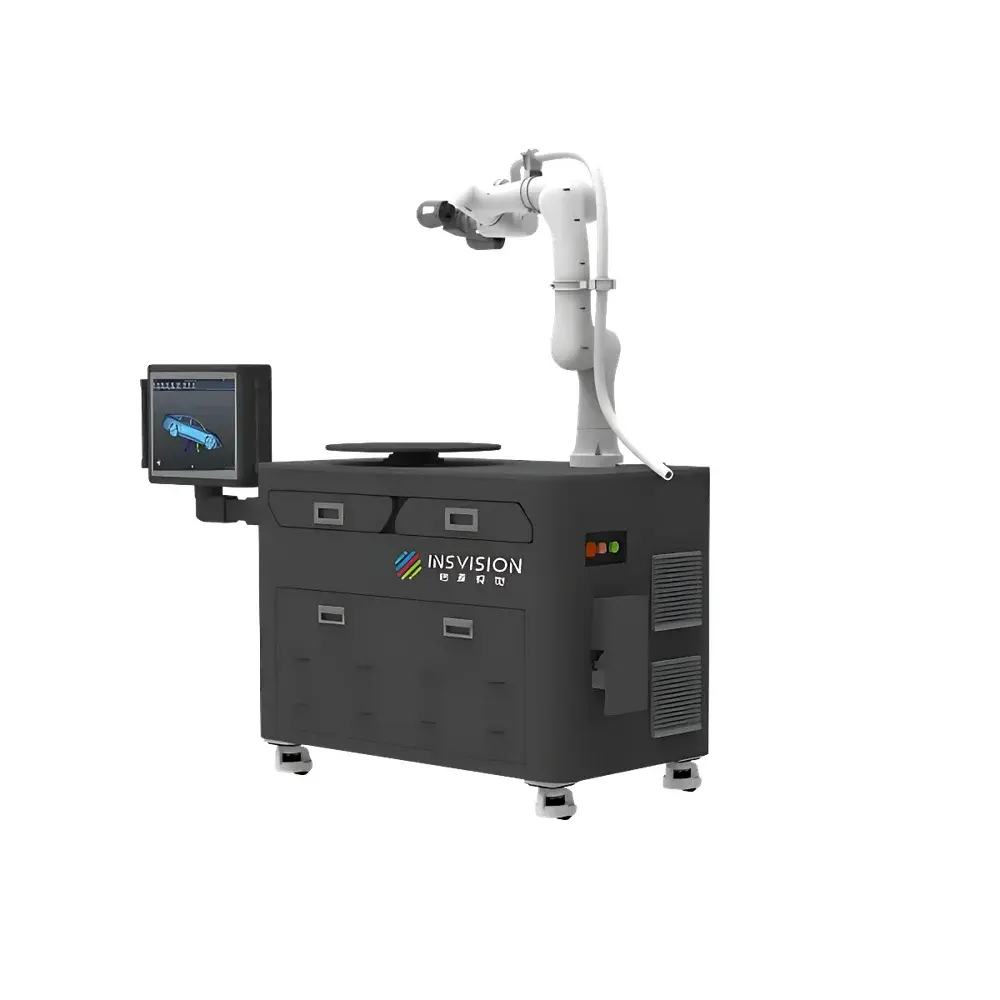
Dantec FlowMap Combustion Laser-Induced Fluorescence (LIF) System
| Brand | Dantec |
|---|---|
| Origin | Denmark |
| Manufacturer Status | Authorized Distributor |
| Origin Category | Imported |
| Model | FlowMap |
| Pricing | Upon Request |
| OH Excitation Laser Energy | 22–25 mJ per Pulse |
| ICCD Gating Width | 3 ns |
| Photocathode Quantum Efficiency | ~30% |
| CCD Quantum Efficiency | ~70% |
| Synchronizer Timing Resolution | 250 ps |
Overview
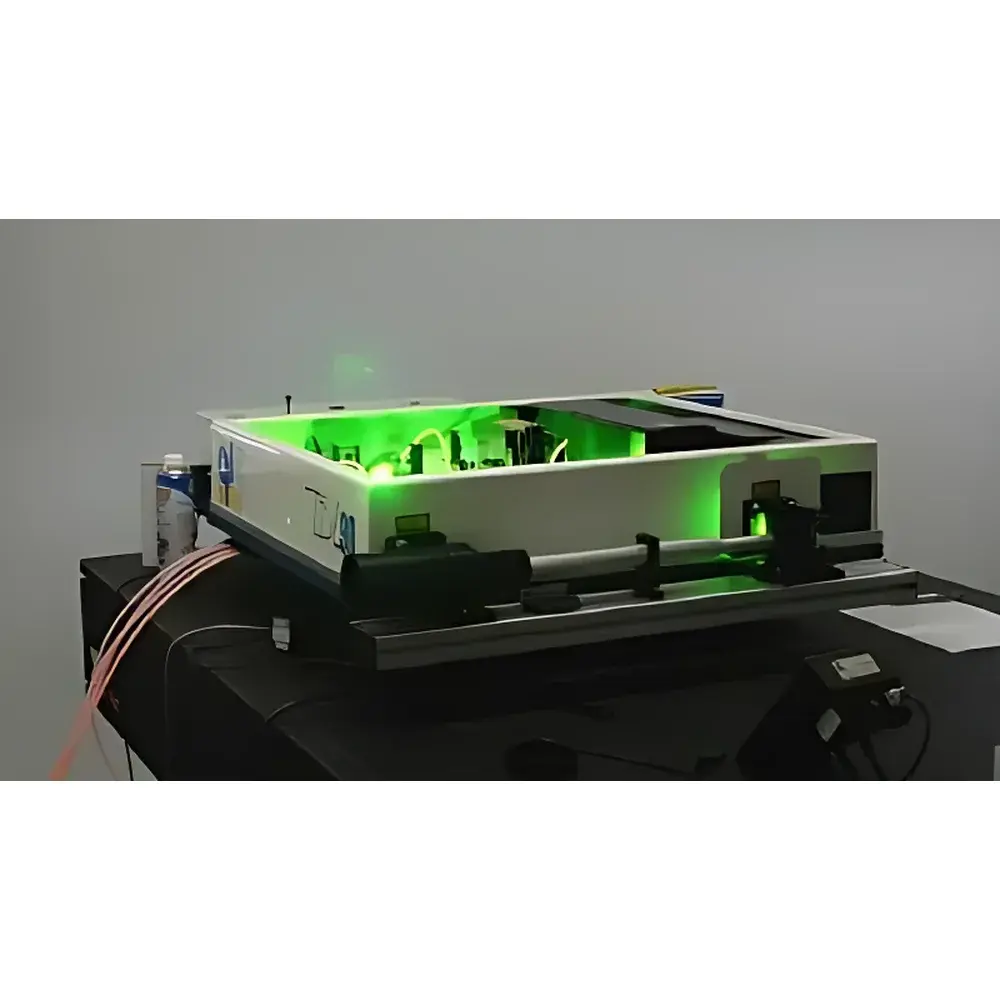
The Dantec FlowMap Combustion Laser-Induced Fluorescence (LIF) System is a high-fidelity, modular optical diagnostic platform engineered for quantitative, spatially resolved measurement of reactive intermediates and combustion species—most notably the hydroxyl radical (OH)—in high-temperature reactive flows. Operating on the principle of planar laser-induced fluorescence, the system delivers two-dimensional, single-shot imaging of OH distributions by exciting the A2Σ+ ← X2Π electronic transition near 283 nm and collecting the resulting fluorescence emission in the 306–315 nm band. This technique enables non-intrusive, species-specific detection with sub-microsecond temporal resolution and micron-scale spatial resolution—critical for resolving flame front structure, extinction events, ignition kernels, and turbulent–chemistry interactions in practical combustors.
Key Features
- Optimized OH-specific excitation source delivering 22–25 mJ per pulse at 283 nm, enabling robust signal-to-noise ratio even in low-concentration or highly quenched environments (e.g., lean-premixed flames, MILD combustion zones).
- Ultra-fast gated Intensified Charge-Coupled Device (ICCD) camera with programmable 3 ns gate width, minimizing background radiation interference and enabling precise time-resolved acquisition synchronized to laser pulses.
- High quantum efficiency detection chain: ~30% photocathode QE and ~70% CCD QE ensure maximum photon capture efficiency across the OH fluorescence band.
- Sub-nanosecond timing precision via 250 ps resolution digital delay generator, supporting phase-locked acquisition relative to engine cycles, spark events, or PIV trigger signals.
- Modular architecture compatible with Dantec’s Gaseous-LIF systems (for low-temperature tracers such as acetone, SO2, CO2) and Particle Image Velocimetry (PIV) platforms—enabling simultaneous OH concentration and velocity field mapping within shared optical access windows.
- Thermally stabilized optical layout and kinematic mounts ensure long-term alignment integrity during extended thermal cycling typical of furnace, gas turbine, or IC engine test rigs.
Sample Compatibility & Compliance
The FlowMap Combustion LIF System is designed for use in laboratory-scale burners (e.g., Bunsen, McKenna, swirl-stabilized), atmospheric and pressurized combustion chambers, internal combustion engines (optical access variants), and aerospace propulsion test facilities. It supports measurements under conditions ranging from ambient temperature to >2200 K flame temperatures, with pressure ranges spanning vacuum to 30 bar. The system complies with ISO 9001-certified manufacturing practices and adheres to CE marking requirements for optical instrumentation. All software modules support audit-trail functionality and user-access controls aligned with GLP and GMP documentation frameworks. Data export formats (TIFF, HDF5, ASCII) are compatible with third-party post-processing tools used in academic and industrial combustion research.
Software & Data Management
Dantec’s FlowManager software provides integrated control of laser timing, ICCD exposure/gain, synchronizer delays, and image acquisition sequencing. Real-time preview, ROI-based intensity normalization, and background subtraction routines are embedded for rapid qualitative assessment. Quantitative analysis workflows include spectral calibration referencing, collisional quenching correction using local temperature and pressure inputs (via optional thermocouple/pressure sensor integration), and absolute OH number density calibration based on known reference flames or Rayleigh scattering normalization. All raw and processed datasets retain full metadata (laser energy, gate delay, gain settings, environmental conditions) in standardized headers compliant with FAIR data principles. Exported data meet formatting requirements for submission to journals such as Combustion and Flame or Proceedings of the Combustion Institute.
Applications
- Mapping OH radical distribution in laminar and turbulent premixed/non-premixed flames to quantify local heat release rate and flame surface density.
- Studying flame stabilization mechanisms in bluff-body and swirl-stabilized combustors under varying equivalence ratios and inlet velocities.
- Validating large-eddy simulation (LES) and Reynolds-averaged Navier–Stokes (RANS) combustion models using experimental OH-LIF data.
- Investigating autoignition behavior and cool-flame chemistry in HCCI and RCCI engines.
- Characterizing pollutant formation pathways (e.g., NOx precursors) through correlation with OH gradients and local stoichiometry.
- Supporting development of low-emission burner designs for power generation and aviation fuel certification programs.
FAQ
Can this system measure species other than OH?
Yes—when configured with appropriate tunable lasers and filters, the platform supports LIF imaging of CH, NO, CN, and PAHs; however, OH remains the primary validated configuration for high-temperature combustion environments.
Is synchronization with PIV possible without hardware modification?
Yes—the system includes TTL-compatible trigger I/O ports and supports direct integration with Dantec PIV systems via shared digital delay generators and common master clock distribution.
What level of temperature and pressure uncertainty affects OH-LIF quantification?
Quantitative accuracy depends on independent measurement of local gas temperature (e.g., via thermocouple or CARS) and pressure; typical combined uncertainty for absolute OH number density is ±15–20% under well-characterized conditions.
Does the system support automated long-duration data acquisition for statistical convergence studies?
Yes—FlowManager includes batch acquisition scripting, file naming conventions with timestamp and parameter tagging, and automatic disk management for multi-hour sequences typical in turbulent flame studies.
Are calibration standards traceable to NIST or PTB?
While the OH-LIF technique itself is not certified as a primary standard, Dantec provides documented calibration protocols referencing NIST-traceable spectroradiometric standards and certified reference flames used in international intercomparison campaigns (e.g., ECN Flame D).