
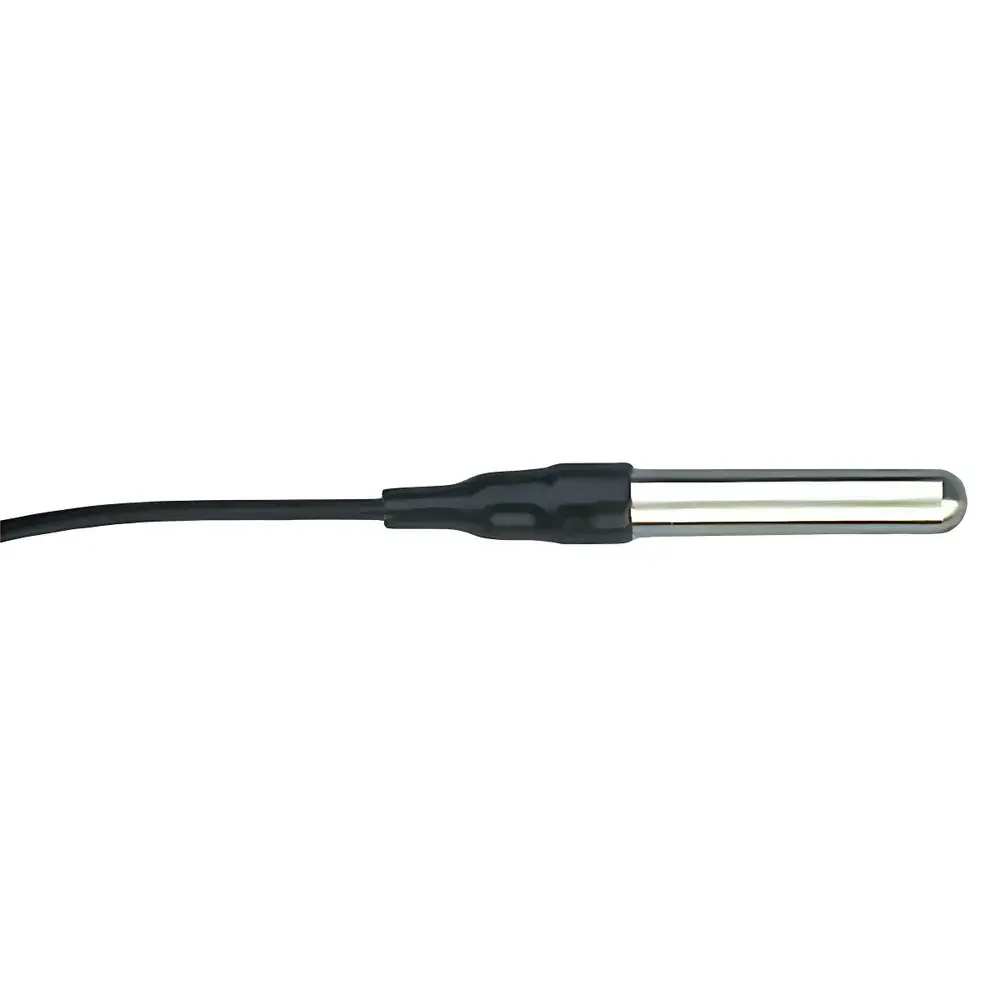
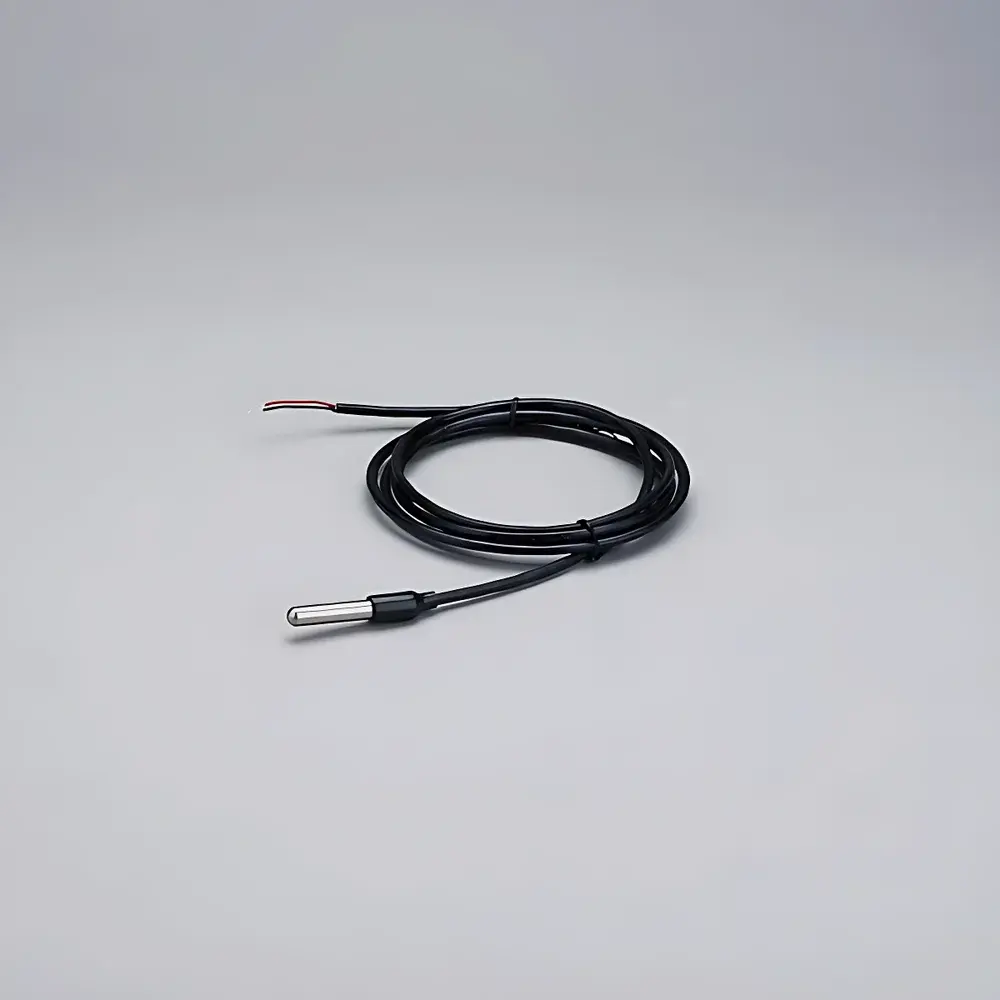
Davis 6470 Soil Temperature Sensor
| Brand | Davis |
|---|---|
| Origin | USA |
| Manufacturer Type | Authorized Distributor |
| Product Category | Imported Instrument |
| Model | 6470 |
| Instrument Type | Soil Temperature Sensor |
| Sensor Element | Precision Thermistor |
| Measurement Range | −40 to +65 °C |
| Accuracy | ±0.5 °C |
| Resolution | 1 °C (user-selectable) |
| Time Constant | 100 s (in air), 28 s (in liquid) |
| Cable Length | 4.6 m |
| Cable Gauge | 22 AWG, direct-burial rated, tin-plated conductors |
| Enclosure Material | 316 stainless steel body with epoxy encapsulation and vinyl strain relief |
| Probe Dimensions | 8 mm diameter × 64 mm length |
| Weight | 128 g |
| Output | Analog resistance (variable resistor), 2-wire configuration (black = common, white = signal) |
Overview
The Davis 6470 Soil Temperature Sensor is a rigorously engineered precision thermistor-based instrument designed for long-term, field-deployable temperature monitoring across heterogeneous environmental media—including soil, freshwater bodies, and ambient air. Its operational principle relies on the predictable, monotonic resistance–temperature relationship of a high-stability NTC (Negative Temperature Coefficient) thermistor element, calibrated to the ITS-90 standard traceable to NIST. The sensor’s 316 stainless steel probe housing provides exceptional corrosion resistance in saline, acidic, or anaerobic soil environments, while its epoxy-encapsulated core ensures hermetic protection against moisture ingress and electrochemical degradation over extended deployment cycles. With a measurement range spanning −40 °C to +65 °C and a certified accuracy of ±0.5 °C across the full scale, the 6470 meets the performance requirements for ecological research, agricultural irrigation scheduling, permafrost monitoring, and climate station networks compliant with WMO (World Meteorological Organization) guidelines for surface temperature observation.
Key Features
- High-reliability NTC thermistor with NIST-traceable calibration certificate available upon request
- 316 stainless steel probe body (8 mm × 64 mm) with epoxy-filled cavity and integrated vinyl strain relief for mechanical durability during installation and freeze–thaw cycling
- 22 AWG direct-burial-rated cable featuring tin-plated copper conductors, UV-stabilized polyethylene insulation, and resistance to rodent gnawing and soil microbial activity
- Optimized thermal response: 28-second time constant in water or saturated soil; 100-second time constant in still air—enabling accurate equilibrium measurements without overshoot
- Two-wire analog output (black = common, white = variable resistance signal) compatible with Davis Vantage Pro2, Vue, and EnviroMonitor data loggers, as well as third-party CR-series (Campbell Scientific) and HOBO (Onset) systems via appropriate interface modules
- Designed for integration into the Davis 6345 Wireless Soil Moisture and Temperature Station—up to four 6470 sensors may be daisy-chained per 6345 node for vertical or lateral soil profile profiling
Sample Compatibility & Compliance
The 6470 is validated for continuous immersion in non-aggressive aqueous media (pH 4–9), mineral soils (sand to clay loam), and organic substrates (peat, compost). It is not intended for use in highly conductive brines (>50 mS/cm), hydrocarbon-contaminated soils, or caustic alkaline environments (pH >12). The device complies with IEC 60529 IP68 ingress protection specifications when installed per manufacturer instructions. Its materials and construction conform to RoHS Directive 2011/65/EU and REACH Regulation (EC) No. 1907/2006. For regulatory-grade environmental monitoring programs, the sensor supports GLP-compliant data acquisition when paired with loggers offering audit-trail-enabled firmware (e.g., Davis EnviroMonitor v3.2+ with timestamped calibration history logging).
Software & Data Management
Raw resistance values from the 6470 are converted to temperature using the Steinhart–Hart equation (coefficients supplied in datasheet) or linearized lookup tables within compatible host platforms. Davis WeatherLink Cloud and Console software automatically apply factory calibration coefficients and support user-defined offset corrections. Exported datasets include UTC timestamps, sensor ID, resistance (Ω), calculated temperature (°C), and diagnostic flags (e.g., open-circuit, short-circuit). All data files adhere to CF Standard Names (Climate and Forecast Metadata Conventions) for interoperability with NOAA NCDC, EDI Data Portal, and FAO WaPOR repositories.
Applications
- Soil thermal regime characterization for crop phenology modeling and frost risk assessment
- Ground heat flux estimation in eddy covariance towers (paired with soil heat flux plates)
- Validation of satellite-derived land surface temperature (LST) products (e.g., MOD11A2, LST_L3)
- Long-term permafrost active layer monitoring in Arctic and alpine tundra ecosystems
- Calibration reference for distributed temperature sensing (DTS) fiber-optic systems
- Control input for automated greenhouse and nursery climate management systems
FAQ
Is the Davis 6470 compatible with non-Davis data loggers?
Yes—when interfaced via a calibrated analog-to-digital converter (e.g., Campbell Scientific AM16/32B multiplexer with CR1000X), provided the host system supports resistance measurement in the 1–10 kΩ range and applies the correct Steinhart–Hart coefficients.
What is the recommended installation depth for agricultural soil monitoring?
For root-zone temperature profiling, install at 5 cm, 10 cm, 20 cm, and 50 cm depths—orienting the probe vertically with minimal air gaps around the shaft to ensure thermal contact.
Does the sensor require periodic recalibration?
No routine recalibration is required under normal field conditions; however, NIST-traceable verification is advised every 24 months for ISO/IEC 17025-accredited monitoring programs.
Can the 6470 be used for air temperature measurement without a radiation shield?
No—direct exposure to solar irradiance causes radiative heating errors exceeding ±3 °C. Use Radiation Shield #7714 (WMO Class A compliant) for meteorological air temperature applications.
Is the cable suitable for trenchless horizontal installation (e.g., using a soil probe)?
Yes—the 22 AWG direct-burial cable withstands moderate lateral shear forces during auger-assisted deployment; however, avoid sharp bends (<5× cable diameter radius) to prevent conductor fatigue.
Related Products







