
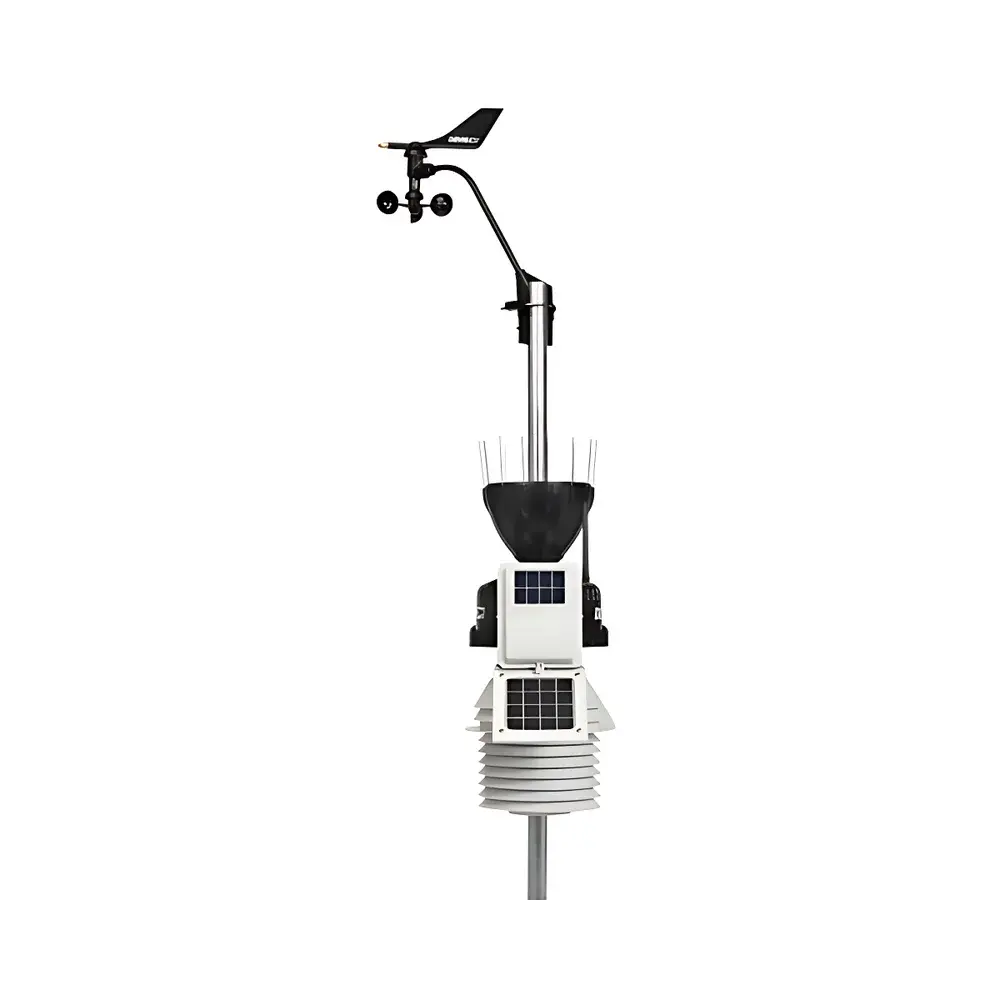
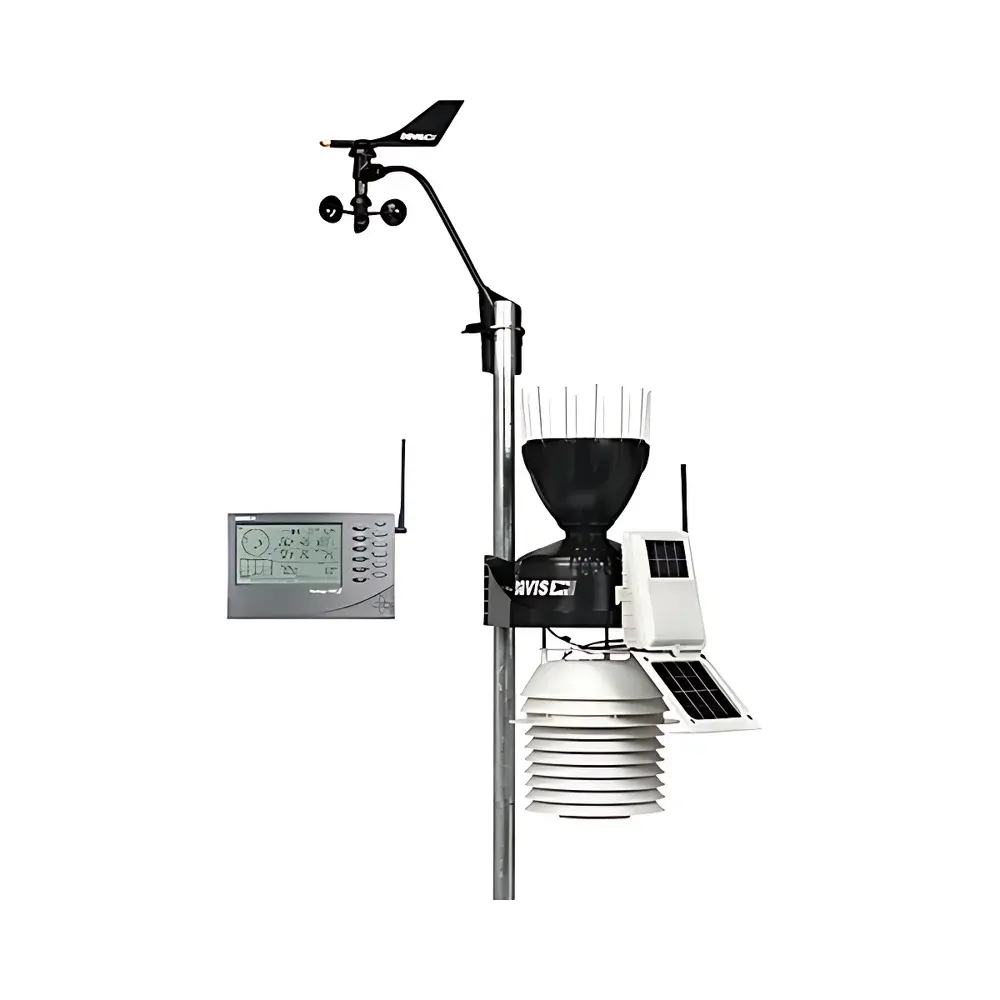
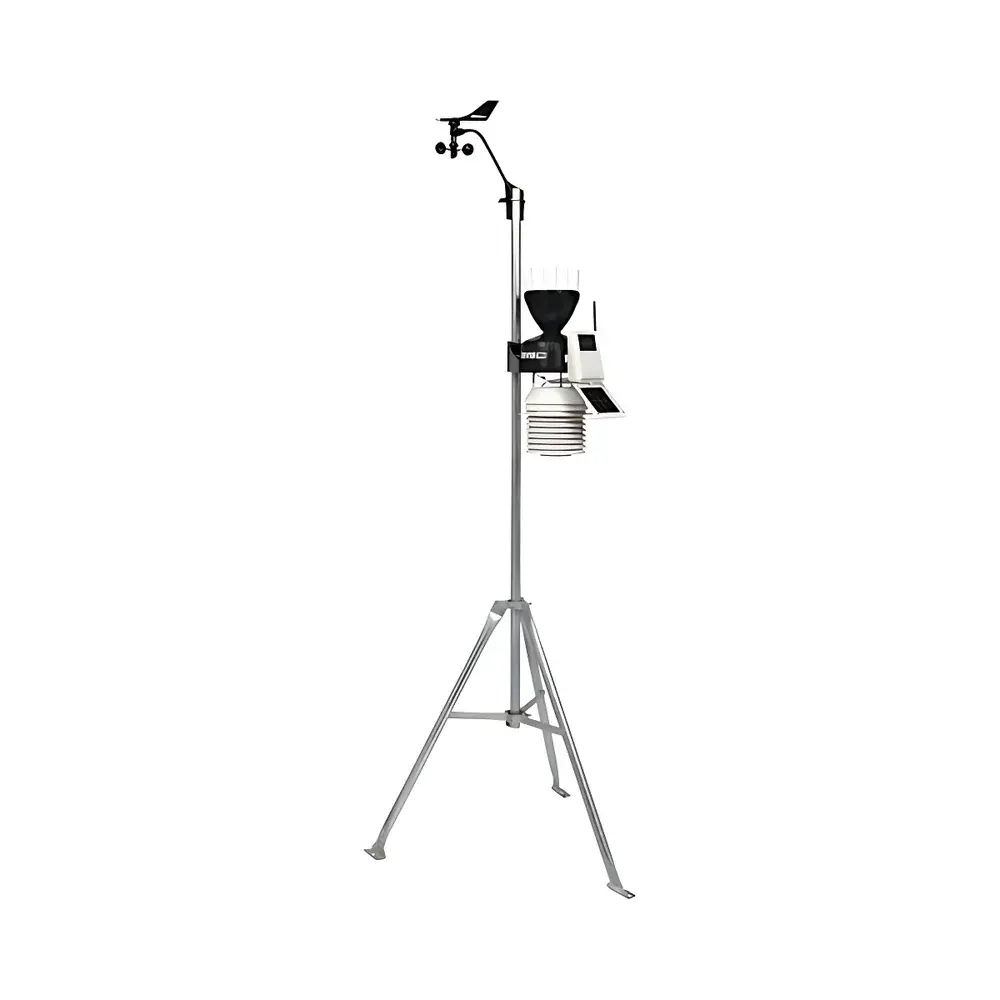
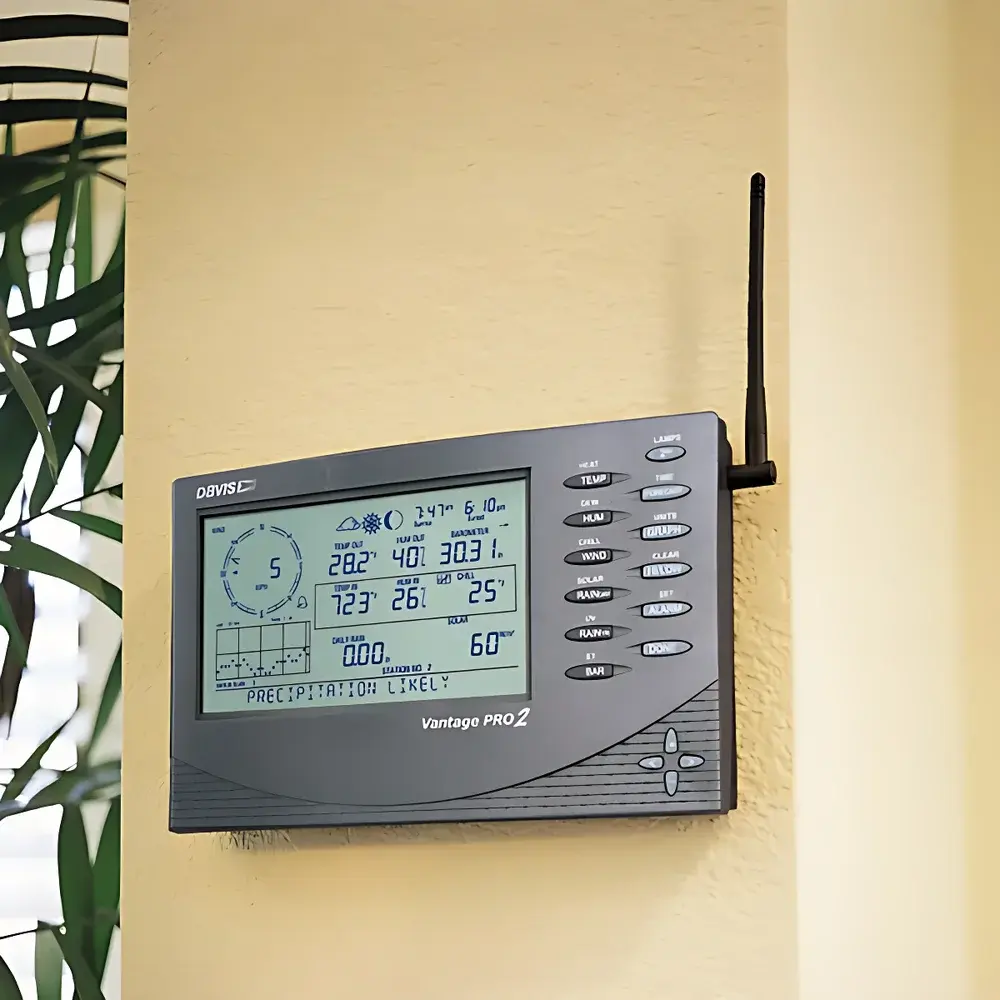
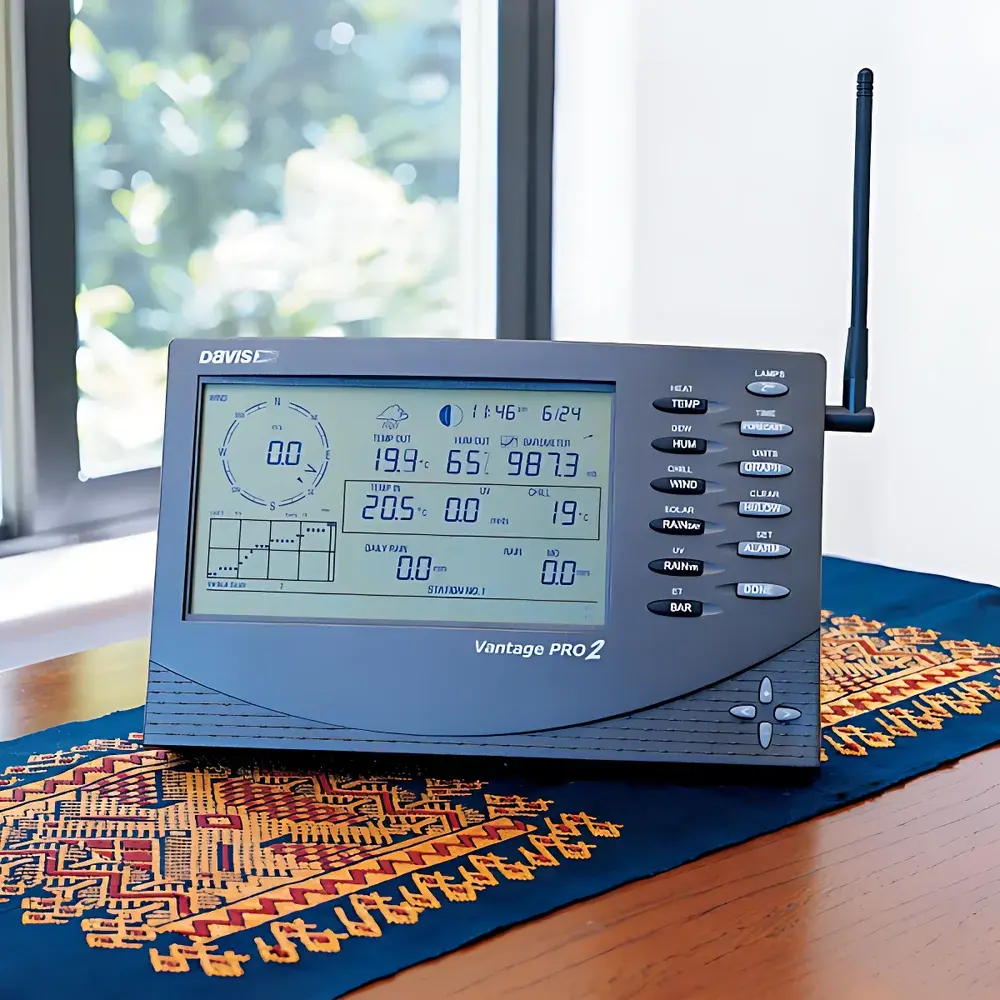
Davis Vantage Pro2 6153 Wireless Standard Weather Station
| Brand | Davis (USA) |
|---|---|
| Origin | USA |
| Model | Vantage Pro2 6153 |
| Instrument Type | Portable Weather Station |
| Certification | CE, FCC, RoHS Compliant |
| Data Logging Interval | 1–60 min (user-configurable) |
| Wireless Transmission Range | Up to 300 m (line-of-sight) |
| Power Supply | Solar panel (0.5 W standard / 0.75 W with fan) + CR-123A lithium or NiMH C-cell batteries |
| Operating Temperature | −40 °C to +65 °C |
| Enclosure Material | UV-stabilized ABS and polypropylene |
| Sensor Housing Ventilation | Integrated brushless DC fan (active airflow ≥2.5 m/s in full sun) |
Overview
The Davis Vantage Pro2 6153 Wireless Standard Weather Station is a fully integrated, research-grade environmental monitoring system engineered for long-term, unattended operation in diverse field conditions—from agricultural research plots and ecological reserves to municipal climate networks and educational campuses. It employs a distributed sensor architecture based on the Integrated Sensor Suite (ISS), which houses precision-calibrated anemometry, thermohygrometry, barometry, and pluviometry modules within a single, NIST-traceable enclosure. The ISS utilizes cup-and-vane wind measurement (ISO 7726-compliant airflow dynamics), capacitive relative humidity sensing (IEC 60751 Class B accuracy), silicon diode temperature transduction, and tipping-bucket rainfall collection (WMO Guide to Instruments and Methods of Observation, Chapter 8). The 6153 variant distinguishes itself with an integrated low-power ventilation fan that maintains laminar airflow across the radiation-shielded temperature and humidity sensors—critical for minimizing solar loading error (<2 °C at 1040 W/m² irradiance, ≤1 m/s ambient wind) and ensuring traceable RH/temperature co-location per ASTM D5032 and ISO 11784 standards.
Key Features
- Active thermal management: Brushless DC fan ensures consistent air exchange (>2.5 m/s sensor chamber velocity under full solar insolation), mitigating radiative heating artifacts in temperature and humidity measurements.
- Non-volatile Flash memory logging: Retains up to 2,190 days of 1-minute interval data (or 30 days at 1-second sampling) without power interruption—compliant with GLP data integrity requirements.
- Modular ISS design: Field-replaceable sensor cartridges (wind, temp/RH, rain, UV, solar radiation) enable rapid maintenance without recalibration downtime.
- Low-power architecture: Average current draw <10 mA (ISS) and 2 years continuous deployment.
- Lightning-hardened electronics: Integrated gas discharge tube (GDT) surge protection on all sensor lines; meets IEC 61000-4-5 Level 3 (2 kV line-to-ground) for outdoor reliability.
- NOAA-compliant reporting engine: Generates standardized METAR, SYNOP, and CLIMAT message formats directly onboard; supports automated upload via WeatherLink IP or third-party MQTT brokers.
Sample Compatibility & Compliance
The Vantage Pro2 6153 is validated for continuous monitoring of ambient atmospheric parameters in open-field, rooftop, and forest-edge microclimates. Its ISS conforms to WMO reference exposure guidelines (height: 2 m AGL, unobstructed 10× fetch), and its rain gauge meets WMO Class A specifications for catch efficiency (≥95% at 250 mm/h intensity). All firmware and data protocols adhere to ISO/IEC 17025 metrological traceability frameworks. The system supports audit-ready data export with embedded timestamps, sensor serial IDs, and firmware revision metadata—enabling compliance with FDA 21 CFR Part 11 (electronic records/signatures) when deployed with WeatherLink Live and validated IT infrastructure.
Software & Data Management
Data acquisition and visualization are managed through Davis WeatherLink software (v7.x+), a Windows/macOS application supporting local USB/serial ingestion, SD card batch download, and real-time TCP/IP streaming. Raw sensor values—including derived indices (heat index, wind chill, dew point, ET₀ via FAO-56 Penman-Monteith), lunar phase, sunrise/sunset, and short-term forecast logic—are stored in CSV, JSON, and native .WLK binary formats. For enterprise integration, the optional WeatherLink Live gateway enables secure HTTPS/FTP push to cloud platforms (AWS IoT Core, Azure IoT Hub) and supports Modbus TCP and RESTful API endpoints. All data exports include embedded calibration coefficients and uncertainty budgets per sensor channel, satisfying ISO/IEC 17025 Clause 7.7 documentation requirements.
Applications
- Agricultural meteorology: Real-time ET₀ calculation, frost warning (dew point + temperature gradient analysis), and irrigation scheduling via soil moisture integration (optional 6510 series probes).
- Environmental research: Long-term trend analysis of diurnal temperature range (DTR), precipitation intensity distribution, and wind regime shifts—aligned with IPCC AR6 observational datasets.
- Infrastructure resilience: Monitoring of microclimate stressors (e.g., urban heat island metrics, wind loading thresholds) for bridge, rail, and energy grid asset management.
- Educational deployment: Curriculum-aligned data streams for STEM instruction in atmospheric physics, statistics, and time-series modeling—supported by free WeatherLink Education Portal resources.
- Regulatory compliance: Continuous monitoring for EPA air quality support stations, USDA NRCS SNOTEL auxiliary nodes, and FAA-certified airport weather observation points (AWOS-III compatibility via serial output).
FAQ
What is the maximum recommended cable length between the ISS and console?
The standard ISS-to-console wireless link operates reliably up to 300 meters line-of-sight; for wired configurations (e.g., using 6510SER adapters), maximum RS-232 cable length is 15 meters (shielded twisted pair, 26 AWG).
Does the system support NTP time synchronization?
Yes—when connected to WeatherLink Live or a networked console with Ethernet, the station auto-syncs to UTC via NTP servers; standalone consoles maintain ±8 seconds/month accuracy using temperature-compensated crystal oscillators.
Can historical data be retrieved after a power outage?
Yes—the ISS’s onboard Flash memory retains all logged data indefinitely without power; no data loss occurs during battery replacement or solar charging interruptions.
Is the rain gauge heated for winter operation?
No—the standard 6153 ISS does not include a heated rain collector; for freezing precipitation environments, Davis recommends the optional Heated Rain Collector (model 7853) or manual seasonal calibration adjustments per WMO guidance.
How is sensor calibration maintained over time?
Each ISS ships with factory-applied NIST-traceable calibration certificates; drift compensation algorithms (e.g., RH hysteresis correction, temperature offset tracking) are embedded in firmware v3.20+, and periodic user-initiated zero-offset verification is supported via WeatherLink diagnostics.







