
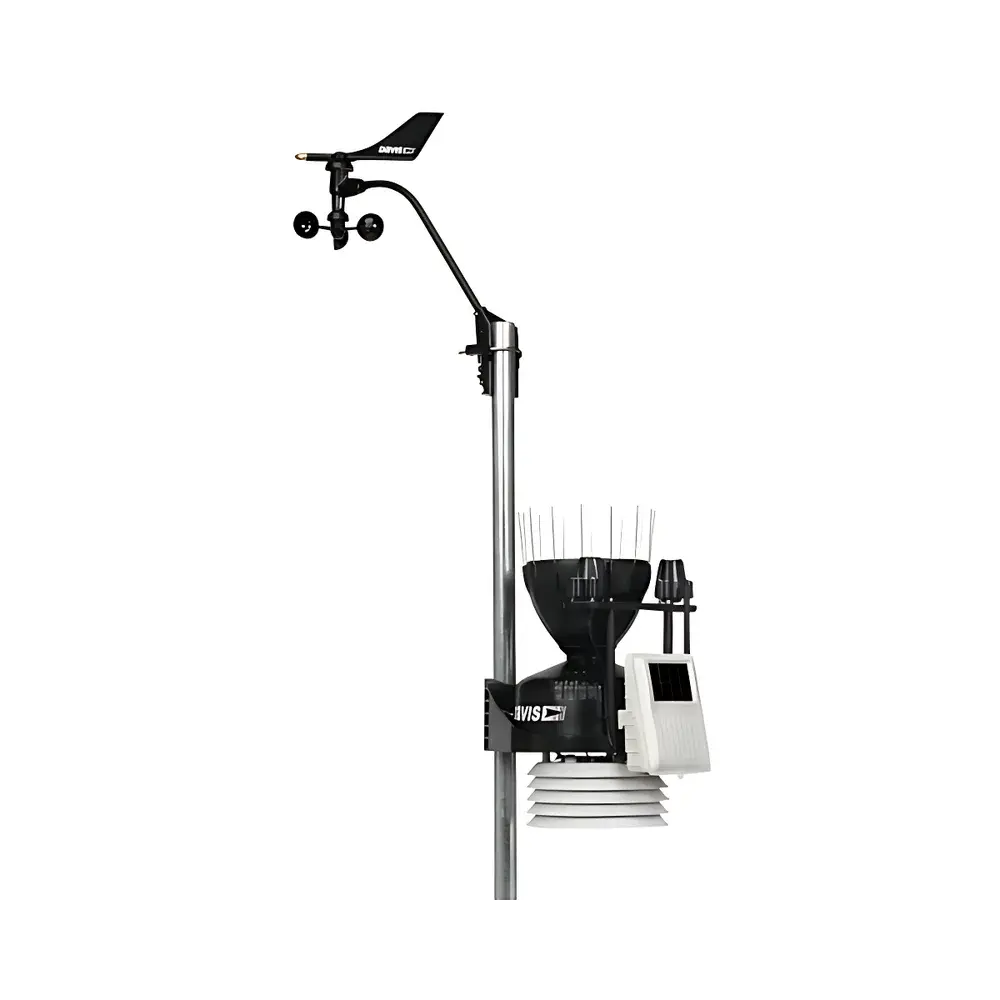
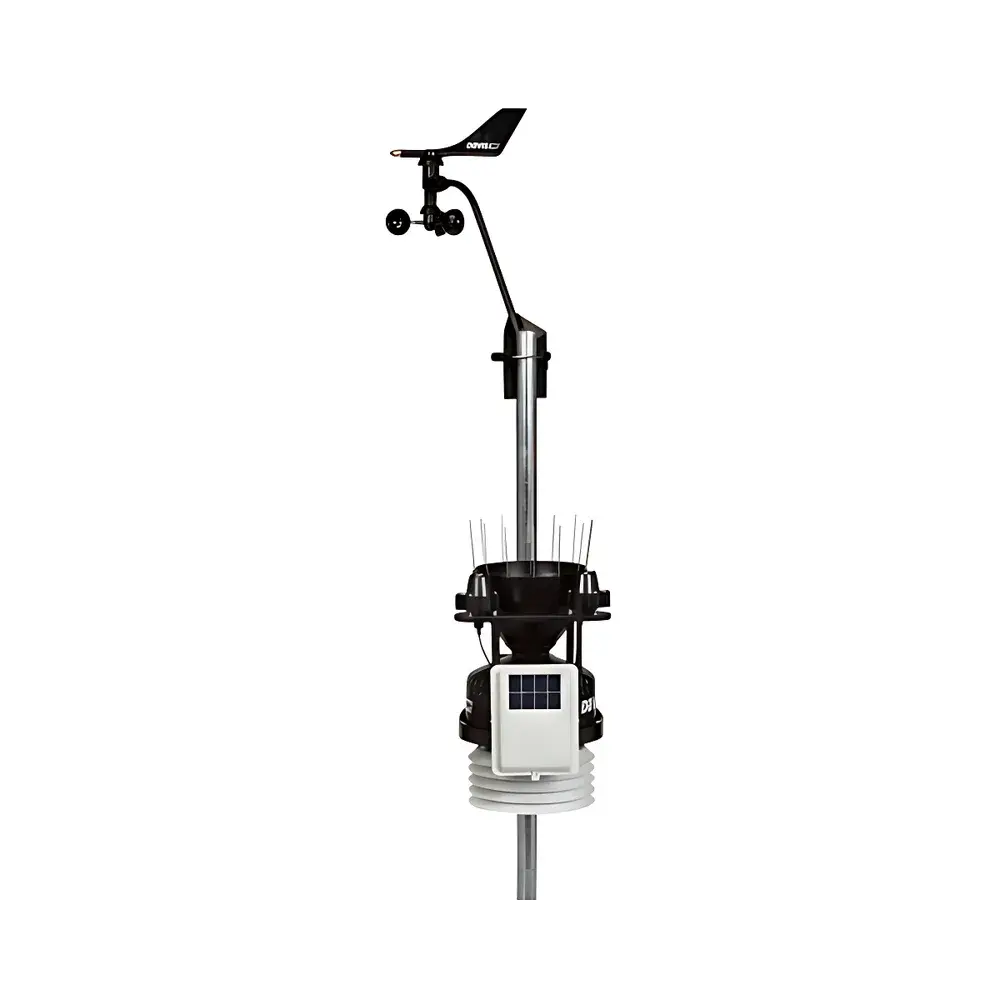
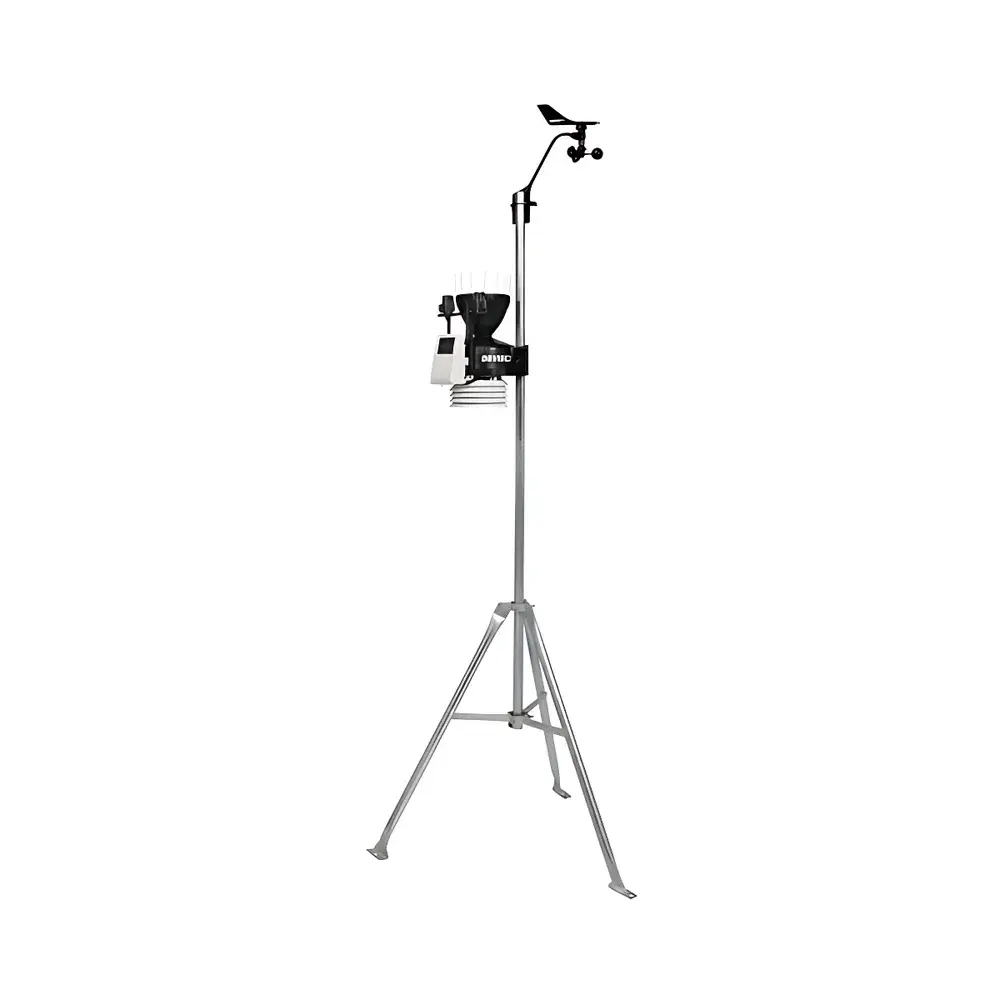
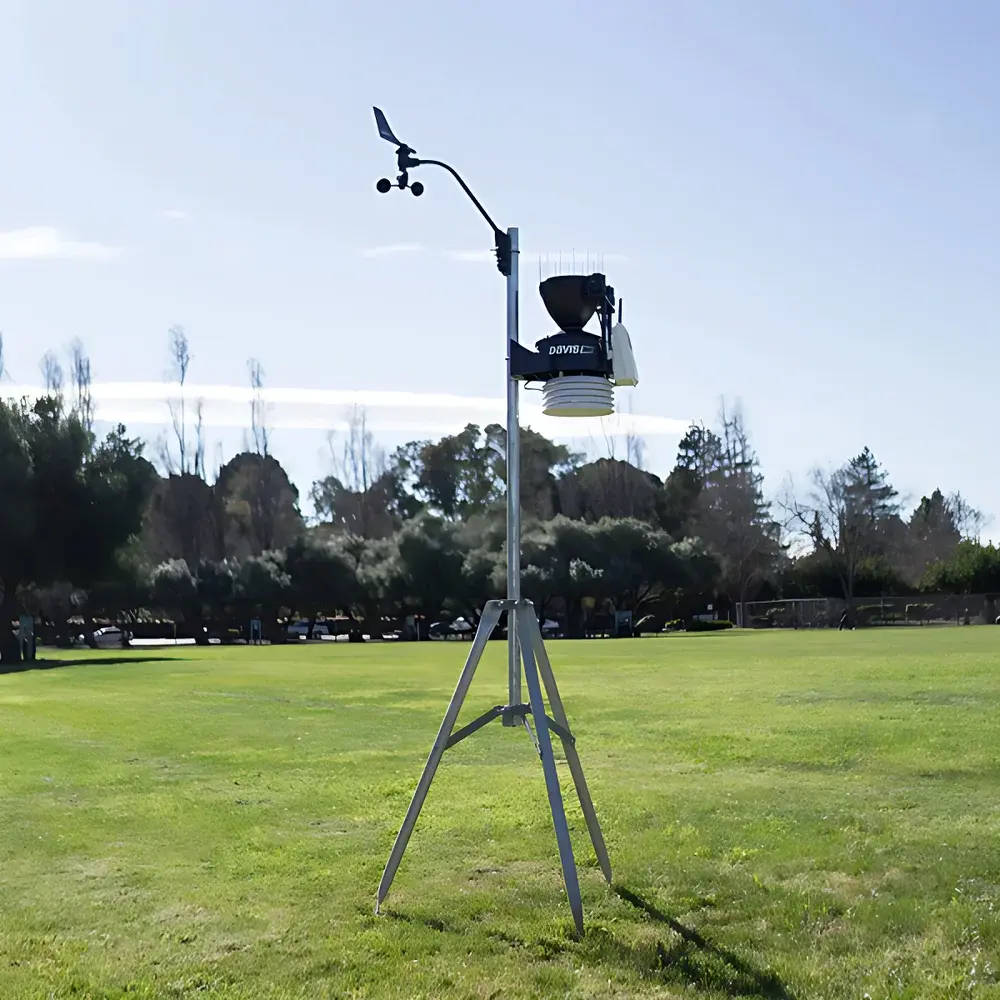
Davis Vantage Pro2 Plus 6162 Wireless Enhanced Weather Station
| Brand | Davis Instruments (USA) |
|---|---|
| Origin | USA |
| Model | Vantage Pro2 Plus 6162 |
| Type | Portable Wireless Weather Station |
| Power Supply | Solar panel (0.5 W) + CR-123A lithium batteries (2 × 3 V) or NiMH C-cell backup |
| Operating Temperature | –40 °C to +65 °C |
| Wireless Transmission Range | Up to 165 m (line-of-sight) |
| Data Logging Interval | 1–60 min configurable |
| Compliance | FCC Part 15, IC RSS-210, RoHS |
Overview
The Davis Vantage Pro2 Plus 6162 Wireless Enhanced Weather Station is a field-deployable, integrated environmental monitoring system engineered for long-term, unattended operation in diverse climatic and geographic conditions. It employs a distributed sensor architecture centered on the Integrated Sensor Suite (ISS), which houses co-located, calibrated transducers for wind speed (cup anemometer with magnetic reed switch), wind direction (vane with potentiometric encoder), temperature and humidity (silicon diode and thin-film capacitive elements), solar radiation (thermopile-based pyranometer), UV index (photodiode with optical filter), and precipitation (tipping-bucket rain gauge with 0.2 mm resolution). All measurements adhere to standard meteorological definitions per WMO Guide to Instruments and Observing Methods (CIMO Guide) and are processed using physically grounded algorithms—e.g., wind chill calculated per NOAA/NWS methodology, dew point derived from Magnus formula, and evapotranspiration (ET) estimated via modified Penman-Monteith reference equations. The ISS communicates wirelessly at 902–928 MHz (FCC-certified ISM band) to the console, eliminating trenching requirements and enabling rapid deployment across remote or ecologically sensitive sites.
Key Features
- Integrated Sensor Suite (ISS) with precision-calibrated, co-located sensors for simultaneous multi-parameter acquisition
- Non-volatile Flash memory ensures data integrity during power loss; retains up to 2,190 days of 1-minute interval records
- Low-power architecture: average current draw ≤0.14 mA (ISS), ≤0.9 mA (console); supports dual-mode power (solar + battery)
- Robust outdoor enclosure fabricated from UV-stabilized ABS and polypropylene; IP65-rated for dust and water resistance
- Lightning protection circuitry compliant with IEC 61643-21 surge immunity standards for Class II installations
- Real-time calculation of derived parameters including heat index, THW index, solar noon, moon phase, sunrise/sunset times, and 12-hour weather forecast based on barometric trend analysis
- Modular design enables field replacement of individual sensor subassemblies without recalibration
Sample Compatibility & Compliance
The Vantage Pro2 Plus 6162 is validated for continuous monitoring of ambient atmospheric variables across terrestrial ecosystems, agricultural plots, coastal zones, and urban microclimate networks. Its sensor suite meets the accuracy tolerances specified in ASTM D5096 (standard practice for calibration of meteorological instruments), ISO 17123-4 (field procedures for optical-electronic distance meters), and USCRN (U.S. Climate Reference Network) operational guidelines. Rain gauge performance conforms to WMO recommendations for tipping-bucket accuracy under dynamic rainfall rates (≤250 mm/h). Radiation sensors satisfy cosine response criteria (±3% error up to 75° zenith angle) and thermal drift specifications (<±0.12%/°C). The system supports GLP-compliant data provenance when used with WeatherLink Live and associated audit-trail-enabled firmware versions.
Software & Data Management
Data acquisition and visualization are managed through Davis WeatherLink software (Windows/macOS) and cloud-hosted WeatherLink.com platform. Local logging occurs on removable microSD cards (up to 32 GB) with timestamped, comma-separated values (CSV) files compatible with MATLAB, Python (pandas), R, and GIS workflows. WeatherLink Live enables real-time HTTP(S) API access, MQTT streaming, and integration with SCADA systems. Remote telemetry options include optional GPRS/CDMA cellular modules (model 6510SER) supporting TCP/IP packet transmission and SMS alerting via GSM modem (user-configurable thresholds and intervals). All firmware updates and configuration changes are digitally signed and verified to ensure integrity per NIST SP 800-193 guidelines.
Applications
This station serves operational and research-grade applications requiring high temporal resolution and long-term stability: automated agrometeorological networks for irrigation scheduling and frost prediction; ecological monitoring of phenological triggers (e.g., growing degree days, chilling hours); validation of mesoscale numerical weather prediction models; compliance reporting for EPA air quality monitoring support stations; and educational deployments in university atmospheric science programs. Its portability and low maintenance profile make it suitable for temporary deployments during field campaigns—including wildfire smoke dispersion studies, post-hurricane recovery assessments, and permafrost thaw monitoring in Arctic tundra.
FAQ
What is the maximum recommended wireless transmission distance between the ISS and console?
Under unobstructed line-of-sight conditions, the nominal range is 165 meters. Performance may decrease in forested, urban, or hilly terrain due to RF attenuation; repeater units (e.g., WeatherLink Live) extend coverage to multi-node mesh configurations.
Does the system meet regulatory requirements for use in federally funded climate observation networks?
Yes—the ISS sensor accuracies, calibration traceability (NIST-traceable reference standards), and data formatting comply with USCRN and NOAA’s NCDC metadata standards for Level 1 observational datasets.
Can historical data be exported in formats compatible with statistical analysis packages?
All logged data exports as UTF-8 encoded CSV with ISO 8601 timestamps, column headers, and documented units—directly ingestible by Python pandas, R data.table, MATLAB timetables, and ArcGIS Pro time-series tools.
Is the solar radiation sensor certified for use in PV performance monitoring?
While not classified as a Class A pyranometer per ISO 9060:2018, its ±5% full-scale accuracy and cosine response meet IEC 61724-1 requirements for secondary reference cells in photovoltaic system performance assessment.
How is firmware updated, and is version rollback supported?
Firmware updates are applied via USB-connected console or over-the-air (OTA) through WeatherLink Live. Version history is retained in non-volatile memory, and authenticated rollback to prior stable releases is permitted within the same major revision family.
Related Products







