
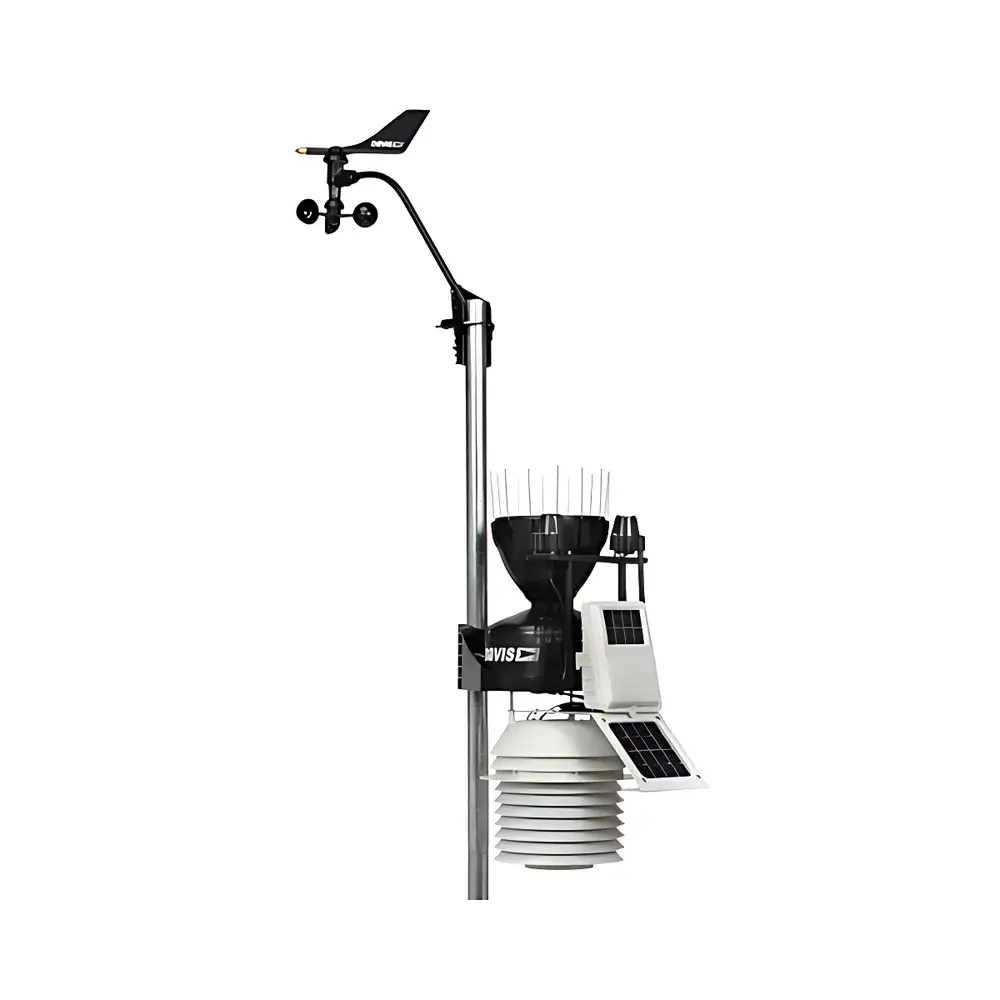
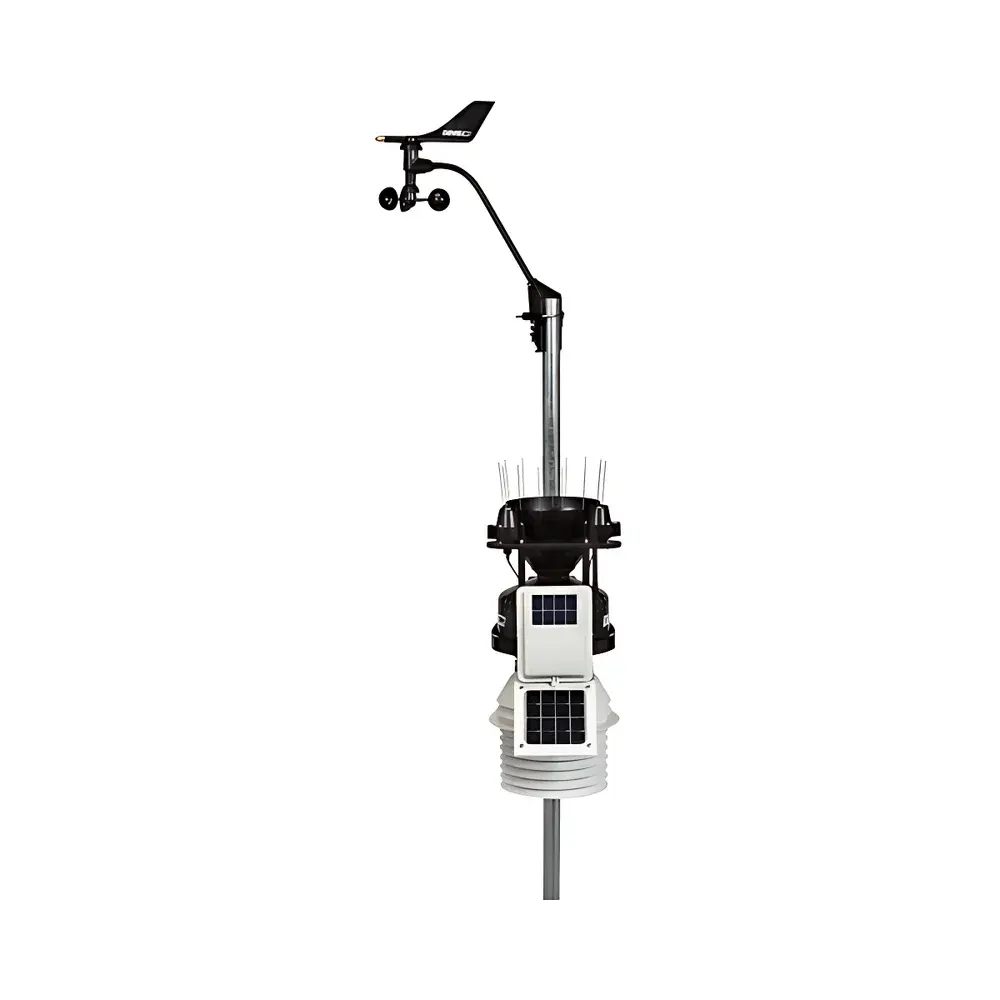
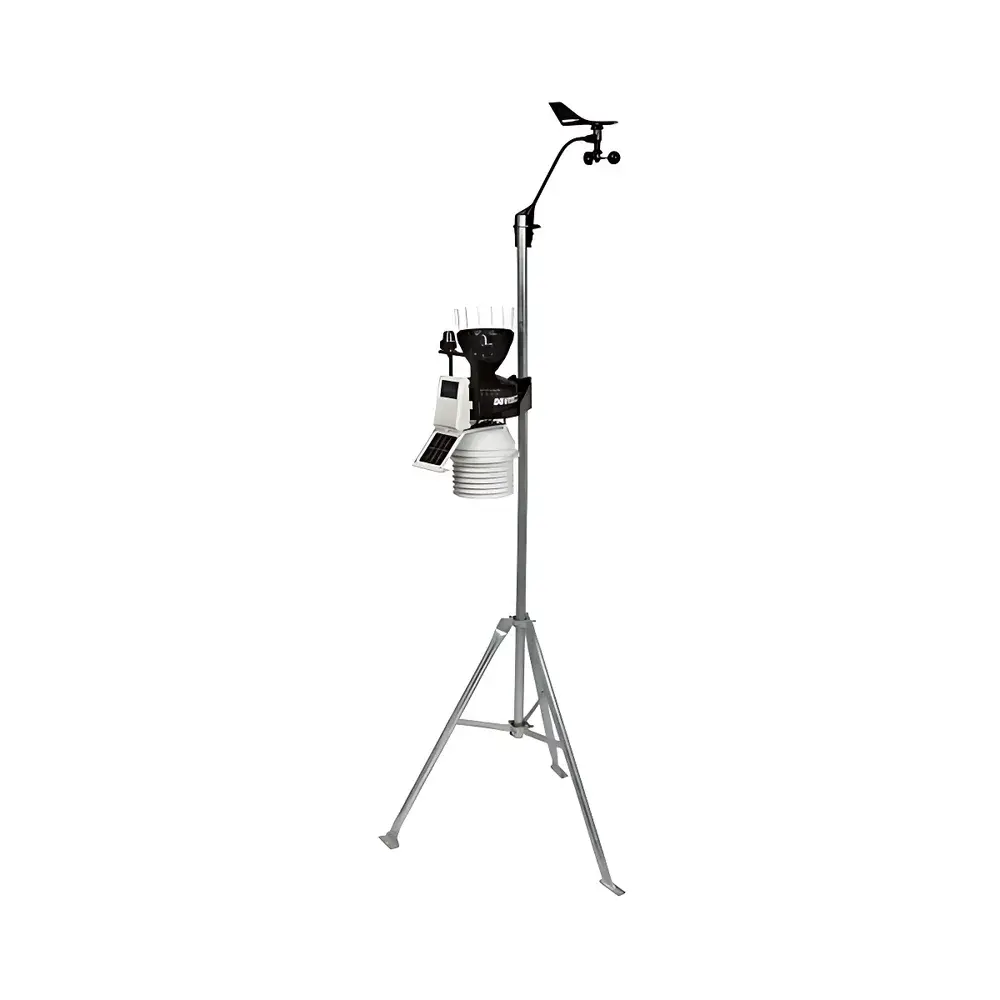
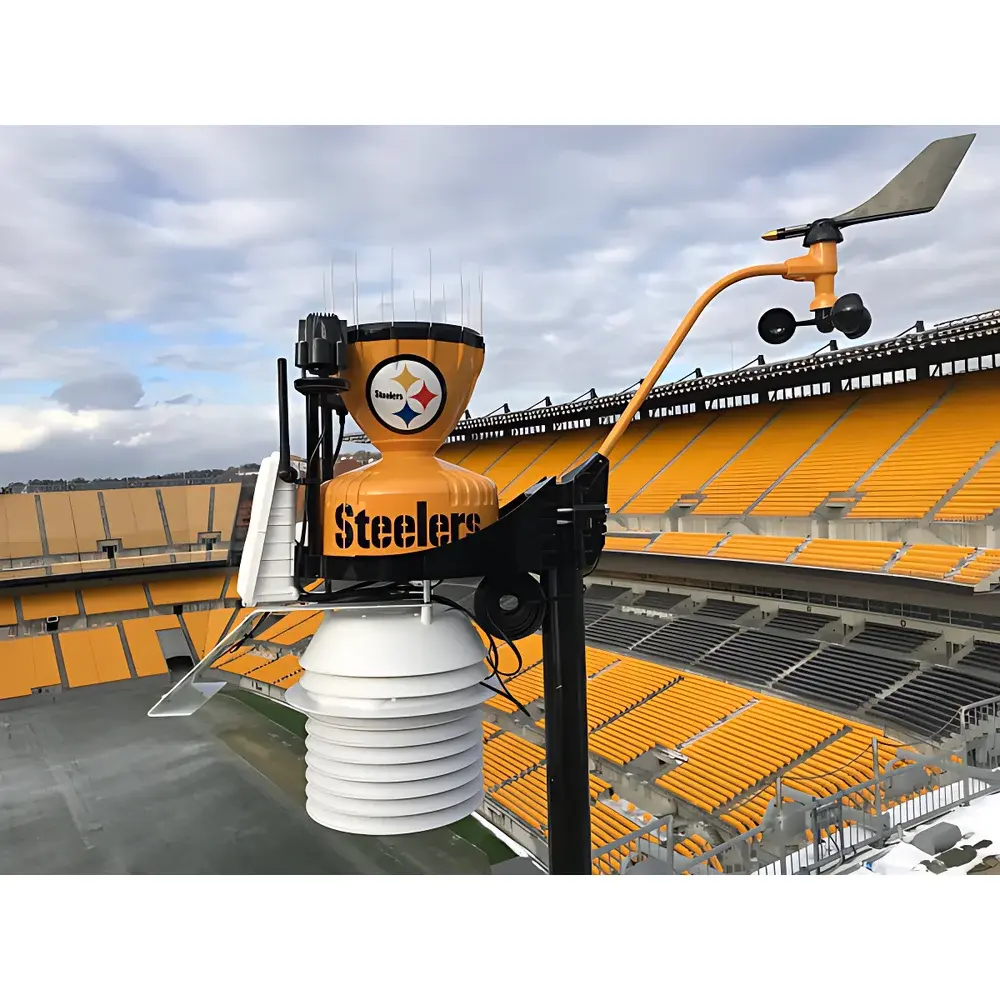
Davis Vantage Pro2 Plus 6163 Wireless Enhanced Weather Station
| Brand | Davis (USA) |
|---|---|
| Origin | USA |
| Model | Vantage Pro2 Plus 6163 |
| Instrument Type | Portable Weather Station |
| Housing Material | UV-Stabilized ABS & Polypropylene |
| Operating Temperature | −40 °C to +65 °C (ISS), 0 °C to +60 °C (Console) |
| Power | Solar Panel (0.5 W standard, 0.75 W with fan) + CR-123A Li‑battery (2 × 3 V) or Ni‑MH C-cells |
| Avg. Current Draw | ≤10 mA (ISS), ≤0.9 mA (Console) |
| Wireless Range | Up to 300 m (line-of-sight), extendable to 1 km with repeater |
| Data Logging Interval | 1–60 min user-selectable |
| Memory | Non-volatile Flash (retains data during power loss) |
| Compliance | FCC Part 15, IC RSS-210, RoHS |
Overview
The Davis Vantage Pro2 Plus 6163 Wireless Enhanced Weather Station is a fully integrated, field-deployable environmental monitoring system engineered for long-term, unattended operation in diverse climatic and geographic conditions. Built upon the proven Vantage Pro2 architecture, this model incorporates a dedicated ventilation fan within the radiation-shielded Integrated Sensor Suite (ISS), ensuring active airflow across temperature and humidity sensors—critical for minimizing solar loading error and maintaining measurement fidelity under high-radiation, low-wind conditions. The system operates on a dual-power architecture: a maintenance-free solar panel (0.5 W base, 0.75 W with fan) coupled with long-life lithium or Ni-MH batteries, enabling continuous operation for up to 8 months without sunlight and over 2 years under typical insolation. All measurements—including wind speed/direction, ambient temperature and relative humidity, barometric pressure, precipitation accumulation and rate, solar irradiance (0–1800 W/m²), UV index (0–16), soil moisture/temperature (optional), leaf wetness (optional), and evapotranspiration (ET)—are acquired, computed, and wirelessly transmitted to the console at configurable intervals (1–60 minutes). Data are stored locally in non-volatile Flash memory, preserving integrity during power interruption—a requirement for GLP-compliant environmental logging.
Key Features
- Active-ventilated ISS housing with integrated 12 V DC fan (0.9 m/s inlet flow under full sun), reducing thermal lag and improving RH/temperature accuracy per ASTM E303 and ISO 7726 thermal comfort standards
- Dual-sensor redundancy: separate anemometer (cup-type with magnetic reed switch) and wind vane (potentiometric) mounted on a single mast; rain collector (tipping bucket, 0.2 mm resolution, 214 cm² orifice area) calibrated to NIST-traceable standards
- High-stability barometric sensor (±1.0 hPa accuracy at 25 °C) with altitude compensation (−600 to +4570 m) and trend-based short-term forecasting (3–12 hr outlook)
- Calibrated pyranometer (±5% full-scale, cosine-corrected ±3° up to 75° zenith angle) and UV sensor (±5%, 0.1–19.9 MEDs range) compliant with WHO/EPA UV Index reporting protocols
- Onboard derived parameter engine computing dew point (±1 °C), heat index (±1 °C), wind chill (±1 °C), THSW index (±2 °C), ET (Penman-Monteith compatible), sunrise/sunset (±1 min), and lunar phase (±38 min)
- FCC- and IC-certified 902–928 MHz spread-spectrum radio link (300 m typical range), supporting multi-station networks and optional repeater modules for extended topographic coverage
Sample Compatibility & Compliance
The Vantage Pro2 Plus 6163 is designed for outdoor deployment in regulatory, academic, agricultural, and industrial environments where traceable, repeatable atmospheric data are required. Its physical construction—UV-stabilized ABS and polypropylene housings, stainless steel fasteners, and sealed RJ-11 sensor interfaces—ensures resistance to corrosion, UV degradation, and thermal cycling per IEC 60068-2 environmental testing standards. All sensors meet or exceed requirements for NOAA Cooperative Observer Program (COOP) site instrumentation, including wind speed uncertainty 95% (per WMO Guide to Instruments and Methods of Observation), and solar irradiance spectral response aligned with ISO 9060:2018 Class C specifications. Optional GPRS/GSM telemetry modules support remote data transmission in compliance with ITU-T X.25 and 3GPP TS 27.005 standards, while WeatherLink software enables audit-trail-enabled data export suitable for FDA 21 CFR Part 11–governed environmental monitoring applications.
Software & Data Management
Data acquisition and visualization are managed via Davis WeatherLink software (v6.x+), a Windows/macOS-compatible platform supporting local USB/serial connection or IP-based remote access. The software provides real-time dashboard views, historical graphing (customizable time windows and parameter overlays), automated NOAA-formatted reports (METAR, SYNOP, CLIMAT), and statistical summaries (min/max/avg/std dev per interval). Raw data are stored in ASCII CSV or binary WLK format with embedded timestamps, sensor IDs, and quality flags. For enterprise integration, WeatherLink Live (cloud gateway) enables secure HTTPS API access, MQTT publishing, and compatibility with SCADA systems, LIMS, and GIS platforms. All data exports include metadata headers specifying calibration dates, sensor serial numbers, and firmware versions—essential for ISO/IEC 17025 laboratory accreditation and EPA QA/QC documentation.
Applications
This station serves mission-critical roles across multiple sectors: in precision agriculture, it informs irrigation scheduling via real-time ET and soil moisture inputs; in hydrology and watershed management, its high-resolution rainfall and solar data feed runoff modeling (e.g., SWAT, HEC-HMS); in air quality networks, it supplies boundary-layer meteorological context for PM₂.₅ and ozone correlation studies; in university research, its modularity supports custom sensor integration (e.g., CO₂, O₃, or particulate counters via analog/digital expansion ports); and in infrastructure monitoring, its low-power, lightning-hardened design ensures reliability for bridge, dam, and wind farm microclimate assessment. Its NOAA-reporting capability also fulfills U.S. federal agency requirements for climate reference network (CRN) auxiliary stations.
FAQ
What is the maximum recommended distance between the ISS and console?
Under open-field conditions, reliable communication is maintained up to 300 meters line-of-sight. With optional repeater units or elevated mounting, effective range extends to 1 kilometer.
Can the station operate solely on battery power without solar input?
Yes—the CR-123A lithium configuration sustains full functionality for approximately 8 months in continuous darkness; Ni-MH cells provide similar runtime under equivalent load.
Is the rain gauge heated to prevent freezing in winter?
No—the standard 6163 model does not include a heated rain collector; however, the optional Heated Rain Collector (Part #7851) is available for sub-zero deployments.
Does the system support NTP time synchronization?
Time is set manually or via WeatherLink software; no built-in NTP client is present, though external GPS time sources can be integrated via third-party gateways.
Are calibration certificates provided with purchase?
Factory calibration is performed per Davis’ internal SOPs; NIST-traceable calibration certificates are available as a paid option (Part #CAL-PRO2) and include pre- and post-calibration verification data.







