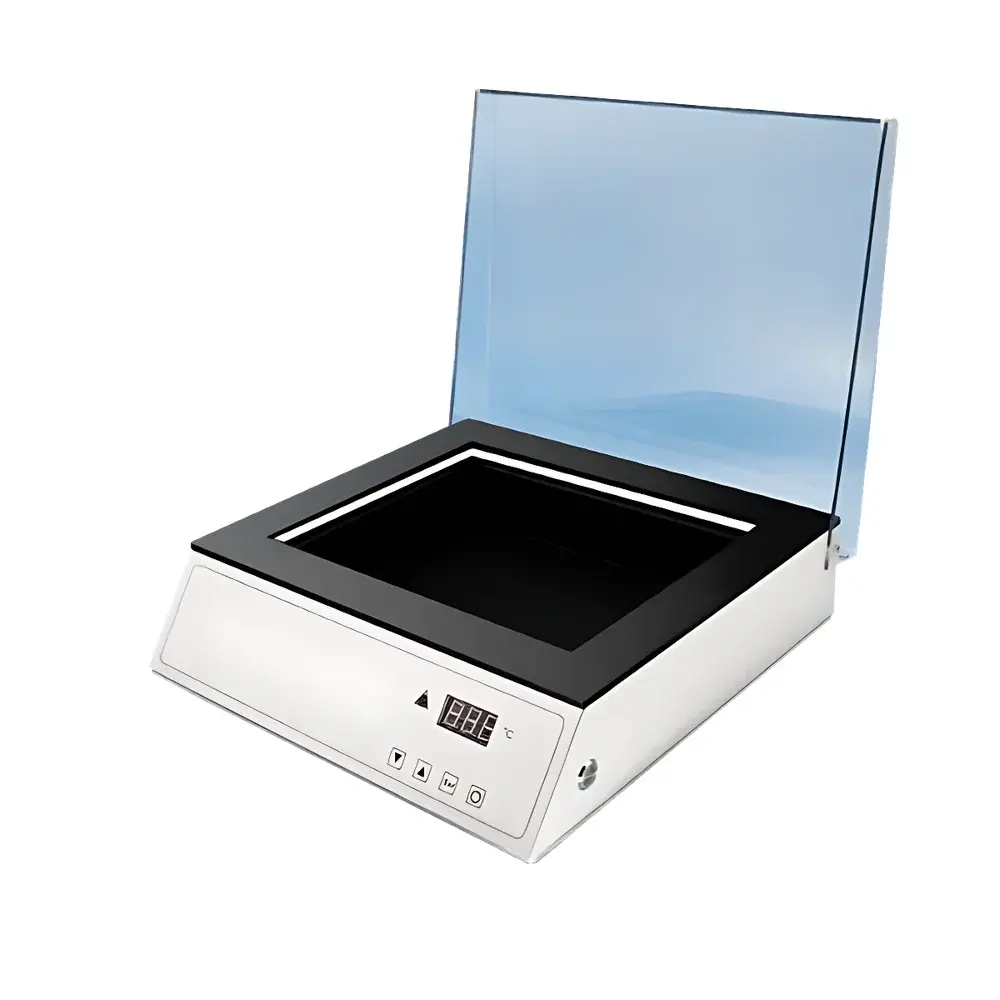
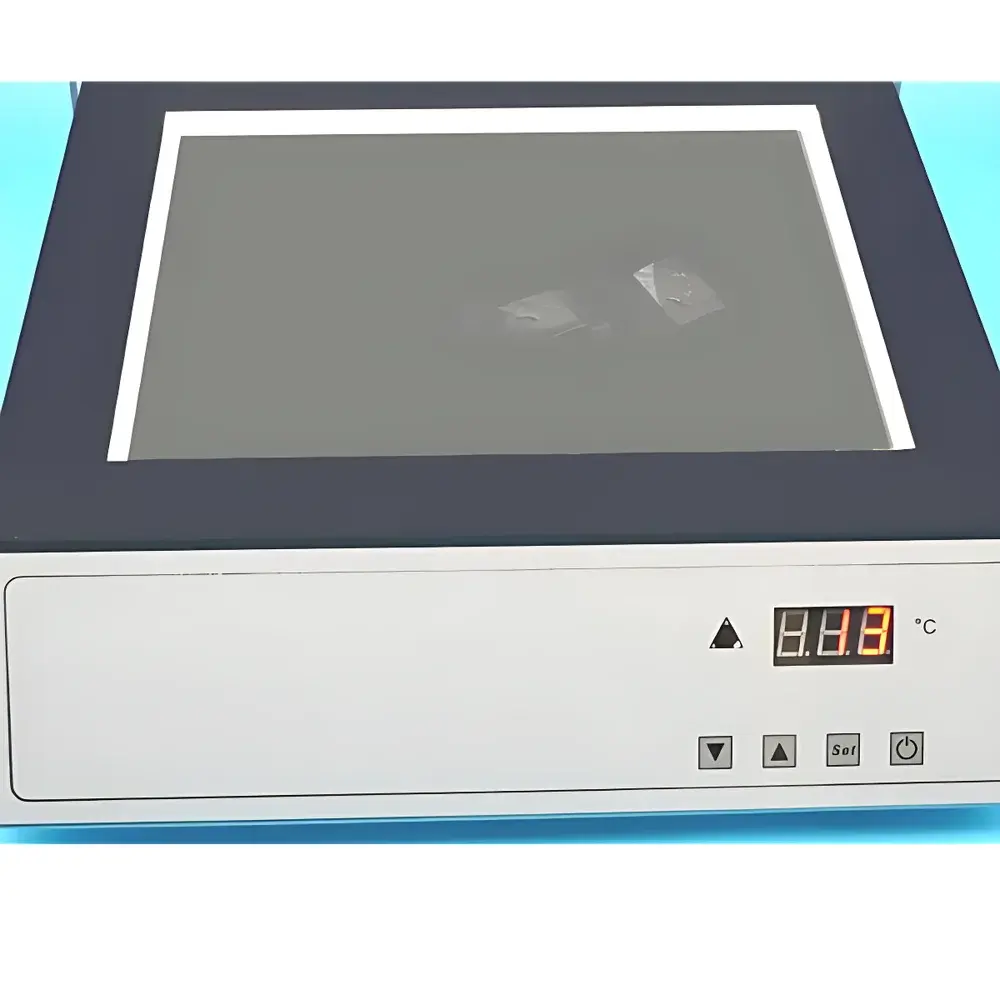
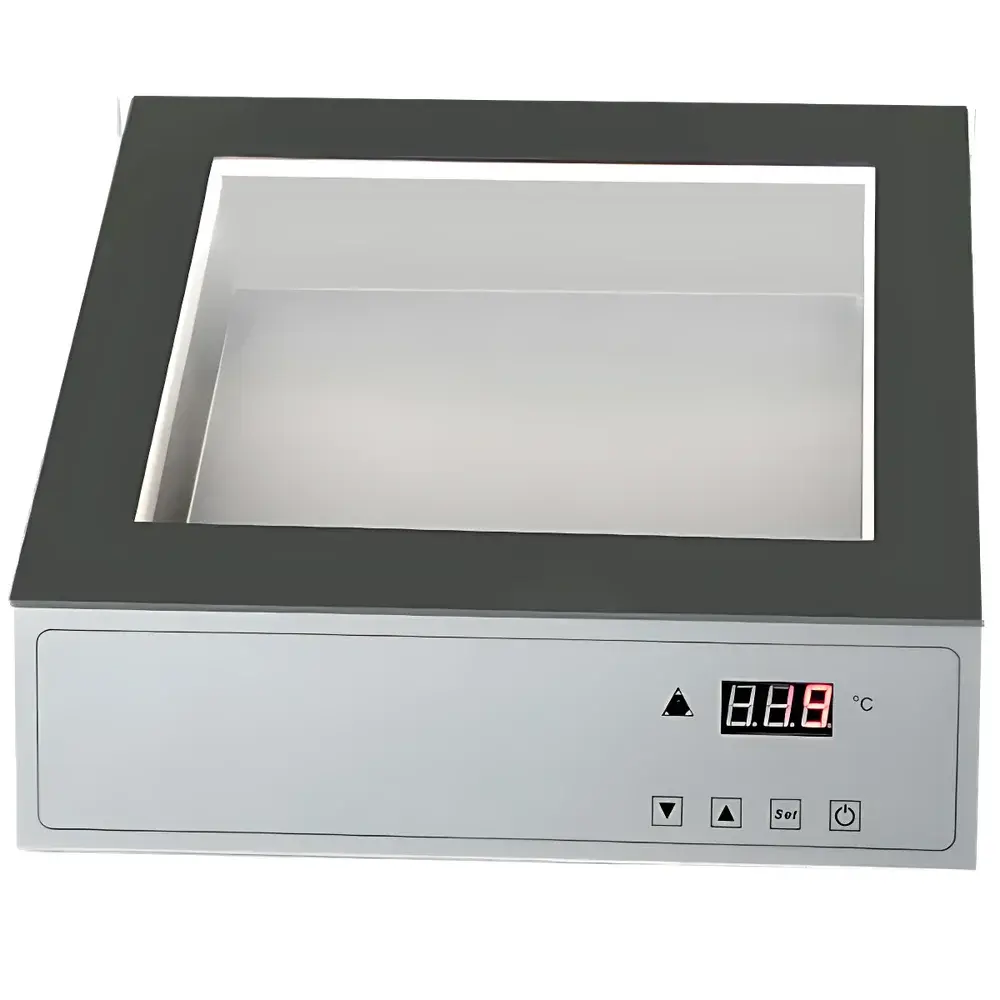
Deerse DK-200 Tissue Floating and Drying Slide Processor
| Brand | Deerse/DS |
|---|---|
| Origin | Beijing, China |
| Manufacturer Type | Authorized Distributor |
| Country of Origin | China |
| Model | DK-200 |
| Price | USD 355 (FOB) |
| Temperature Range | Adjustable 25–70°C |
| Temperature Stability | ±0.5°C |
| Ambient Operating Temperature | 0–40°C |
| Power Supply | AC 220V 50Hz / AC 110V 60Hz |
| Rated Power | 300 W |
| Overall Dimensions | 330 × 330 × 90 mm |
| Bath Chamber Dimensions | 250 × 200 × 60 mm |
| Heating Element | Surface-Mounted Imported Polymer Heating Film |
| Illumination | Integrated LED Task Light with Diffused Beam Profile |
| Dust Protection | Removable Acrylic Dust Cover (Patent Pending) |
Overview
The Deerse DK-200 Tissue Floating and Drying Slide Processor is an integrated benchtop instrument engineered for histology laboratories requiring precise, repeatable control during the critical tissue section flotation and slide drying stages of paraffin-embedded specimen preparation. It combines a temperature-regulated water bath (for controlled tissue section spreading) and a heated drying platform (for post-transfer slide stabilization) into a single compact unit. The device operates on the principle of thermal equilibrium maintenance in a shallow aqueous medium—enabling optimal surface tension reduction and tissue section adhesion to glass slides—followed by gentle convective and conductive drying at defined temperatures. Its design addresses core workflow challenges in routine histopathology, including inconsistent section flattening, edge curling, water ripple artifacts, and uncontrolled evaporation-induced tissue distortion. Unlike legacy standalone floaters or hot plates, the DK-200 implements closed-loop thermal management across both functional zones, minimizing inter-batch variability and supporting compliance with standardized histotechnique protocols.
Key Features
- Advanced PID temperature control algorithm with real-time bath water temperature feedback via submersible platinum resistance sensor—ensuring dynamic response and sustained stability within ±0.5°C across the full 25–70°C operating range.
- Surface-mounted polymer heating film integrated beneath the stainless-steel bath chamber floor—providing rapid thermal ramp-up (10,000 operational hours).
- Dedicated LED task illumination system with diffused 5000K white light—positioned to eliminate glare and shadowing over the water surface, enhancing visual acuity during section transfer and orientation under stereomicroscopic guidance.
- Removable, optically transparent acrylic dust cover—mechanically sealed to minimize airborne particulate deposition on slides and bath surface, thereby reducing contamination risk and extending cleaning intervals.
- Intuitive dual-knob interface with digital temperature display—allowing independent adjustment of bath and drying zone setpoints; zero-error calibration mode supports traceable temperature verification using external NIST-traceable thermometers.
Sample Compatibility & Compliance
The DK-200 accommodates standard microscope slides (75 × 25 mm and 75 × 50 mm), as well as specialty formats including charged, APES-coated, and poly-L-lysine-treated substrates. It supports tissue sections cut between 2–10 µm thickness from paraffin-embedded blocks processed using rotary microtomes. The unit complies with IEC 61010-1:2010 safety requirements for laboratory electrical equipment and meets electromagnetic compatibility standards per EN 61326-1:2013. While not classified as a medical device under FDA 21 CFR Part 820, its operational parameters align with widely adopted histology quality frameworks—including CAP Laboratory Accreditation Program checklist item ANP.41100 (slide processing controls) and ISO 15189:2022 clause 5.3.2 (equipment performance verification). Routine temperature verification and logbook documentation satisfy internal GLP audit requirements for pre-analytical process traceability.
Software & Data Management
The DK-200 is a stand-alone electromechanical instrument with no embedded firmware, network interface, or data logging capability. All operational parameters are manually configured and maintained without software dependency—eliminating cybersecurity risks, validation overhead, and version-control complications. Temperature setpoints and usage logs are recorded externally in laboratory notebooks or LIMS-integrated spreadsheets. This architecture ensures long-term operational continuity, avoids obsolescence due to OS updates, and simplifies IQ/OQ documentation for regulated environments where deterministic behavior and minimal validation scope are prioritized.
Applications
- Routine hematoxylin and eosin (H&E) staining workflows requiring uniform tissue adherence and minimal morphological distortion.
- Immunohistochemistry (IHC) slide preparation, where consistent antigen exposure and reduced background non-specific binding depend on reproducible section flattening and drying kinetics.
- In situ hybridization (ISH) protocols involving fragile RNA targets—benefiting from low-thermal-stress drying conditions that preserve nucleic acid integrity.
- Teaching laboratories performing basic histotechnique training, where intuitive operation and visual feedback support competency development in section handling and orientation.
- Research settings utilizing serial sectioning for 3D reconstruction, where positional fidelity across hundreds of consecutive slides demands tightly controlled flotation geometry.
FAQ
Does the DK-200 support programmable multi-step temperature profiles?
No. It features fixed-point temperature control only, optimized for stable single-setpoint operation typical of manual histology workflows.
Can the water bath be filled with solutions other than distilled water?
Distilled or deionized water is strongly recommended. Adding surfactants or ethanol-based solutions may compromise sensor accuracy and accelerate corrosion of the stainless-steel chamber.
Is the drying platform independently heated from the water bath?
Yes. Two separate heating circuits and temperature sensors enable simultaneous but independent control of flotation bath and slide drying surface temperatures.
What maintenance is required for long-term reliability?
Monthly descaling of the bath chamber using 5% acetic acid solution and biannual inspection of the heating film integrity using visual and resistance continuity checks (≥10 MΩ insulation resistance).
Does the unit include CE or UL certification markings?
It carries CE marking per Directive 2014/30/EU (EMC) and 2014/35/EU (LVD); UL listing is not pursued due to its classification as general-purpose lab equipment rather than clinical diagnostic hardware.