
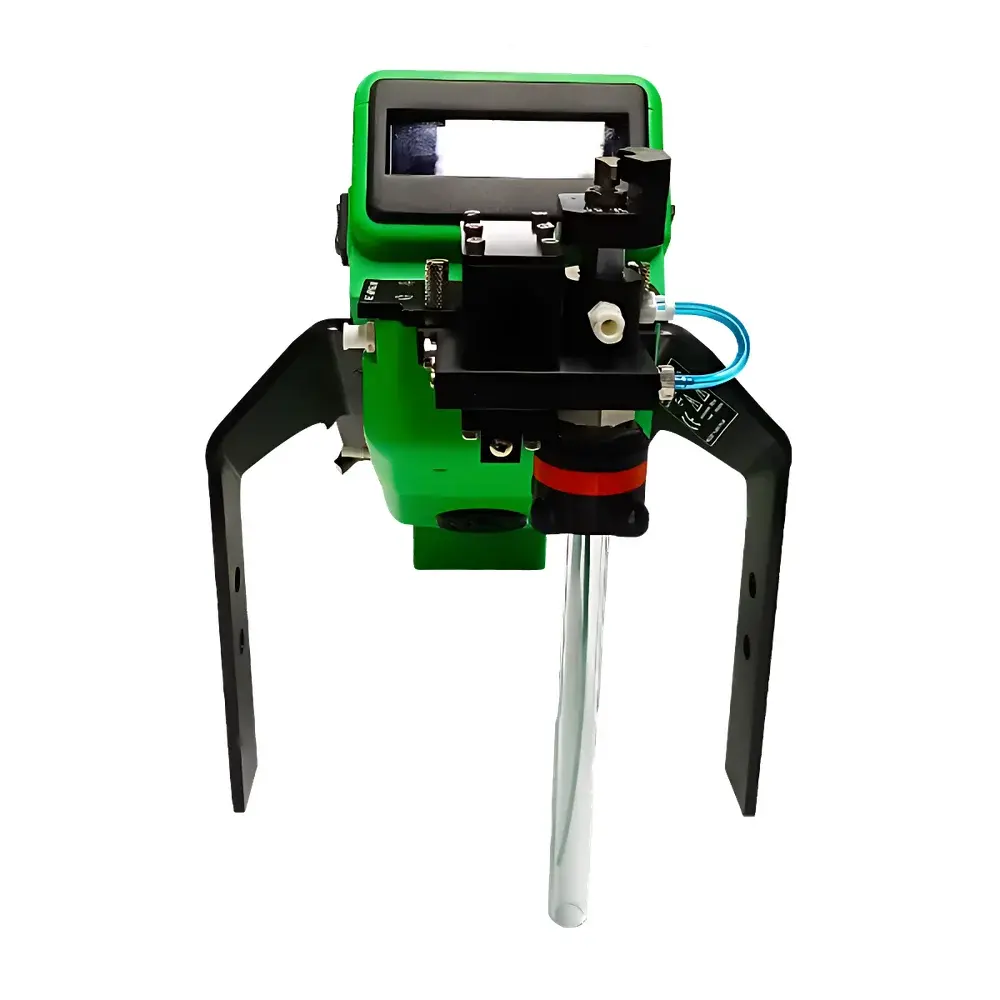
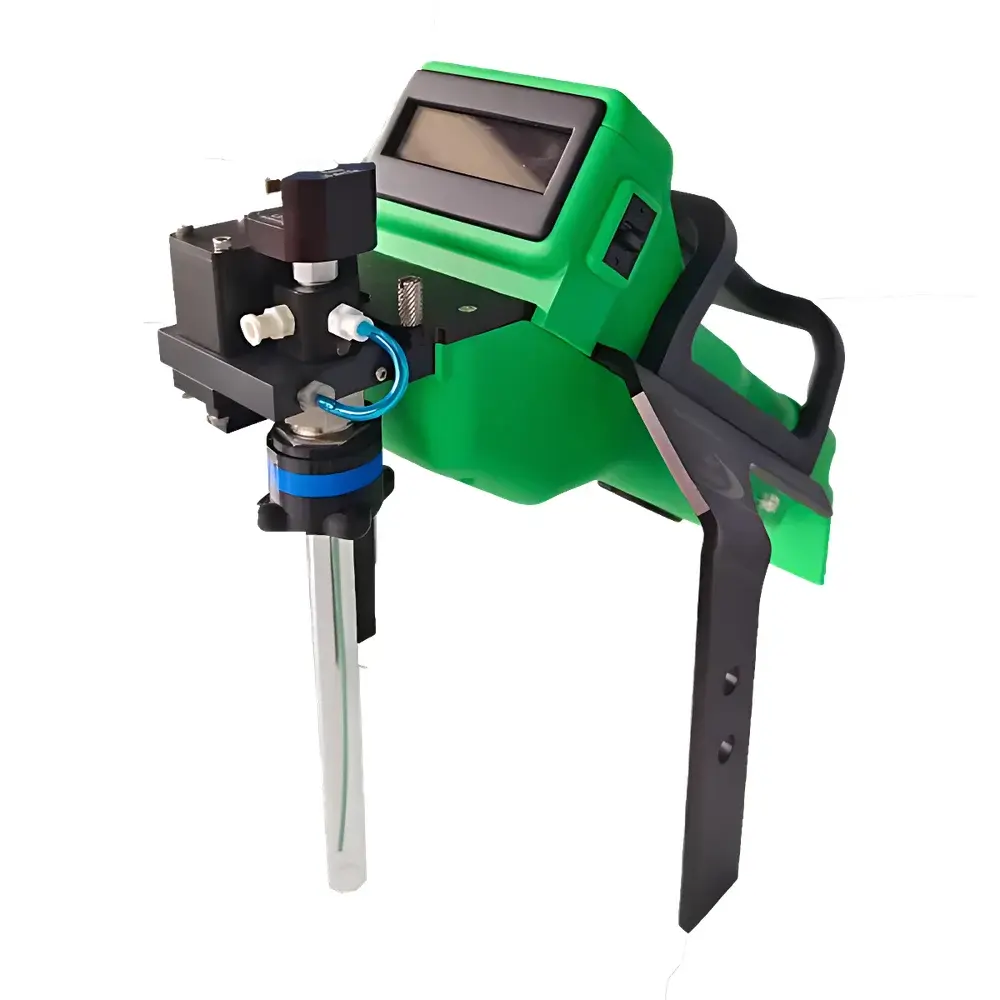
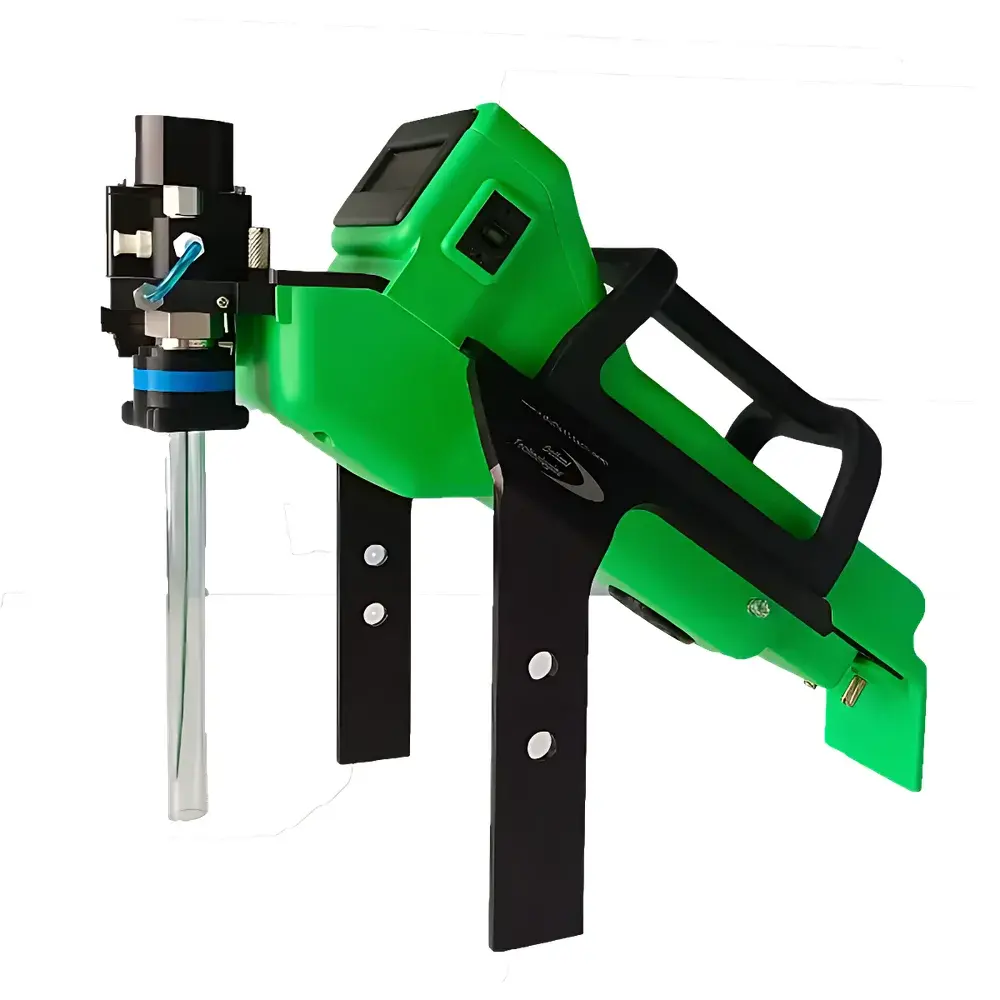
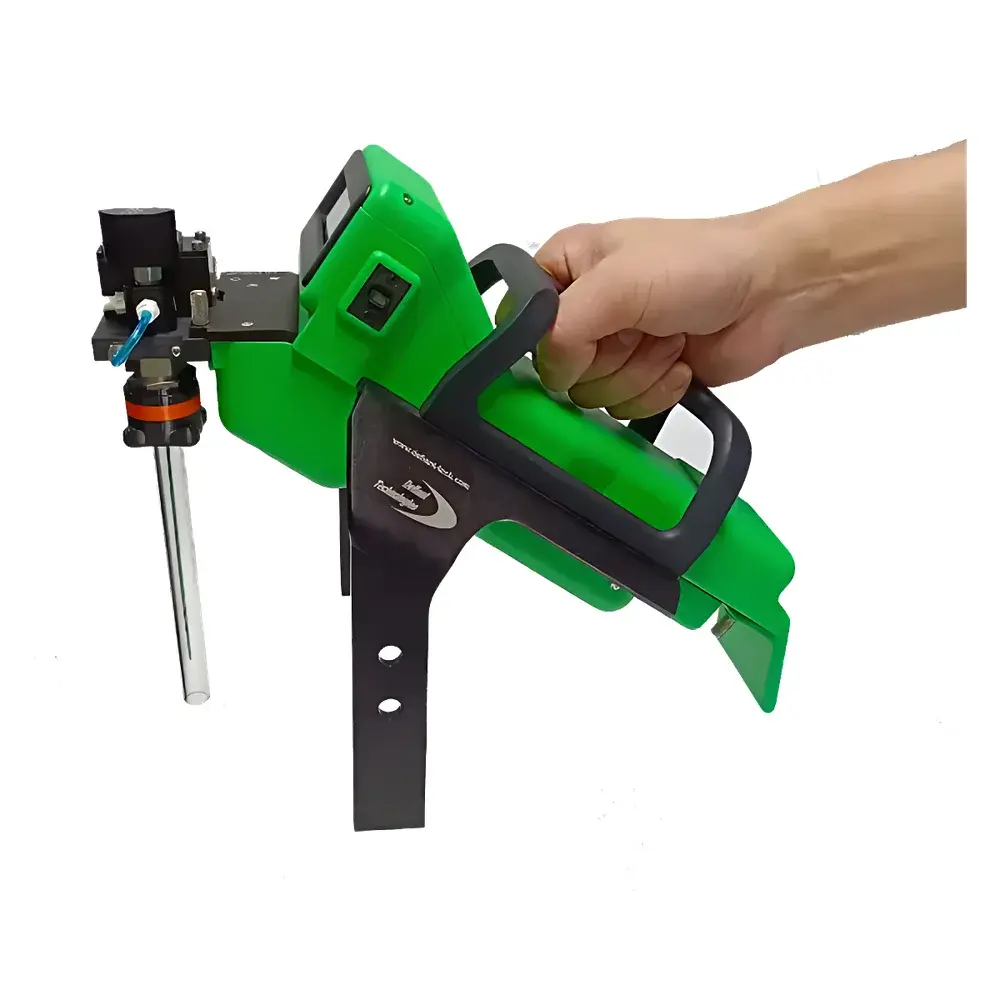
Defiant frog5000 Portable Gas Chromatograph
| Brand | Defiant |
|---|---|
| Origin | USA |
| Manufacturer Status | Authorized Distributor |
| Origin Category | Imported |
| Model | frog5000 |
| Price Range | USD 27,000–68,000 (est.) |
| Detection Limit | 0.1 ppb for benzene |
| Weight | 2.2 kg |
| Dimensions | 267 × 197 × 308 mm |
Overview
The Defiant frog5000 Portable Gas Chromatograph is a field-deployable analytical instrument engineered for rapid, on-site qualitative and quantitative analysis of volatile organic compounds (VOCs) in air, water, and soil matrices. It employs micro-electromechanical systems (MEMS)-based microfabricated chromatographic columns coupled with a 10.6 eV photoionization detector (PID), enabling high-sensitivity separation and detection without requiring cryogenic cooling or external gas cylinders. Designed for compliance with regulatory measurement protocols—including GB/T 18883–2022 Annex C.3 (China), EPA Method 5035 (soil/water headspace extraction), and EPA Method 8021B (aromatic hydrocarbons in air)—the frog5000 delivers laboratory-grade chromatographic resolution in a handheld form factor. Its operational principle relies on thermal desorption of VOCs from sampled media, followed by isothermal or temperature-programmed elution through a MEMS column and real-time ionization/detection via PID. This architecture ensures reproducible retention times, minimal carryover, and robust performance under variable ambient conditions (10–40 °C, 20–80% RH).
Key Features
- True portable GC architecture: No external carrier gas supply required—uses filtered ambient air as carrier gas, conditioned by integrated activated carbon and molecular sieve traps to remove background VOCs and moisture.
- MEMS micro-column technology: Enables precise thermal control, rapid equilibration (<60 s), and stable baseline performance across repeated field deployments.
- On-device data processing: Integrated ARM-based processor and 5-inch capacitive touchscreen display allow full method execution, peak integration, calibration curve application, and result visualization without PC connectivity.
- Multi-matrix sampling capability: Standard configuration supports direct air analysis; optional accessories include thermal desorption tubes for air, purge-and-trap modules for water, and headspace vials with heated agitator for solid-phase extraction from soil.
- Battery-powered operation: Rechargeable Li-ion battery pack supports >9 hours of continuous analysis at 25 °C, with hot-swap capability for extended missions.
- Regulatory-ready reporting: Auto-generates PDF reports compliant with ISO/IEC 17025 documentation requirements, including audit trail metadata (operator ID, timestamp, method version, instrument serial number).
Sample Compatibility & Compliance
The frog5000 is validated for analysis of over 100 target VOCs—including benzene, toluene, ethylbenzene, xylenes (BTEX), trichloroethylene, tetrachloroethylene, vinyl chloride, and 2-methylnaphthalene—across three primary sample types: ambient or indoor air (direct draw or canister sampling), aqueous samples (via headspace or purge-and-trap), and soil/sediment (via heated headspace extraction). All methods adhere to internationally recognized validation frameworks: detection limits meet or exceed those specified in EPA SW-846 Methods 5035A and 8021B; precision (RSD ≤ 5% at 10× LOD) and accuracy (recovery 85–115% across spiking levels) are verified per ASTM D7575–22. Instrument firmware supports GLP-compliant electronic signatures and 21 CFR Part 11–enabled audit trails when connected to enterprise LIMS via USB or Wi-Fi.
Software & Data Management
The embedded FrogOS operating system provides intuitive method setup, real-time chromatogram visualization, automated peak identification using NIST MS library cross-referencing (where PID spectral libraries are preloaded), and customizable calibration workflows (single-point, multi-level, internal standard). Raw chromatographic data (.cdf format) and processed reports (.pdf, .csv) are stored locally on encrypted microSD card (up to 128 GB) with automatic timestamping and SHA-256 hash generation for data integrity verification. Optional cloud synchronization enables secure remote data backup and collaborative review via Defiant’s WebLIMS portal, supporting role-based access control and versioned method management aligned with ISO 17025 Clause 7.7.
Applications
- Indoor air quality (IAQ) assessment per GB/T 18883–2022 and WHO guidelines—rapid screening for BTEX in residential, office, and vehicle cabin environments.
- Environmental emergency response—on-scene identification and quantification of VOC plumes following chemical spills, industrial leaks, or fire debris analysis.
- Petroleum refining and distribution QA/QC—leak detection at storage tanks, pipeline joints, and loading facilities using passive diffusion sampling.
- Regulatory compliance monitoring for occupational exposure limits (OELs) defined in ACGIH TLVs® and OSHA PELs.
- Research-grade field studies in atmospheric chemistry, biogeochemical cycling, and urban pollution mapping where spatial-temporal resolution demands instrument portability.
FAQ
What carrier gas does the frog5000 use?
It uses ambient air as the carrier gas, purified in-line by dual-stage filtration: activated carbon removes trace VOCs, and a molecular sieve eliminates water vapor.
Can the instrument be calibrated in the field?
Yes—calibration gases (e.g., benzene-in-nitrogen standards) can be introduced via the built-in calibration port; auto-calibration routines verify detector response and retention time stability before each analysis batch.
Is method validation documentation available?
Defiant provides a complete Validation Package (VP-5000) including IQ/OQ protocols, uncertainty budgets per EURACHEM/CITAC Guide, and interlaboratory study data supporting ISO/IEC 17025 accreditation.
How is data integrity ensured during offline operation?
All acquisitions are cryptographically signed at source; the audit log records every user action, sensor reading, and environmental parameter (temperature, pressure, battery voltage) with tamper-evident hashing.
What maintenance is required between analyses?
No consumables are replaced between runs; routine maintenance includes quarterly PID lamp cleaning and annual MEMS column performance verification using certified reference standards.
Related Products





